
Pilt: Gardener Checking Corn Ear for Ripeness
Avaldatud:
Viimati uuendatud: 13. märts 2026, kell 20:38:22 UTC
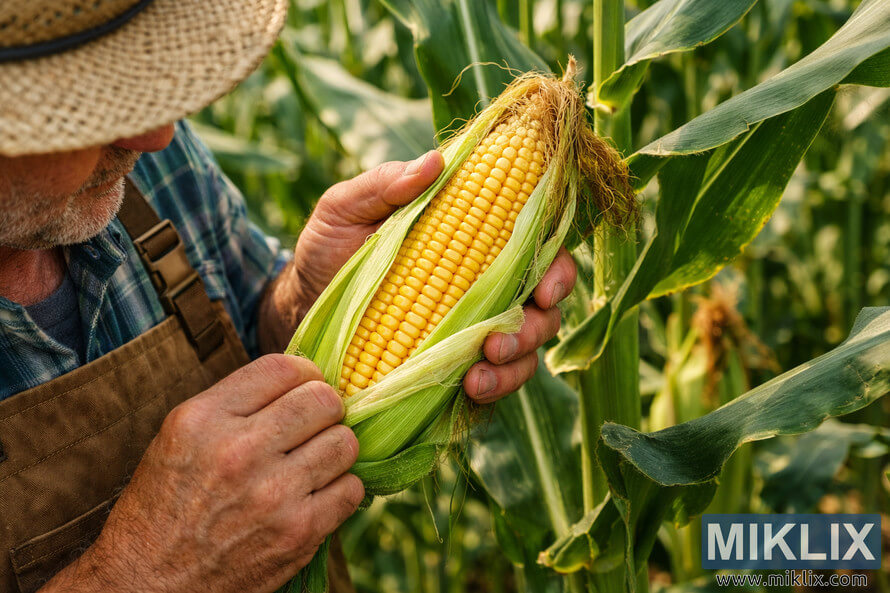
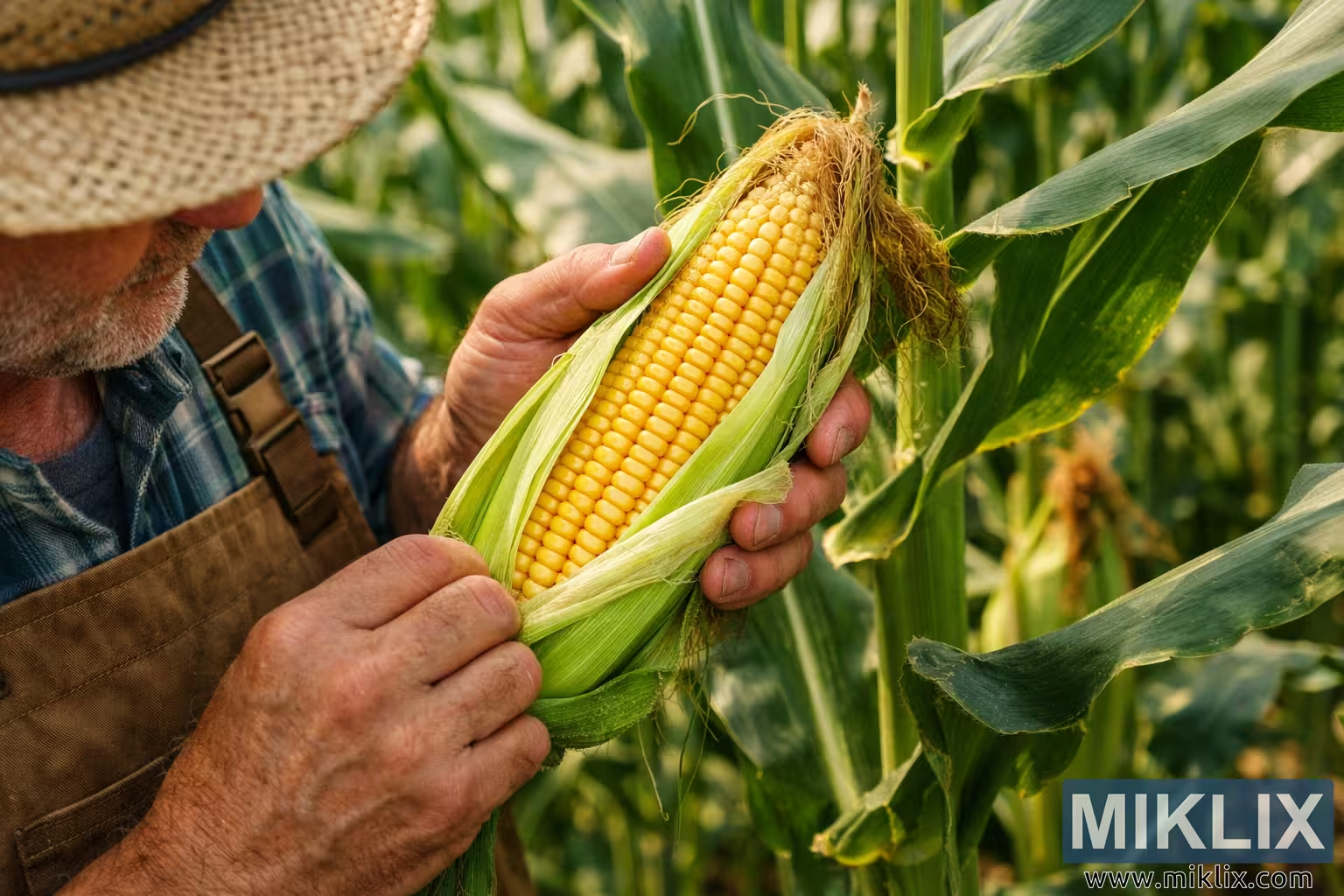
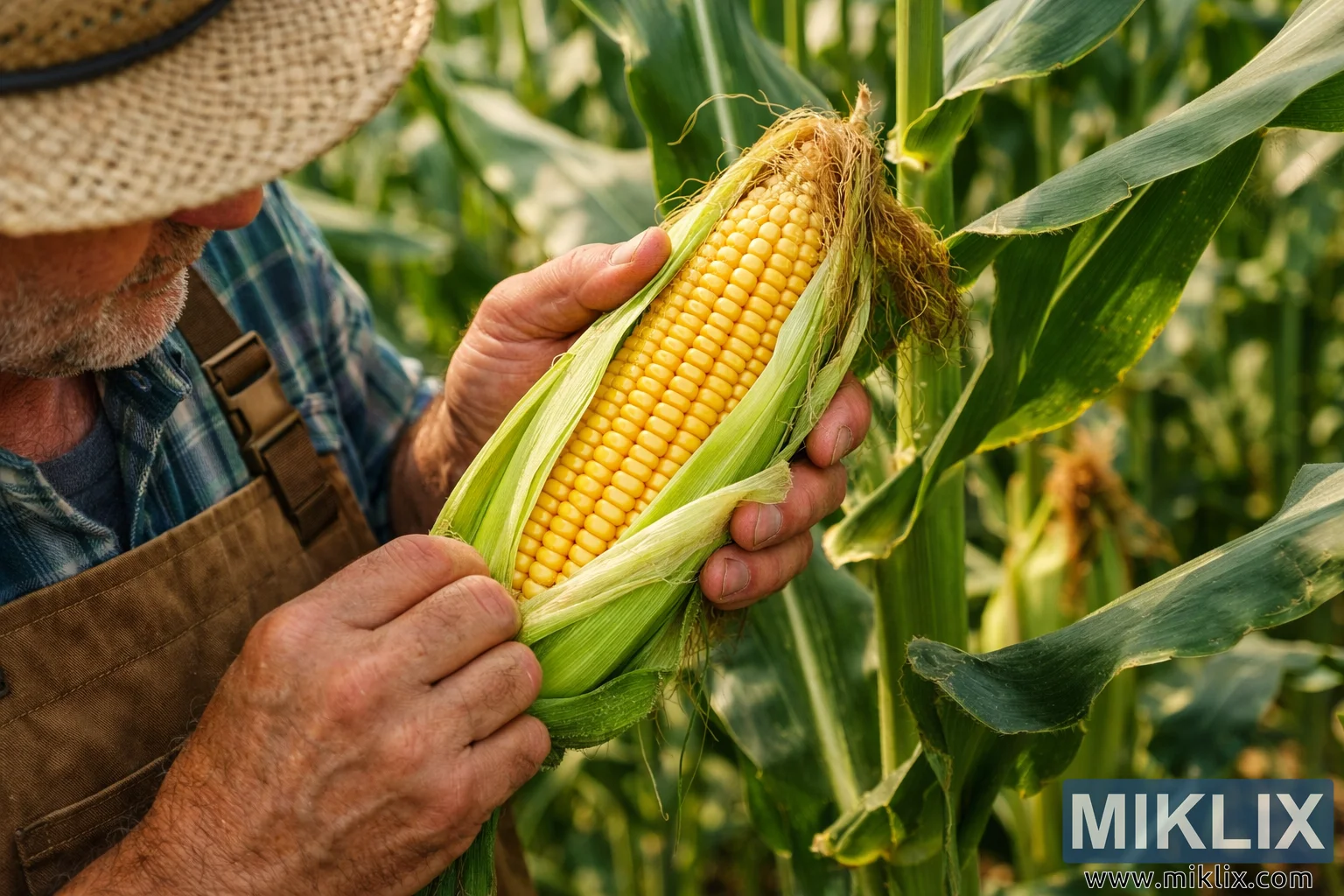
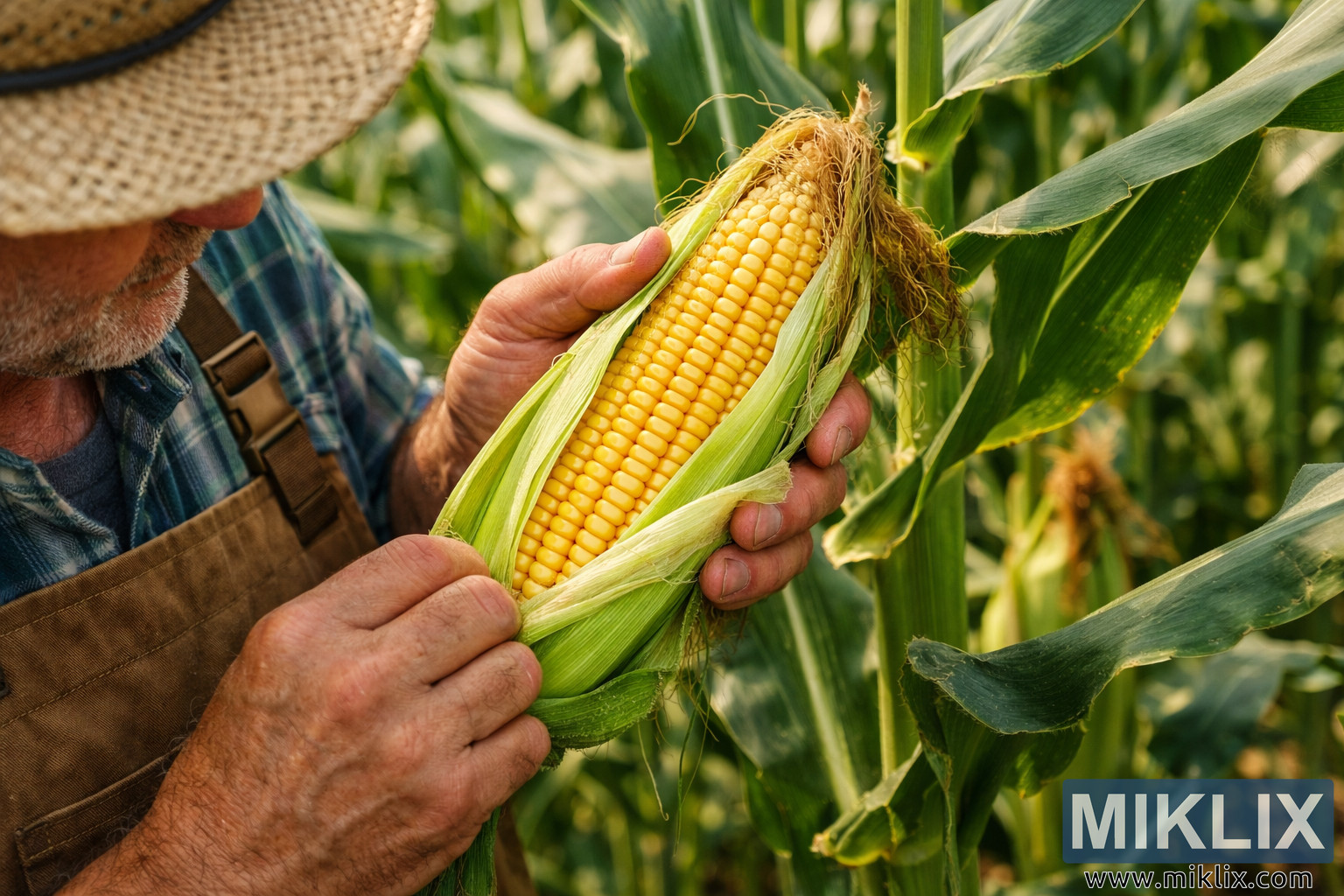
A gardener inspects a corn ear for ripeness by peeling back the green husk to reveal rows of bright yellow kernels in a sunlit cornfield.
Gardener Checking Corn Ear for Ripeness
Selle pildi olemasolevad versioonid
Allpool allalaadimiseks saadaval olevad pildifailid on vähem kokkusurutud ja kõrgema resolutsiooniga - ja selle tulemusena kvaliteetsemad - kui selle veebisaidi artiklitesse ja lehekülgedele manustatud pildid, mis on ribalaiuse tarbimise vähendamiseks faili suuruse poolest rohkem optimeeritud.
Tavaline suurus (1,536 x 1,024)
Suur suurus (3,072 x 2,048)
Väga suur suurus (4,608 x 3,072)
Eriti suur suurus (6,144 x 4,096)
Koomiliselt suur suurus (1,048,576 x 699,051)
- Ikka veel üleslaadimine... ;-)
Pildi kirjeldus
A close-up photograph captures a gardener carefully inspecting a corn ear in a thriving cornfield on a sunny day. The scene focuses on the gardener’s hands as he gently pulls back the green husk of the corn, revealing tightly packed rows of bright golden kernels beneath. The action suggests the common practice of checking corn for ripeness directly on the stalk by peeling back the protective leaves to examine the kernels' size, color, and fullness.
The gardener’s weathered hands dominate the foreground, conveying years of experience and familiarity with working in the soil. His fingers grip the husk delicately yet confidently, folding the pale green layers outward to expose the glossy kernels underneath. The kernels appear plump, uniform, and vibrant yellow, indicating that the ear is likely nearing harvest readiness. Fine strands of corn silk frame the exposed section of the cob, some still attached to the husk and others draping loosely around the kernels.
Part of the gardener’s clothing is visible in the frame, including a straw hat that casts a soft shadow over his face and a blue plaid shirt worn beneath a set of rugged brown overalls. These details reinforce the agricultural setting and suggest a practical, hands-on approach to gardening or small-scale farming. Only a portion of the gardener’s face is visible along the edge of the frame, emphasizing the inspection process rather than the individual.
Surrounding the subject, tall green corn stalks fill the background, their long leaves stretching upward and outward. The plants appear healthy and dense, creating a lush environment that suggests a productive growing season. Sunlight filters through the leaves, producing warm highlights and gentle shadows that enhance the textures of the corn husk, the kernels, and the gardener’s hands.
The composition centers the partially opened ear of corn, making it the visual focal point. The natural colors of the scene—rich greens, warm yellows, and earthy browns—create a vivid contrast that draws attention to the ripening crop. The photograph conveys both the patience and attentiveness required in gardening, illustrating a quiet moment of evaluation before harvest.
Overall, the image portrays the intimate relationship between a gardener and the crops he tends. By focusing on the simple act of checking a corn ear for ripeness, the photograph highlights the tactile, observational nature of traditional farming practices and the satisfaction that comes from nurturing plants from seed to harvest.
Pilt on seotud: Growing Corn: Your Complete Guide to Sweet Success in the Garden