
Image: Corn Plant Under Attack by Japanese Beetles
Publié :
Dernière mise à jour : 13 mars 2026 à 20 h 39 min 16 s UTC
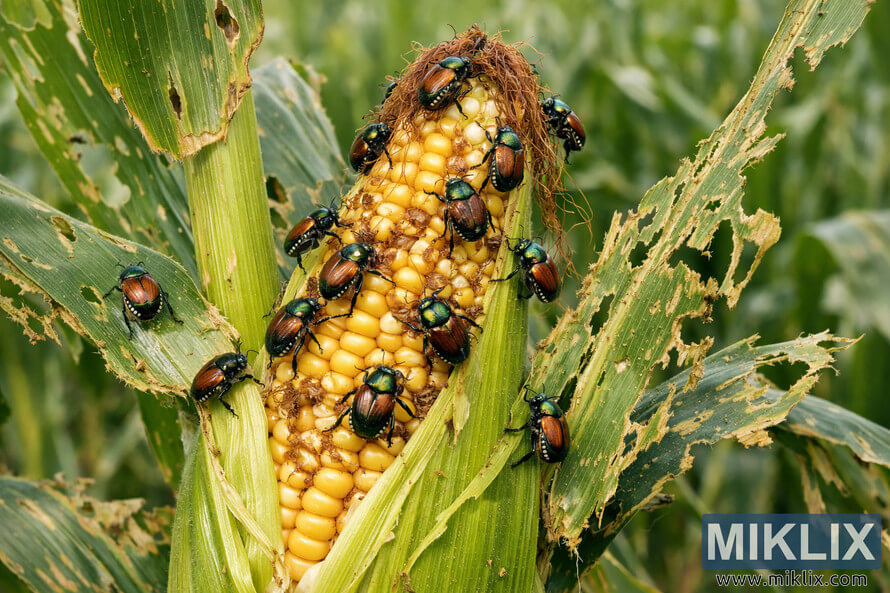
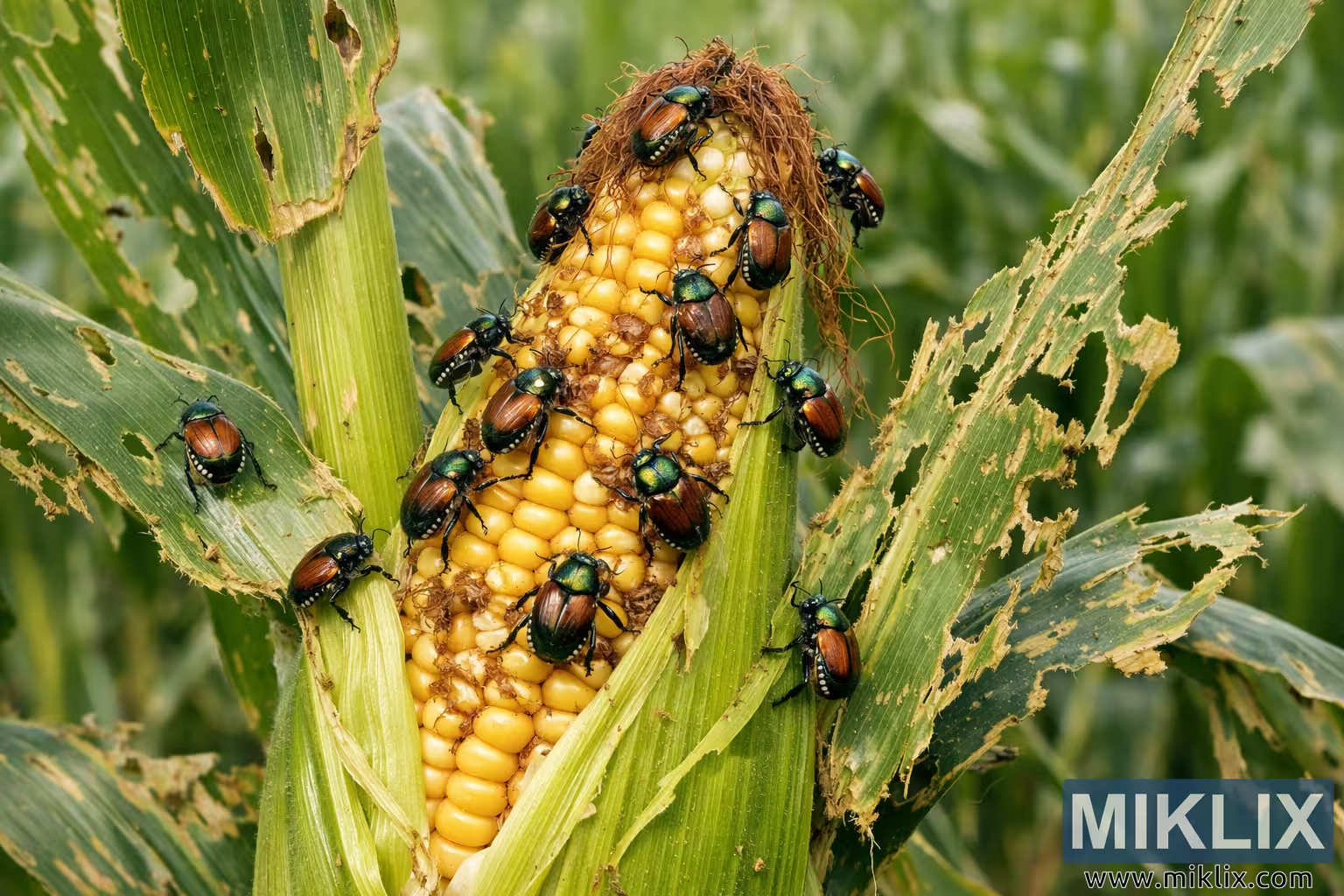
High-resolution photo showing Japanese beetles clustered on a corn ear and heavily damaged leaves in a cornfield, illustrating insect pest damage to maize crops.
Corn Plant Under Attack by Japanese Beetles
Versions disponibles de cette image
Les fichiers image disponibles au téléchargement ci-dessous sont moins compressés et de résolution plus élevée – et par conséquent de meilleure qualité – que les images intégrées aux articles et aux pages de ce site Web, qui sont davantage optimisées en termes de taille de fichier afin de réduire la consommation de bande passante.
Taille standard (1,536 x 1,024)
Grande taille (3,072 x 2,048)
Très grande taille (4,608 x 3,072)
Taille extra large (6,144 x 4,096)
Taille comiquement grande (1,048,576 x 699,051)
- Téléchargement en cours... ;-)
Description de l'image
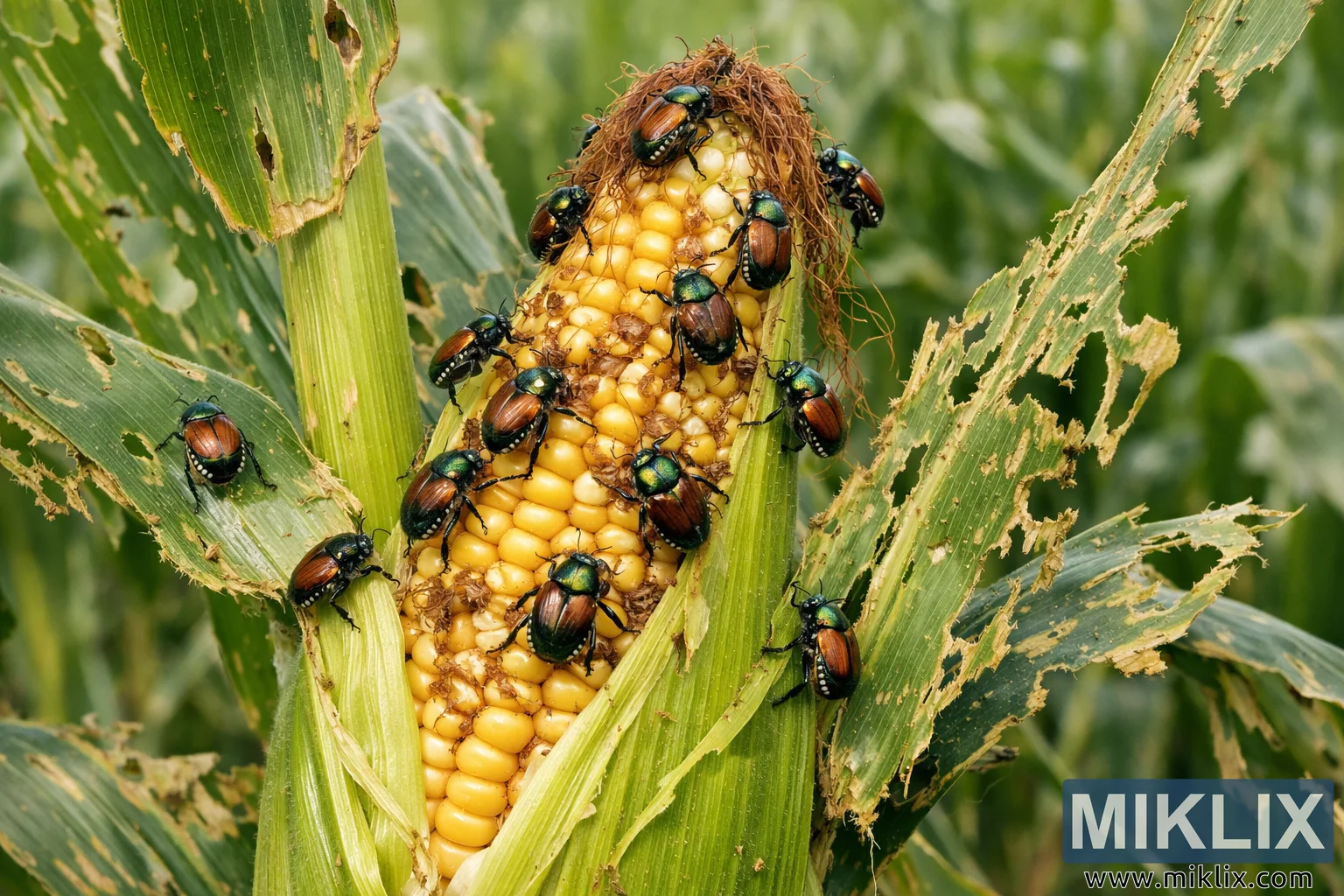
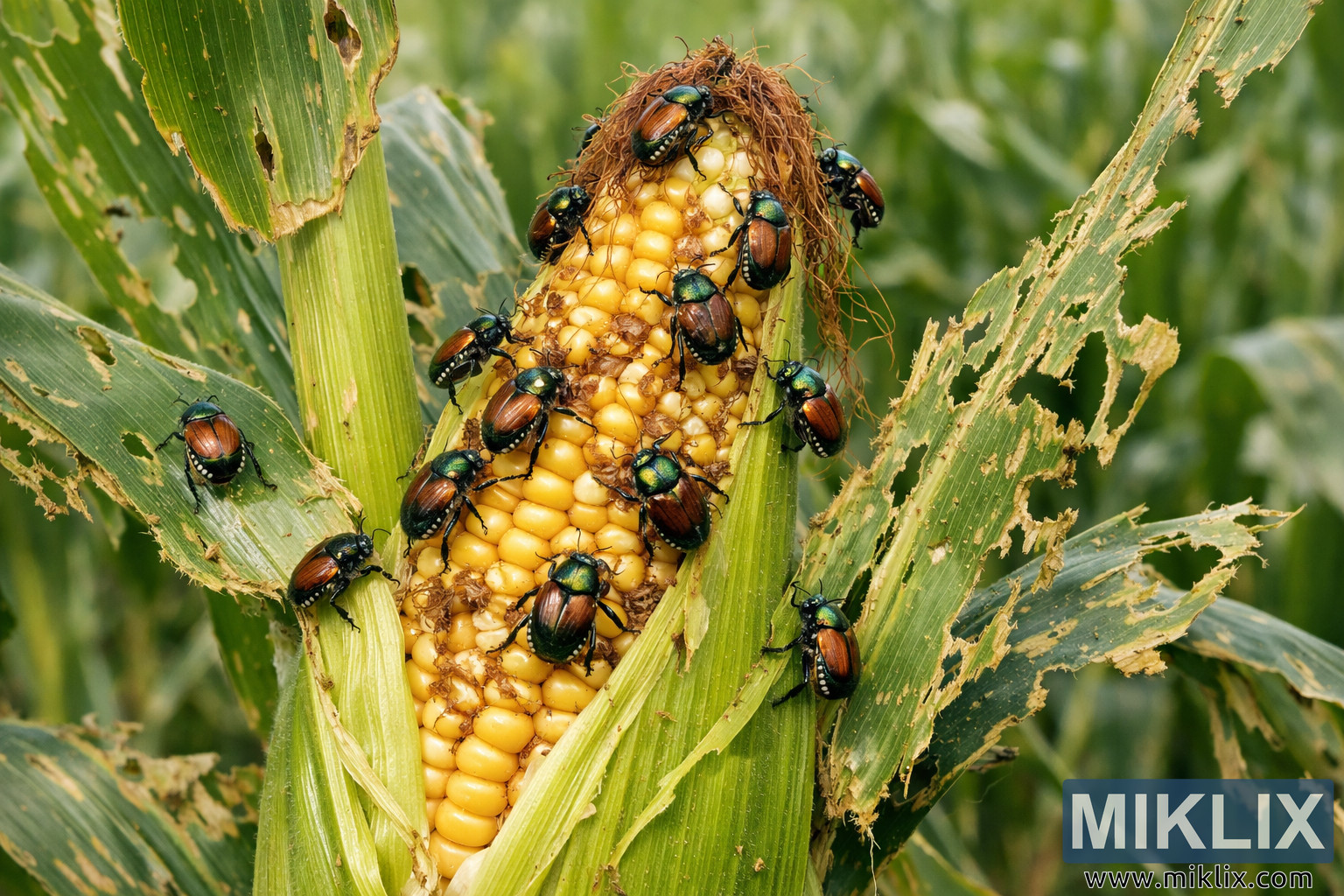
A detailed daytime photograph captures a corn plant in a cultivated field as it is heavily infested by Japanese beetles. The central focus of the image is a partially exposed ear of corn whose protective husk has opened, revealing rows of bright yellow kernels beneath a layer of tangled, browning corn silk. Numerous Japanese beetles crawl across the ear and surrounding plant surfaces. Their small oval bodies display a distinctive metallic green head and thorax paired with coppery bronze wing covers that catch the sunlight. Several beetles cluster directly on the kernels, while others cling to the silk and the torn edges of nearby leaves.
The corn leaves surrounding the ear show extensive feeding damage. Large irregular holes and thin skeletonized sections run across the leaf blades where the soft tissue has been eaten away, leaving behind only delicate veins and ragged edges. Some portions of the leaves appear shredded and papery, curling slightly from the loss of structure. The damage clearly indicates sustained insect feeding rather than a single brief attack.
The ear of corn itself shows signs of disturbance where beetles have gathered. A few kernels appear scraped or partially chewed, and bits of plant debris cling to the sticky silk around the top of the cob. The insects vary in position and orientation, with some facing upward along the ear and others sideways on the leaves, creating a sense of constant movement and activity across the plant surface.
In the background, the rest of the cornfield fades softly out of focus, forming a green, textured backdrop of tall corn stalks and leaves. This shallow depth of field isolates the damaged plant and the beetles as the primary subject while still providing environmental context. Natural daylight illuminates the scene evenly, highlighting the glossy metallic sheen of the beetles and the vivid contrast between healthy green plant tissue and the pale, torn areas where feeding has occurred.
Overall, the image conveys a clear visual example of agricultural pest pressure on maize crops. The concentration of beetles, the characteristic skeletonized leaves, and the exposed corn ear together illustrate the destructive feeding behavior associated with Japanese beetle infestations in cornfields.
L'image est liée à : Growing Corn: Your Complete Guide to Sweet Success in the Garden