
Image: Parsnip Plant Heavily Infested with Aphids
Publié :
Dernière mise à jour : 18 mars 2026 à 20 h 44 min 03 s UTC
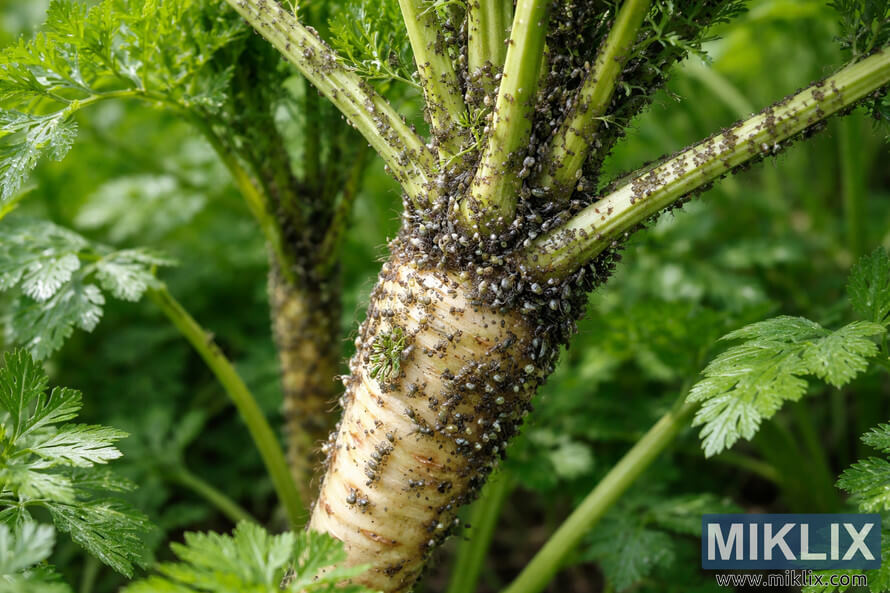
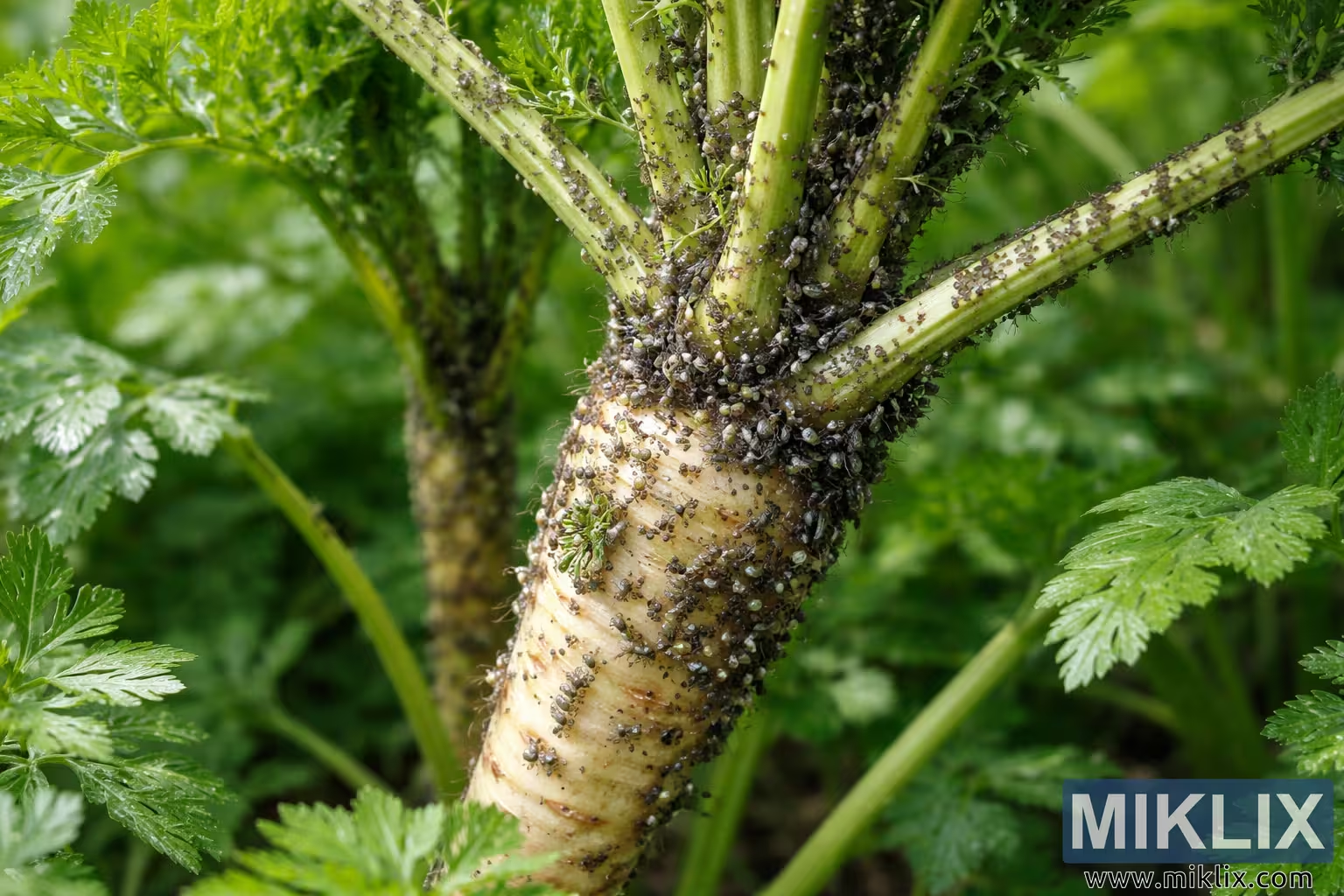
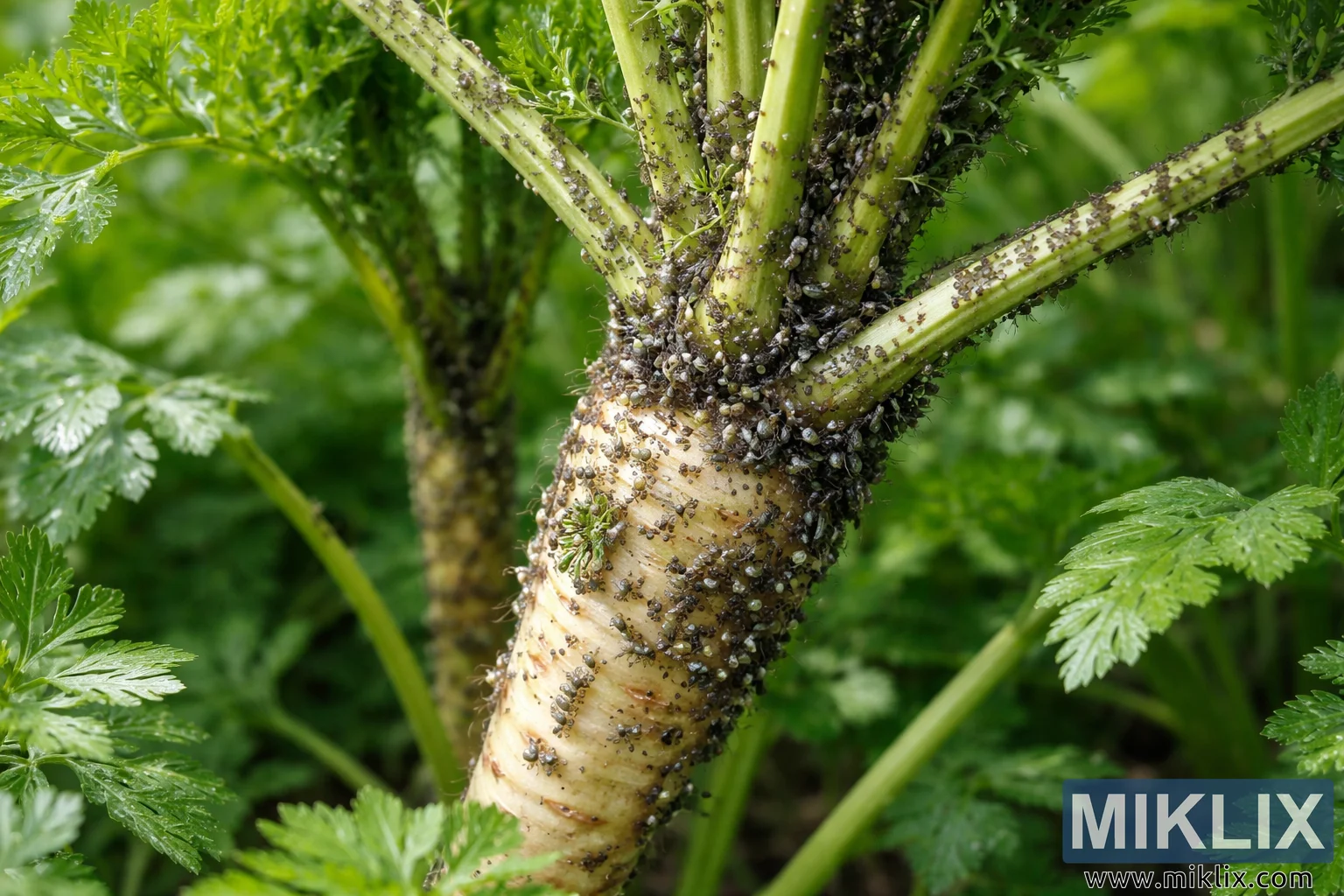
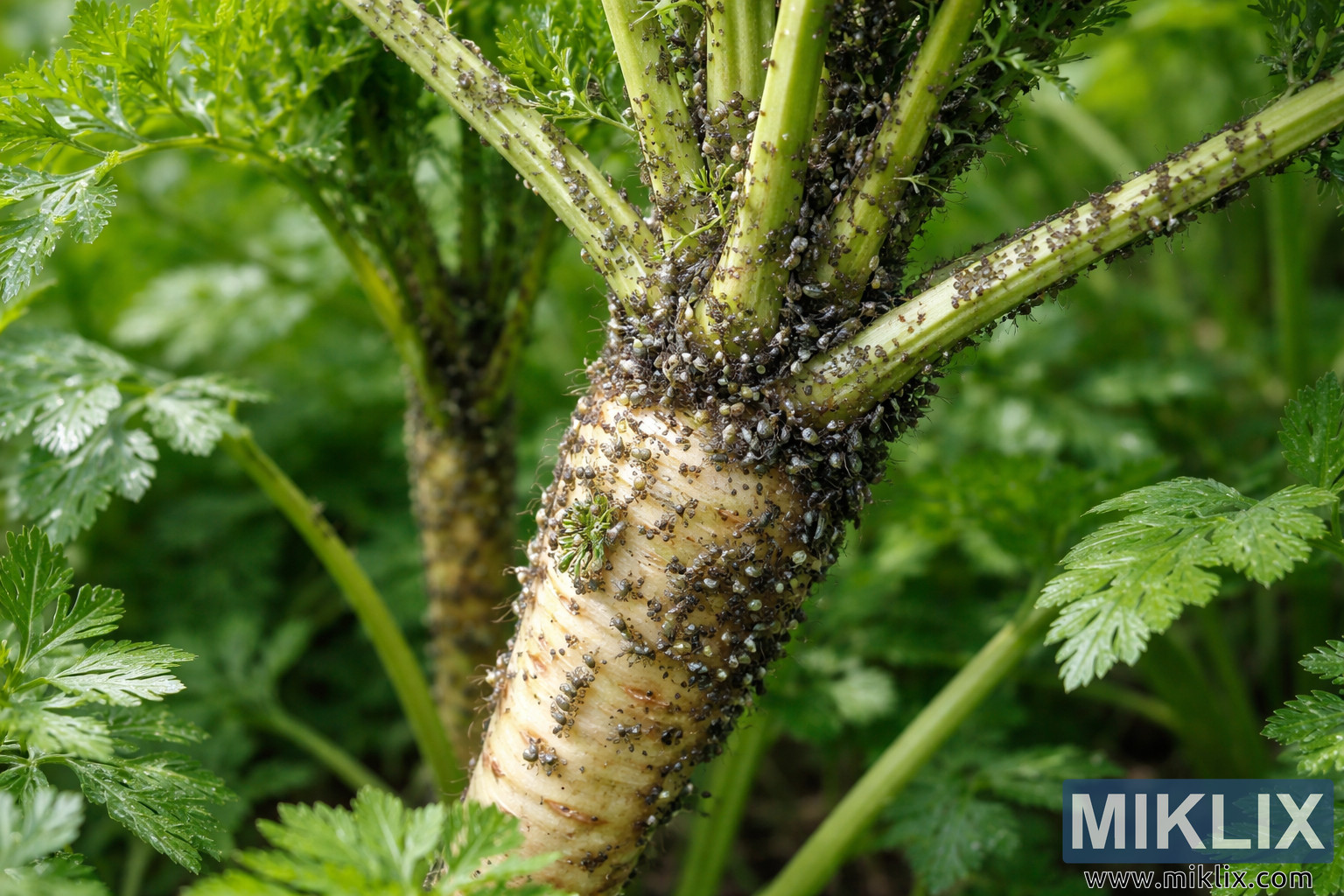
High-resolution close-up image of a parsnip plant heavily infested with aphids clustered around the stem and leaf joints, illustrating a common garden pest problem.
Parsnip Plant Heavily Infested with Aphids
Versions disponibles de cette image
Les fichiers image disponibles au téléchargement ci-dessous sont moins compressés et de résolution plus élevée – et par conséquent de meilleure qualité – que les images intégrées aux articles et aux pages de ce site Web, qui sont davantage optimisées en termes de taille de fichier afin de réduire la consommation de bande passante.
Taille standard (1,536 x 1,024)
Grande taille (3,072 x 2,048)
Très grande taille (4,608 x 3,072)
Taille extra large (6,144 x 4,096)
Taille comiquement grande (1,048,576 x 699,051)
- Téléchargement en cours... ;-)
Description de l'image
This high-resolution landscape photograph shows a detailed close-up view of a parsnip plant growing in a lush green garden environment while heavily infested with aphids. The central focus of the image is the thick, pale cream-colored parsnip root crown and the lower section of its upright stems emerging from it. The stems branch outward in several directions, forming a natural radial pattern where the leaf stalks extend from the central base. Covering much of this area are dense clusters of aphids gathered around the joints where the stems meet the crown and along the vertical ridges of the stalks.
The aphids appear in large numbers, forming dark, uneven patches across the plant surface. Individual insects can be seen clinging tightly to the plant tissues. Their bodies are small, oval, and slightly translucent, with colors ranging from dark green to almost black. Tiny legs and antennae are faintly visible on some of the insects, giving the infestation a textured, granular appearance. Many of the aphids congregate at the stem intersections, where plant sap is most accessible, creating thick bands of insects that almost encircle parts of the stalk.
The parsnip plant itself displays characteristic features of the species. The root crown is smooth and light beige, transitioning upward into sturdy green stems with subtle longitudinal grooves. From these stems extend feathery, finely divided leaves typical of parsnip foliage. The leaves spread outward into the surrounding space and appear vibrant and healthy in color despite the heavy pest presence near the base.
In the background, the garden environment is softly blurred, emphasizing the main subject through shallow depth of field. Various shades of green fill the frame, suggesting dense surrounding vegetation or neighboring plants. The lighting appears natural and diffused, likely from daylight filtering through foliage. This illumination highlights the glossy surfaces of the stems and reveals tiny reflective droplets of honeydew, a sticky substance secreted by aphids as they feed on plant sap.
The composition places the infected portion of the plant prominently in the foreground, drawing attention to the ecological interaction between plant and pest. The high level of detail allows viewers to clearly observe the scale and severity of the infestation, making the image useful for educational or agricultural contexts where aphid damage on root vegetables and garden crops is being illustrated.
L'image est liée à : Growing Parsnips: Your Complete Guide to Sweet, Homegrown Roots