
Image: Healthy vs Pest-Damaged Radish Plant Comparison
Publié :
Dernière mise à jour : 31 mars 2026 à 20 h 44 min 09 s UTC
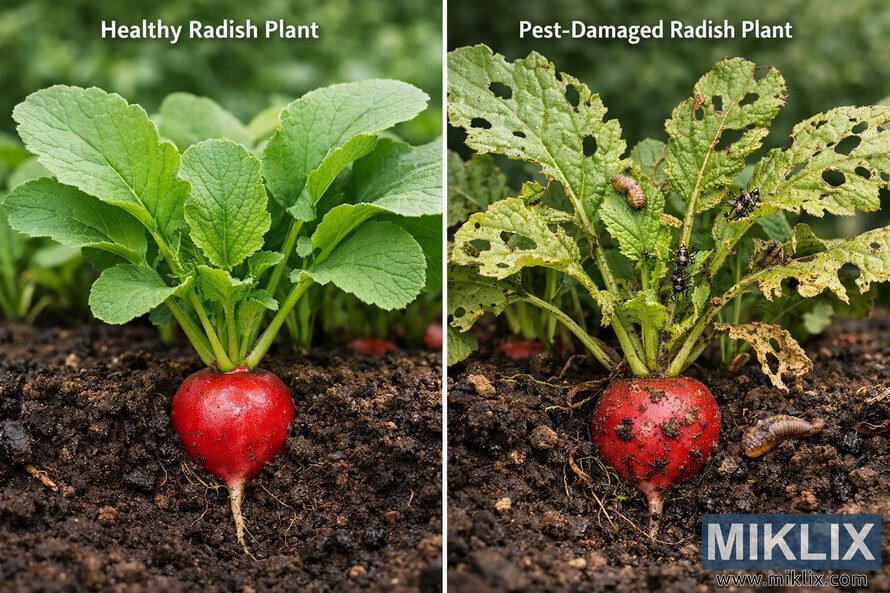
Visual comparison of a healthy radish plant and a pest-damaged radish plant, highlighting leaf damage, insects, and reduced plant health caused by garden pests.
Healthy vs Pest-Damaged Radish Plant Comparison
Versions disponibles de cette image
Les fichiers image disponibles au téléchargement ci-dessous sont moins compressés et de résolution plus élevée – et par conséquent de meilleure qualité – que les images intégrées aux articles et aux pages de ce site Web, qui sont davantage optimisées en termes de taille de fichier afin de réduire la consommation de bande passante.
Taille standard (1,536 x 1,024)
Grande taille (3,072 x 2,048)
Très grande taille (4,608 x 3,072)
Taille extra large (6,144 x 4,096)
Taille comiquement grande (1,048,576 x 699,051)
- Téléchargement en cours... ;-)
Description de l'image
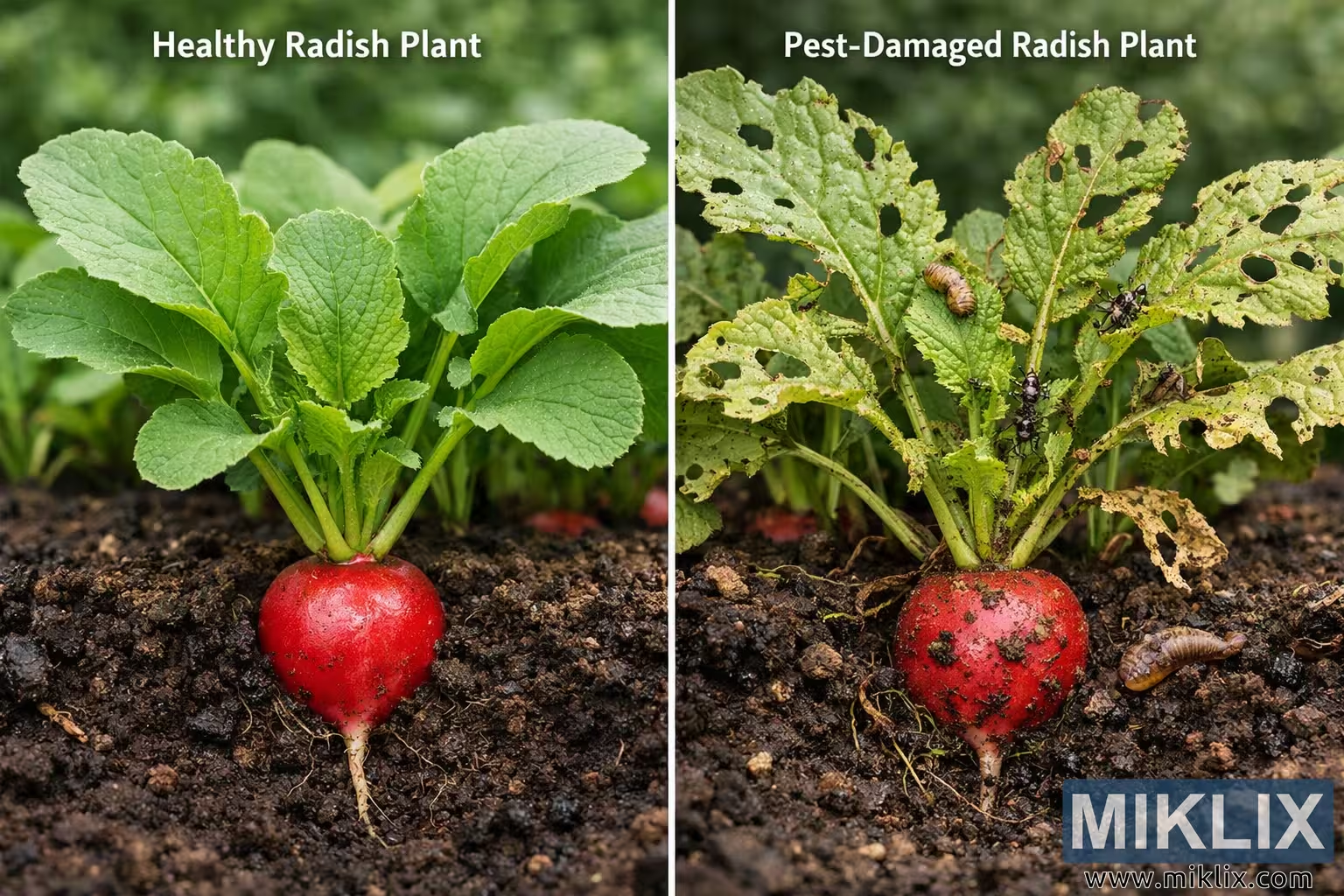
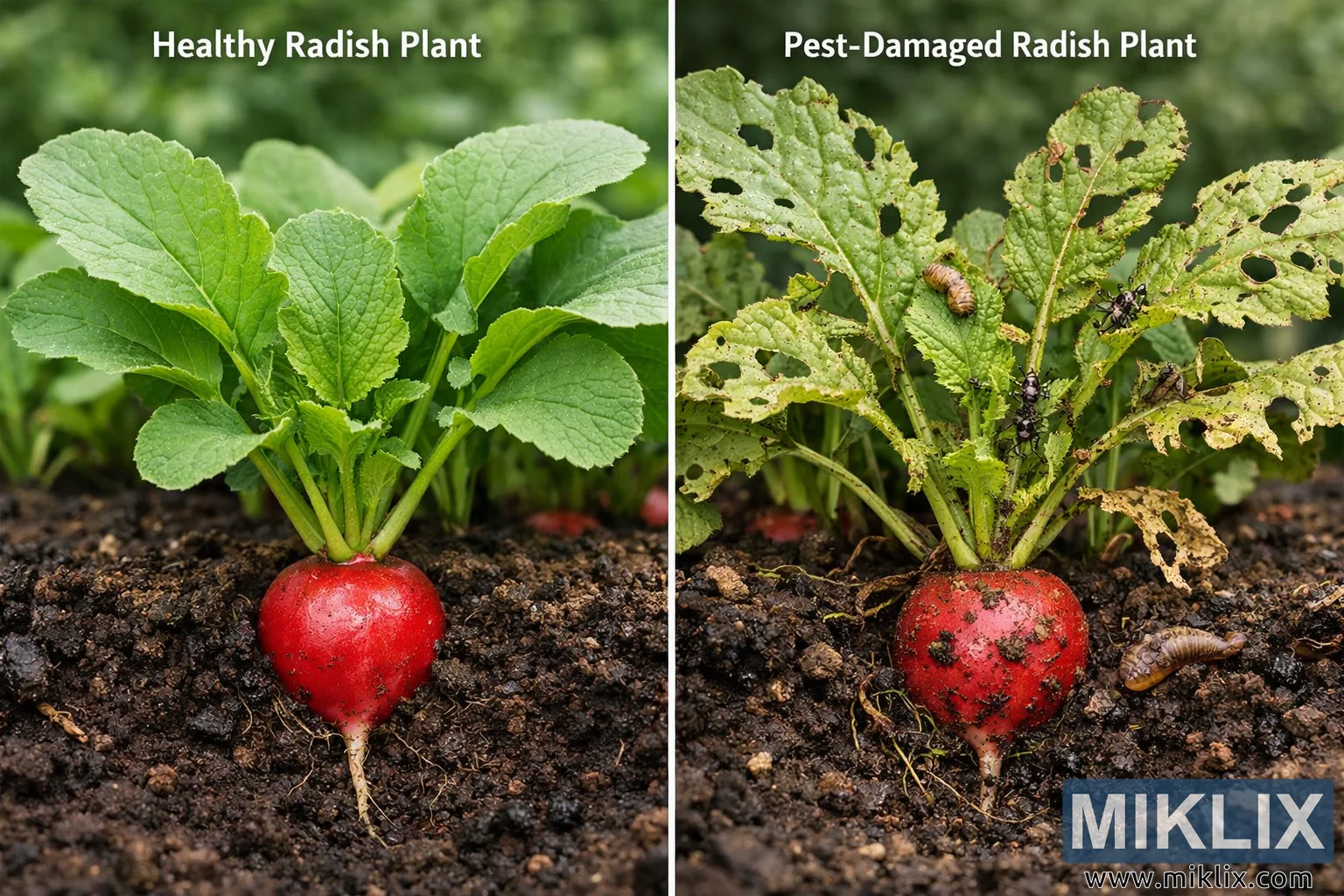
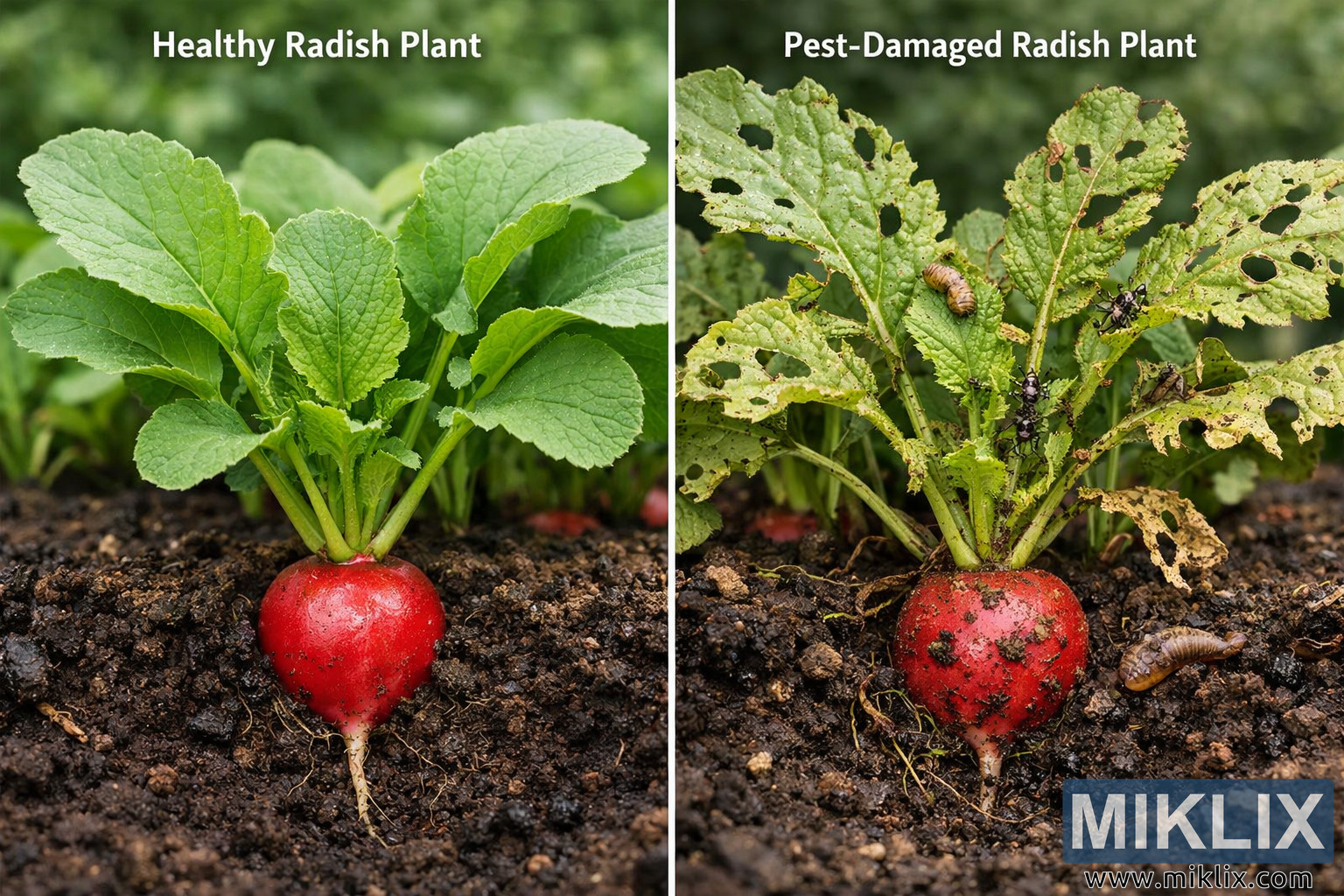
The image presents a clear side-by-side comparison of two radish plants growing in soil, designed to illustrate the visual differences between a healthy plant and one that has been damaged by pests. The composition is divided vertically into two equal halves, separated by a thin white line, making it easy to compare the conditions of the plants. The left side of the image is labeled "Healthy Radish Plant" and the right side is labeled "Pest-Damaged Radish Plant." Both plants are shown from a close, ground-level perspective with the radish root partially visible above the soil surface.
On the left side, the healthy radish plant appears vibrant and robust. The plant features several broad, bright green leaves that look thick, smooth, and intact. The leaf surfaces appear slightly textured with clearly visible veins, and their edges are clean without any signs of holes, discoloration, or damage. The stems are firm and upright, supporting the leaves in a symmetrical cluster. Beneath the foliage, a bright red radish bulb emerges from dark, moist soil. The radish root is smooth and rounded, with a glossy surface and a small white taproot extending downward into the soil. The surrounding soil looks rich and well-structured, reinforcing the impression of a thriving plant growing in healthy garden conditions. The lighting on this side is even and natural, emphasizing the plant’s vitality and the lush green color of the leaves.
On the right side, the pest-damaged radish plant shows clear signs of stress and infestation. The leaves appear pale green to yellowish and are visibly damaged with numerous irregular holes and ragged edges. Several leaves are partially eaten, and the overall foliage looks thinner and less vigorous compared to the healthy plant. Small insects and larvae can be seen on the leaves and stems, suggesting an active pest problem. The stems appear weaker and slightly bent, contributing to the plant’s unhealthy appearance. The radish root beneath the damaged foliage is still red but appears dirtier and less smooth, with soil clinging to its surface. Nearby on the soil surface, a small larva or grub is visible, further illustrating the presence of pests affecting the plant.
Overall, the image clearly contrasts plant health and pest damage in a garden setting. The healthy side demonstrates what a strong, well-growing radish plant should look like, while the damaged side highlights the typical symptoms caused by insect feeding, including perforated leaves, discoloration, and reduced vigor. The side-by-side format makes the visual differences immediately recognizable and educational for gardeners, farmers, or anyone learning to identify pest damage on vegetable crops.
L'image est liée à : How to Grow Radishes: Your Complete Beginner's Guide to a Perfect Harvest