
Image: Healthy Okra Plant with Natural Pest Management in Garden
Publié :
Dernière mise à jour : 17 mars 2026 à 21 h 38 min 56 s UTC
High-resolution image of a thriving okra plant with green pods, yellow flower, and beneficial insects demonstrating natural pest management in a garden setting.
Healthy Okra Plant with Natural Pest Management in Garden
Versions disponibles de cette image
Les fichiers image disponibles au téléchargement ci-dessous sont moins compressés et de résolution plus élevée – et par conséquent de meilleure qualité – que les images intégrées aux articles et aux pages de ce site Web, qui sont davantage optimisées en termes de taille de fichier afin de réduire la consommation de bande passante.
Taille standard (1,536 x 1,024)

Grande taille (3,072 x 2,048)
Très grande taille (4,608 x 3,072)
Taille extra large (6,144 x 4,096)
Taille comiquement grande (1,048,576 x 699,051)
- Téléchargement en cours... ;-)
Description de l'image
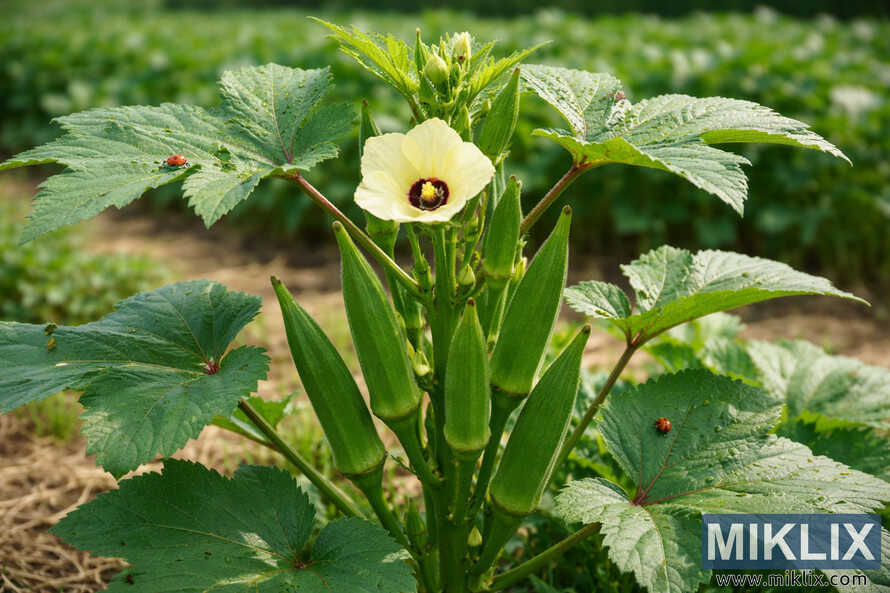
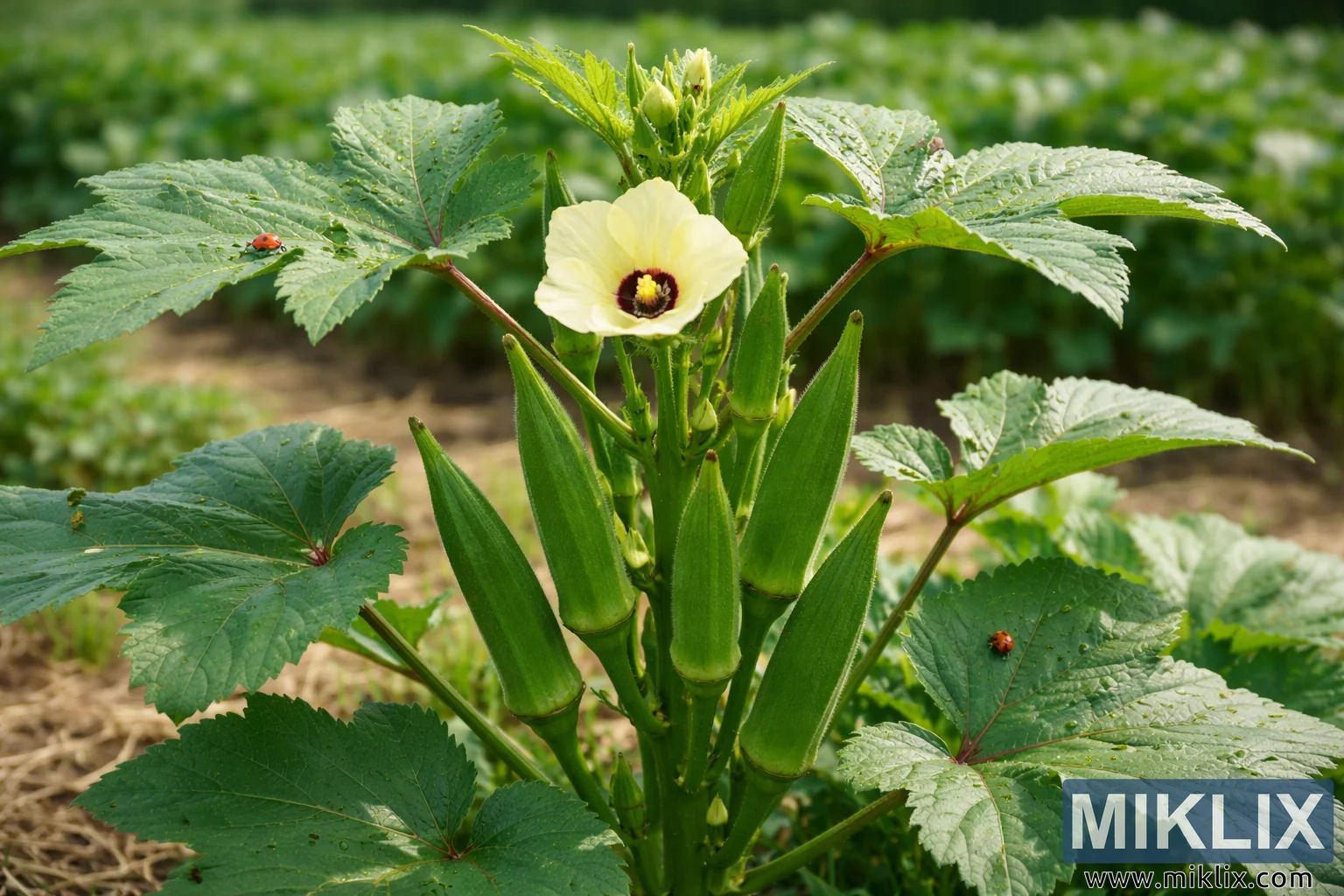
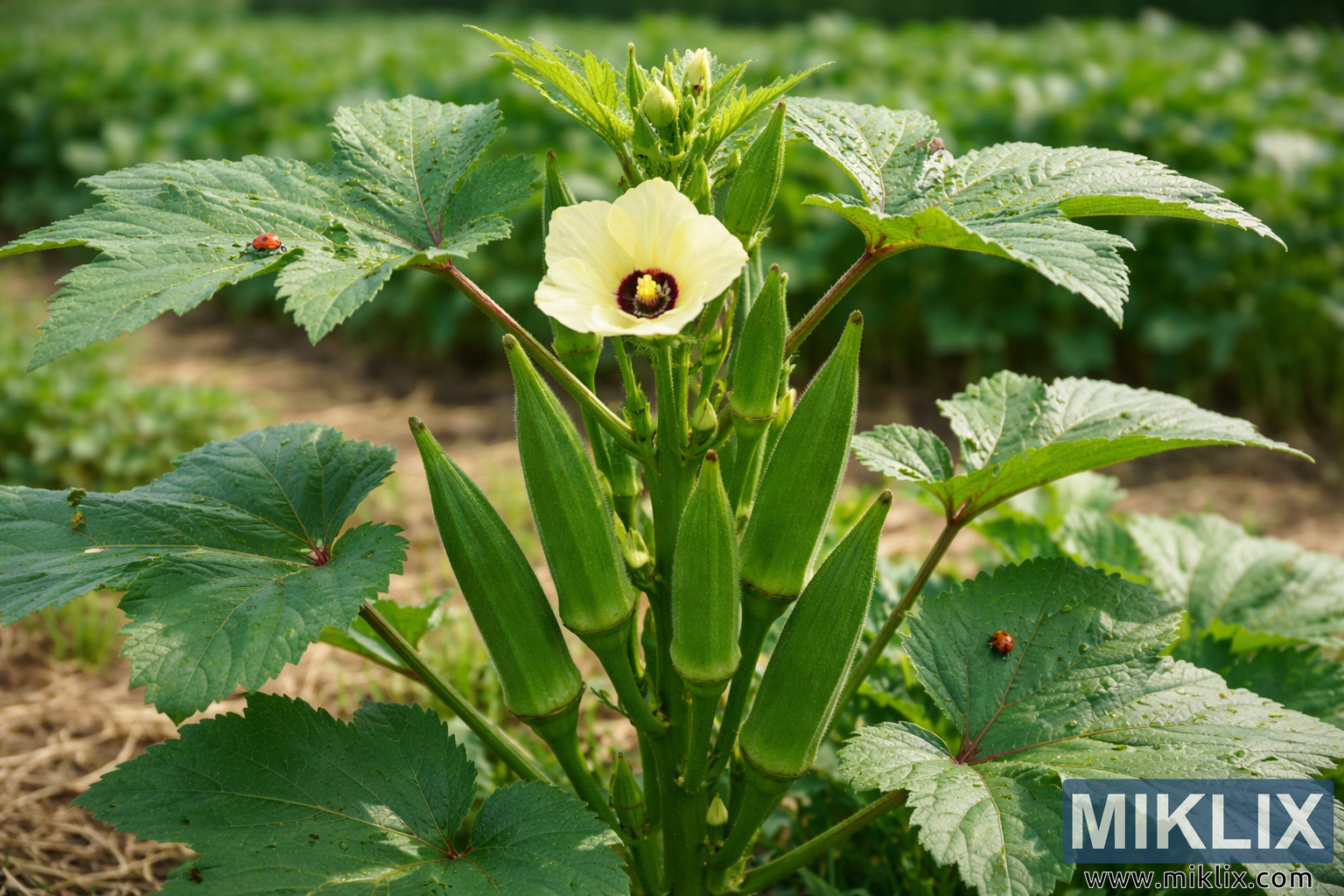
This high-resolution landscape photograph presents a thriving okra plant growing in a carefully maintained garden bed. The plant stands upright at the center of the frame, displaying vibrant green leaves with visible veins and slightly serrated edges. Several mature okra pods extend upward from thick stems, their smooth ridged surfaces catching the sunlight. Near the top of the plant, a delicate pale-yellow okra flower blooms with a deep maroon center, signaling healthy growth and active fruit production.
The foliage appears lush and well-hydrated, with tiny droplets of moisture clinging to the leaves and stems, suggesting early morning conditions or recent watering. The leaves are broad and sturdy, branching symmetrically from the main stalk. Their rich green color indicates strong plant health and proper nutrient balance. The structure of the plant is dense but organized, allowing sunlight to filter through the canopy and illuminate the developing pods.
Several beneficial insects can be seen on the leaves, illustrating a natural pest management ecosystem. Bright red ladybugs with black spots rest on different parts of the foliage, while a delicate green lacewing and a small praying mantis are visible among the stems. These insects are known predators of common garden pests such as aphids, and their presence suggests an environmentally friendly approach to crop protection. Instead of chemical pesticides, the garden appears to rely on natural biological control to maintain plant health.
The background of the image is softly blurred, revealing rows of additional plants growing in the garden. The soil around the base of the okra plant is covered with light organic mulch, which helps retain moisture and suppress weeds. Sunlight filters through the surrounding vegetation, creating a warm, natural atmosphere that emphasizes the vitality of the plant.
Overall, the image captures a moment of healthy growth within a sustainable garden environment. The combination of flourishing okra pods, vibrant leaves, a blooming flower, and beneficial insects highlights the balance between cultivation and ecological pest management. The photograph serves as a visual example of successful home gardening practices that promote plant health, biodiversity, and natural pest control.
L'image est liée à : The Complete Guide to Growing Okra in Your Home Garden