
Image: Health Benefits of Fresh Rhubarb Stalks Infographic
Publié :
Dernière mise à jour : 7 juin 2026 à 19 h 13 min 23 s UTC
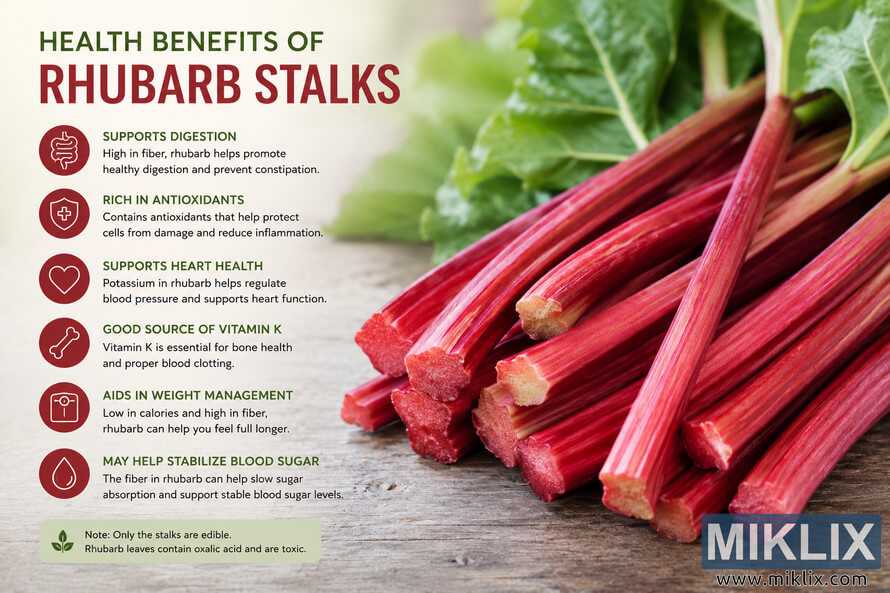
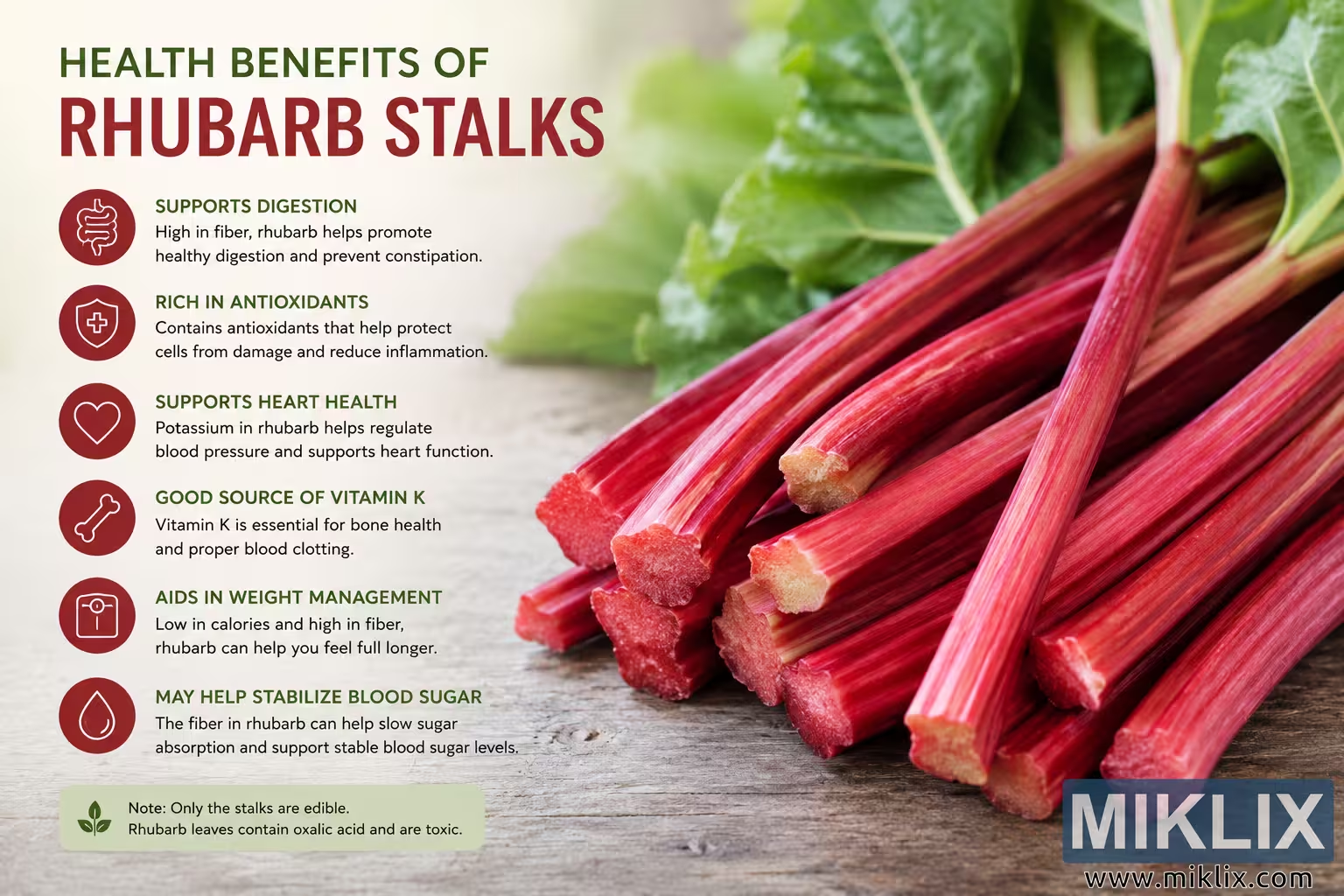
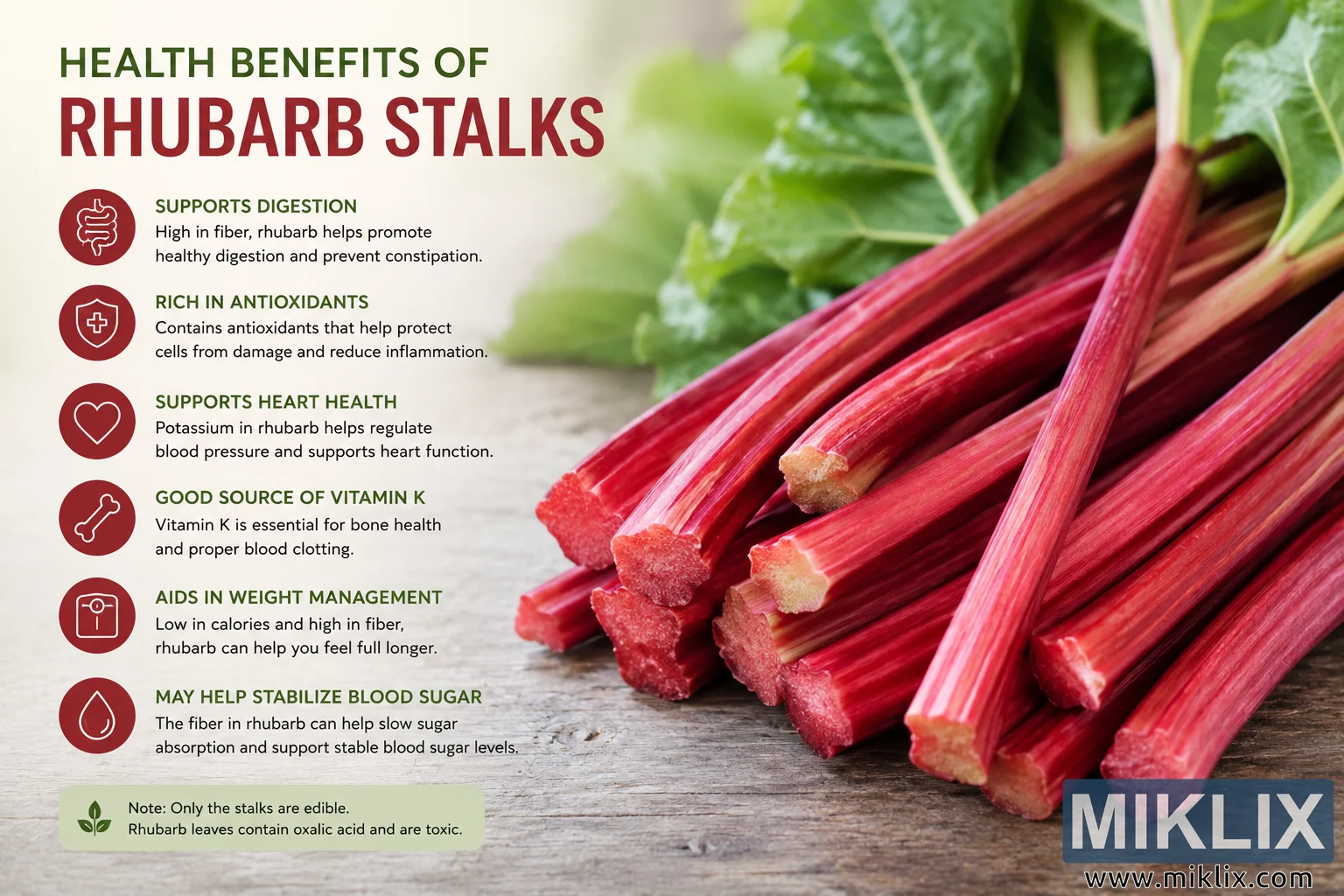
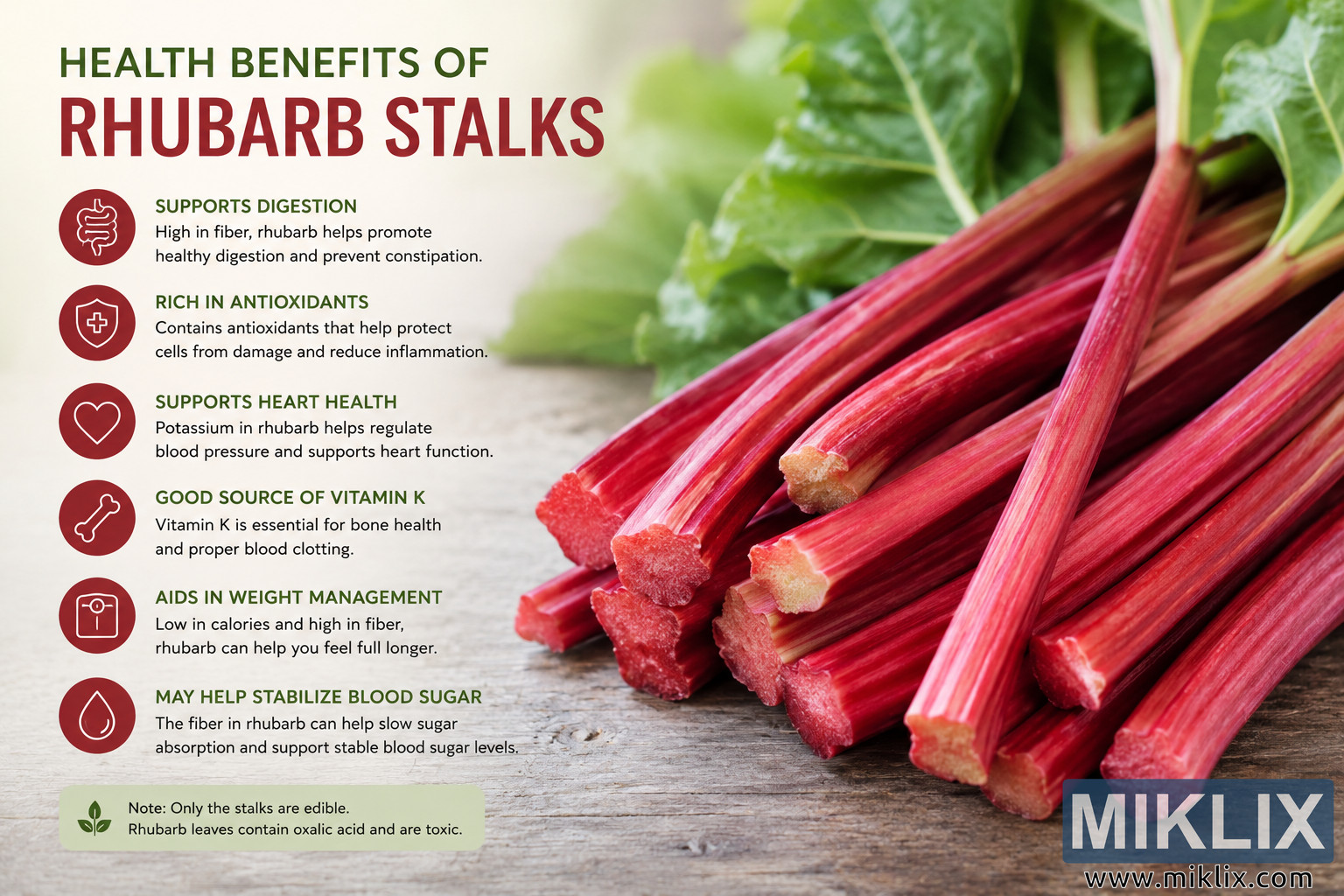
Discover the health benefits of fresh rhubarb stalks with this vibrant infographic-style image featuring red rhubarb on a rustic wooden table. Learn about digestion support, antioxidants, heart health, vitamin K, weight management, and blood sugar balance while noting the important safety warning about toxic rhubarb leaves.
Health Benefits of Fresh Rhubarb Stalks Infographic
Versions disponibles de cette image
Les fichiers image disponibles au téléchargement ci-dessous sont moins compressés et de résolution plus élevée – et par conséquent de meilleure qualité – que les images intégrées aux articles et aux pages de ce site Web, qui sont davantage optimisées en termes de taille de fichier afin de réduire la consommation de bande passante.
Taille standard (1,536 x 1,024)
Grande taille (3,072 x 2,048)
Très grande taille (4,608 x 3,072)
Taille extra large (6,144 x 4,096)
Taille comiquement grande (1,048,576 x 699,051)
- Téléchargement en cours... ;-)
Description de l'image
This high-resolution landscape infographic presents a visually rich and educational composition centered around fresh rhubarb stalks and their nutritional advantages. The image is divided into two primary sections, creating a balanced and professional layout suitable for use in food blogs, health websites, recipe articles, nutrition guides, wellness campaigns, or educational materials.
On the right side of the image, a large cluster of freshly harvested rhubarb stalks dominates the composition. The stalks are vivid shades of crimson red, deep pink, and subtle magenta, with glossy surfaces that reflect natural light and emphasize freshness. Some stalks display gentle color gradients transitioning from pale pink near the ends to darker ruby tones toward the center. The cut ends reveal fibrous textures and moist interiors, reinforcing the realistic appearance of recently harvested produce. Several broad green rhubarb leaves remain attached near the top, adding contrast and natural framing to the arrangement. The leaves appear slightly blurred in the background due to a shallow depth-of-field effect, which helps draw attention to the foreground stalks.
The rhubarb rests on a weathered rustic wooden table with visible grain patterns, scratches, and natural imperfections. The warm earthy tones of the wood create a cozy farm-to-table atmosphere and complement the vibrant reds and greens of the produce. Soft natural lighting enters from the upper left area of the image, producing subtle highlights and shadows that add depth and realism without appearing overly dramatic. The background fades into a soft green blur, suggesting a garden or outdoor environment while keeping the main focus on the rhubarb.
The left side of the infographic contains a clean and organized informational panel with a light neutral background that improves readability. At the top, a bold uppercase headline reads “HEALTH BENEFITS OF RHUBARB STALKS.” The typography uses dark green and rich red colors that visually connect to the rhubarb theme. The large title creates immediate visual impact and establishes the educational purpose of the graphic.
Beneath the headline, the infographic presents multiple health-related points arranged vertically in clearly separated sections. Each section includes a circular icon with a matching red background and white symbol, followed by descriptive text. The icons visually reinforce the corresponding wellness topics and create a polished infographic aesthetic.
One section highlights digestive support, explaining that rhubarb is high in fiber and may help promote healthy digestion and reduce constipation. Another section focuses on antioxidants, noting that rhubarb contains compounds that help protect cells from oxidative stress and inflammation. Additional sections describe support for heart health through potassium content, vitamin K contributions for bone strength and blood clotting, and potential benefits for weight management because rhubarb is naturally low in calories while being filling due to fiber.
A final informational point discusses blood sugar support, explaining that the fiber in rhubarb may help slow sugar absorption and contribute to more stable blood sugar levels. The text throughout the infographic is concise, educational, and easy to scan, making the design suitable for quick online reading or social sharing.
At the bottom left corner, a highlighted safety note appears inside a pale green rounded rectangle accompanied by a small leaf icon. This note explains that only the stalks are edible and warns that rhubarb leaves contain oxalic acid and are toxic if consumed. The inclusion of this warning enhances the educational credibility of the infographic and provides important food safety context.
Overall, the image combines realistic food photography with modern infographic design elements. The color palette is dominated by natural reds, greens, creams, and warm wood tones, creating a healthy and organic visual identity. The composition feels balanced, professional, and inviting while clearly communicating the nutritional and culinary appeal of fresh rhubarb stalks.
L'image est liée à : A Guide to the Health Benefits of Rhubarb