
Image: Rhubarb Antioxidants Research for Cancer Prevention in a Modern Laboratory
Publié :
Dernière mise à jour : 7 juin 2026 à 19 h 13 min 23 s UTC
High-resolution laboratory image showing rhubarb antioxidant research related to cancer prevention, including fresh rhubarb samples, scientific equipment, microscope analysis, and educational presentation materials in a clinical environment.
Rhubarb Antioxidants Research for Cancer Prevention in a Modern Laboratory
Versions disponibles de cette image
Les fichiers image disponibles au téléchargement ci-dessous sont moins compressés et de résolution plus élevée – et par conséquent de meilleure qualité – que les images intégrées aux articles et aux pages de ce site Web, qui sont davantage optimisées en termes de taille de fichier afin de réduire la consommation de bande passante.
Taille standard (1,536 x 1,024)
Grande taille (3,072 x 2,048)
Très grande taille (4,608 x 3,072)
Taille extra large (6,144 x 4,096)
Taille comiquement grande (1,048,576 x 699,051)
- Téléchargement en cours... ;-)
Description de l'image
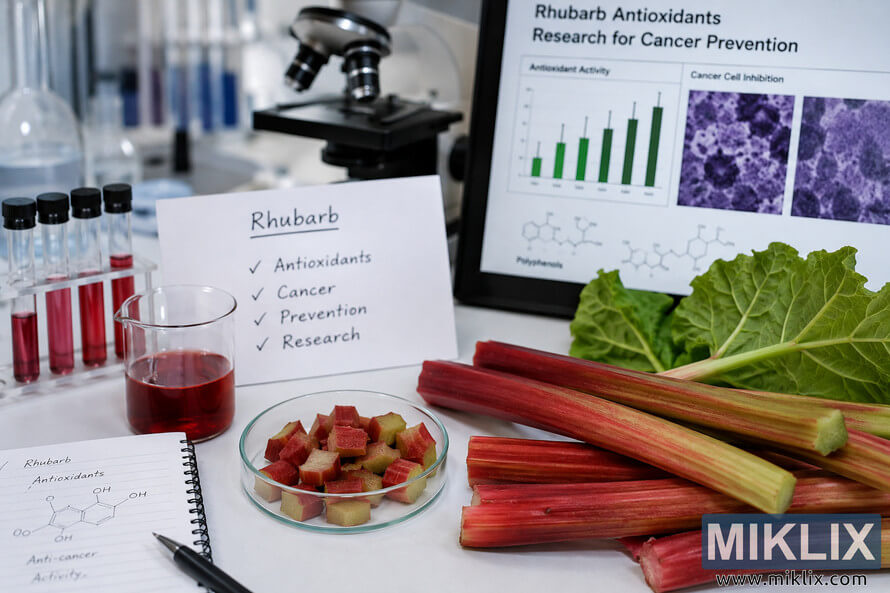
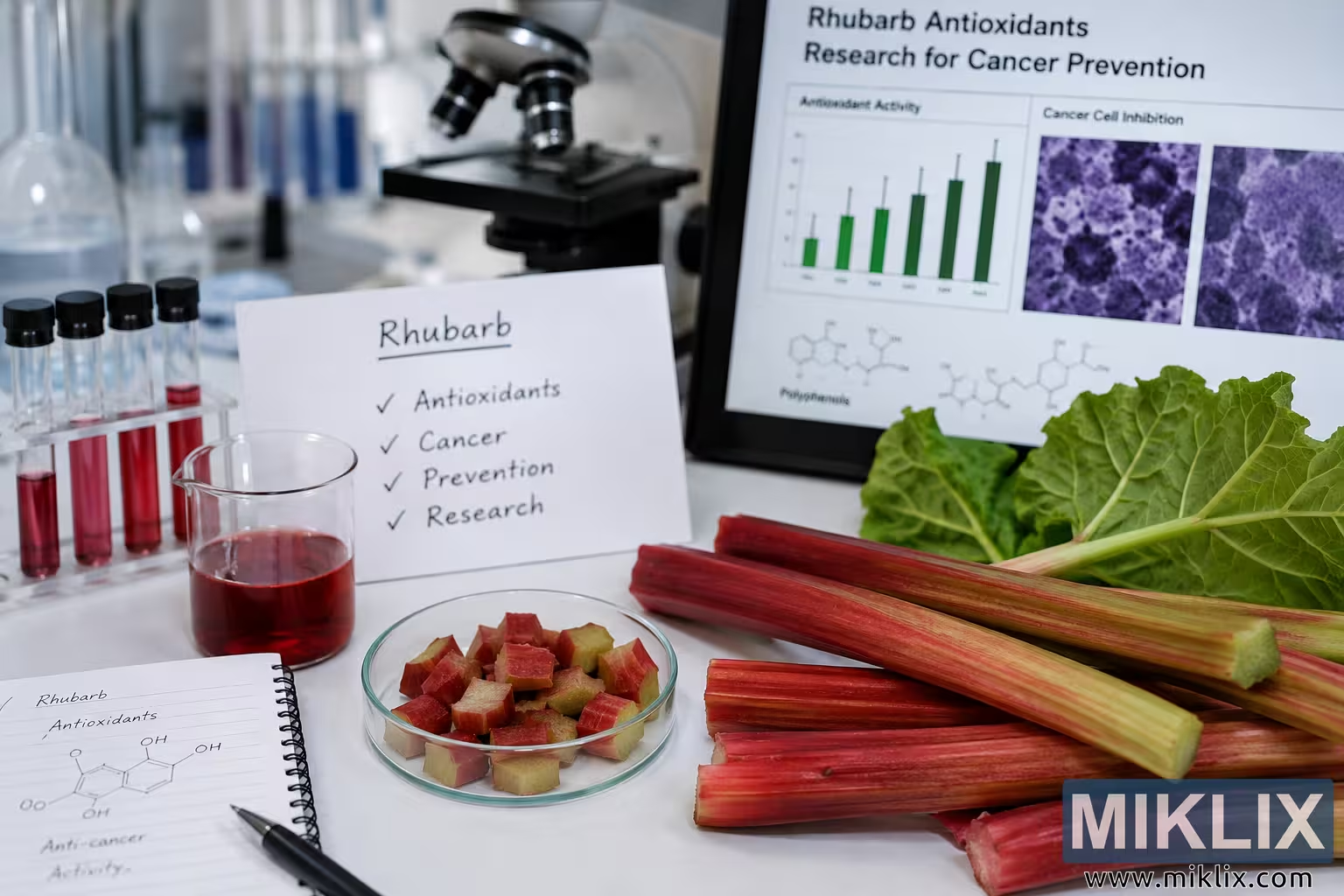
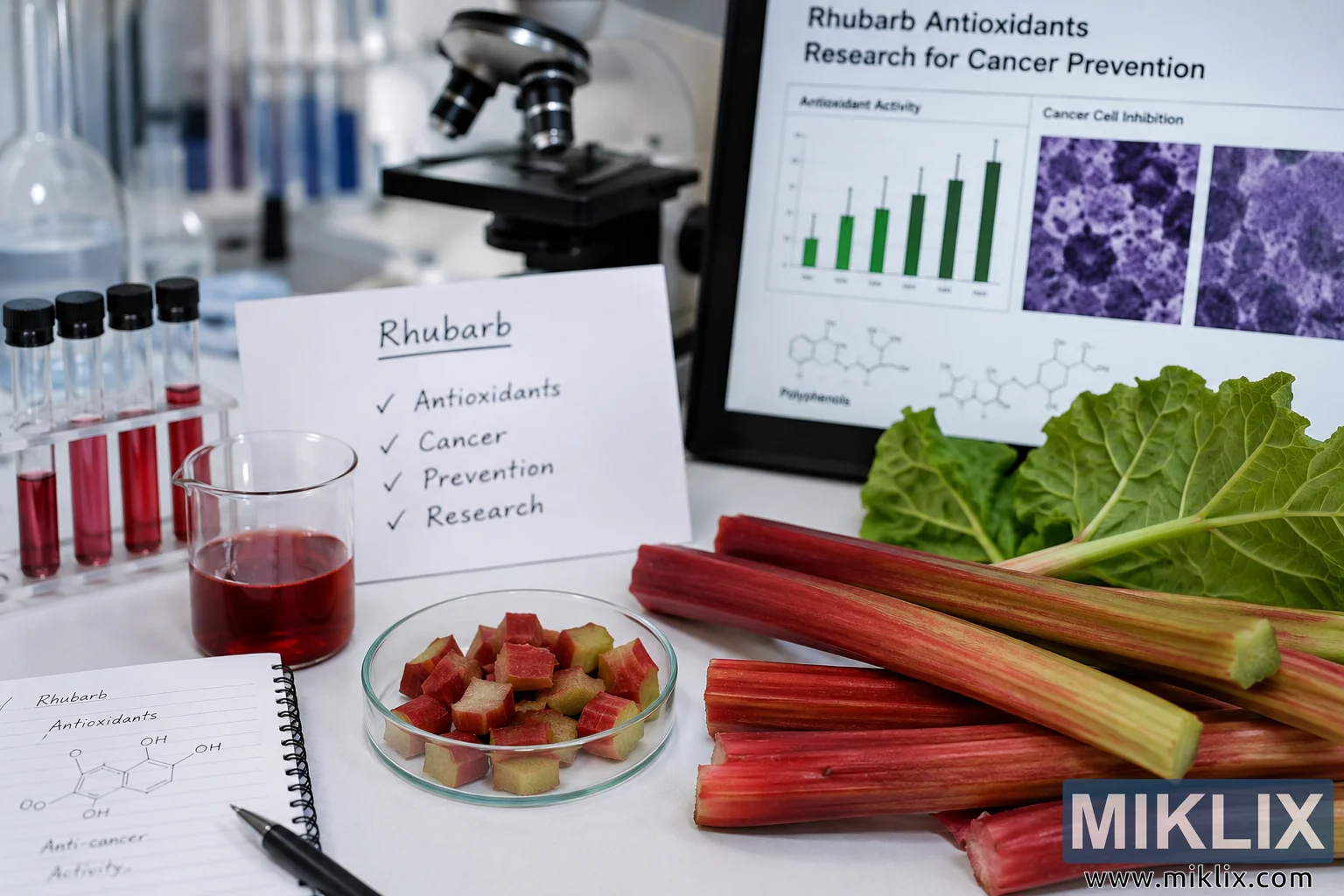
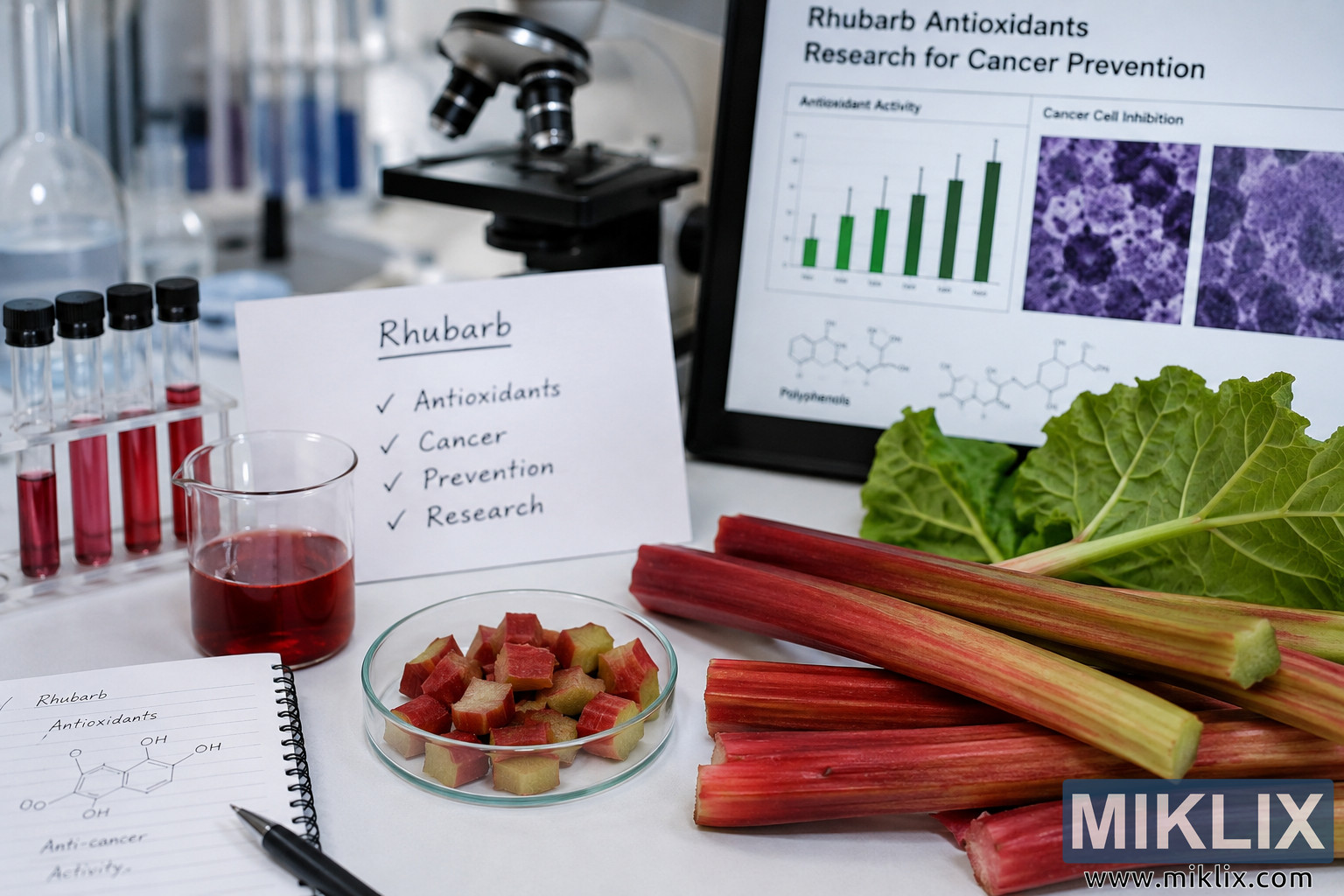
A highly detailed, landscape-oriented scientific laboratory scene focused on rhubarb antioxidant research and its potential role in cancer prevention. The image presents a clean and modern clinical research environment illuminated with soft natural and artificial laboratory lighting, creating a professional and educational atmosphere. In the foreground, several freshly harvested rhubarb stalks with vibrant red and green coloration are arranged neatly across a white laboratory table. The rhubarb appears fresh, textured, and realistic, with visible fibrous surfaces and subtle natural imperfections that emphasize authenticity and botanical detail.
Adjacent to the rhubarb stalks is a shallow glass petri dish containing uniformly diced rhubarb pieces prepared for experimental analysis. The diced samples display varying shades of crimson, pink, and pale green, visually reinforcing the concept of plant-based nutritional research. Nearby, a laboratory beaker filled with a translucent reddish liquid suggests an extracted rhubarb compound or antioxidant solution being evaluated for scientific study. Several capped laboratory test tubes positioned in a transparent rack contain similar red-toned samples, adding to the impression of active biochemical experimentation.
Toward the left side of the composition, a spiral-bound scientific notebook rests partially open on the laboratory table. The notebook contains hand-drawn molecular sketches and handwritten annotations referencing antioxidant compounds and anti-cancer activity. A dark laboratory pen lies across the notebook, implying ongoing documentation and active research analysis. The handwritten notes contribute a human and investigative element to the otherwise sterile environment.
At the center of the image, a clean white information card prominently displays the word “Rhubarb” along with a checklist of related research topics, including antioxidants, cancer prevention, and scientific study. The card is positioned upright and slightly angled toward the viewer, acting as a focal point that visually connects the fresh botanical samples with the surrounding laboratory environment.
In the background, a modern microscope with black and metallic components is positioned slightly out of focus, symbolizing microscopic examination and advanced scientific investigation. Behind the microscope, laboratory glassware and blurred scientific equipment create depth and realism while maintaining emphasis on the foreground research materials. The soft depth-of-field effect helps guide attention toward the rhubarb samples and educational content.
On the right side of the composition, a large digital presentation screen or framed scientific display contains educational charts and imagery related to rhubarb antioxidant research for cancer prevention. The display includes graphical representations of antioxidant activity levels and cellular inhibition studies, alongside stylized microscopic imagery in shades of purple and violet. Molecular diagrams and analytical graphics further reinforce the scientific and educational context of the scene.
Fresh green rhubarb leaves partially extend into the composition from the right side, adding natural texture and visual balance. Their broad organic shapes contrast with the clean geometric forms of the laboratory tools and presentation materials. The combination of natural plant elements and advanced scientific instruments visually communicates the intersection of nutrition, plant science, oncology research, and preventive healthcare.
The overall color palette combines crisp whites, clinical grays, deep reds, and vibrant greens, producing a balanced and visually engaging composition suitable for educational articles, health research publications, scientific blogs, medical presentations, wellness campaigns, or nutritional studies. The atmosphere conveys professionalism, innovation, and optimism surrounding natural antioxidant research and future cancer prevention possibilities. The image contains no commercial branding, logos, or identifiable corporate products, maintaining a neutral and universally applicable scientific presentation.
L'image est liée à : A Guide to the Health Benefits of Rhubarb