
Image: Quality Control Laboratory Testing Wheatgrass Products
Publié :
Dernière mise à jour : 16 juin 2026 à 14 h 09 min 04 s UTC
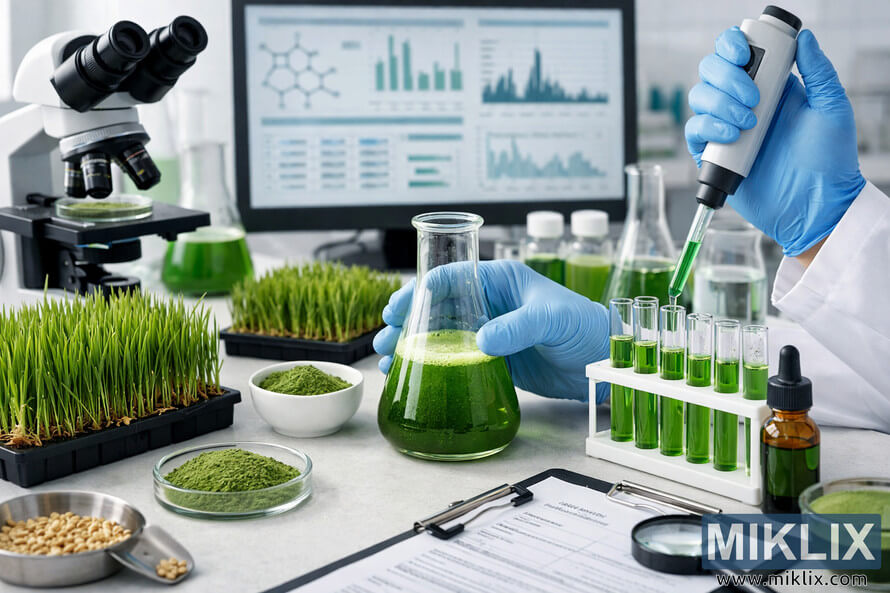
High-resolution image of a quality control laboratory testing wheatgrass products, featuring scientists analyzing samples with microscopes, test tubes, and computer data displays.
Quality Control Laboratory Testing Wheatgrass Products
Versions disponibles de cette image
Les fichiers image disponibles au téléchargement ci-dessous sont moins compressés et de résolution plus élevée – et par conséquent de meilleure qualité – que les images intégrées aux articles et aux pages de ce site Web, qui sont davantage optimisées en termes de taille de fichier afin de réduire la consommation de bande passante.
Taille standard (1,536 x 1,024)
Grande taille (3,072 x 2,048)
Très grande taille (4,608 x 3,072)
Taille extra large (6,144 x 4,096)
Taille comiquement grande (1,048,576 x 699,051)
- Téléchargement en cours... ;-)
Description de l'image
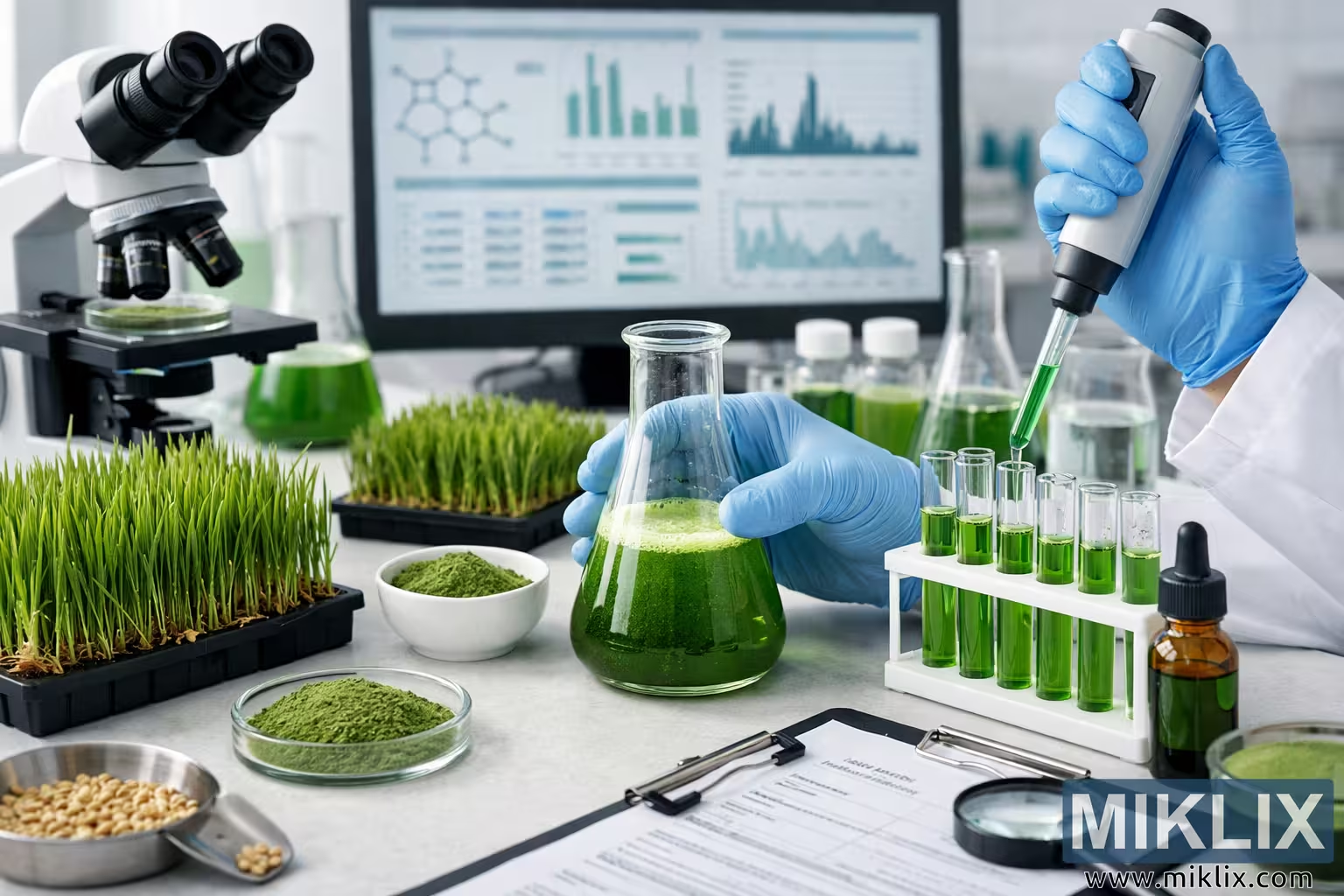
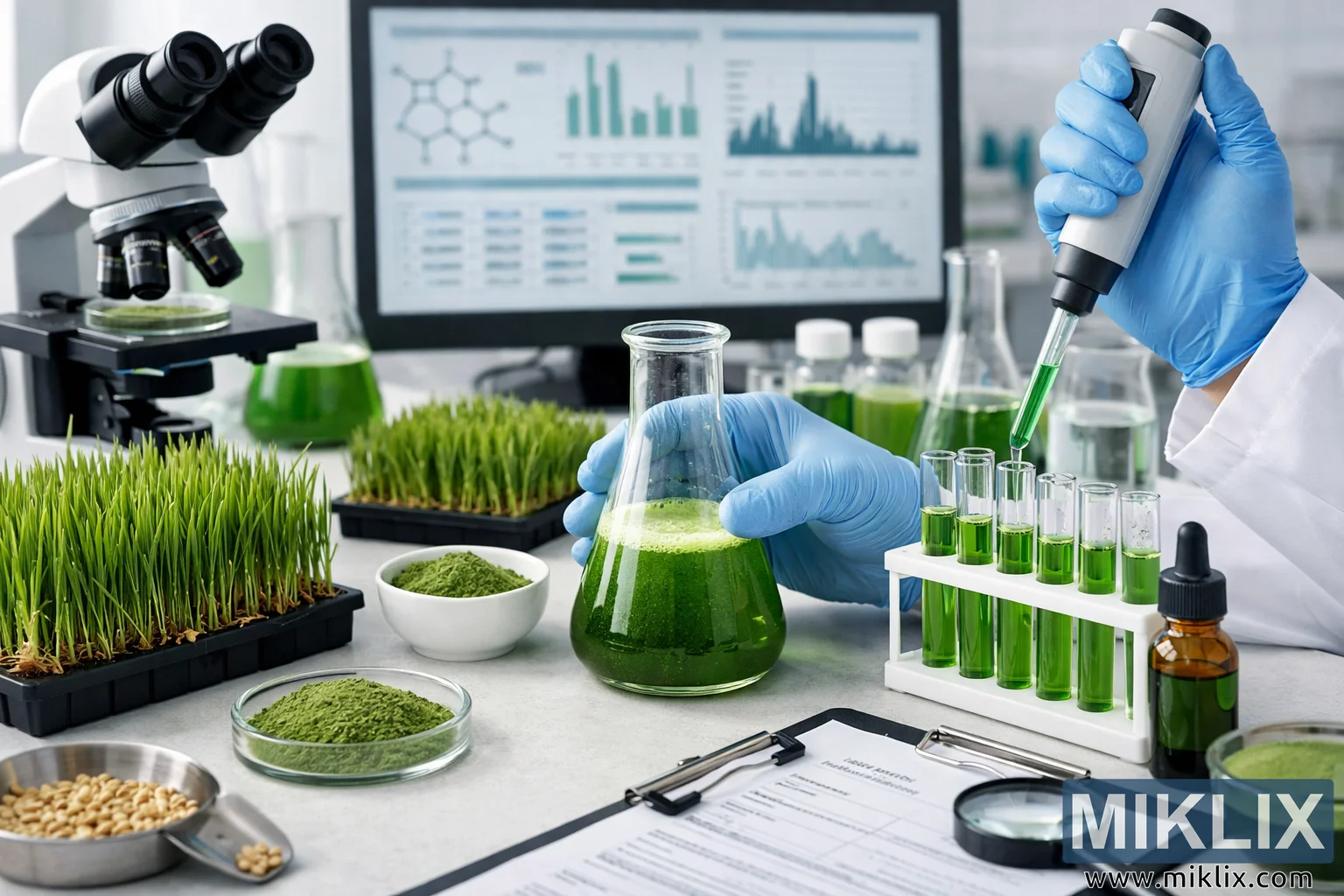
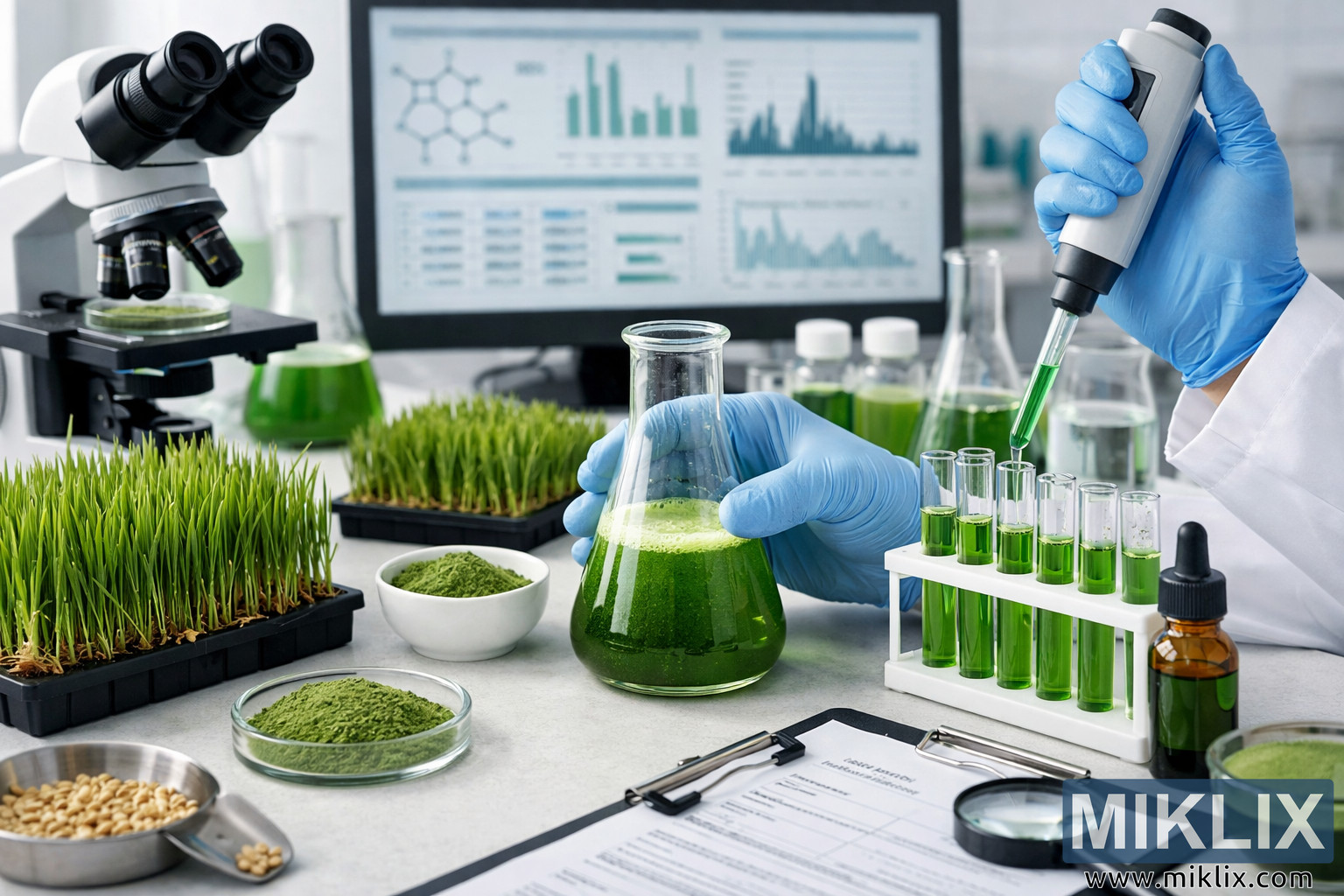
A high-resolution landscape photograph captures the meticulous environment of a modern quality control laboratory dedicated to testing wheatgrass products. The composition is carefully arranged to convey precision, cleanliness, and scientific rigor. In the foreground, a white laboratory bench stretches across the frame, covered with instruments and materials associated with wheatgrass analysis. On the left side of the bench, a dense tray of fresh wheatgrass grows in rich soil, its vibrant green blades reaching upward under bright laboratory lighting. The roots and seeds are visible through the transparent tray, emphasizing the natural origin of the samples being tested.
At the center of the image, a scientist wearing a white lab coat and blue nitrile gloves holds a glass Erlenmeyer flask filled with bright green wheatgrass juice. The liquid appears frothy and opaque, suggesting recent extraction and blending. The scientist’s hand is steady, symbolizing the controlled precision required in laboratory testing. Next to the flask, a small white ceramic bowl contains finely ground wheatgrass powder, its texture smooth and uniform. A Petri dish filled with similar green powder sits nearby, alongside a row of test tubes filled with varying shades of green liquid held in a white rack. Each test tube represents a different concentration or formulation of wheatgrass extract under examination. A small amber dropper bottle containing green liquid adds a touch of contrast and suggests chemical testing or sample preservation.
To the left of the scientist’s hand, a compound microscope stands ready for microscopic analysis. Its white and black body gleams under the laboratory lights, and its eyepiece and objective lenses are focused on a Petri dish containing wheatgrass powder. The microscope symbolizes the intersection of biology and chemistry in product testing. To the right, a digital pipette is held by another gloved hand, dispensing precise drops of green liquid into one of the test tubes. This action captures the essence of laboratory work—accuracy, consistency, and attention to detail.
In the background, a computer monitor displays analytical data, including molecular diagrams, bar graphs, and chromatograms. These visuals represent the quantitative side of quality control, where results are measured and validated. Beside the monitor, several transparent bottles filled with green liquid stand next to a glass beaker containing clear fluid and another flask of wheatgrass juice. Behind these, additional trays of wheatgrass are visible, reinforcing the continuity between raw material and tested product.
On the lower right corner of the bench, a clipboard holds a printed laboratory report with charts and notes. A magnifying glass rests beside it, along with a metal scoop containing wheat grains. A stainless steel measuring dish filled with wheat grains completes the composition, connecting the laboratory’s analytical work to the agricultural source of the product.
The lighting is bright and evenly distributed, highlighting the cleanliness and order of the laboratory. The color palette is dominated by whites, silvers, and greens, creating a sense of freshness and purity. The image’s depth of field is moderate—the foreground elements are sharply focused, while the background is slightly softened to draw attention to the scientist’s hands and the testing apparatus.
Overall, the photograph conveys a narrative of scientific integrity and environmental consciousness. It illustrates the process of ensuring that wheatgrass products meet rigorous standards of quality and safety before reaching consumers. The scene blends natural vitality with technological precision, symbolizing the harmony between nature and science in modern health product development.
L'image est liée à : A Guide to the Health Benefits of Wheatgrass