
Image: Cholesterol Levels Chart with Heart-Healthy Foods Including Okra
Publié :
Dernière mise à jour : 30 juillet 2026 à 18 h 38 min 51 s UTC
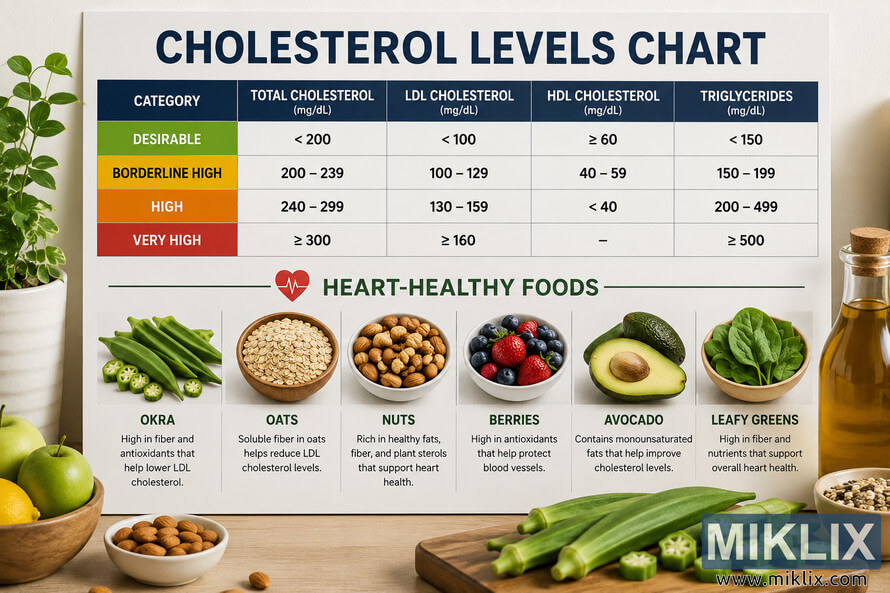
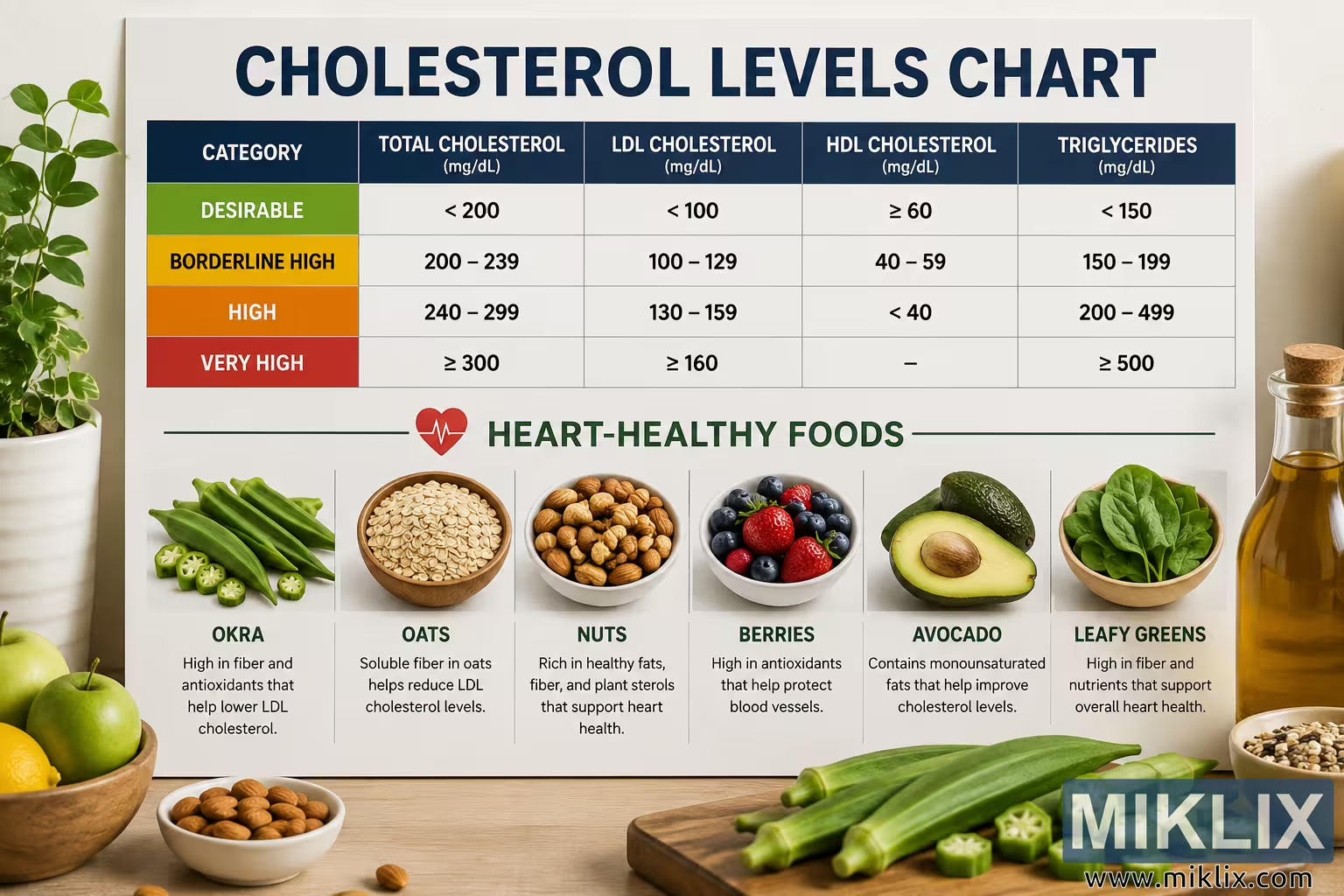
A bright cholesterol levels chart paired with heart-healthy foods including okra, oats, nuts, berries, avocado, and leafy greens in a clean nutrition-themed scene.
Cholesterol Levels Chart with Heart-Healthy Foods Including Okra
Versions disponibles de cette image
Les fichiers image disponibles au téléchargement ci-dessous sont moins compressés et de résolution plus élevée – et par conséquent de meilleure qualité – que les images intégrées aux articles et aux pages de ce site Web, qui sont davantage optimisées en termes de taille de fichier afin de réduire la consommation de bande passante.
Taille standard (1,536 x 1,024)
Grande taille (3,072 x 2,048)
Très grande taille (4,608 x 3,072)
Taille extra large (6,144 x 4,096)
Taille comiquement grande (1,048,576 x 699,051)
- Téléchargement en cours... ;-)
Description de l'image
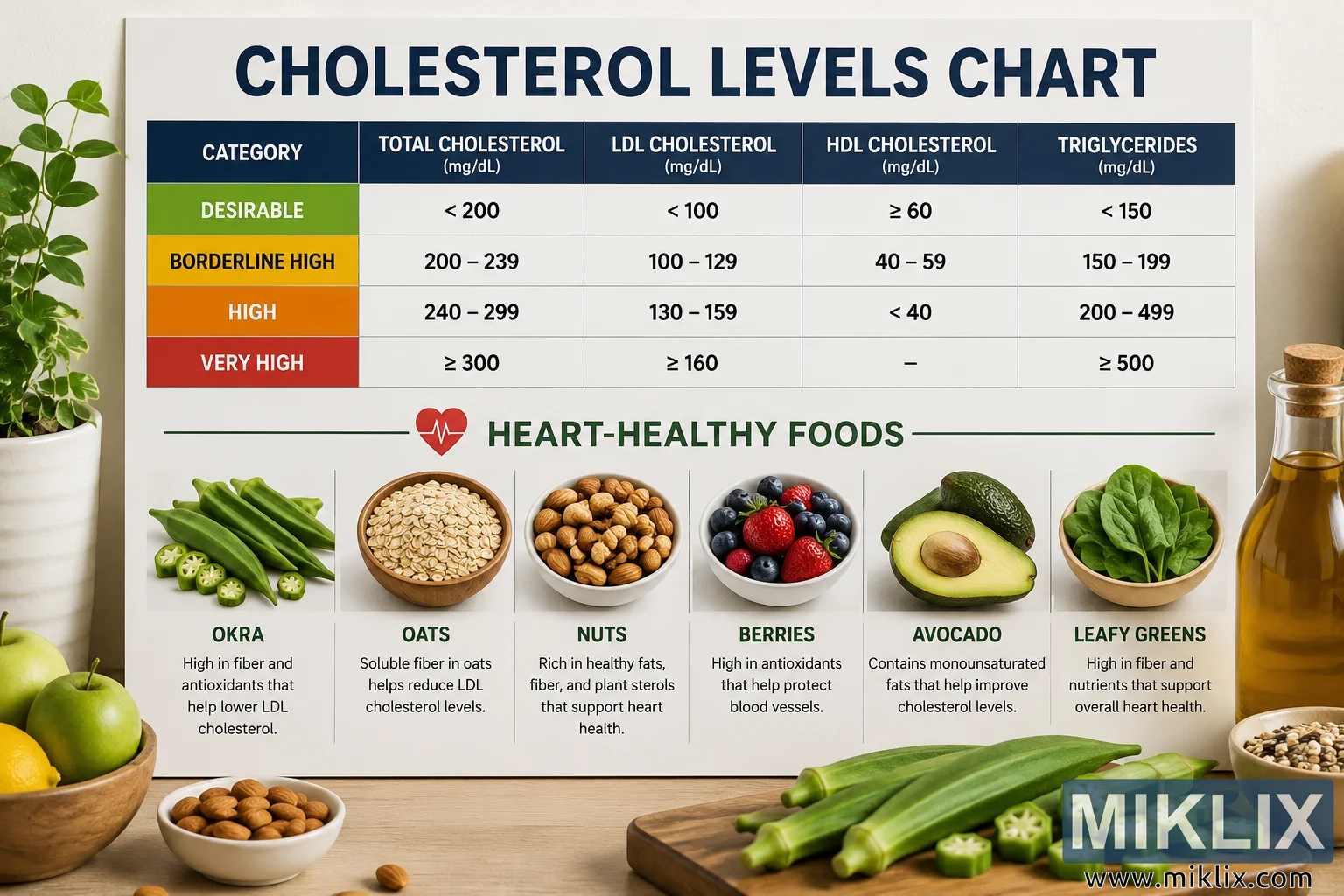
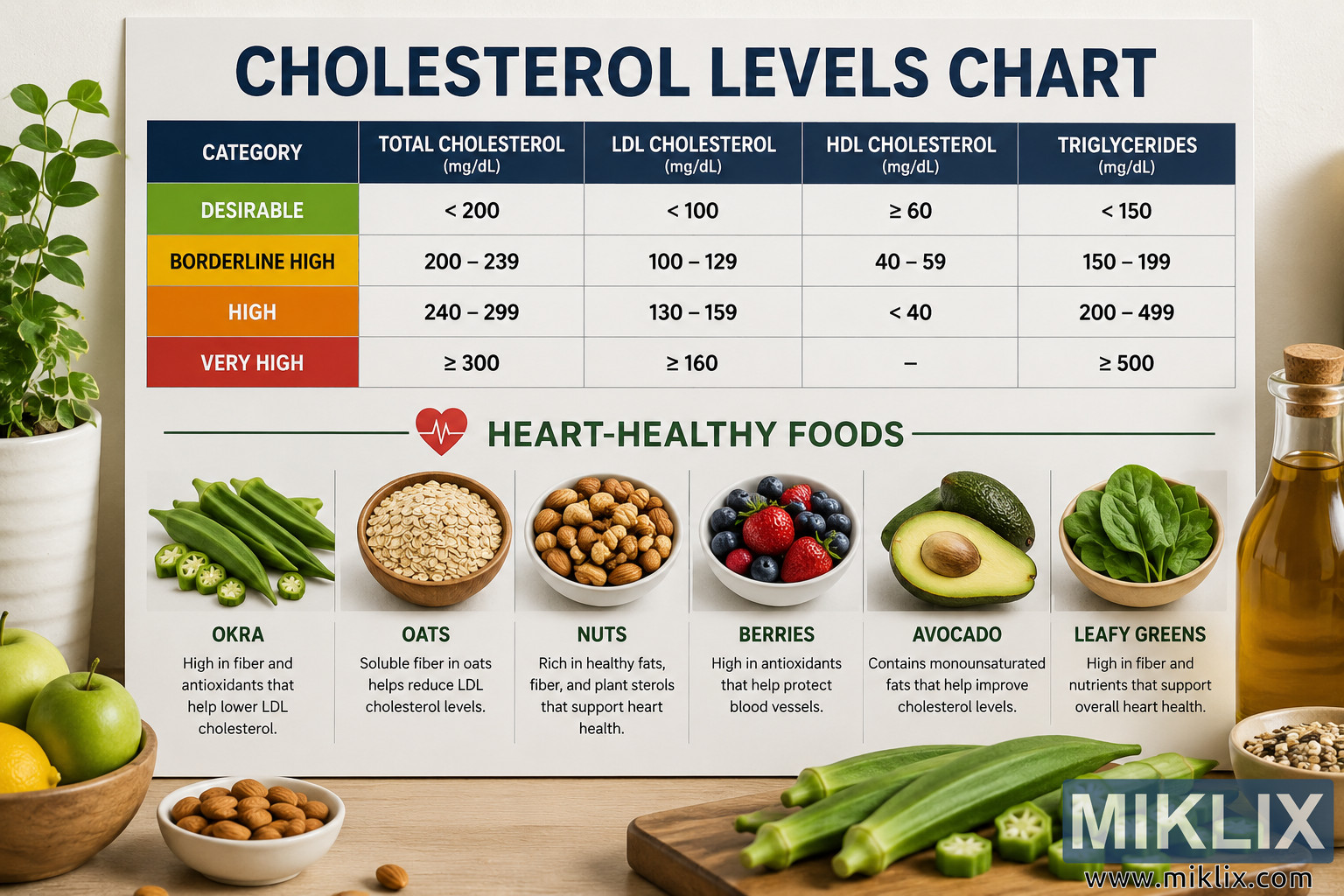
A clean, bright, landscape-oriented nutrition infographic is displayed on a tabletop in a natural, health-focused setting. The main visual element is a large cholesterol levels chart mounted against a light neutral wall. The chart has a bold title reading “Cholesterol Levels Chart” and presents cholesterol information in a structured table format. The table compares several categories of cholesterol status, including desirable, borderline high, high, and very high. It includes columns for total cholesterol, LDL cholesterol, HDL cholesterol, and triglycerides, with values shown in milligrams per deciliter. The category labels are color-coded, moving from green for desirable to yellow and orange for increasing risk, and red for very high levels. This gives the chart a clear visual hierarchy and makes the information easy to scan.
Below the cholesterol chart is a second section labeled “Heart-Healthy Foods,” accompanied by a small heart icon. This section presents a row of nutritious foods commonly associated with supporting cardiovascular health. The first highlighted food is okra, shown as fresh green pods with several sliced cross-sections that reveal the star-like interior. Okra appears prominently both in the food row and again in the foreground on a wooden cutting board, reinforcing its importance in the image. The okra is described as being high in fiber and antioxidants that may help support healthy LDL cholesterol levels.
Next to the okra are oats displayed in a small wooden bowl, suggesting soluble fiber and whole-grain nutrition. A bowl of mixed nuts follows, including almonds and other nuts, representing healthy fats, fiber, and plant-based nutrients. A bowl of berries, including strawberries, blueberries, and dark berries, adds vivid color and represents antioxidant-rich foods. An avocado is shown sliced open with its green flesh and central pit visible, symbolizing monounsaturated fats and a heart-conscious diet. A bowl of leafy greens, likely spinach or similar greens, completes the row, representing fiber, micronutrients, and general cardiovascular support.
The scene is arranged like a professional health education poster or clinic handout brought to life as a photographed tabletop display. The background is minimal and bright, allowing the chart and foods to stand out clearly. On the left side, a potted green plant adds a fresh natural accent. A bowl containing green apples and a lemon sits near the lower left, adding additional color and reinforcing the theme of wholesome eating. On the right side, a glass bottle of golden oil, possibly olive oil, sits near the chart, contributing to the Mediterranean-style heart-healthy food atmosphere. Small bowls of almonds and grains appear near the bottom edge, while fresh okra pods and slices on the wooden board create a strong foreground focal point.
The overall composition combines educational medical information with appetizing, natural food photography. The image uses balanced lighting, soft shadows, and a tidy layout to create a calm, trustworthy, and informative mood. The chart communicates cholesterol ranges in a straightforward way, while the surrounding foods visually suggest dietary choices that may support heart health. The image contains no visible commercial branding, logos, or product labels. Its style is suitable for a wellness blog, nutrition article, healthcare presentation, clinic waiting room display, patient education page, or social media post about cholesterol awareness and heart-healthy eating. The inclusion of okra gives the image a distinctive focus, showing it as one of several fiber-rich foods that can be part of a balanced diet aimed at supporting healthy cholesterol levels.
L'image est liée à : Okra Benefits: How This Nutritious Vegetable Supports Your Health