
Image: Measured Portion of Pistachios Showing Proper Serving Size
Publié :
Dernière mise à jour : 5 septembre 2026 à 18 h 08 min 00 s UTC
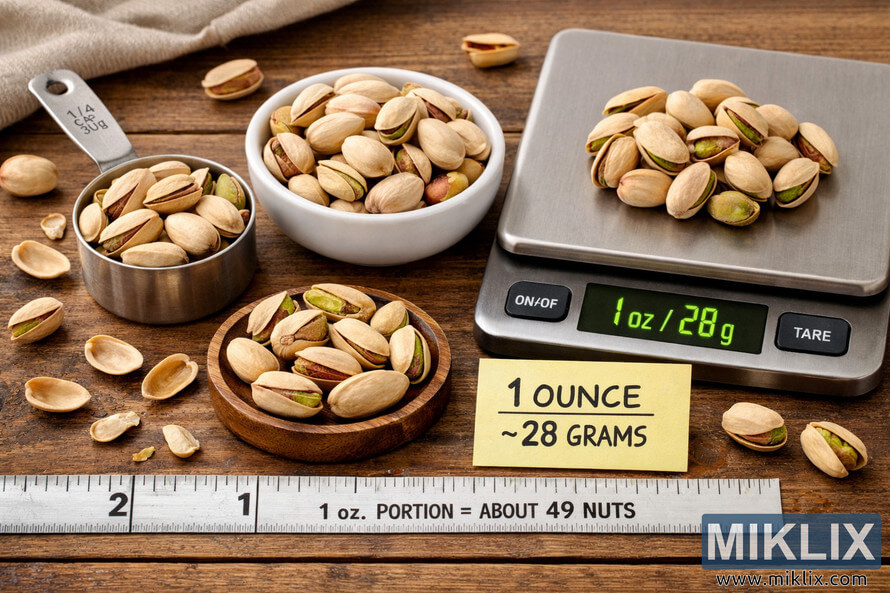
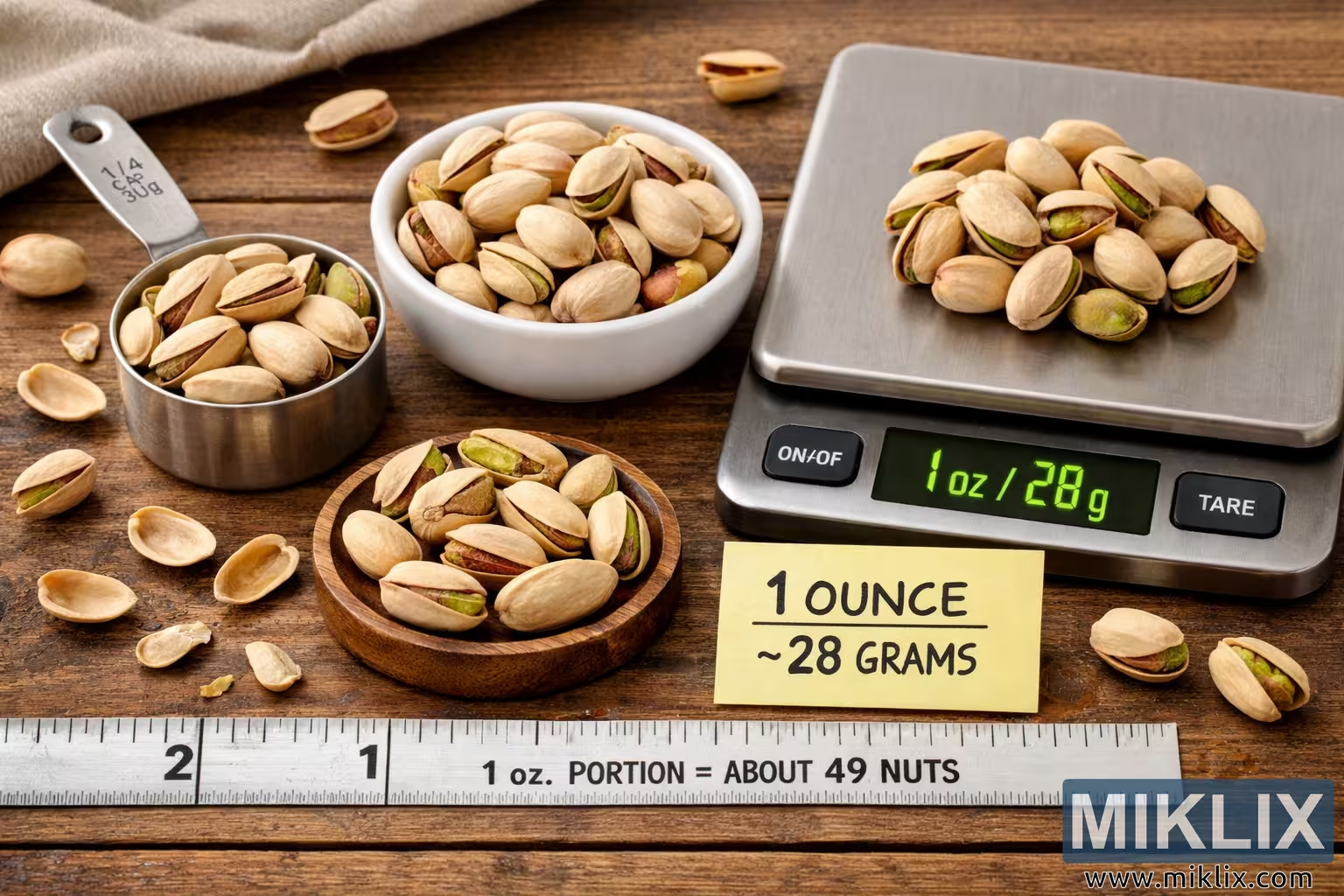
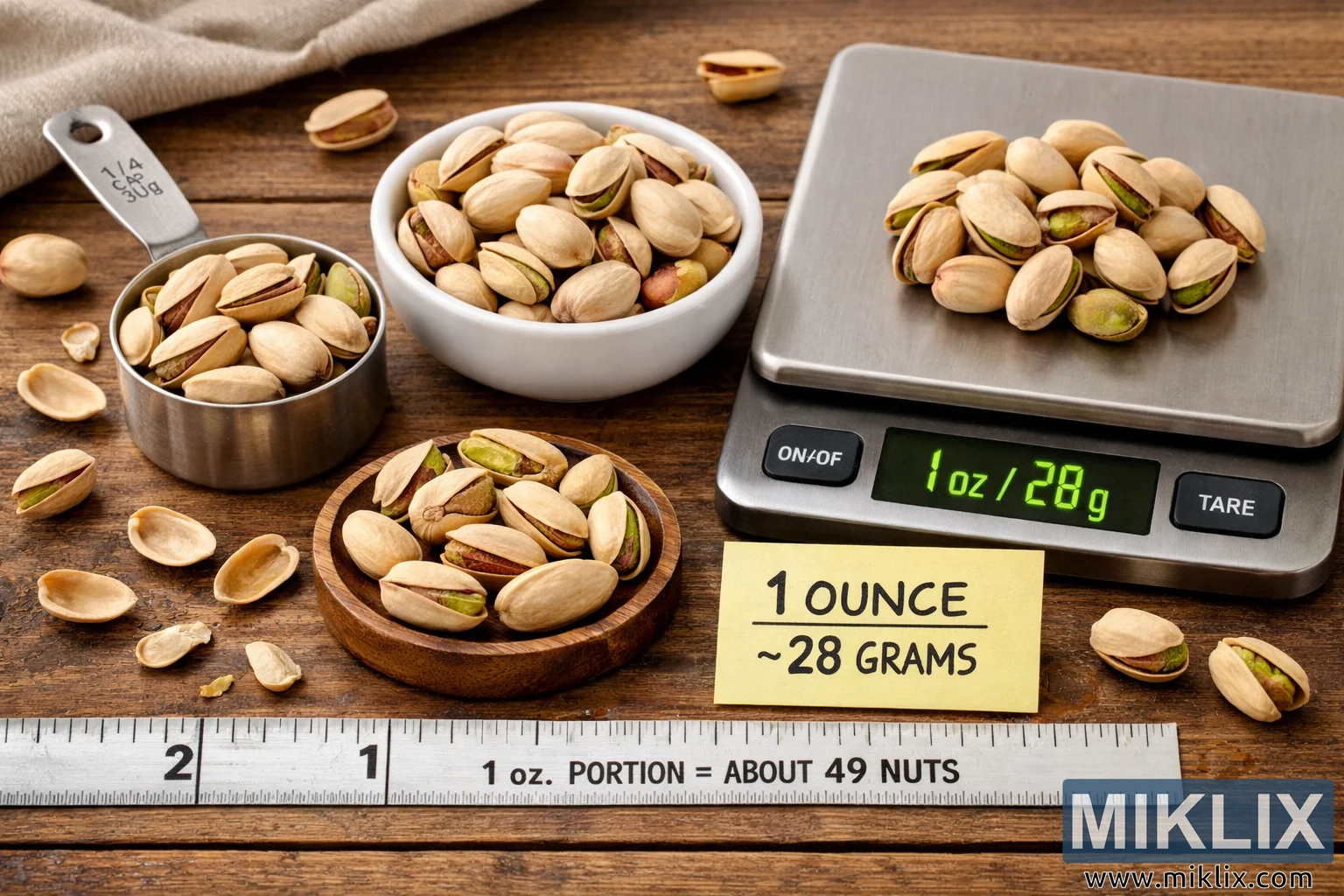
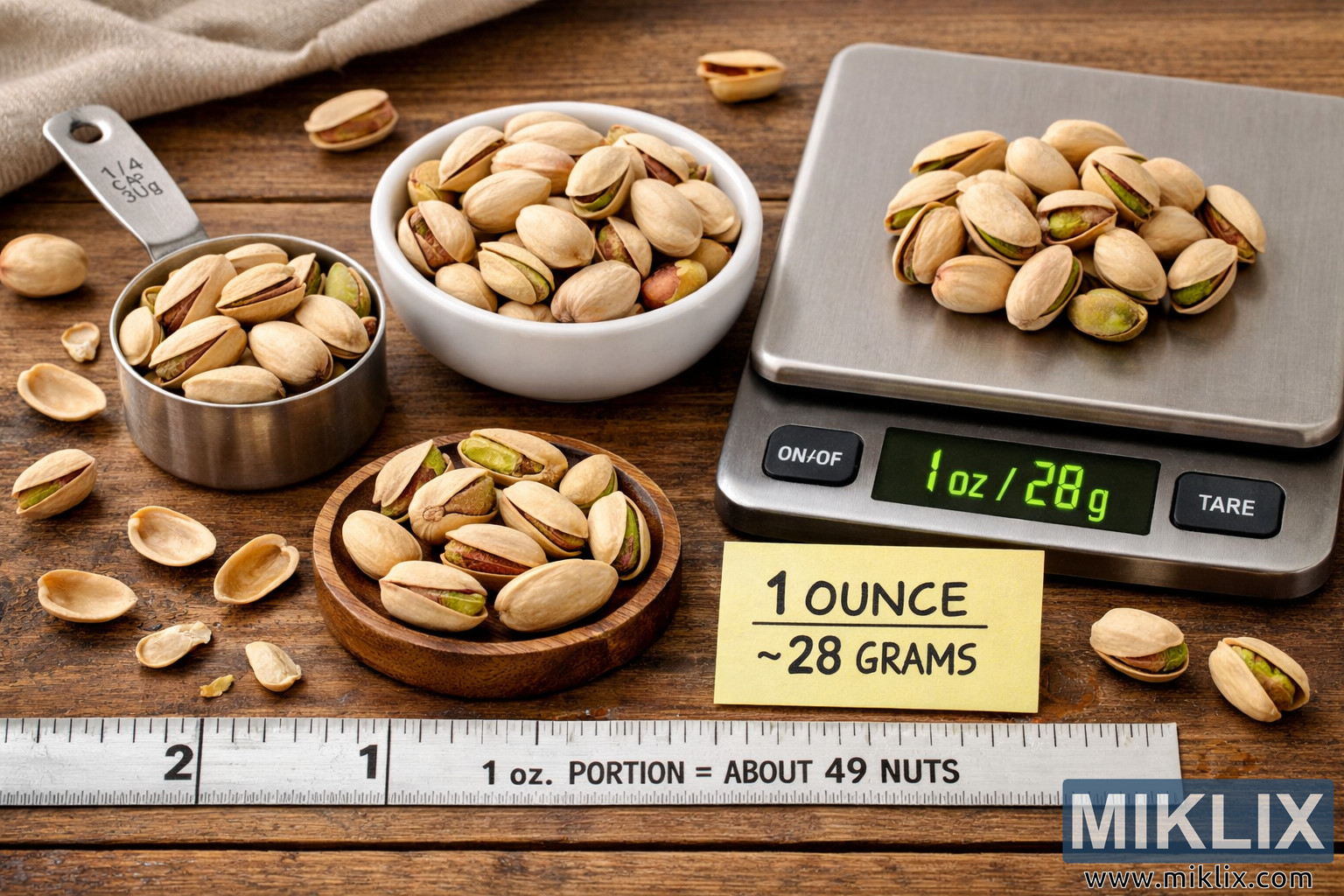
A high-resolution landscape photo illustrating the proper serving size of pistachios, featuring a bowl, measuring cup, digital scale, and handwritten note showing 1 ounce equals 28 grams.
Measured Portion of Pistachios Showing Proper Serving Size
Versions disponibles de cette image
Les fichiers image disponibles au téléchargement ci-dessous sont moins compressés et de résolution plus élevée – et par conséquent de meilleure qualité – que les images intégrées aux articles et aux pages de ce site Web, qui sont davantage optimisées en termes de taille de fichier afin de réduire la consommation de bande passante.
Taille standard (1,536 x 1,024)
Grande taille (3,072 x 2,048)
Très grande taille (4,608 x 3,072)
Taille extra large (6,144 x 4,096)
Taille comiquement grande (1,048,576 x 699,051)
- Téléchargement en cours... ;-)
Description de l'image
The image presents a meticulously arranged still life composition that demonstrates the proper serving size of pistachios in a visually informative and aesthetically pleasing manner. The setting is a rustic wooden table with a warm, natural tone that enhances the earthy colors of the pistachios and the surrounding objects. At the center of the composition sits a small, white ceramic bowl filled to the brim with pistachios. Each pistachio shell is slightly open, revealing the greenish-brown nut inside, and the bowl’s smooth, matte surface contrasts beautifully with the textured shells. To the left of the bowl, a stainless steel measuring cup marked '1/4 CUP 30g' is filled with pistachios up to the top, emphasizing the concept of portion control. The engraved measurement on the handle is clearly visible, adding an educational touch to the scene.
To the right of the bowl, a digital kitchen scale with a brushed stainless steel surface displays the weight '1 oz / 28 g' in bright green numbers on its digital screen. The scale’s design is modern and minimalistic, featuring two buttons labeled 'ON/OFF' and 'TARE' below the display. A small pile of pistachios rests on the weighing platform, reinforcing the idea of precision in measuring food portions. The reflection of light on the scale’s surface adds depth and realism to the photograph.
In the foreground, a small round wooden dish holds a neatly arranged handful of pistachios, some of which are cracked open to reveal their interiors. In front of this dish lies a yellow sticky note with the handwritten message '1 OUNCE ~ 28 GRAMS' in bold, black letters. The handwriting appears casual yet clear, giving the image a personal and approachable feel. Below the sticky note, a measuring tape stretches horizontally across the bottom of the frame. The tape shows markings in both inches and centimeters, with the section from '0' to '2' clearly visible. Beneath the tape, printed text reads '1 oz. PORTION = ABOUT 49 NUTS,' providing additional context for viewers who want to understand the serving size visually and numerically.
Scattered around the main subjects are a few loose pistachios and empty shells, which add a natural, uncontrived element to the composition. The background features a beige cloth draped casually in the upper left corner, softening the overall look and balancing the metallic and wooden textures. The lighting is even and natural, likely from a diffused source, which prevents harsh shadows and highlights the subtle variations in color—from the pale beige of the shells to the vibrant green of the nuts.
The photograph’s composition is carefully balanced: the bowl of pistachios serves as the focal point, flanked by the measuring cup and digital scale, while the wooden dish and sticky note in the foreground draw the viewer’s eye downward to the educational details. The measuring tape at the bottom acts as a visual anchor, guiding the viewer’s gaze across the image horizontally. The arrangement of objects creates a harmonious triangle of focus points, ensuring that each element contributes to the overall message of portion awareness.
The image communicates both practicality and warmth. It is not merely a depiction of food but a visual guide to healthy eating habits. The combination of precise measuring tools and organic textures bridges the gap between scientific accuracy and everyday life. The pistachios themselves, with their natural imperfections and varied hues, remind viewers that nutrition can be both disciplined and enjoyable. The handwritten note and scattered shells introduce a human touch, suggesting that this is a real kitchen scene rather than a sterile laboratory setup.
Overall, the photograph succeeds in conveying the concept of a measured portion of pistachios with clarity and charm. It invites viewers to appreciate the beauty of mindful eating and the importance of understanding serving sizes. The interplay of materials—ceramic, metal, wood, and paper—creates a rich sensory experience, while the careful lighting and composition ensure that every detail contributes to the educational purpose of the image. This visual representation of portion control is both informative and aesthetically satisfying, making it an ideal illustration for nutrition guides, healthy eating campaigns, or culinary education materials.
L'image est liée à : Pistachios: The Little Green Nuts with Big Health Benefits