
Image: Scientific Analysis of Rosemary Extract in a Modern Laboratory
Publié :
Dernière mise à jour : 9 septembre 2026 à 11 h 07 min 44 s UTC
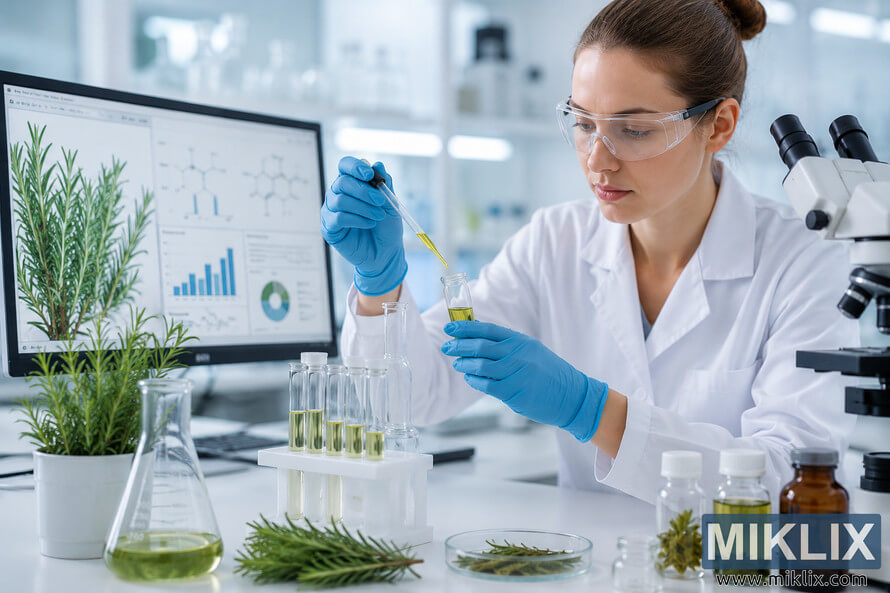
High-resolution laboratory scene depicting scientific research on rosemary extract, featuring a researcher performing botanical analysis with laboratory equipment, glassware, microscope, and digital research data in a clean, modern setting.
Scientific Analysis of Rosemary Extract in a Modern Laboratory
Versions disponibles de cette image
Les fichiers image disponibles au téléchargement ci-dessous sont moins compressés et de résolution plus élevée – et par conséquent de meilleure qualité – que les images intégrées aux articles et aux pages de ce site Web, qui sont davantage optimisées en termes de taille de fichier afin de réduire la consommation de bande passante.
Taille standard (1,536 x 1,024)
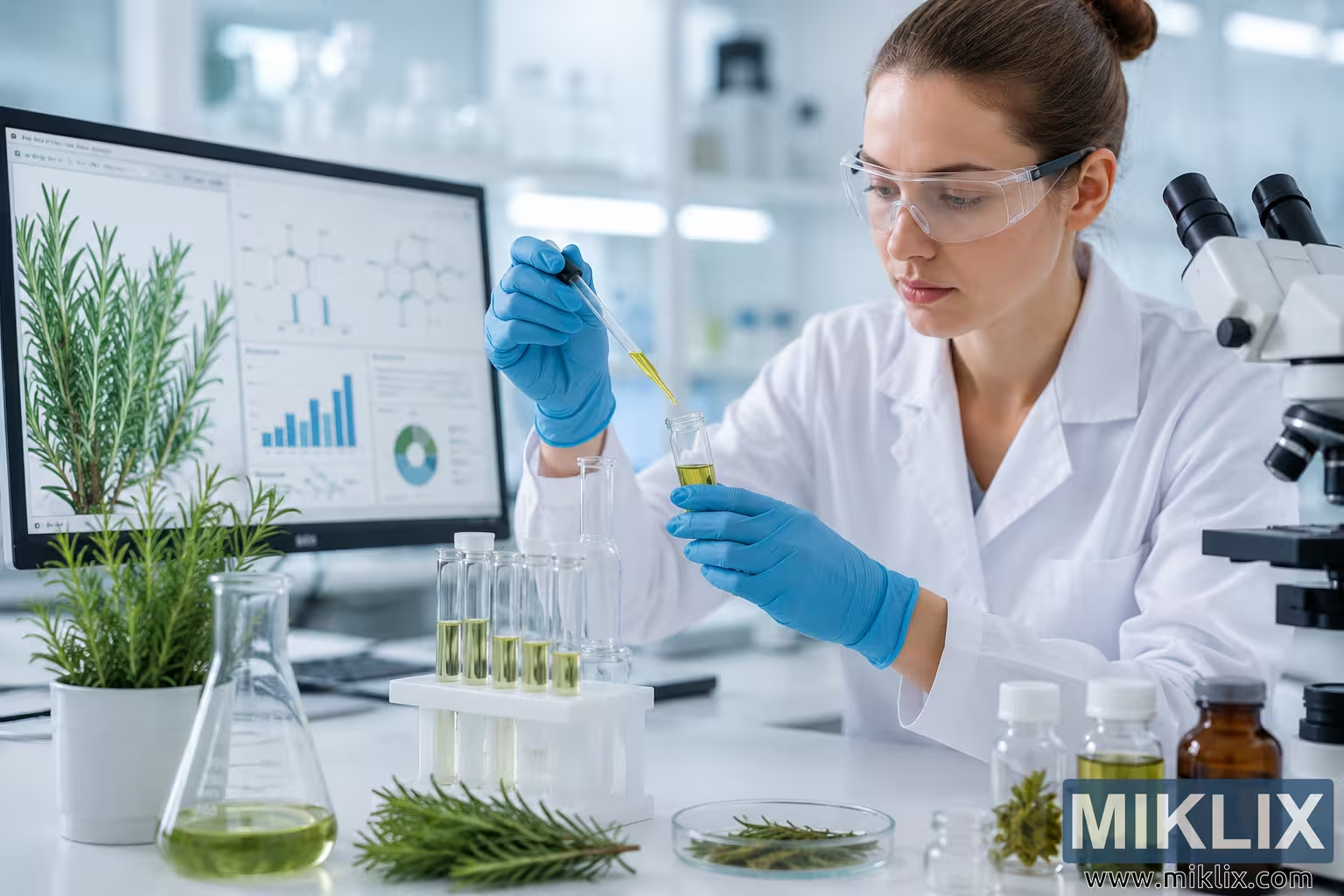
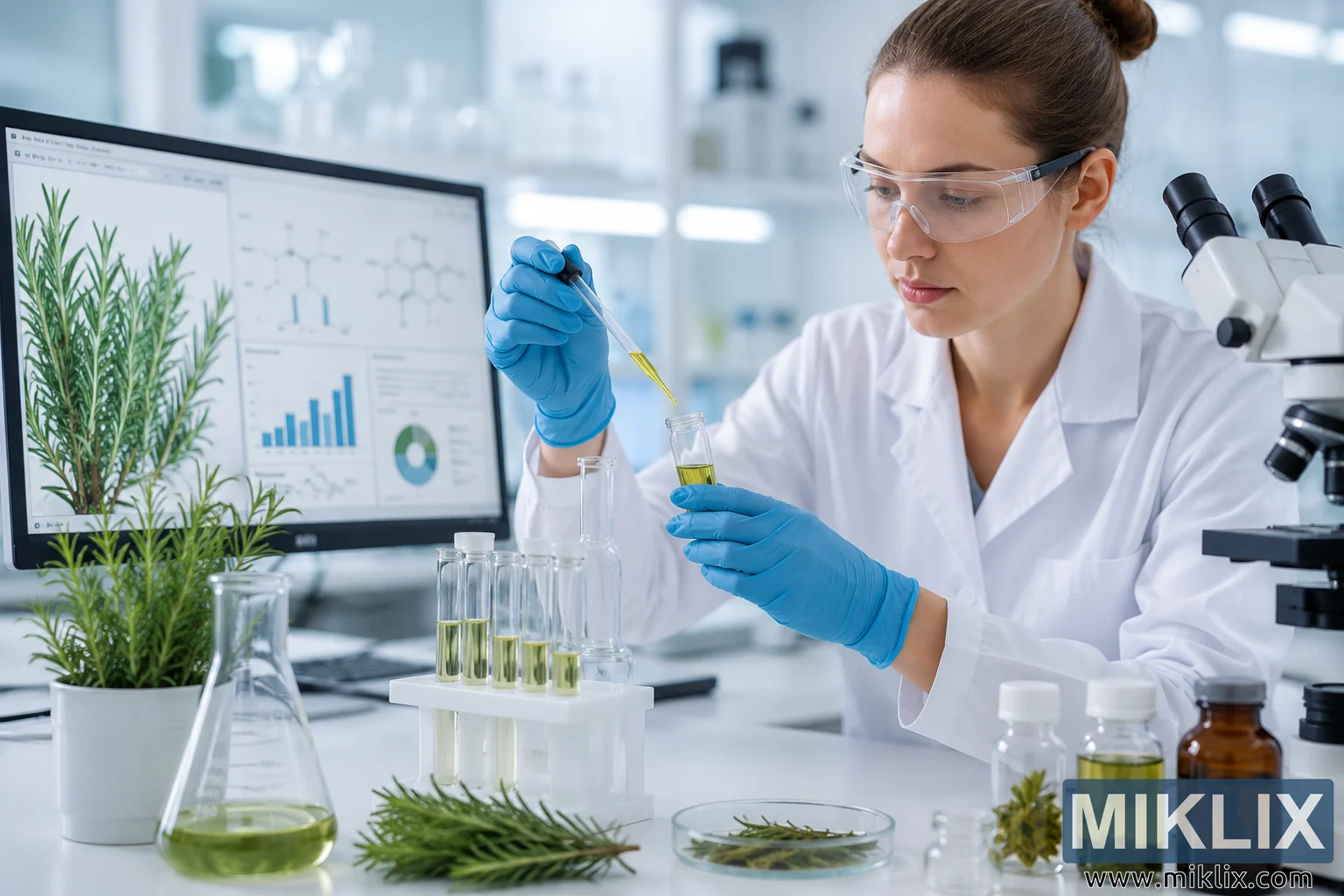
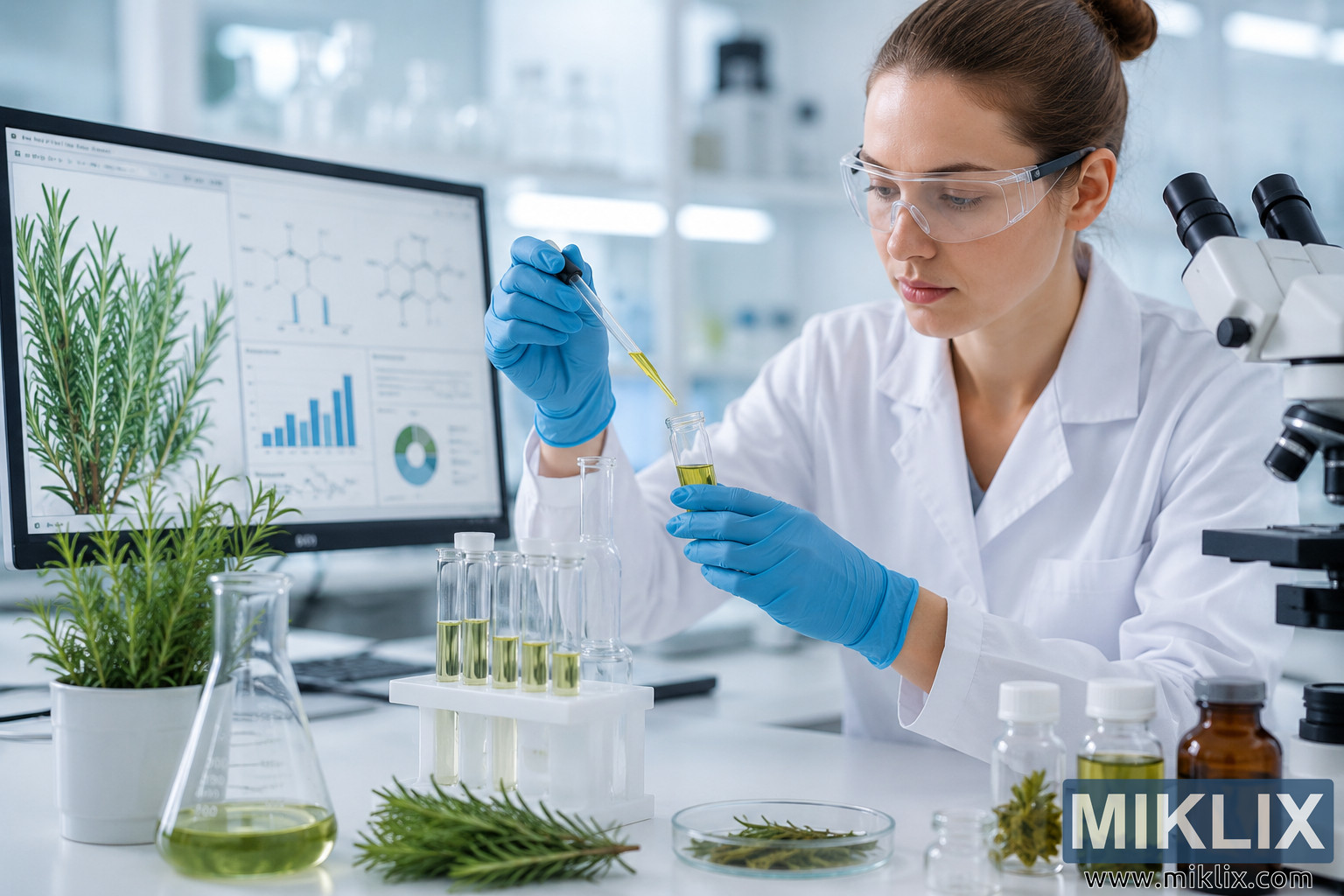
Grande taille (3,072 x 2,048)
Très grande taille (4,608 x 3,072)
Taille extra large (6,144 x 4,096)
Taille comiquement grande (1,048,576 x 699,051)
- Téléchargement en cours... ;-)
Description de l'image
A high-resolution landscape-oriented image portrays a contemporary scientific laboratory dedicated to the study of botanical compounds, with a particular emphasis on rosemary extract. The scene is brightly illuminated by cool, even laboratory lighting that creates a clean and highly professional atmosphere while emphasizing the sterile environment expected in modern research facilities. The composition is carefully balanced, drawing immediate attention to a researcher seated at a laboratory workbench in the foreground while a variety of scientific instruments and botanical materials reinforce the overall theme of phytochemical research.
The researcher is dressed in a pristine white laboratory coat and wears clear protective safety goggles together with blue disposable laboratory gloves, indicating adherence to standard laboratory safety procedures. Their facial expression is calm, concentrated, and attentive, suggesting careful observation of an ongoing experimental procedure. Using a precision pipette, the researcher transfers a small quantity of yellow-green liquid into a transparent glass sample vial held steadily in the opposite hand. The transfer of liquid represents a typical analytical laboratory workflow associated with preparing plant extracts for chemical or biological analysis.
On the laboratory bench, numerous pieces of laboratory glassware contribute to the scientific authenticity of the scene. A rack of transparent test tubes contains varying amounts of pale green solution that visually imply multiple experimental samples or different stages of extraction. Nearby stands an Erlenmeyer flask partially filled with a similarly colored liquid, reflecting the botanical origin of the material under investigation. Additional clear sample bottles and amber laboratory containers are positioned around the workspace, suggesting careful storage of experimental materials and light-sensitive extracts. Their labels are intentionally absent, ensuring the image remains generic and free from identifiable commercial branding.
Fresh rosemary serves as the unmistakable botanical subject of the research. A healthy rosemary plant in a simple white container is positioned prominently toward the left side of the composition, while freshly cut rosemary sprigs rest across the laboratory bench near a shallow glass dish containing additional plant material. Small transparent sample jars filled with dried botanical fragments reinforce the impression that both fresh and processed rosemary materials are being examined as part of a comprehensive scientific investigation. The characteristic needle-like leaves provide immediate visual identification of the plant while contributing natural green tones that contrast harmoniously with the white laboratory environment.
To the right side of the workspace, a modern laboratory microscope is positioned within easy reach of the researcher, indicating that microscopic examination may complement chemical analysis during the investigation. The microscope's clean design integrates naturally into the workspace without dominating the composition. Throughout the bench, carefully arranged laboratory tools create an organized environment that conveys precision, repeatability, and rigorous scientific methodology.
Behind the researcher, a computer monitor displays a collection of scientific visualizations associated with botanical research. The screen contains illustrations of rosemary, stylized molecular diagrams, bar charts, and circular analytical graphics that imply the interpretation of experimental results and phytochemical data. Although these graphics resemble genuine scientific displays, they remain intentionally generic, avoiding references to proprietary software, commercial products, or recognizable institutional branding. Their presence strengthens the narrative that laboratory experimentation is being combined with digital data analysis and documentation.
The background of the laboratory is softly blurred with a shallow depth of field, allowing shelves containing additional glass bottles and laboratory equipment to remain visible without distracting from the primary subject. This photographic technique emphasizes the researcher and the active experiment while still communicating the broader research environment. Reflections on the glassware and polished laboratory surfaces enhance the realism of the image and contribute to an atmosphere of cleanliness and technical sophistication.
The overall color palette combines cool whites, subtle blues, transparent glass, stainless laboratory equipment, and multiple shades of natural green originating from the rosemary plant and extracted liquids. These colors collectively communicate freshness, scientific credibility, and botanical research. The yellow-green liquid being transferred with the pipette serves as a visual focal point, symbolizing the extraction and analysis of naturally derived compounds.
The composition successfully conveys themes of scientific investigation, phytochemistry, botanical extraction, laboratory precision, natural product research, and evidence-based analysis. Every visible object supports the central narrative of researchers studying rosemary-derived substances under controlled laboratory conditions. The absence of commercial logos, recognizable brands, institutional insignia, or identifiable product packaging ensures the image remains suitable for educational materials, scientific publications, editorial content, healthcare communications, academic presentations, and general discussions about botanical research. Overall, the image presents a realistic yet accessible visualization of modern laboratory science focused on the careful analysis of rosemary extract using contemporary analytical techniques within a bright, organized, and highly professional research setting.
L'image est liée à : Rosemary: The Fragrant Herb with Powerful Health Benefits