
Image: Fresh Rutabaga on Wooden Cutting Board
Publié :
Dernière mise à jour : 10 septembre 2026 à 09 h 58 min 15 s UTC
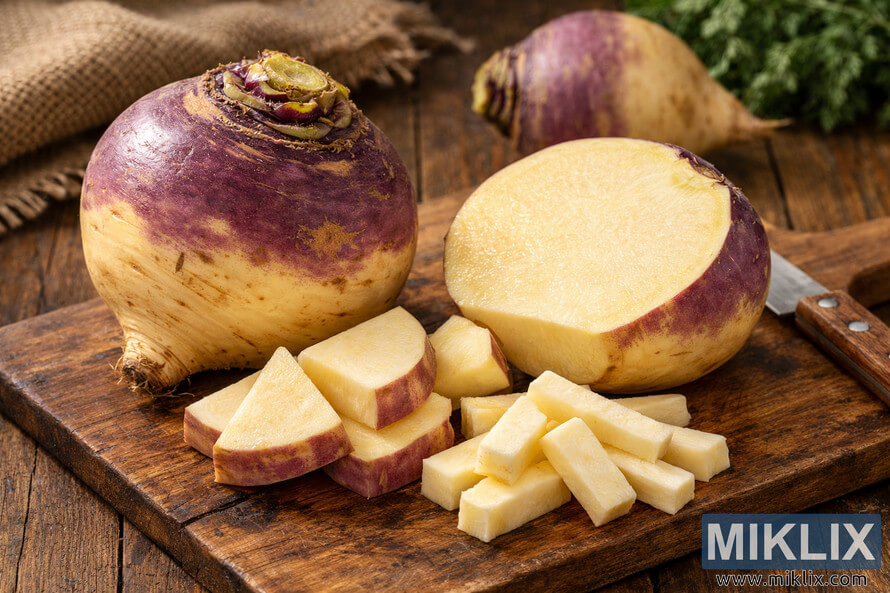
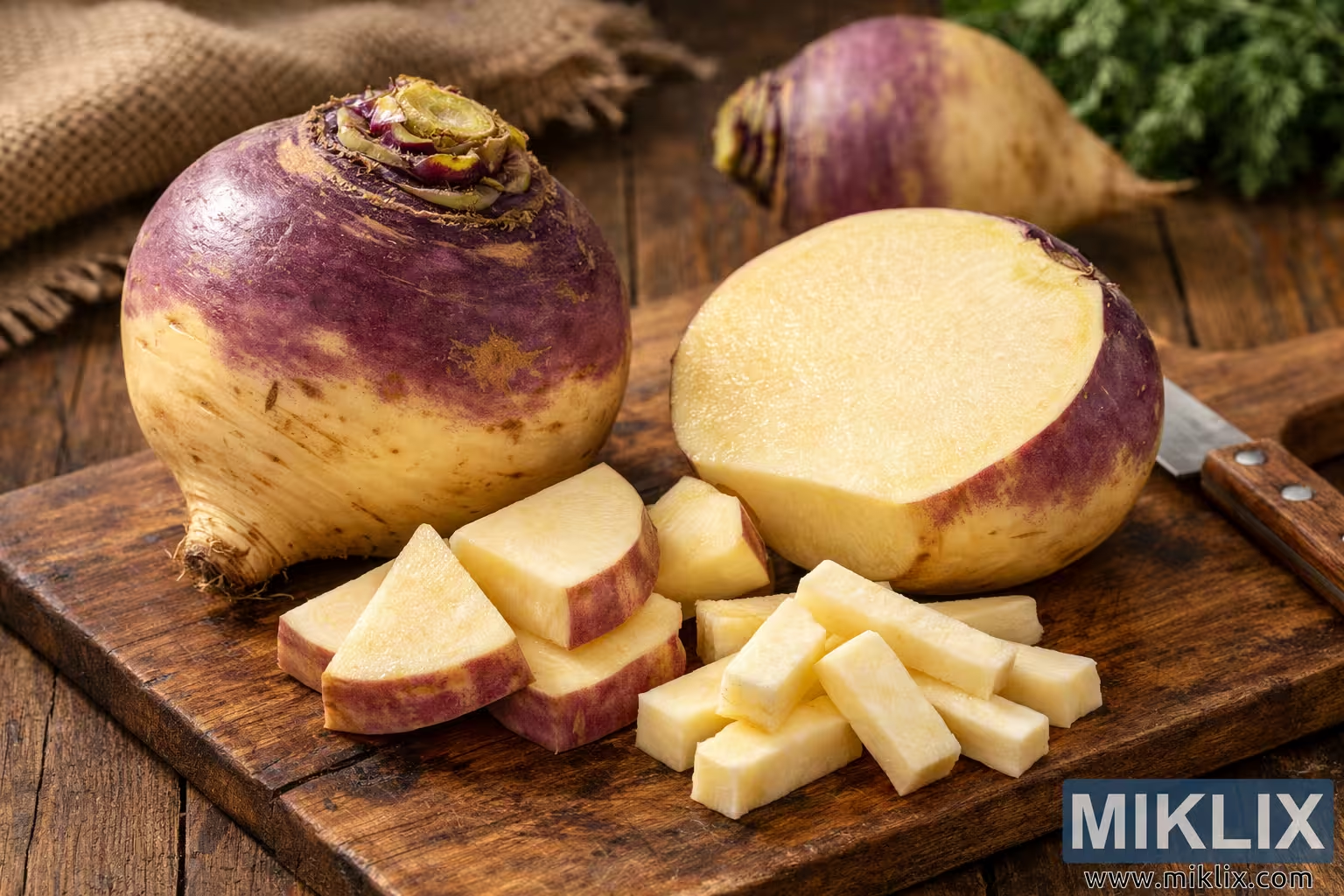
A high-resolution landscape photo of a fresh rutabaga root vegetable with a purple crown and cream-colored flesh placed on a rustic wooden cutting board, illuminated by warm natural light.
Fresh Rutabaga on Wooden Cutting Board
Versions disponibles de cette image
Les fichiers image disponibles au téléchargement ci-dessous sont moins compressés et de résolution plus élevée – et par conséquent de meilleure qualité – que les images intégrées aux articles et aux pages de ce site Web, qui sont davantage optimisées en termes de taille de fichier afin de réduire la consommation de bande passante.
Taille standard (1,536 x 1,024)
Grande taille (3,072 x 2,048)
Très grande taille (4,608 x 3,072)
Taille extra large (6,144 x 4,096)
Taille comiquement grande (1,048,576 x 699,051)
- Téléchargement en cours... ;-)
Description de l'image
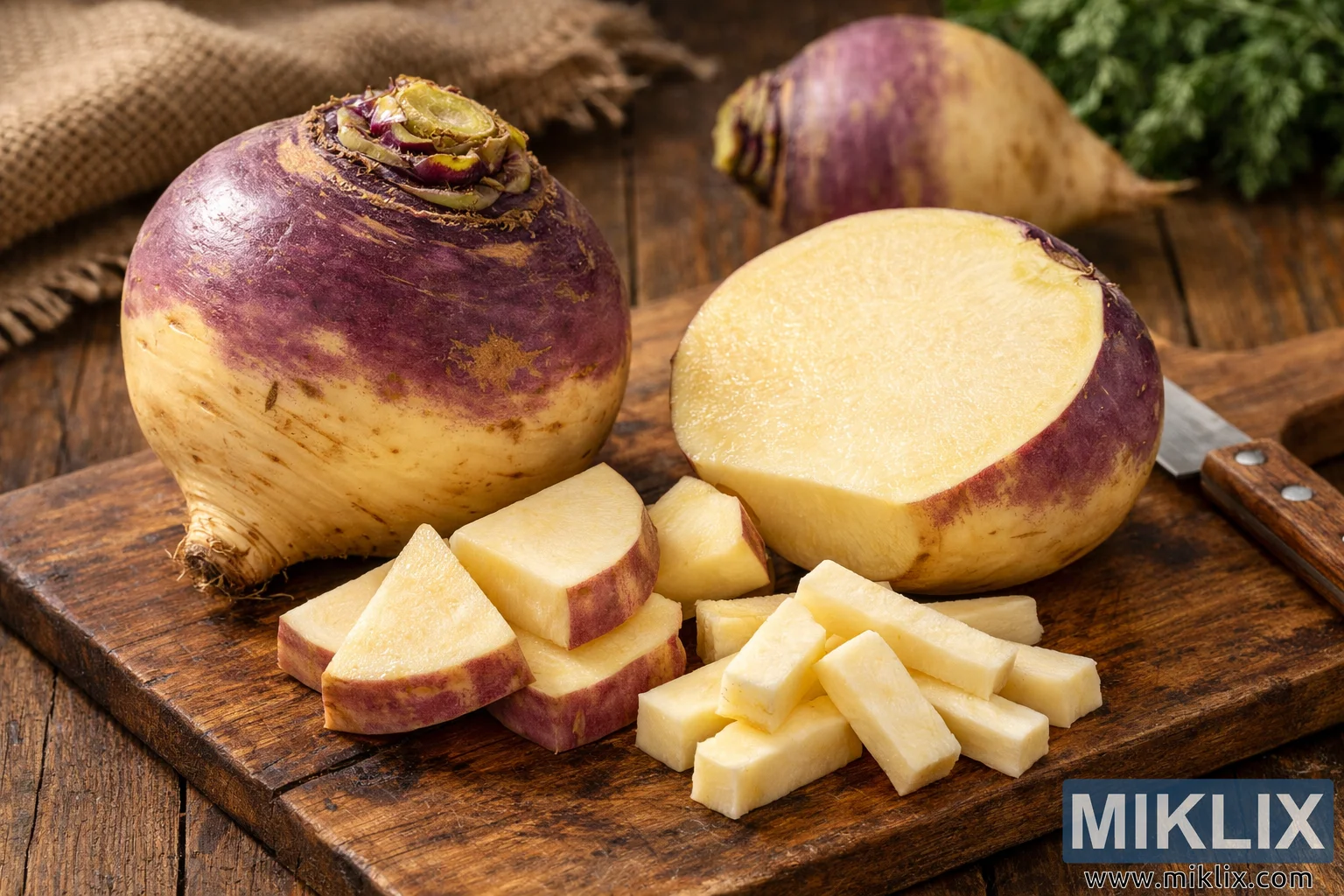
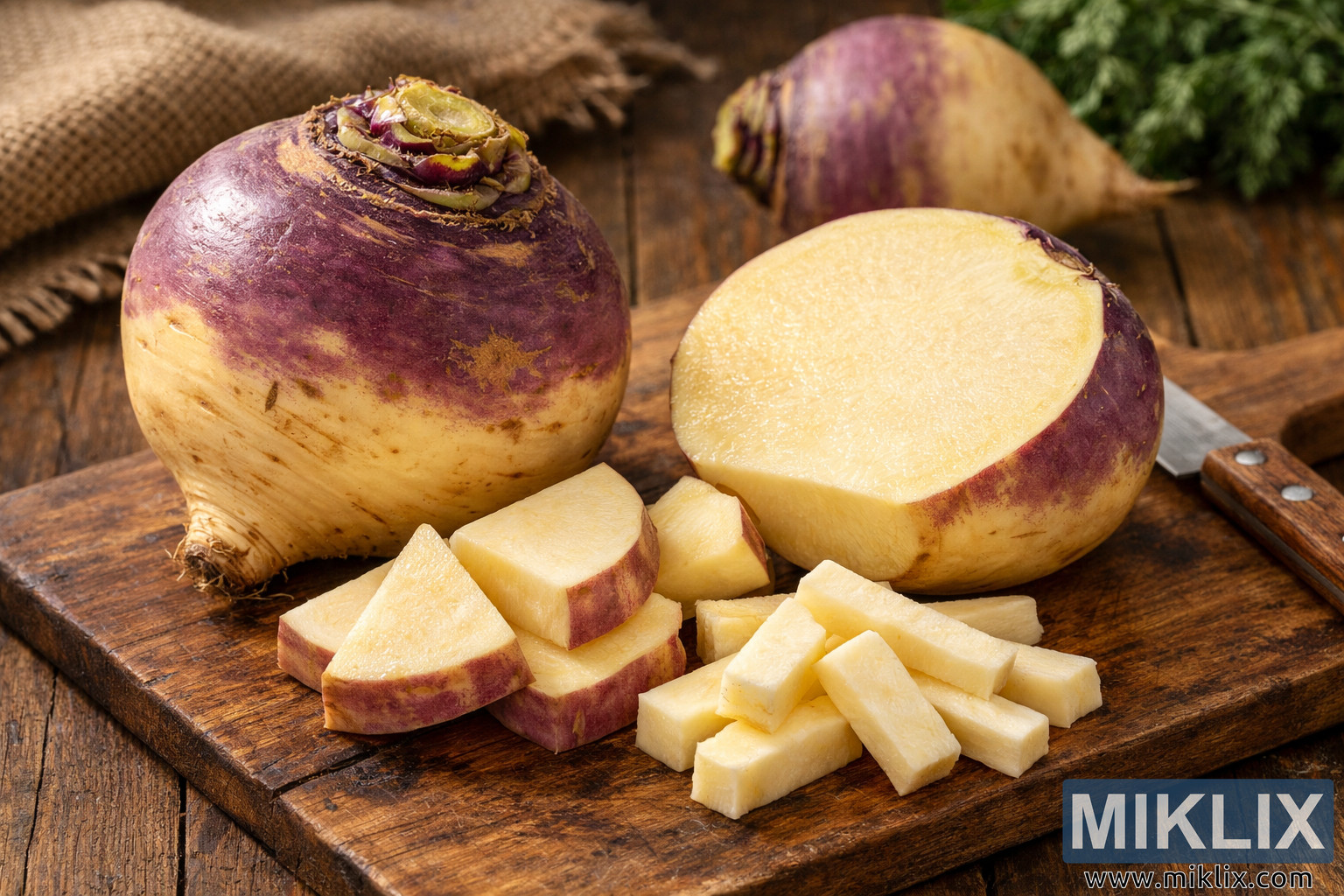
The image captures a beautifully composed still life of fresh rutabaga root vegetables arranged on a rustic wooden cutting board. The scene is set in warm, natural light that filters softly across the surface, emphasizing the earthy textures and organic tones of the composition. In the foreground, a whole rutabaga sits proudly, its skin transitioning from a deep, rich purple at the crown to a creamy yellow near the base. The vegetable’s surface is slightly rough, showing faint traces of soil and natural imperfections that speak to its authenticity and freshness. The purple crown glows subtly under the light, while the cream-colored lower portion reflects a gentle sheen, suggesting moisture and vitality.
Beside the whole rutabaga lies a halved one, its interior flesh smooth and pale, almost buttery in tone. The cut surface reveals the dense, fine-grained texture of the root, with faint concentric lines that mark its growth. A few thick slices are arranged neatly in front of the halved rutabaga, their edges clean and sharp, showing the precision of the knife that cut them. The slices vary slightly in size, adding a natural rhythm to the composition. To the right, a small pile of rutabaga sticks—cut into uniform rectangular pieces—rests casually on the board, their creamy interiors catching the light and contrasting beautifully with the darker wood beneath.
The cutting board itself is a character in the image: aged, with visible grain lines and knife marks that tell stories of past preparations. Its warm brown tones complement the rutabaga’s colors, creating a harmonious palette of purples, yellows, and browns. The board sits atop a wooden table of similar hue, extending the rustic aesthetic and grounding the entire composition in a cozy, farmhouse atmosphere.
In the background, slightly out of focus, additional rutabagas can be seen resting on a burlap cloth. Their blurred presence adds depth to the image, suggesting abundance and continuity. To the upper right, sprigs of fresh green herbs introduce a touch of color contrast, their delicate leaves softening the otherwise sturdy forms of the root vegetables. The interplay between sharp focus in the foreground and gentle blur in the background creates a pleasing sense of depth, drawing the viewer’s eye naturally toward the main subject.
A knife with a wooden handle and stainless steel blade lies diagonally across the cutting board, its placement deliberate yet casual. The blade catches a faint glint of light, hinting at recent use. Its presence adds a narrative element—this is not merely a display but a moment in the process of preparation, frozen in time. The composition feels both intentional and spontaneous, as if the cook has just paused mid-action.
The lighting is warm and directional, likely from a window or soft lamp positioned to the left. It casts gentle shadows that accentuate the rutabaga’s curves and the wood’s texture. The overall mood is inviting and wholesome, evoking the tactile pleasure of cooking with fresh, seasonal produce. The image’s color balance leans toward earthy warmth, with the purple crown providing a subtle pop of vibrancy against the neutral background.
Every detail contributes to the authenticity of the scene—the faint dusting of soil on the rutabaga’s skin, the uneven edges of the wooden board, the natural imperfections that make the vegetables appear real and unprocessed. The photograph celebrates simplicity and craftsmanship, highlighting the beauty of everyday ingredients. It invites the viewer to appreciate the humble rutabaga not just as food but as an object of natural artistry.
The composition follows classic still-life principles, with a clear focal point, balanced asymmetry, and harmonious color relationships. The textures—smooth flesh, rough skin, coarse wood, and soft burlap—create a rich sensory experience. The image could easily serve as a visual centerpiece for a culinary magazine, a farm-to-table cookbook, or an educational piece on root vegetables. Its high resolution ensures that every fiber, grain, and shadow is rendered with clarity, allowing viewers to immerse themselves in the tactile realism of the scene.
Ultimately, this photograph is a celebration of nature’s quiet elegance. It transforms a simple rutabaga into a subject of visual poetry, capturing the intersection of nourishment and artistry. The viewer is left with a sense of calm appreciation—a reminder that beauty often resides in the most ordinary things, waiting to be noticed under the right light.
L'image est liée à : Rutabaga: The Root Vegetable Packed with Nutrients