
Image: Step-by-Step Swiss Chard Preparation
Publié :
Dernière mise à jour : 12 septembre 2026 à 14 h 52 min 31 s UTC
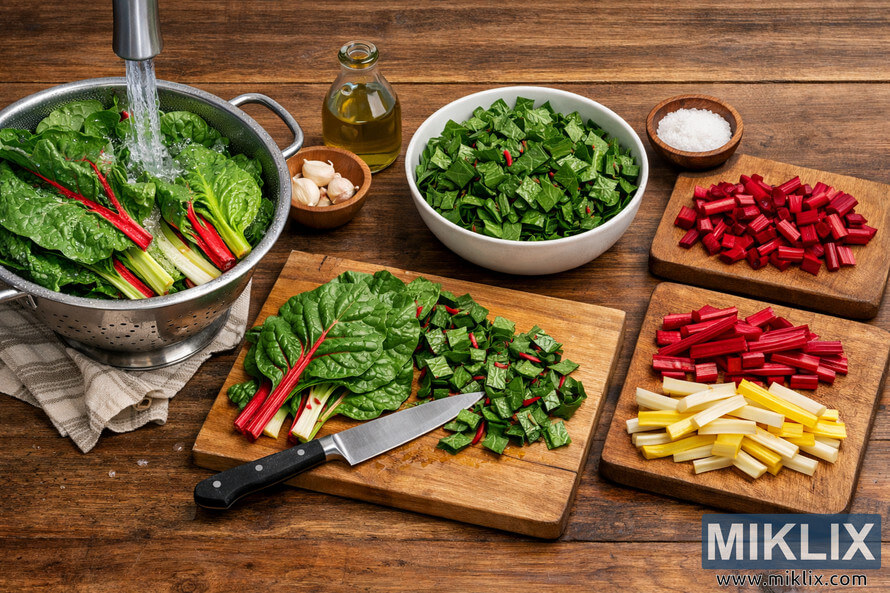
A high-resolution landscape photo illustrating the process of preparing Swiss chard, from washing and cutting to separating stems and leaves, arranged neatly on a wooden kitchen surface.
Step-by-Step Swiss Chard Preparation
Versions disponibles de cette image
Les fichiers image disponibles au téléchargement ci-dessous sont moins compressés et de résolution plus élevée – et par conséquent de meilleure qualité – que les images intégrées aux articles et aux pages de ce site Web, qui sont davantage optimisées en termes de taille de fichier afin de réduire la consommation de bande passante.
Taille standard (1,536 x 1,024)
Grande taille (3,072 x 2,048)
Très grande taille (4,608 x 3,072)
Taille extra large (6,144 x 4,096)
Taille comiquement grande (1,048,576 x 699,051)
- Téléchargement en cours... ;-)
Description de l'image
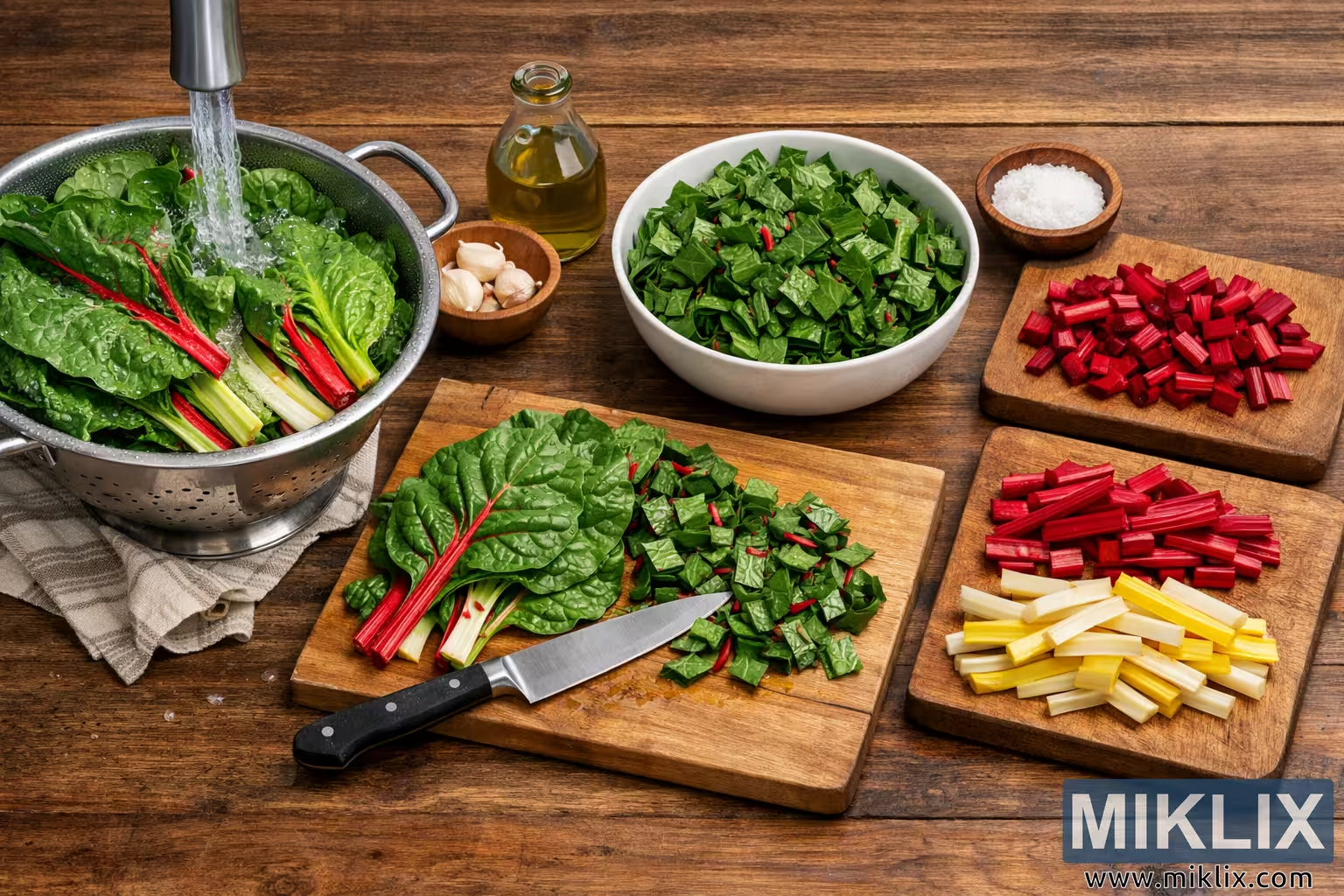
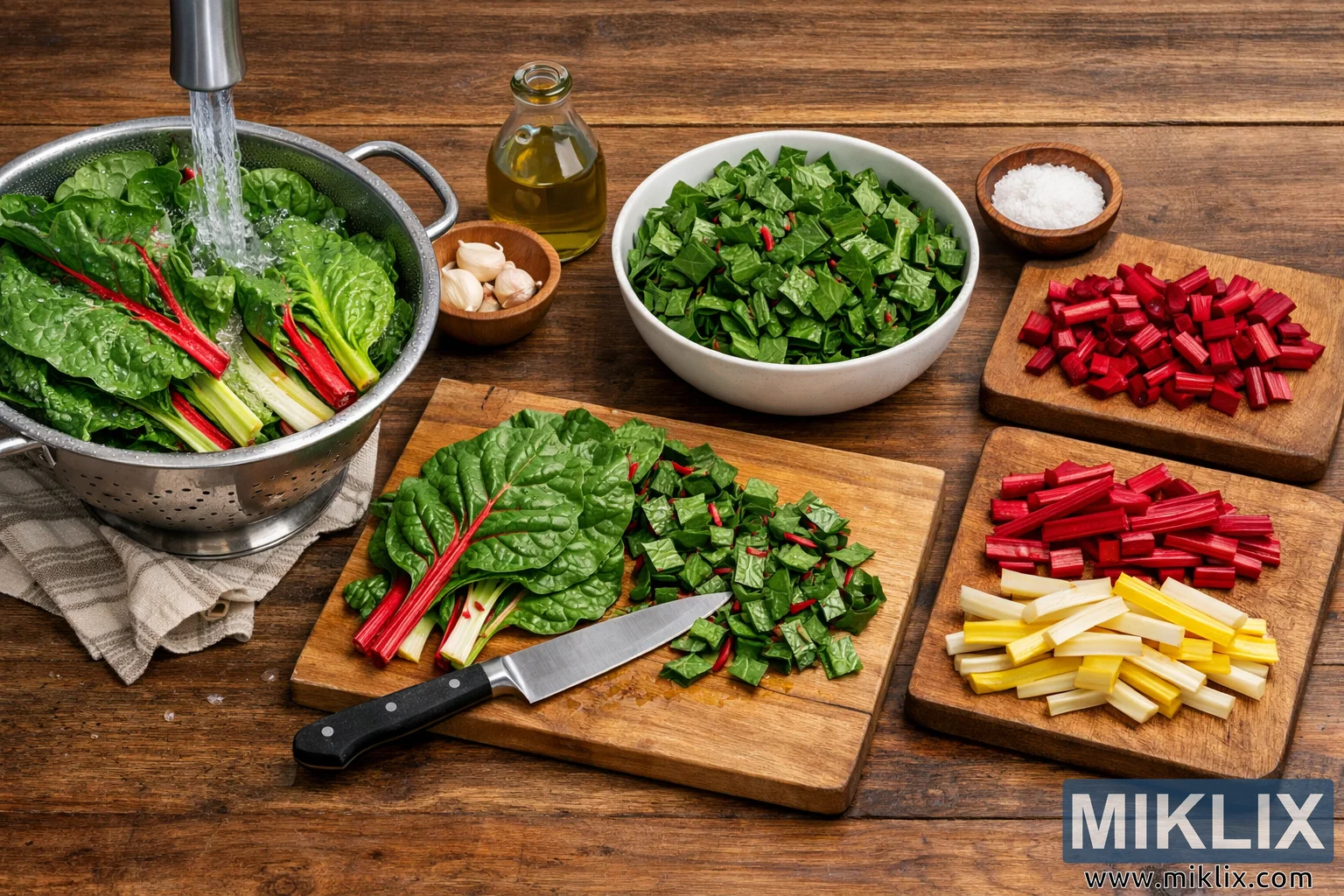
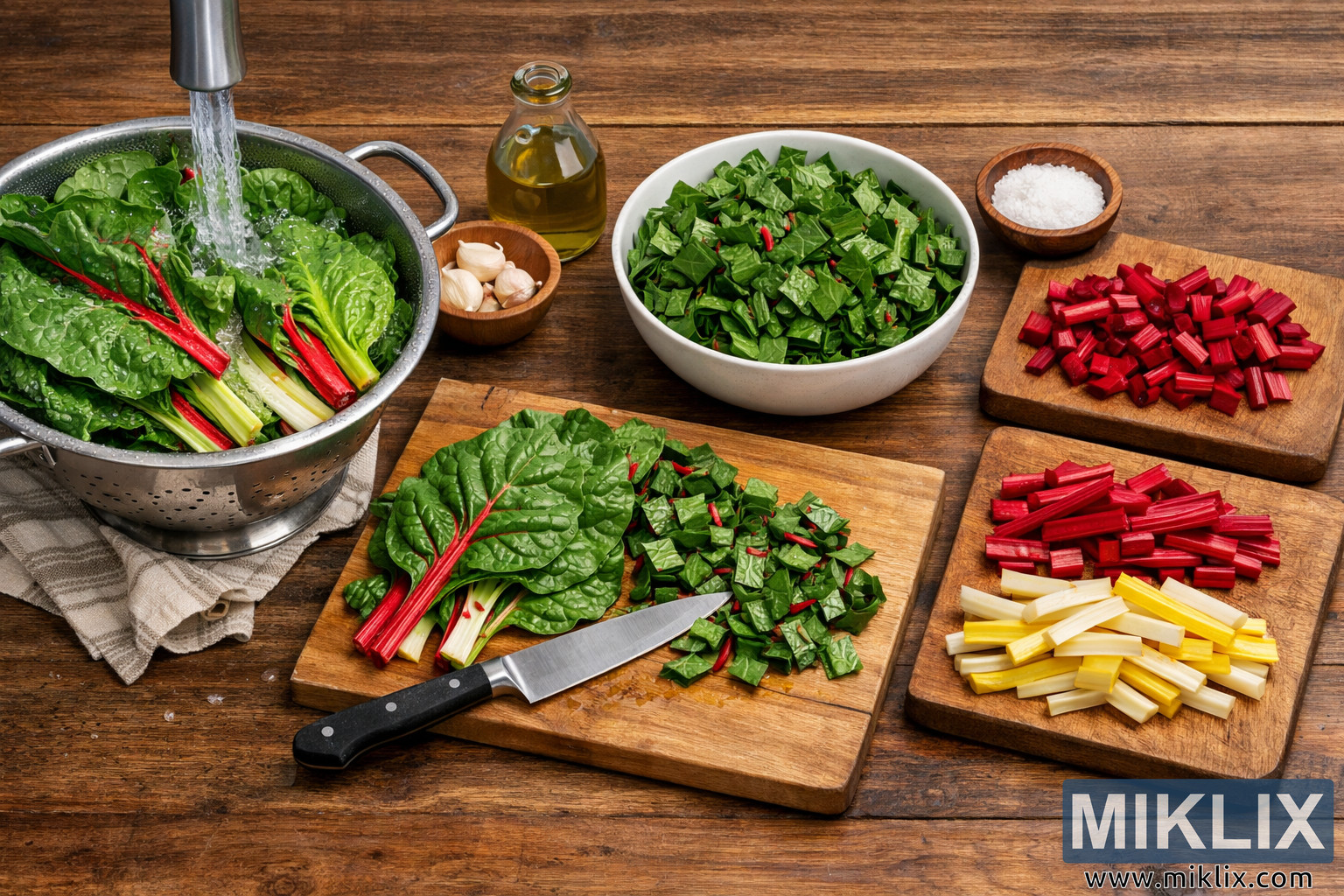
This image captures the complete process of preparing Swiss chard in a beautifully organized, step-by-step layout across a rustic wooden kitchen countertop. The composition unfolds from left to right, guiding the viewer through each stage of the preparation with clarity and visual harmony. On the far left, a stainless steel colander brimming with fresh Swiss chard sits under a running faucet. The water cascades over the vibrant green leaves, washing away any soil or residue. Droplets glisten on the surface of the leaves and splash gently onto the countertop, evoking a sense of freshness and cleanliness. The chard’s stems display a natural rainbow of colors—deep reds, bright yellows, and creamy whites—contrasting vividly against the muted tones of the wooden surface. A beige and white striped kitchen towel lies beneath the colander, adding a touch of homely warmth to the scene.
Moving toward the center-left, the next stage of preparation is shown on a sturdy wooden cutting board. A chef’s knife with a black handle and polished blade rests beside a bunch of Swiss chard, mid-cut. The leaves are partially sliced into bite-sized pieces, their crisp texture evident in the clean cuts. The knife’s placement suggests active motion, as if the preparation is ongoing. To the upper left of the cutting board, a small wooden bowl holds several garlic cloves, while a glass bottle of olive oil stands nearby, hinting at the ingredients that might accompany the chard in a future dish. The lighting is soft and natural, illuminating the textures of the wood, metal, and vegetables without harsh shadows.
In the center-right section, the focus shifts to organization and separation. A white ceramic bowl filled with chopped Swiss chard leaves sits prominently on the countertop. The leaves are neatly cut and piled high, their deep green hue contrasting with the bowl’s clean white surface. To the right of the bowl, the stems are arranged in two distinct piles: red stems above and yellow and white stems below. Each pile is carefully aligned, showcasing the precision and care of the preparation process. A small wooden bowl of coarse salt rests nearby, its crystalline texture catching the light and adding a subtle sparkle to the composition.
On the far right, two small wooden cutting boards display the final stage of separation. The upper board holds a pile of red stems cut into uniform pieces, while the lower board features yellow and white stems arranged in a similar fashion. The repetition of form and color creates a pleasing rhythm across the image, emphasizing the methodical nature of culinary preparation. The rustic wooden countertop ties all elements together, its grain and imperfections adding authenticity and warmth.
Throughout the image, the interplay of color, texture, and light conveys both practicality and artistry. The vibrant greens of the leaves, the jewel-like tones of the stems, and the earthy browns of the wood create a balanced palette that feels both natural and inviting. The composition is meticulously structured yet relaxed, evoking the calm satisfaction of preparing fresh produce by hand. Each object—the knife, bowls, towel, and ingredients—serves a purpose within the narrative, contributing to the overall sense of progression from raw to ready.
The photograph not only documents the steps of washing, cutting, and separating Swiss chard but also celebrates the beauty of the process itself. It invites the viewer to appreciate the tactile experience of cooking—the sound of running water, the crisp snap of stems under the knife, and the subtle aroma of fresh greens. The image embodies a moment of mindful preparation, where simplicity and care transform everyday ingredients into something visually and sensorially delightful.
L'image est liée à : Swiss Chard: Why It Is One of the Healthiest Leafy Greens