
Image: Laboratory Testing of Thyme’s Antibacterial Properties
Publié :
Dernière mise à jour : 13 septembre 2026 à 17 h 33 min 08 s UTC
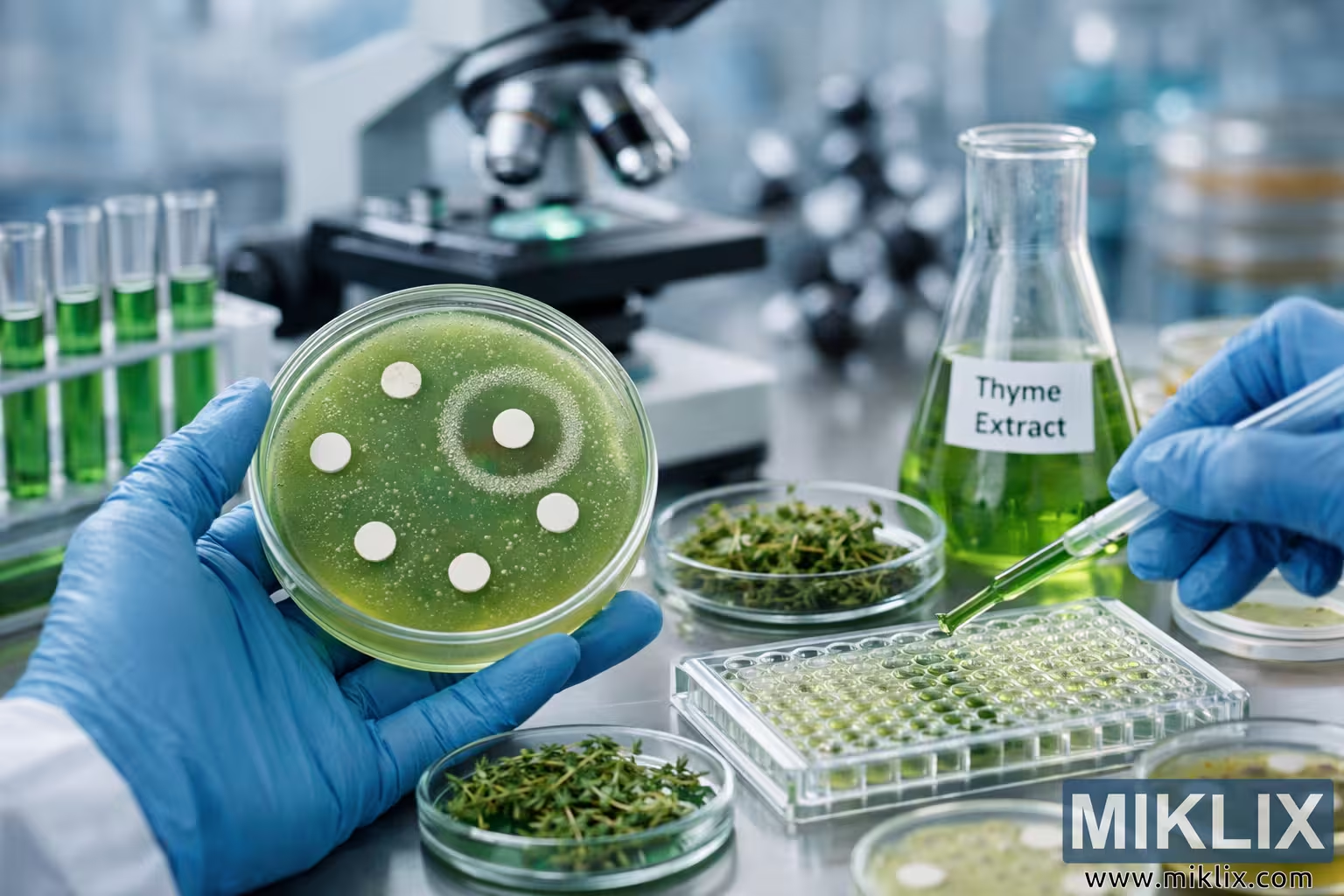
High-resolution laboratory scene depicting antibacterial testing of thyme extract. The image shows Petri dishes, thyme samples, and scientific equipment under bright lighting, illustrating the study of natural antimicrobial properties.
Laboratory Testing of Thyme’s Antibacterial Properties
Versions disponibles de cette image
Les fichiers image disponibles au téléchargement ci-dessous sont moins compressés et de résolution plus élevée – et par conséquent de meilleure qualité – que les images intégrées aux articles et aux pages de ce site Web, qui sont davantage optimisées en termes de taille de fichier afin de réduire la consommation de bande passante.
Taille standard (1,536 x 1,024)
Grande taille (3,072 x 2,048)
Très grande taille (4,608 x 3,072)
Taille extra large (6,144 x 4,096)
Taille comiquement grande (1,048,576 x 699,051)
- Téléchargement en cours... ;-)
Description de l'image
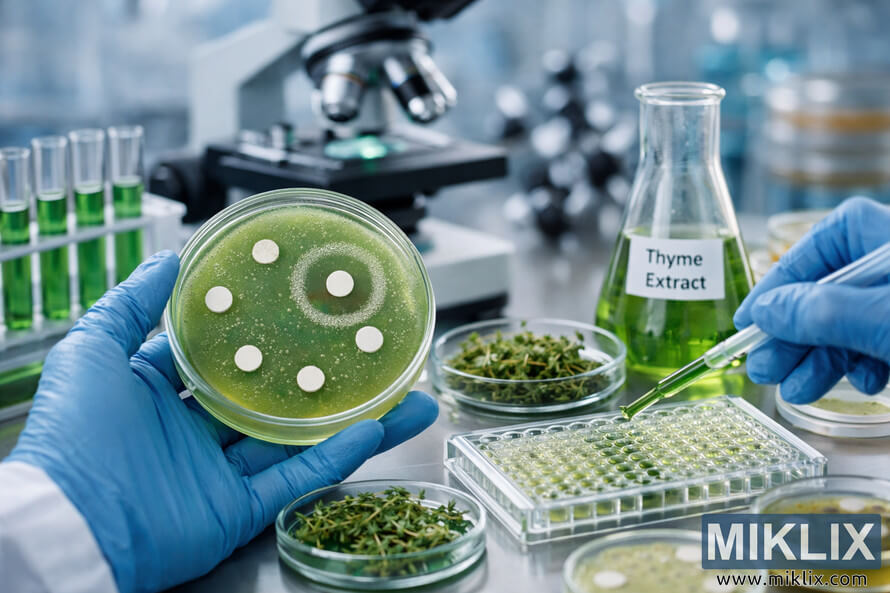
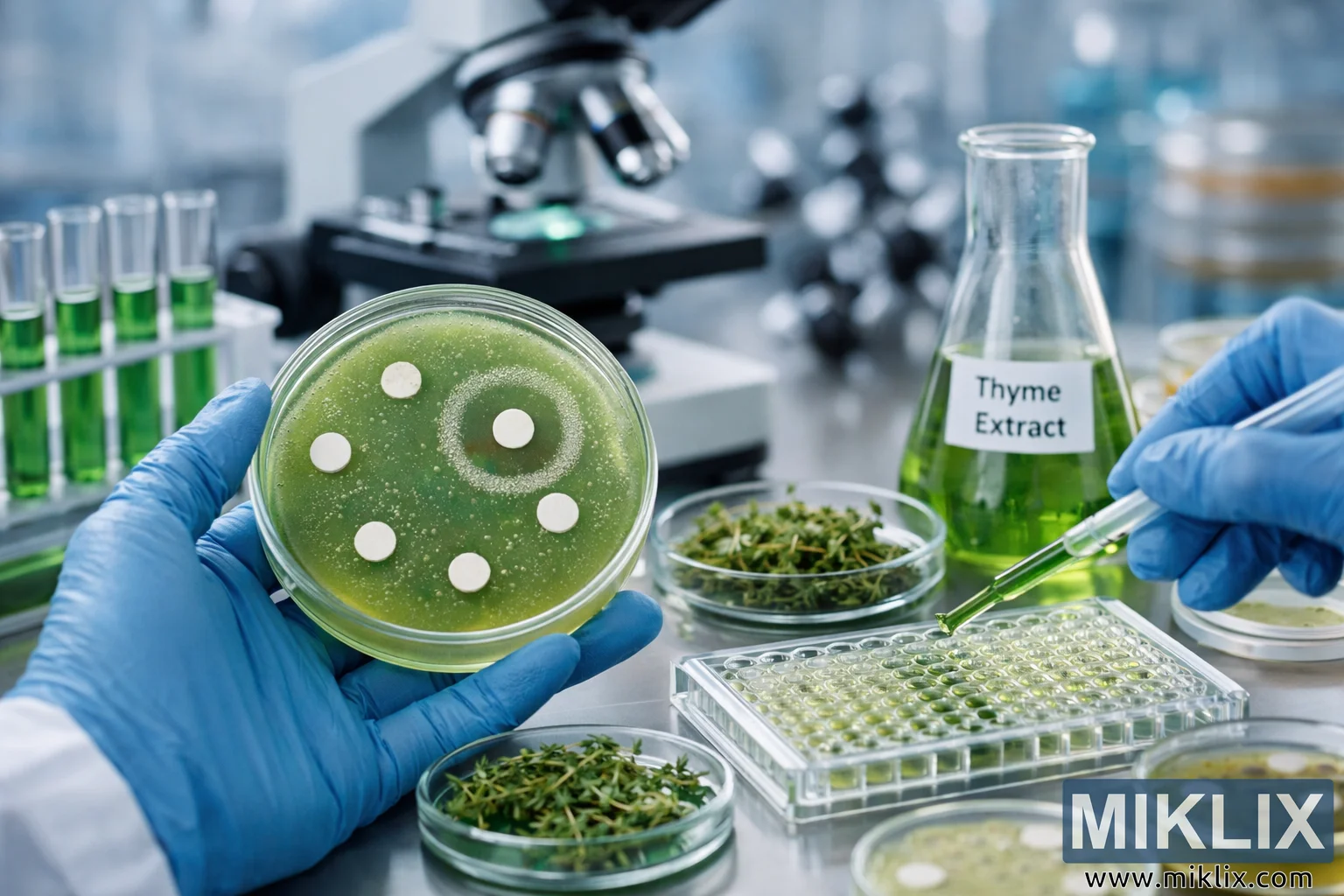
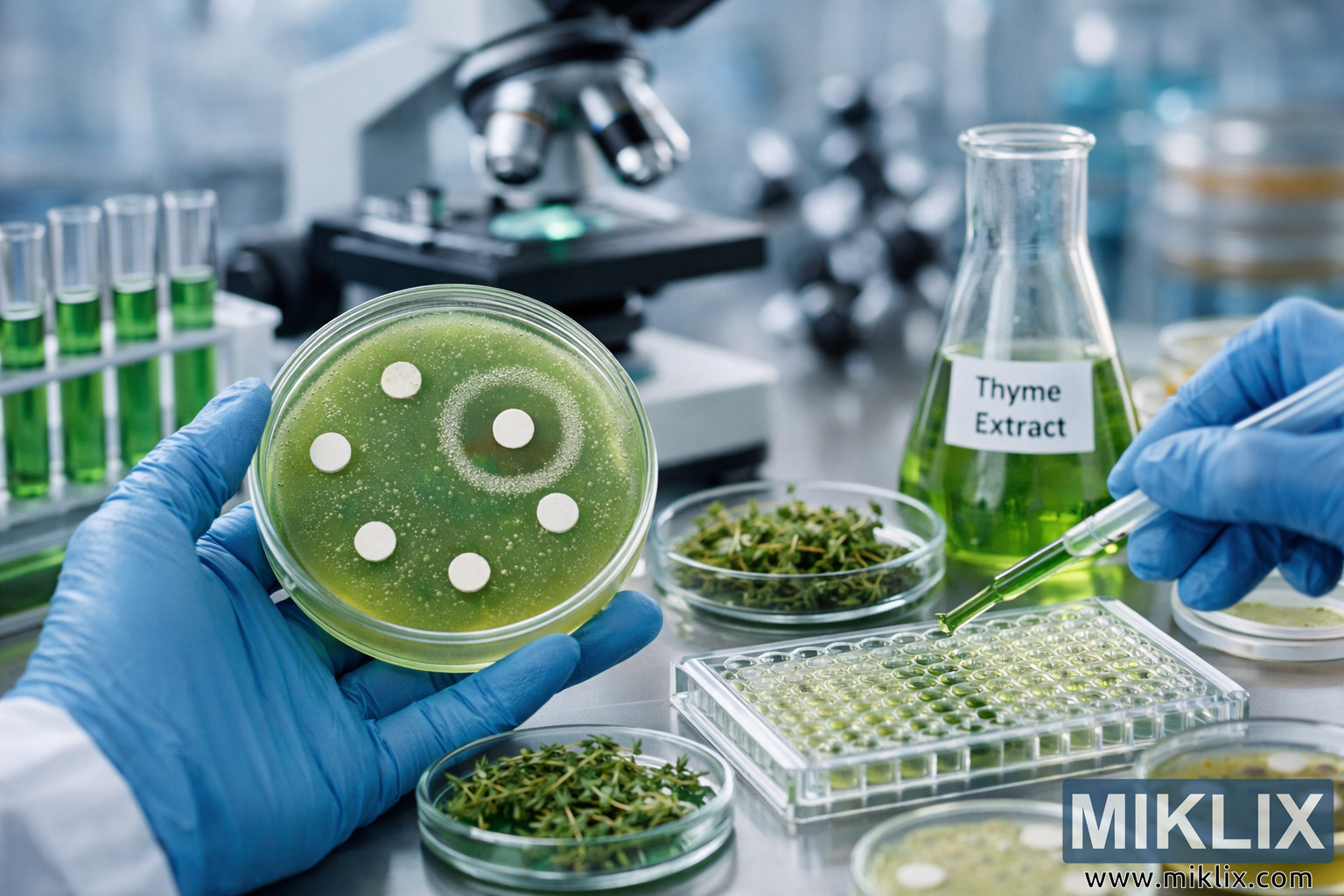
A high-resolution digital photograph captures a scientific laboratory where a researcher is conducting antibacterial tests on thyme extract. In the foreground, a Petri dish is held by a gloved left hand wearing blue nitrile gloves. The Petri dish contains a greenish agar medium and has six small white antibiotic discs placed on it in a circular pattern. Around one of the discs, there is a clear inhibition zone where bacteria have not grown, demonstrating the antibacterial effect of thyme extract. The Petri dish is held up to the camera to clearly display the inhibition zone around the disc with a distinct halo, emphasizing the success of the experiment.
To the left of the Petri dish, a sprig of fresh thyme rests on a glass dish, its small green leaves and woody stems providing a natural contrast to the sterile laboratory environment. Behind the thyme, a white rack holds test tubes filled with green liquid, each tube reflecting the light from the overhead lamps. To the left of the rack, several glass bottles with droppers contain similar green solutions, suggesting different concentrations or extracts of thyme being tested for antibacterial potency. Further back, a compound microscope stands ready for observation, its objective lenses and eyepieces directed toward the Petri dish, symbolizing the analytical precision of modern microbiology.
To the right of the Petri dish, a glass Erlenmeyer flask filled with green liquid bears a label that reads “Thyme Extract.” In front of the flask, a small Petri dish contains freshly cut thyme sprigs, linking the natural source of the extract to the scientific process. A pipette held by a gloved right hand dispenses a green liquid onto a clear 96-well plate, each well representing a separate sample for testing. The plate’s grid-like structure reflects the systematic approach of laboratory experimentation. Additional Petri dishes with bacterial cultures are visible in the lower right corner, each showing varying degrees of bacterial growth and inhibition.
In the background, stacks of Petri dishes and a bacterial culture under the microscope add depth to the composition. The blurred laboratory setting includes various glassware, pipettes, and molecular models, reinforcing the scientific atmosphere. The lighting is bright and even, casting subtle reflections on the glass surfaces and highlighting the textures of the agar, thyme leaves, and liquids. The focus is centered on the Petri dish with the inhibition zones, while the surrounding elements are slightly blurred to draw attention to the core of the experiment.
The image conveys a sense of precision and discovery, illustrating the intersection between natural remedies and scientific validation. The thyme extract, a traditional herbal component, is shown under rigorous laboratory conditions, bridging the gap between ancient botanical knowledge and modern microbiological research. The composition balances organic and synthetic elements—the earthy green of the thyme and extract against the metallic and glass tones of the laboratory tools.
Every detail contributes to the narrative of scientific inquiry: the gloved hands symbolize safety and professionalism; the labeled flask represents controlled experimentation; the inhibition zones demonstrate measurable results. The photograph encapsulates the meticulous process of testing natural substances for antibacterial properties, highlighting thyme’s potential as a source of bioactive compounds. The overall atmosphere is one of curiosity, precision, and respect for both nature and science, portraying a moment where empirical evidence meets botanical tradition in a modern research setting.
L'image est liée à : Thyme: The Fragrant Herb That Supports Better Health