
Image: Close-Up Landscape of Vibrant Green Turnip Leaves
Publié :
Dernière mise à jour : 14 septembre 2026 à 14 h 49 min 46 s UTC
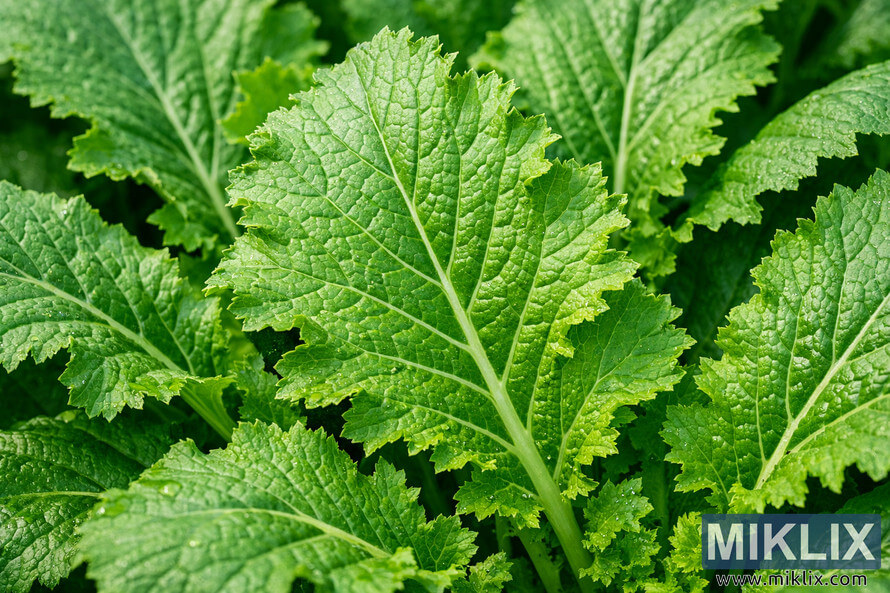
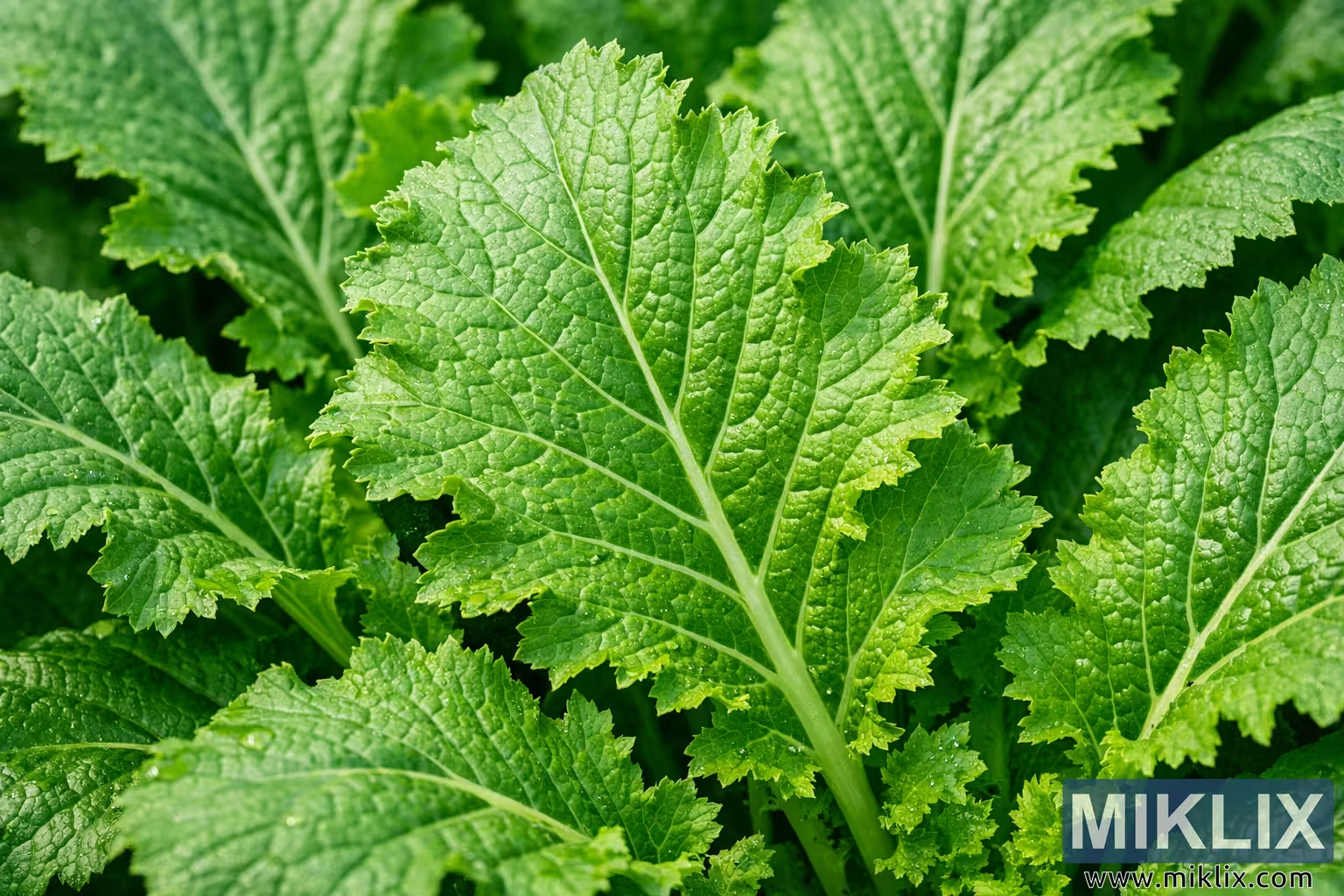
A detailed, landscape-oriented close-up of vibrant green turnip leaves, highlighting a central leaf with serrated edges, intricate veining, and glistening water droplets. The surrounding blurred foliage and natural, even lighting create a lush, fresh, and visually rich botanical scene.
Close-Up Landscape of Vibrant Green Turnip Leaves
Versions disponibles de cette image
Les fichiers image disponibles au téléchargement ci-dessous sont moins compressés et de résolution plus élevée – et par conséquent de meilleure qualité – que les images intégrées aux articles et aux pages de ce site Web, qui sont davantage optimisées en termes de taille de fichier afin de réduire la consommation de bande passante.
Taille standard (1,536 x 1,024)
Grande taille (3,072 x 2,048)
Très grande taille (4,608 x 3,072)
Taille extra large (6,144 x 4,096)
Taille comiquement grande (1,048,576 x 699,051)
- Téléchargement en cours... ;-)
Description de l'image
This image presents a richly detailed, landscape-oriented close-up of vibrant green turnip leaves, filling the entire frame with layered foliage and intricate textures. The composition is dominated by a single central leaf that immediately draws the eye. This leaf is a bright, saturated green, with subtle variations in tone that move from deeper hues near the midrib to slightly lighter shades along the serrated edges. The edges themselves are jagged and wavy, forming small, irregular teeth that give the leaf a lively, organic silhouette.
Running through the center of the leaf is a thick, pale vein that appears almost white in contrast to the surrounding green. From this central vein, a network of secondary veins branches outward, creating a delicate, web-like pattern that spreads across the leaf’s surface. These veins are lighter in color than the rest of the leaf, standing out as fine lines that guide the viewer’s gaze from the base of the leaf toward its tip and out toward the edges. The veining pattern emphasizes the natural structure of the plant, suggesting strength and vitality while also adding visual complexity.
The surface of the central leaf is subtly crinkled, with small bumps and ridges that catch the light differently across its area. This uneven texture gives the leaf a tactile quality, as if one could reach out and feel the gentle undulations beneath their fingertips. Tiny water droplets are scattered across the leaf, clinging to the surface and resting in the shallow grooves formed by the veins. These droplets glisten softly, reflecting the ambient light and adding a sense of freshness, as though the leaves have just been watered or touched by morning dew. Each droplet is small but distinct, contributing to the impression of a living, breathing plant in a natural environment.
Surrounding the central leaf are numerous other turnip leaves that overlap and extend beyond the edges of the frame. These leaves share the same vibrant green color and serrated edges, but they are slightly out of focus, creating a gentle blur that contrasts with the sharp detail of the central leaf. This shallow depth of field isolates the main leaf as the focal point while still providing context and a sense of abundance. The overlapping leaves form a dense canopy of foliage, suggesting a healthy, thriving plant bed where the leaves grow closely together.
The lighting in the image is even and natural, without harsh shadows or overly bright highlights. It appears as though the scene is illuminated by soft daylight, perhaps under a lightly overcast sky or in the filtered light of early morning or late afternoon. This gentle illumination enhances the green tones, making them appear rich and full without overwhelming the viewer. The light also helps to reveal the subtle variations in color and texture, from the darker areas near the veins to the lighter, almost translucent sections near the edges.
The overall color palette is dominated by shades of green, ranging from deep, forest-like tones to bright, almost neon hues. The veins, being lighter, introduce a delicate contrast that prevents the image from feeling flat. There are no other strong colors present, which keeps the focus entirely on the leaves themselves. This monochromatic emphasis on green reinforces the natural, organic character of the scene and evokes feelings of growth, renewal, and vitality.
The composition is carefully balanced, with the central leaf positioned slightly off-center, creating a dynamic yet harmonious arrangement. The surrounding leaves frame the main subject without distracting from it, their blurred forms acting as a soft backdrop that enhances the sense of depth. The viewer’s eye is naturally guided from the central vein outward along the branching veins, then toward the serrated edges, and finally into the surrounding foliage. This visual journey invites close inspection and encourages appreciation of the fine details that might otherwise go unnoticed in a more distant view.
The photograph captures not just the appearance of turnip leaves but also their character as living plant structures. The intricate veining suggests the pathways through which nutrients and water travel, while the fresh droplets hint at recent moisture and ongoing growth. The slight crinkles and ridges in the leaf surface speak to the plant’s adaptation to its environment, perhaps shaped by wind, light, and time. Together, these elements create a portrait of plant life that feels both intimate and expansive.
In addition to its botanical interest, the image has a strong aesthetic appeal. The repetition of similar shapes and textures across the frame creates a rhythmic pattern that is pleasing to the eye. The interplay of sharp focus and soft blur adds a sense of depth and dimension, making the viewer feel as though they are peering into a small, lush world. The close-up perspective transforms ordinary leaves into a subject of visual fascination, revealing details that might be overlooked in a wider view of a garden or field.
Overall, this landscape-oriented close-up of vibrant green turnip leaves offers a richly textured, visually engaging depiction of plant life. The central leaf, with its bright color, serrated edges, and intricate veining, serves as a compelling focal point, while the surrounding blurred foliage provides context and depth. The presence of tiny water droplets, the natural lighting, and the harmonious composition all contribute to a sense of freshness, vitality, and quiet beauty. It is an image that invites the viewer to pause, look closely, and appreciate the complexity and elegance of something as simple as a leaf.
L'image est liée à : Turnip: The Root Vegetable That Supports Better Health