
Image: Eye Protection Nutrients Found in Watermelon
Publié :
Dernière mise à jour : 16 août 2026 à 19 h 13 min 08 s UTC
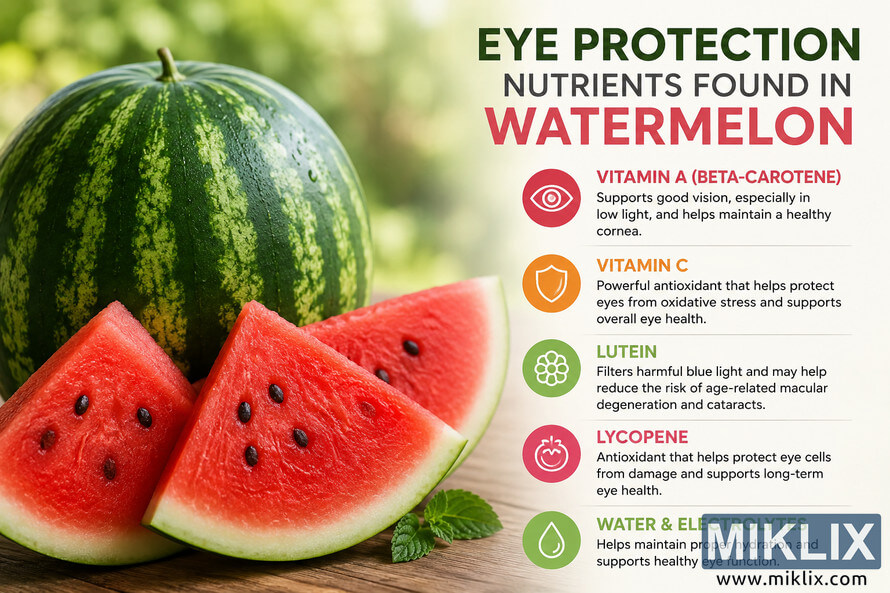
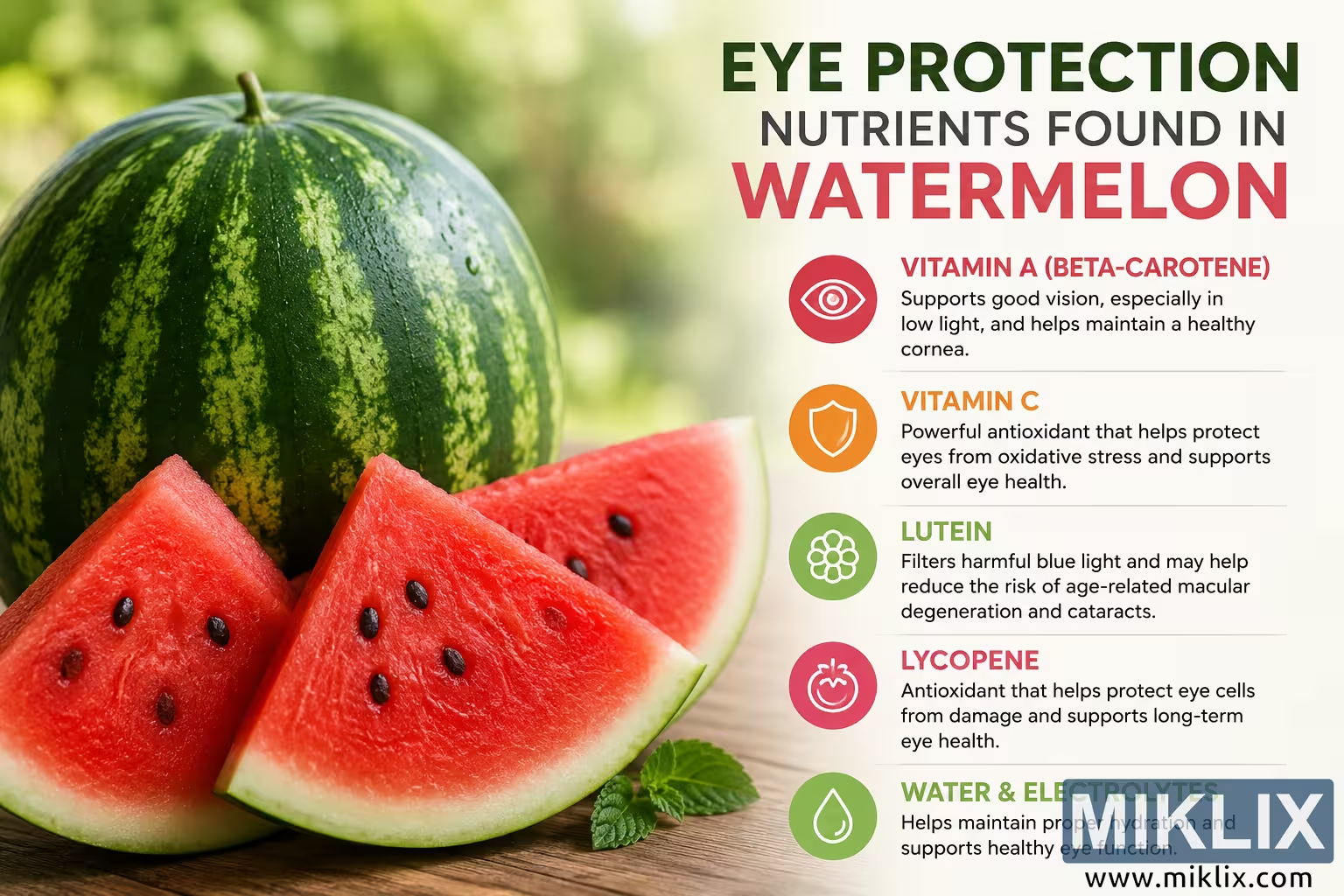
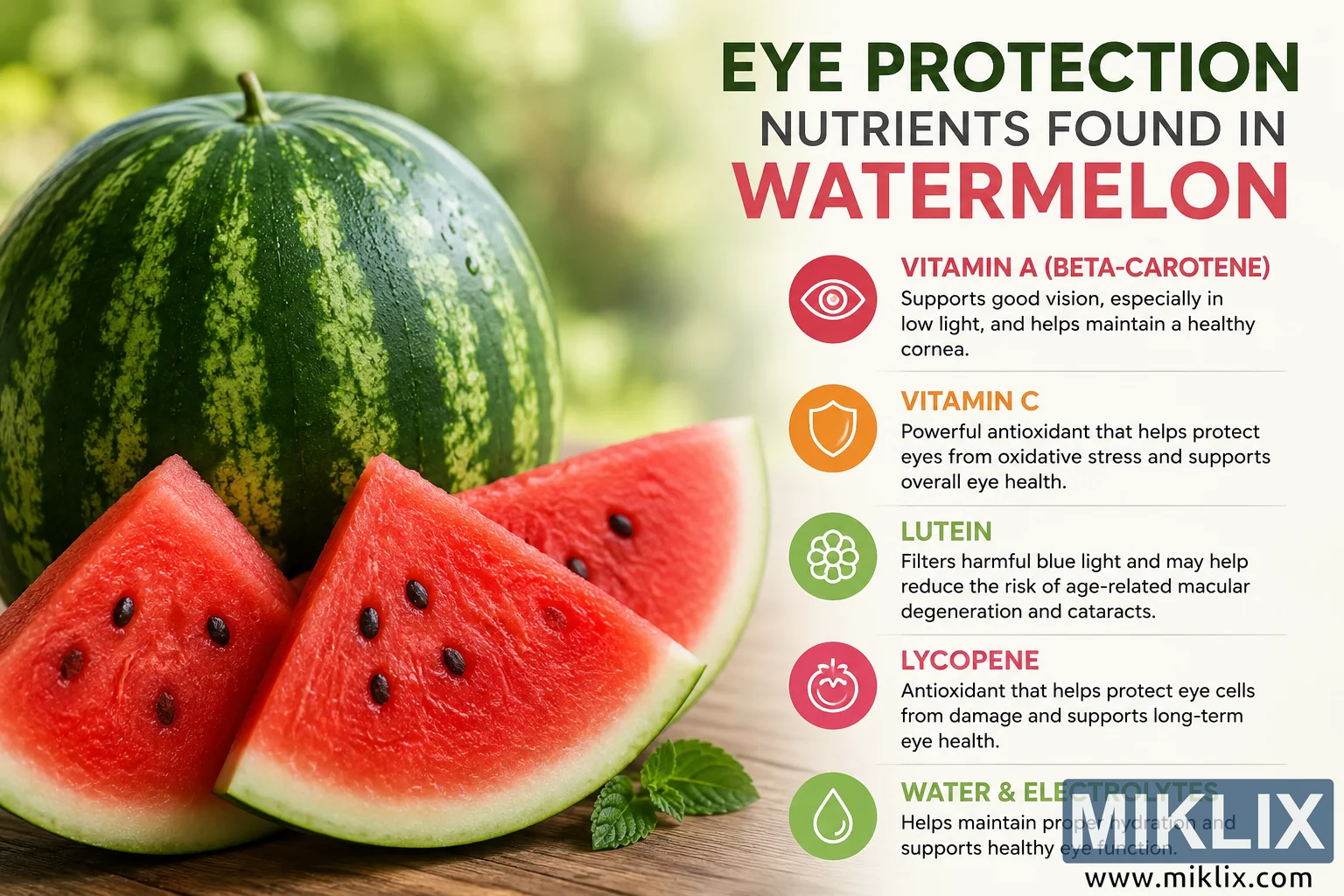
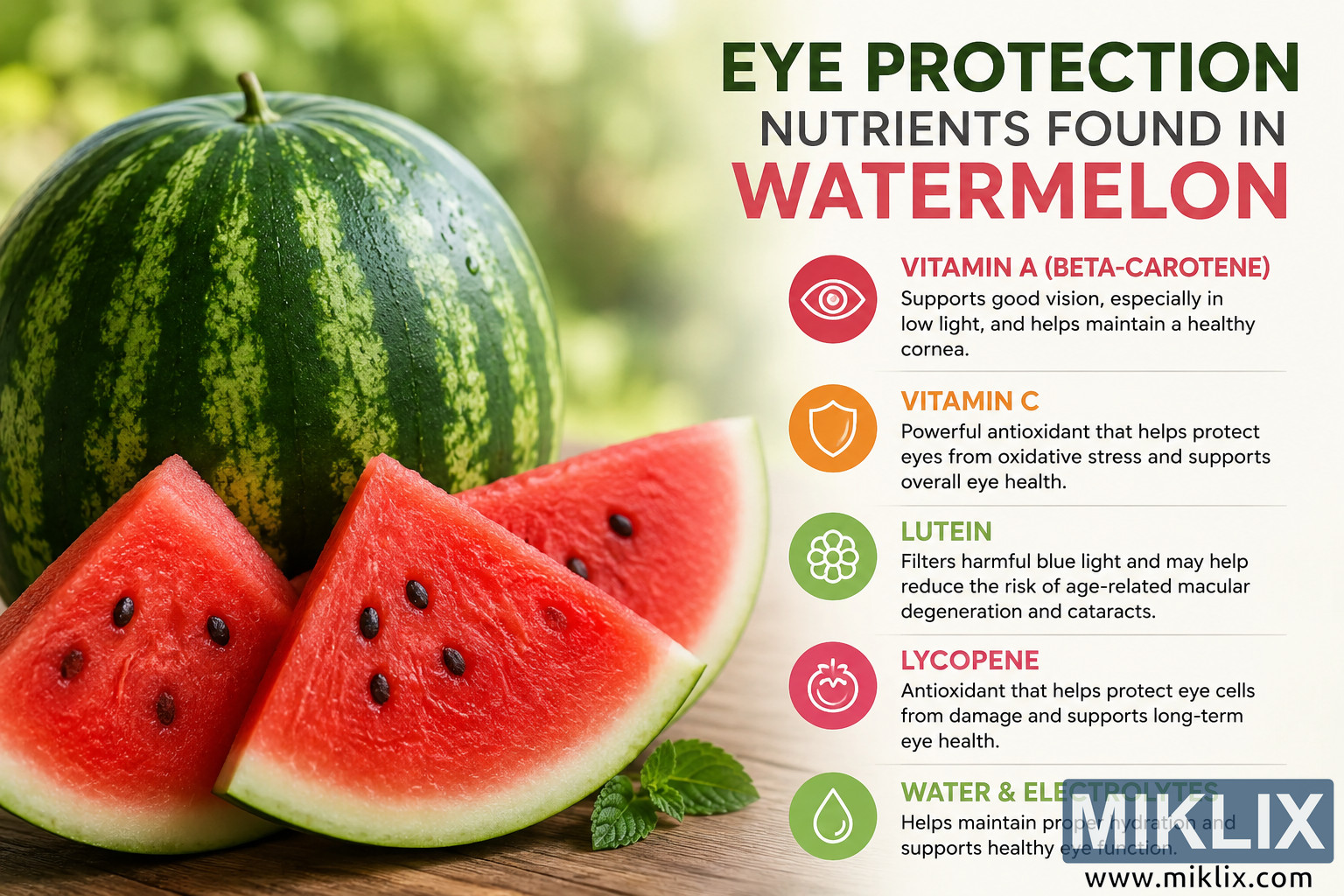
Landscape infographic illustrating watermelon and its eye-supporting nutrients. The design features fresh watermelon imagery alongside educational content about vitamin A, vitamin C, lutein, lycopene, and hydration in a clean, modern layout suitable for nutrition and wellness topics.
Eye Protection Nutrients Found in Watermelon
Versions disponibles de cette image
Les fichiers image disponibles au téléchargement ci-dessous sont moins compressés et de résolution plus élevée – et par conséquent de meilleure qualité – que les images intégrées aux articles et aux pages de ce site Web, qui sont davantage optimisées en termes de taille de fichier afin de réduire la consommation de bande passante.
Taille standard (1,536 x 1,024)
Grande taille (3,072 x 2,048)
Très grande taille (4,608 x 3,072)
Taille extra large (6,144 x 4,096)
Taille comiquement grande (1,048,576 x 699,051)
- Téléchargement en cours... ;-)
Description de l'image
This image is a high-resolution landscape-oriented educational infographic that focuses on the relationship between watermelon and nutrients associated with eye health. The composition is divided into two primary visual sections that balance photography and informational design. On the left side of the image is a vivid, photorealistic food scene, while the right side contains a structured informational panel with headings, icons, and explanatory text. The overall color palette emphasizes fresh greens, bright reds, soft whites, and natural wood tones, creating an inviting appearance that suggests freshness, health, and nutrition.
Dominating the left half of the composition is a large whole watermelon positioned slightly behind several freshly cut watermelon slices. The watermelon has a glossy dark green rind decorated with lighter green stripes that follow the fruit's natural curvature. Tiny droplets of moisture are visible across the rind, giving the impression that the fruit has recently been washed or chilled. In front of the whole fruit are several triangular watermelon slices with vibrant red flesh, crisp white rind, and green outer skin. Small black seeds are scattered naturally throughout the flesh, enhancing the realistic appearance. The watermelon pieces rest on a warm-toned wooden tabletop whose visible grain adds texture and contrast to the fruit. Near the slices sits a small sprig of fresh green mint leaves, providing an additional visual accent and reinforcing the fresh produce theme.
The background behind the fruit is intentionally blurred using a shallow depth-of-field effect. Soft green and cream-colored bokeh suggests an outdoor garden or sunlit natural environment without drawing attention away from the foreground. The gentle blur helps isolate the watermelon as the primary photographic subject while maintaining a bright, airy atmosphere. Warm natural lighting illuminates the fruit from above and slightly to one side, producing subtle highlights on the rind and soft shadows beneath the slices.
The right half of the infographic is dedicated to educational content. At the top is a bold headline presented in large uppercase lettering. The first line reads "EYE PROTECTION" in a dark green color. Below it appears "NUTRIENTS FOUND IN" in a smaller gray font. The largest word, "WATERMELON," is displayed prominently in a vivid red color that visually matches the fruit itself and immediately attracts attention. The typography is clean, modern, and easy to read, with generous spacing that supports a professional infographic style.
Below the heading is a vertically organized series of nutrient callouts. Each section begins with a colored circular icon positioned to the left of the text. The first icon contains a stylized eye symbol representing vision and accompanies information about vitamin A (beta-carotene). The second icon resembles a protective shield and corresponds to vitamin C. The third icon depicts a simplified flower-like symbol associated with lutein. The fourth icon features a tomato-inspired graphic representing lycopene, while the fifth icon shows a water droplet illustrating hydration and electrolytes. Each icon uses a distinct accent color, helping viewers visually separate the categories while maintaining a consistent design language.
Each nutrient section includes a bold nutrient name followed by a concise explanatory paragraph describing its proposed role in supporting eye health. Thin horizontal divider lines separate the sections, improving readability and creating a clear visual hierarchy. The text is aligned consistently and spaced evenly, making the information easy to scan from top to bottom.
The infographic combines realistic food photography with clean graphic design elements, creating an attractive educational resource that could be used in nutrition articles, health blogs, wellness presentations, educational materials, or social media posts. The composition successfully balances imagery and information without appearing cluttered. Strong contrast between the bright fruit, muted background, and white information panel helps direct the viewer's attention naturally from the watermelon toward the nutritional explanations. The overall impression is fresh, informative, visually appealing, and suitable for audiences interested in healthy eating, nutrition education, eye wellness, and fruit-based dietary information.
L'image est liée à : Watermelon: The Hydrating Superfruit You Should Eat More Often