
Image: Watermelon Brain Vitality: The Fusion of Hydration and Cognitive Health
Publié :
Dernière mise à jour : 16 août 2026 à 19 h 13 min 09 s UTC
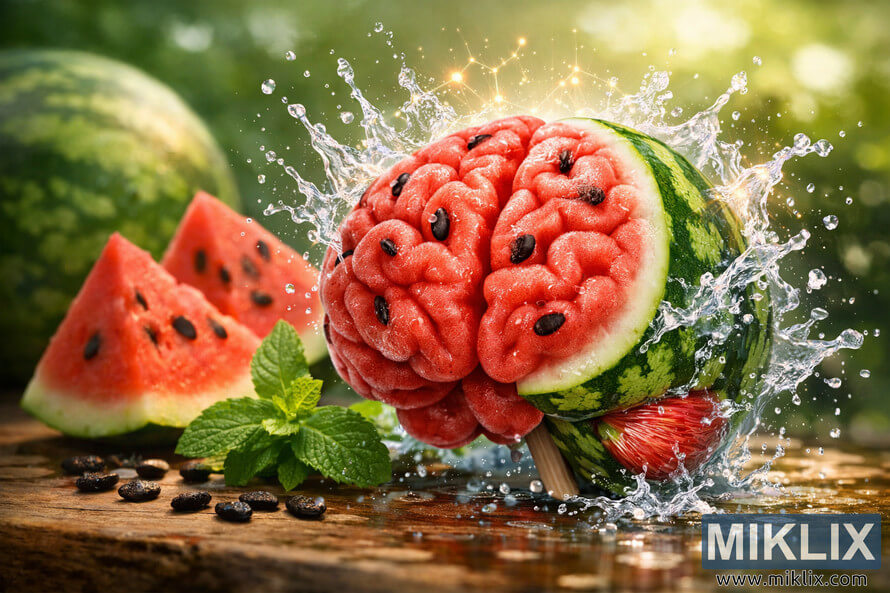
Explore the vivid concept of brain health through watermelon nutrients and hydration, captured in a stunning high-resolution image blending a human brain with watermelon textures and water splashes.
Watermelon Brain Vitality: The Fusion of Hydration and Cognitive Health
Versions disponibles de cette image
Les fichiers image disponibles au téléchargement ci-dessous sont moins compressés et de résolution plus élevée – et par conséquent de meilleure qualité – que les images intégrées aux articles et aux pages de ce site Web, qui sont davantage optimisées en termes de taille de fichier afin de réduire la consommation de bande passante.
Taille standard (1,536 x 1,024)
Grande taille (3,072 x 2,048)
Très grande taille (4,608 x 3,072)
Taille extra large (6,144 x 4,096)
Taille comiquement grande (1,048,576 x 699,051)
- Téléchargement en cours... ;-)
Description de l'image
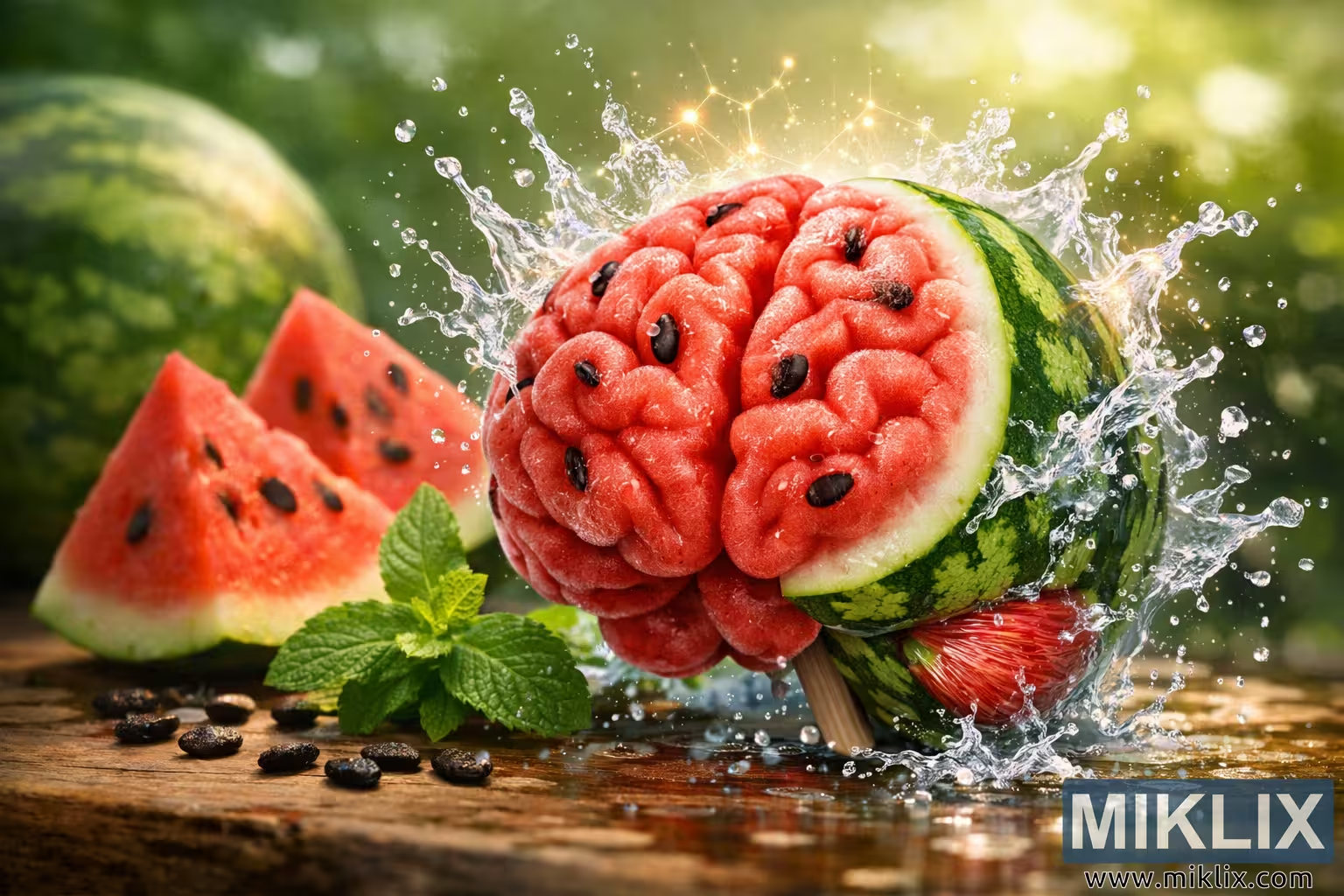
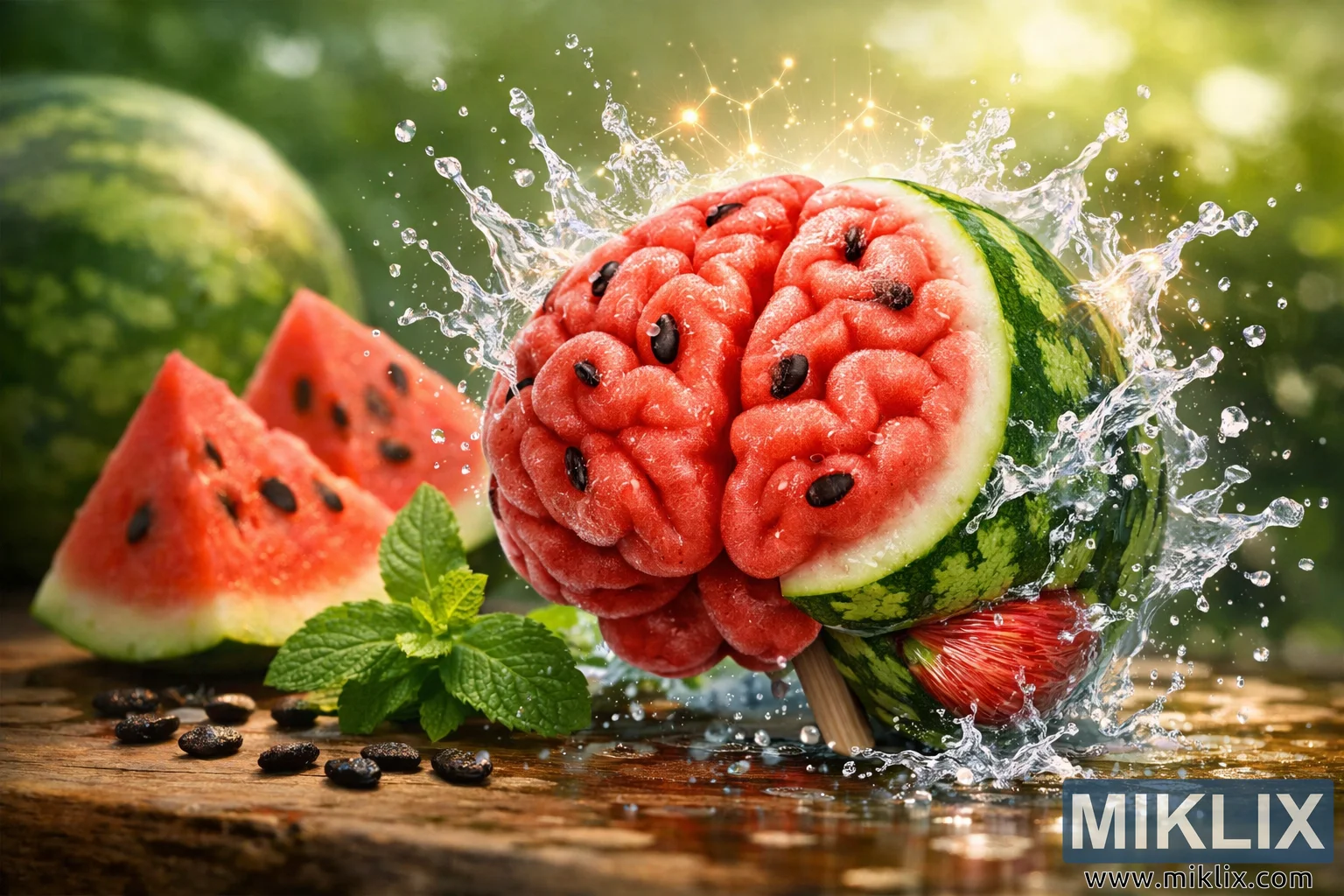
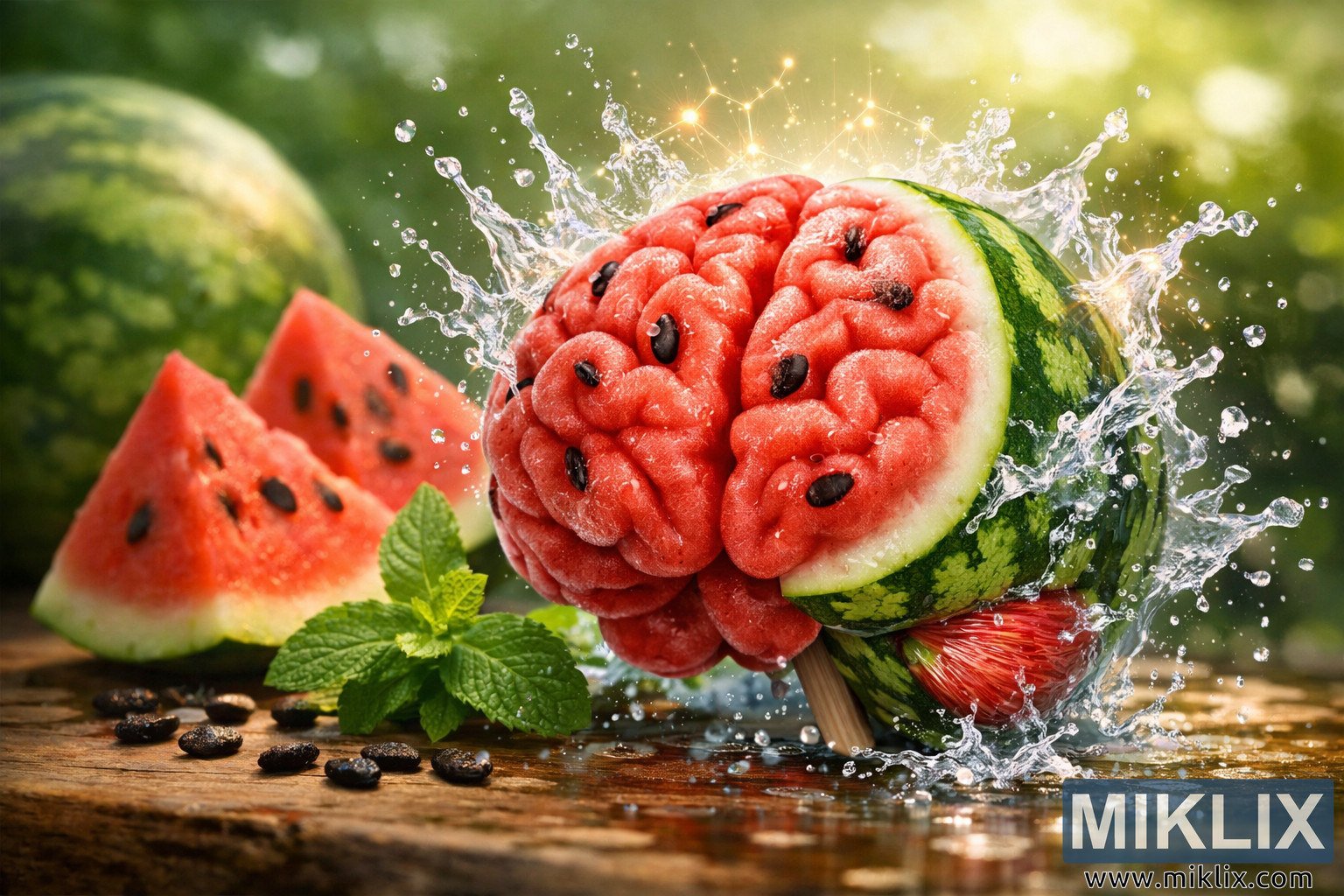
The image titled 'Watermelon Brain Vitality' presents a visually striking and imaginative representation of the connection between hydration, nutrition, and cognitive health. At the center of the composition lies a human brain that seamlessly merges with the vibrant textures of a watermelon. The right hemisphere of the brain retains its natural folds and contours, while the left hemisphere transforms into the juicy red flesh of a watermelon, complete with glossy black seeds embedded within. The transition between the brain tissue and the watermelon rind is smooth and organic, symbolizing the harmony between natural hydration and mental vitality.
Surrounding the central figure are dynamic splashes of water, frozen mid-motion, with droplets suspended in the air. These water elements evoke a sense of freshness and life, reinforcing the theme of hydration as essential for brain function. The droplets catch the light, creating tiny reflections and sparkles that add depth and realism to the scene. The water appears to burst outward from the brain, suggesting an energetic release of vitality and clarity.
To the left of the brain, several triangular slices of watermelon rest on a rustic wooden surface. The slices are rich in color, displaying the deep red of the fruit’s flesh and the contrasting green of its rind. Fresh mint leaves are placed nearby, their bright green hue complementing the watermelon’s tones and adding a touch of natural fragrance to the visual narrative. Scattered across the wooden surface are black watermelon seeds, each glistening slightly under the light, contributing to the organic realism of the composition.
In the background, a softly blurred natural environment unfolds, bathed in warm sunlight filtering through lush greenery. The bokeh effect creates a sense of depth and tranquility, allowing the viewer’s focus to remain on the central subject while still evoking the serenity of nature. The overall lighting is bright and balanced, with highlights emphasizing the moisture on the watermelon and the sheen of the water droplets.
Subtle glowing lines form a neural network around the brain, connecting luminous nodes that pulse with energy. These electric filaments symbolize synaptic activity and the flow of information within the mind. The glow is gentle yet radiant, blending seamlessly with the surrounding water effects to create a sense of interconnected vitality. The neural network’s design suggests that the nutrients and hydration provided by watermelon contribute to enhanced cognitive performance and mental clarity.
The composition is carefully balanced: the watermelon brain occupies the right side of the frame, while the slices and mint leaves on the left provide visual counterweight. The wooden surface anchors the scene, adding a natural texture that contrasts with the smoothness of the water and the organic curves of the brain. The color palette is harmonious, dominated by reds, greens, and cool blues, which together evoke feelings of freshness, health, and rejuvenation.
The image’s symbolism extends beyond its literal elements. The fusion of brain and fruit represents the idea that proper hydration and nutrient intake can nourish both body and mind. Watermelon, known for its high water content and rich supply of antioxidants like lycopene and citrulline, becomes a metaphor for mental refreshment and vitality. The splashing water embodies the cleansing and energizing effects of hydration, while the glowing neural network conveys the spark of cognitive enhancement.
Every detail in the image contributes to a cohesive narrative of wellness and balance. The interplay of light and texture, the juxtaposition of organic forms, and the dynamic motion of water all work together to create a sense of living energy. The viewer is invited to contemplate the relationship between nature’s gifts and human health, appreciating how something as simple as a fruit can symbolize profound biological harmony.
Ultimately, 'Watermelon Brain Vitality' is not just a visual artwork—it is a conceptual statement about the synergy between hydration, nutrition, and mental performance. It captures the essence of vitality in a single frame, blending scientific symbolism with artistic imagination. The image radiates positivity and freshness, encouraging viewers to reflect on the importance of nourishing both the body and the mind through natural sources of hydration and nutrients.
L'image est liée à : Watermelon: The Hydrating Superfruit You Should Eat More Often