
Image: Frozen Watermelon Cubes on Frosted Ice
Publié :
Dernière mise à jour : 16 août 2026 à 19 h 13 min 09 s UTC
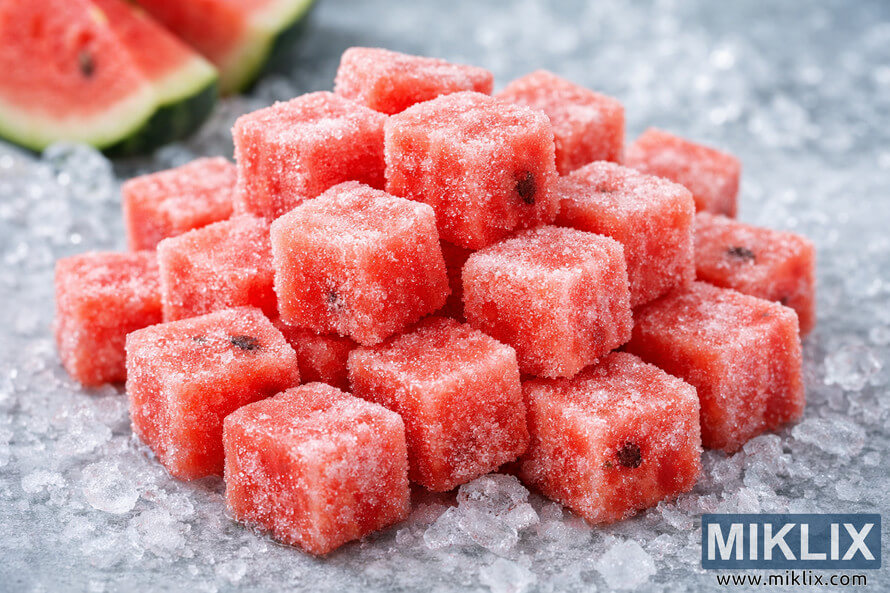
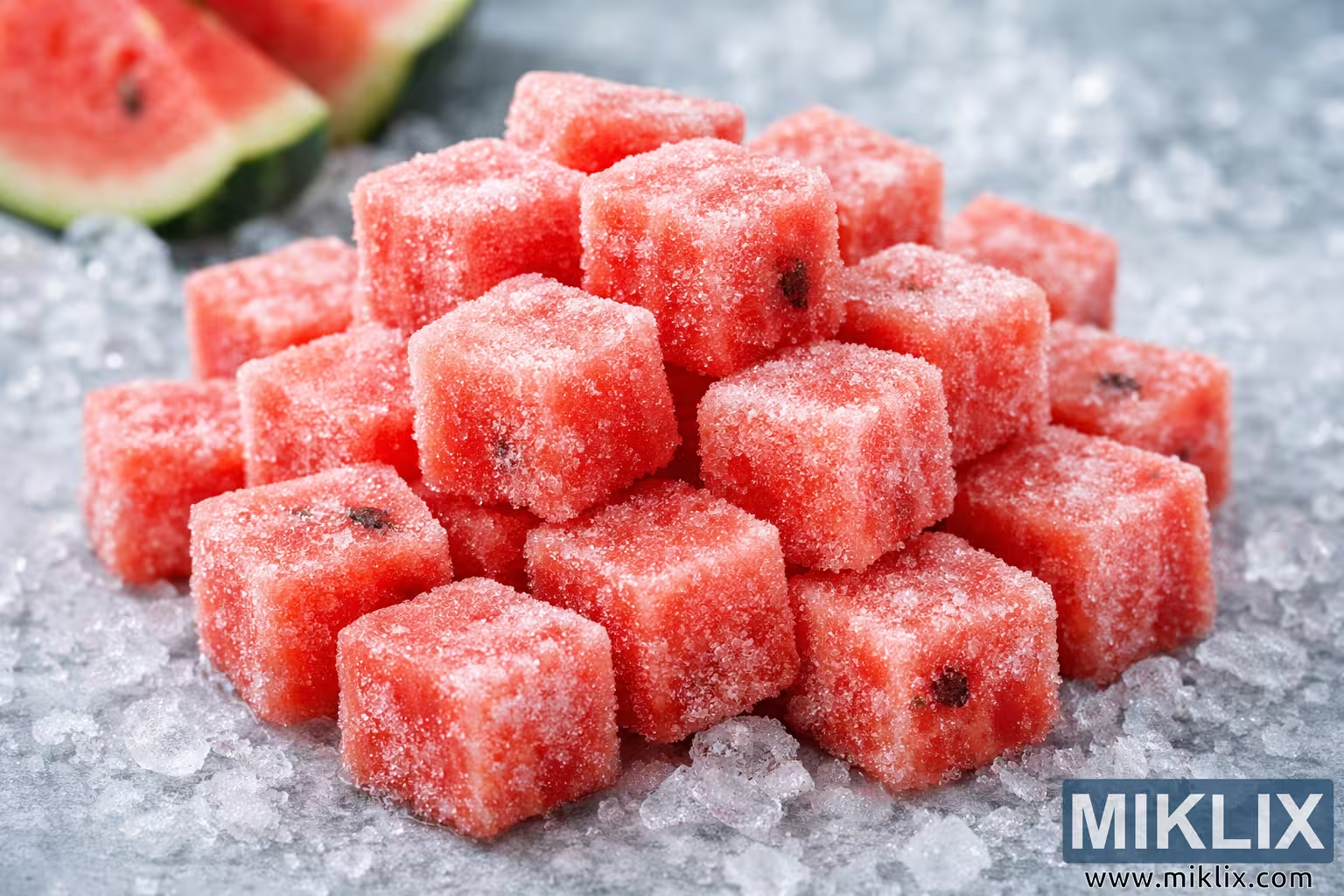
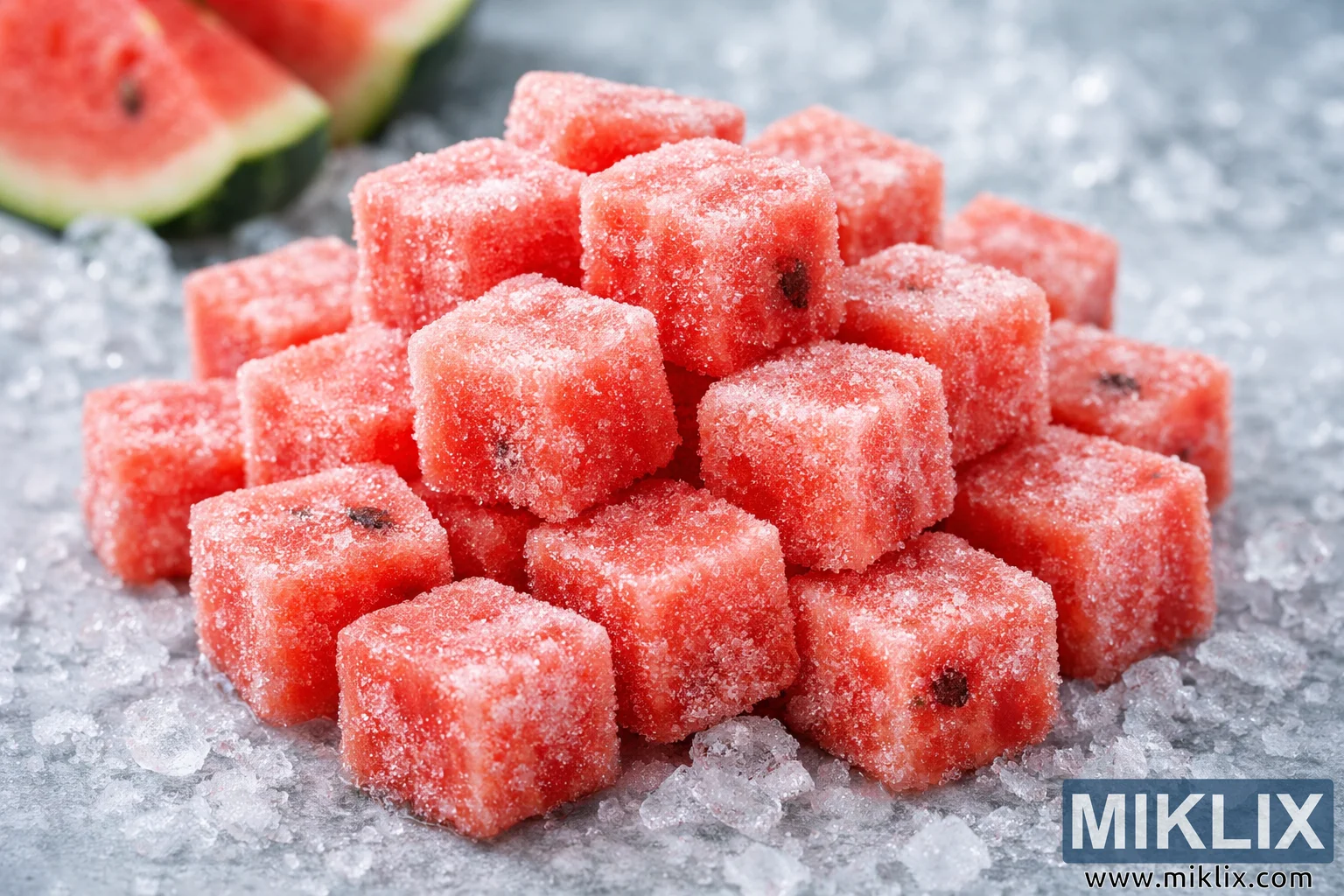
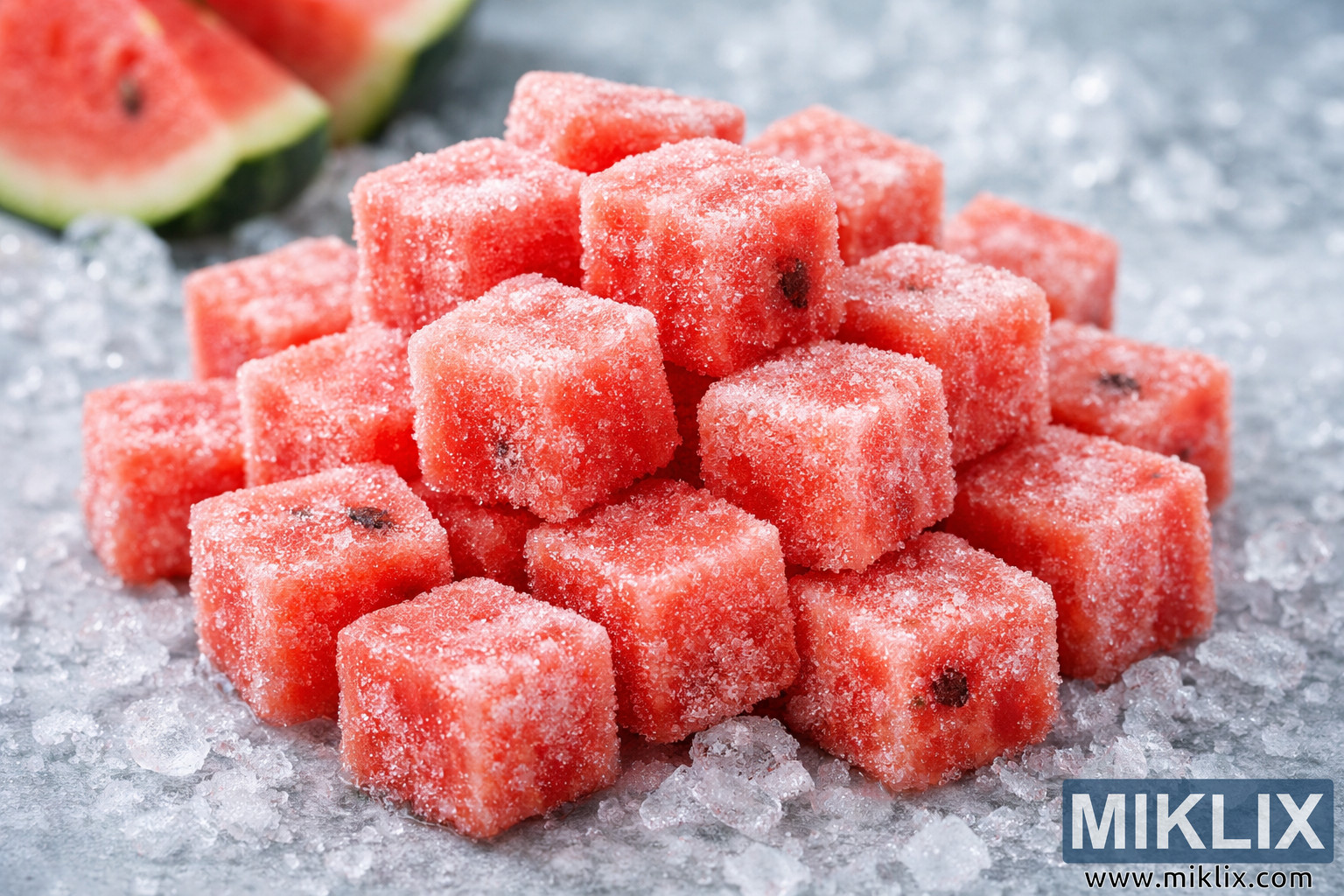
A vibrant close-up of frozen watermelon cubes coated in frosty ice crystals, stacked on an icy surface with blurred watermelon slices and crushed ice in the background. Bright, even lighting and a shallow depth of field highlight the refreshing texture and color, making the scene perfect for illustrating smoothies, frozen treats, and cool summer desserts.
Frozen Watermelon Cubes on Frosted Ice
Versions disponibles de cette image
Les fichiers image disponibles au téléchargement ci-dessous sont moins compressés et de résolution plus élevée – et par conséquent de meilleure qualité – que les images intégrées aux articles et aux pages de ce site Web, qui sont davantage optimisées en termes de taille de fichier afin de réduire la consommation de bande passante.
Taille standard (1,536 x 1,024)
Grande taille (3,072 x 2,048)
Très grande taille (4,608 x 3,072)
Taille extra large (6,144 x 4,096)
Taille comiquement grande (1,048,576 x 699,051)
- Téléchargement en cours... ;-)
Description de l'image
The image presents a vivid, mouthwatering close-up of frozen watermelon cubes arranged in a loose, organic pile on a frosty, ice-covered surface. Each cube is cut into neat, bite-sized pieces, with sharp edges and clean lines that emphasize their geometric shape. The dominant color is a rich, saturated red, characteristic of ripe watermelon flesh, and this red hue stands out strikingly against the cool, pale tones of the icy background. Some cubes reveal a slightly darker red core, suggesting the denser, juicier center of the fruit, while others show subtle variations in tone where the light interacts with the frozen surface.
A delicate layer of frost and tiny ice crystals coats the exterior of the cubes, giving them a distinctly frozen, almost sparkling appearance. These crystals catch the bright, even lighting and glisten softly, creating a sense of freshness and chill that immediately evokes the idea of a refreshing summer treat. The frost is especially noticeable along the edges and corners of the cubes, where the ice has formed intricate patterns that add texture and visual interest. In certain areas, the frost appears slightly thicker, hinting at the cold environment and the time the cubes have spent resting on the icy surface.
The cubes are stacked in a casual, haphazard pile, with some leaning against each other and others resting on top, forming a small mound that naturally draws the viewer’s eye to the center of the composition. This arrangement feels uncontrived and spontaneous, as if the cubes were just poured out or scooped up and placed on the ice moments before the photograph was taken. A few cubes sit slightly apart from the main pile, adding a sense of movement and flow, as though they have tumbled outward. The positioning of the cubes creates subtle shadows and highlights, further emphasizing their three-dimensional form and the interplay between light and texture.
Embedded within the red flesh of several cubes are small, black watermelon seeds. These seeds are scattered irregularly, some near the surface and others deeper within the fruit, and they provide a contrasting detail that breaks up the uniform red color. Their presence reinforces the natural, unprocessed quality of the watermelon, reminding the viewer that these frozen cubes originate from fresh, real fruit rather than a manufactured product. The seeds also contribute to the overall visual rhythm of the image, punctuating the smooth surfaces with tiny, dark accents.
The surface beneath the cubes is icy and textured, covered with frost, ice shards, and small fragments of crushed ice. This base layer appears almost crystalline, with jagged shapes and irregular patterns that catch the light in different ways. The cool tones of the ice—ranging from white to pale blue-gray—create a striking contrast with the warm red of the watermelon, enhancing the sense of chill and making the cubes look even more vibrant by comparison. The ice beneath the pile looks slightly compressed, as if the weight of the cubes has pressed them into the frosty surface, adding a subtle sense of physical realism.
In the background, slightly out of focus due to the shallow depth of field, there are a few slices of fresh watermelon positioned to the left side of the frame. These slices display the familiar green rind and red flesh, with the rind forming a curved border that visually frames the cubes in the foreground. The blurred watermelon slices serve as a contextual element, reinforcing the identity of the frozen cubes and suggesting a connection between fresh fruit and frozen preparation. The background also contains scattered pieces of crushed ice, which glimmer softly and contribute to the overall atmosphere of cold refreshment.
The photograph employs a shallow depth of field, ensuring that the frozen watermelon cubes in the foreground are rendered with crisp, sharp detail, while the background elements—watermelon slices and crushed ice—are gently blurred. This selective focus guides the viewer’s attention directly to the pile of cubes, making them the clear focal point of the image. The blur in the background adds a sense of depth and dimension, preventing the composition from feeling flat and instead creating a layered, immersive scene.
The lighting in the image is bright and even, illuminating the cubes from above and slightly to the side. This lighting setup highlights the frosty texture of the cubes and the ice crystals on their surface, causing them to sparkle subtly without creating harsh glare. The light also enhances the natural translucency of the watermelon flesh, allowing some areas to appear slightly luminous, as if the light is passing through the frozen fruit. Soft reflections and gentle shadows help define the contours of each cube, making them appear tangible and almost within reach.
Overall, the image conveys a strong sense of coolness, freshness, and indulgence. The frozen watermelon cubes look ready to be used in smoothies, frozen desserts, or icy treats, and their vibrant color and frosty coating make them visually irresistible. The combination of sharp foreground detail, blurred background context, and carefully balanced lighting creates a visually appealing composition that celebrates the simple beauty of frozen fruit. The scene feels both refreshing and inviting, capturing the essence of a chilled, summery delight in a single, striking photograph.
L'image est liée à : Watermelon: The Hydrating Superfruit You Should Eat More Often