
Image: Watermelon Health Awareness: Benefits and Precautions
Publié :
Dernière mise à jour : 16 août 2026 à 19 h 13 min 10 s UTC
Explore the health benefits and potential side effects of watermelon consumption through a vivid awareness image featuring hydration, vitamins, and cautionary notes about digestive issues and blood sugar spikes.
Watermelon Health Awareness: Benefits and Precautions
Versions disponibles de cette image
Les fichiers image disponibles au téléchargement ci-dessous sont moins compressés et de résolution plus élevée – et par conséquent de meilleure qualité – que les images intégrées aux articles et aux pages de ce site Web, qui sont davantage optimisées en termes de taille de fichier afin de réduire la consommation de bande passante.
Taille standard (1,536 x 1,024)
Grande taille (3,072 x 2,048)
Très grande taille (4,608 x 3,072)
Taille extra large (6,144 x 4,096)
Taille comiquement grande (1,048,576 x 699,051)
- Téléchargement en cours... ;-)
Description de l'image
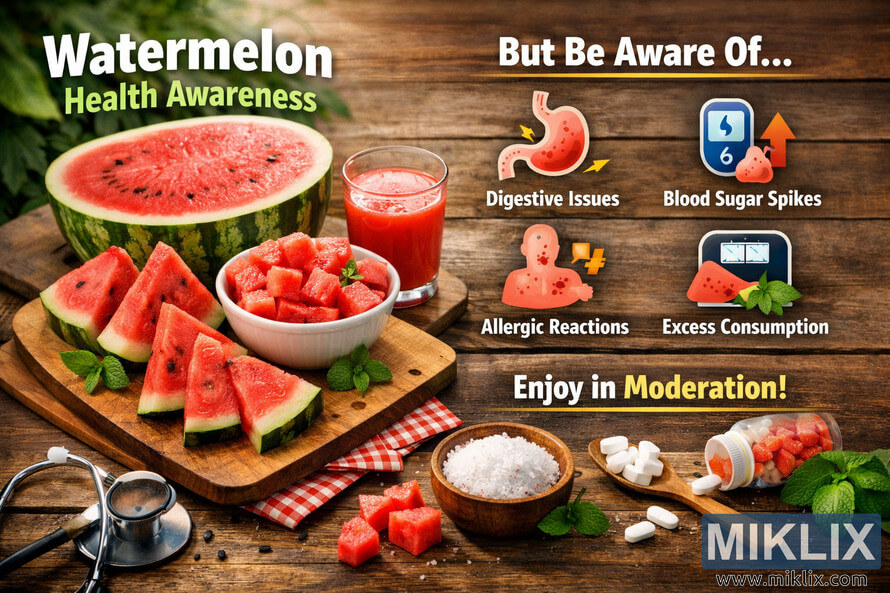
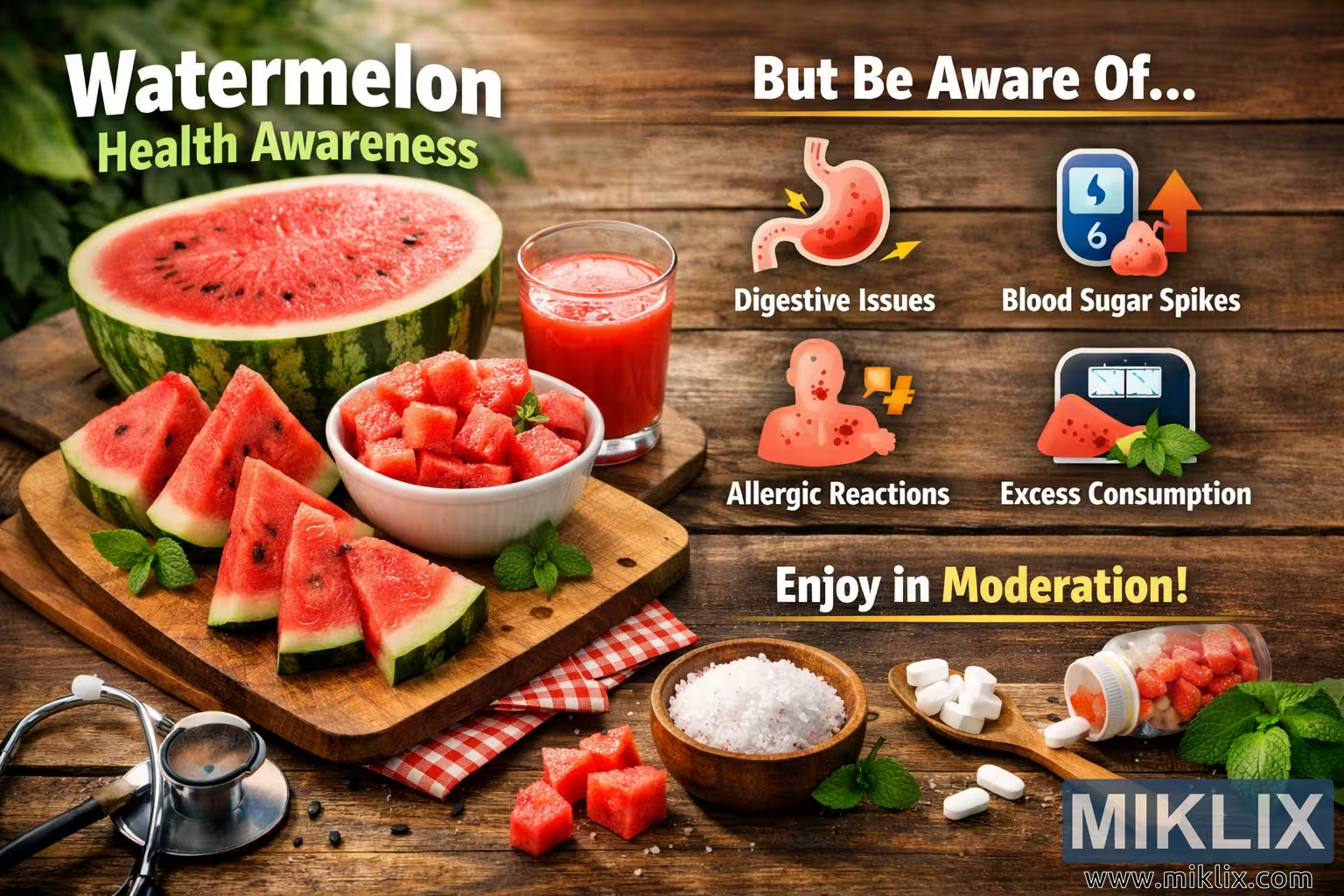
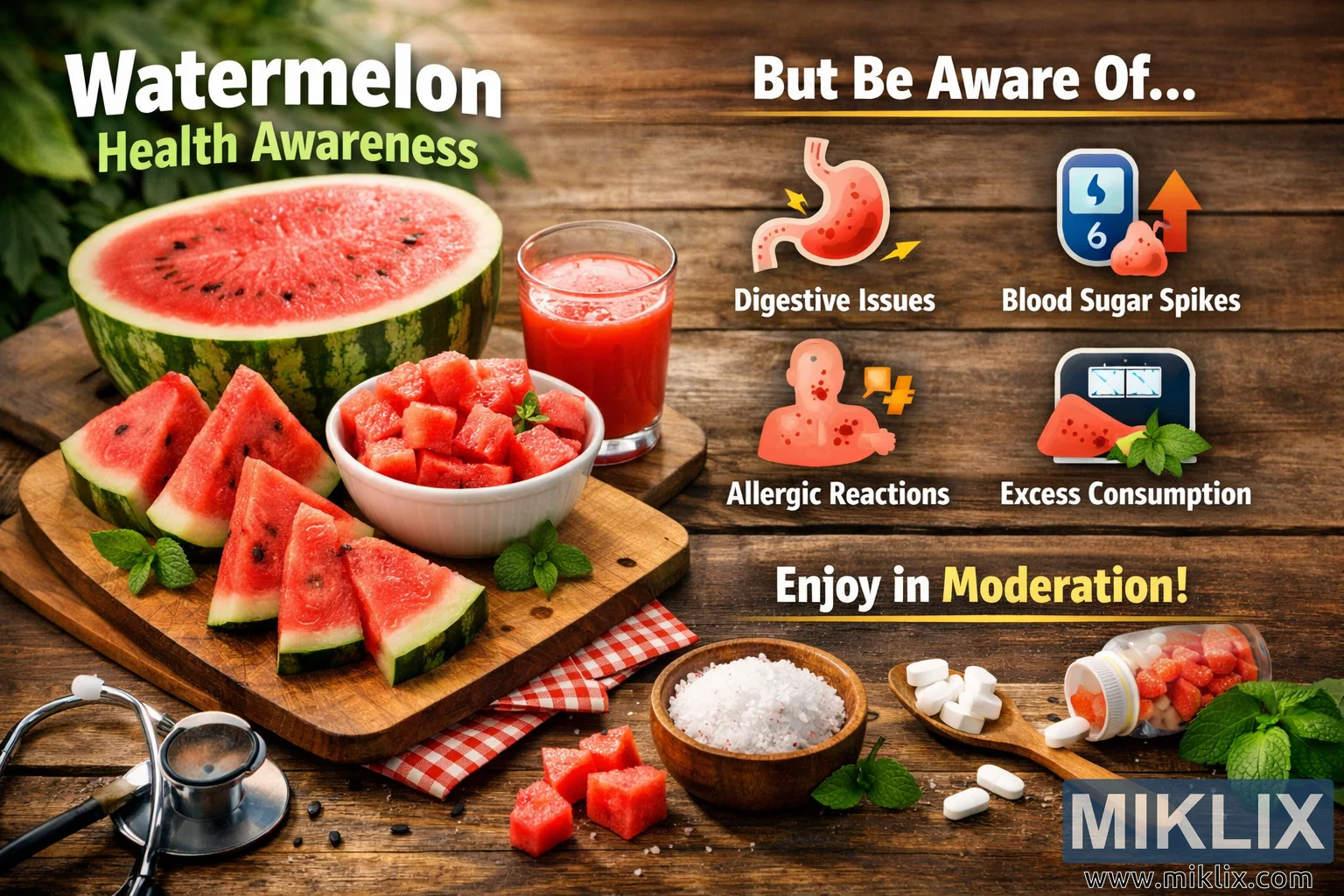
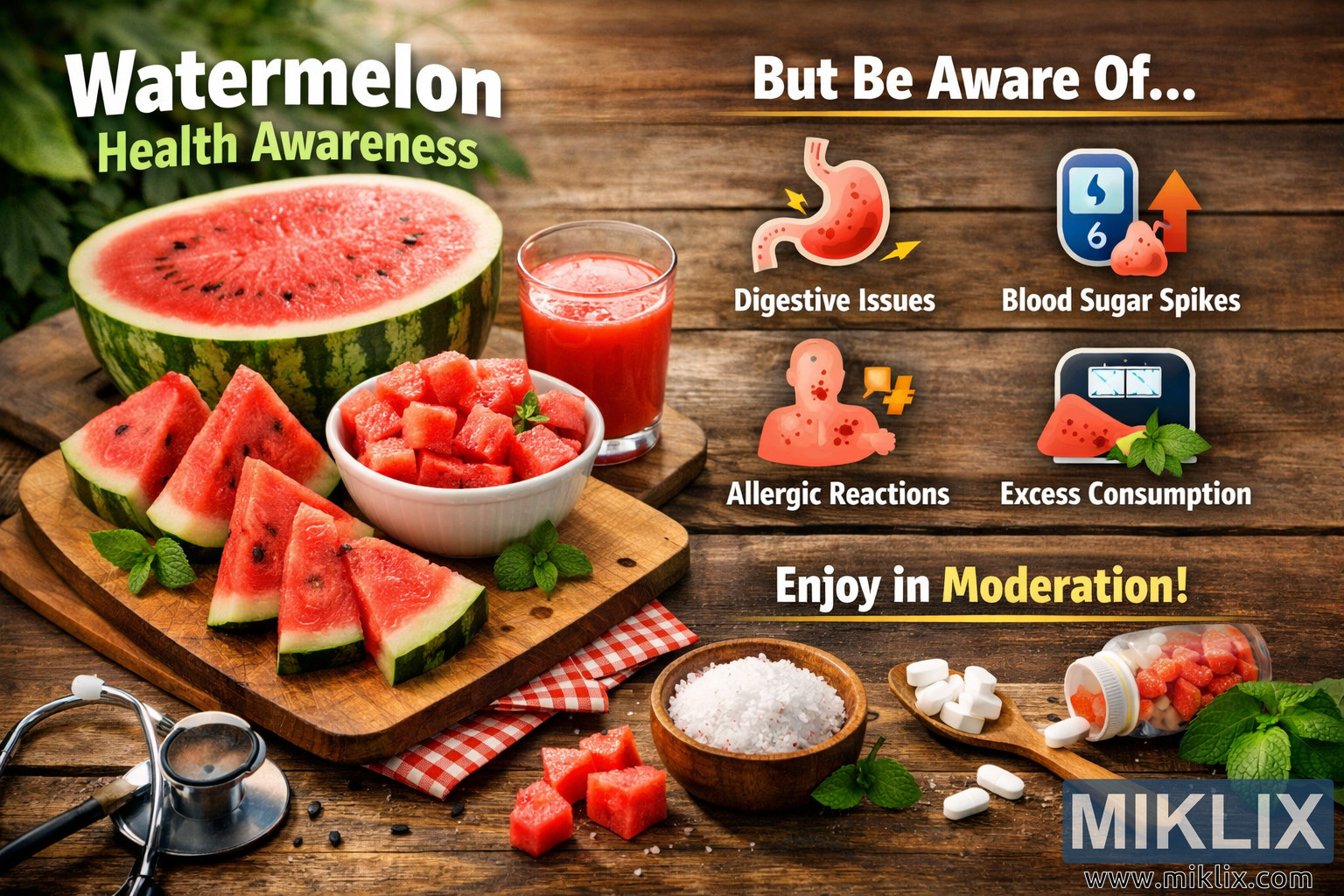
The image titled 'Watermelon Health Awareness: Benefits and Precautions' presents a visually rich and educational composition designed to raise awareness about the nutritional advantages and possible side effects of consuming watermelon. The scene is set on a rustic wooden table bathed in soft, natural light that filters from the upper left corner, creating gentle shadows and a warm, inviting atmosphere. The photograph is divided into two distinct sections, each serving a clear purpose: the left side celebrates the fruit’s health benefits, while the right side cautions viewers about potential risks associated with excessive consumption.
On the left, the headline 'Watermelon Health Awareness' appears in bold, white and green lettering, immediately drawing attention to the theme of the image. Beneath this title, a wooden cutting board holds a large half of a watermelon, its vibrant red flesh glistening with moisture and dotted with dark seeds. Several triangular slices are arranged neatly beside it, their green rinds providing a striking color contrast. A white bowl filled with cubed watermelon sits nearby, accompanied by a glass of freshly blended watermelon juice whose deep crimson hue adds visual richness. The arrangement evokes freshness, hydration, and summer vitality.
Below the cutting board, three bullet points summarize the key health benefits of watermelon consumption. Each point is paired with a small, illustrative icon: a water droplet and vitamin capsule for 'Hydration & Vitamins,' a heart with a checkmark for 'Low in Calories,' and a shield with a leaf for 'Rich in Antioxidants.' These icons are simple yet effective, reinforcing the message that watermelon is not only delicious but also beneficial for overall wellness. The left side of the image thus conveys a sense of balance, nourishment, and natural goodness.
Transitioning to the right side, the tone shifts subtly from celebration to caution. The heading 'But Be Aware Of...' appears in bold white letters, signaling a change in focus. Beneath this, four warning signs are displayed, each accompanied by a relevant icon and short explanatory text. The first warning, 'Digestive Issues,' features a stylized stomach with a lightning bolt, symbolizing discomfort or bloating that may occur when watermelon is consumed in large quantities. The second, 'Blood Sugar Spikes,' shows a glucose meter, reminding viewers that watermelon’s natural sugars can affect blood glucose levels, particularly for individuals with diabetes. The third, 'Allergic Reactions,' depicts a red rash on an arm, highlighting that although rare, some people may experience mild allergic responses. The fourth, 'Excess Consumption,' includes an image of a scale with an upward arrow, cautioning against overeating even healthy foods.
At the bottom of the composition, the phrase 'Enjoy in Moderation!' is displayed in bold white and yellow letters, serving as a unifying conclusion that bridges the two halves of the image. This message encapsulates the overall theme: while watermelon offers hydration, vitamins, and antioxidants, mindful consumption is essential to avoid unwanted effects. Surrounding this text are small, symbolic objects that reinforce the health narrative—a stethoscope representing medical awareness, a wooden bowl filled with salt suggesting dietary balance, a spoon with sugar cubes referencing sweetness and moderation, and a bottle of pills with white capsules spilling out, symbolizing the intersection of nutrition and health care. A sprig of mint near the bowl of watermelon cubes adds a final touch of freshness and natural beauty.
The background remains softly blurred, ensuring that the focus stays on the foreground elements. The interplay of light and shadow enhances the realism of textures—the rough grain of the wooden table, the smooth surface of the glass, and the juicy translucence of the watermelon flesh. The color palette is dominated by reds and greens, complemented by earthy browns and neutral whites, creating a harmonious balance that is both aesthetically pleasing and informative.
Overall, this image functions as a visual guide to responsible fruit consumption. It communicates that watermelon, while a symbol of summer refreshment and health, should be enjoyed thoughtfully. The composition’s clarity, vibrant colors, and educational layout make it suitable for health campaigns, nutrition blogs, or wellness presentations. It invites viewers not only to appreciate the beauty of the fruit but also to consider the broader context of dietary awareness and moderation.
L'image est liée à : Watermelon: The Hydrating Superfruit You Should Eat More Often