
Image : Corn Tassel Releasing Pollen Above Developing Ear
Publié :
Dernière mise à jour : 13 mars 2026 à 20:38:23 UTC
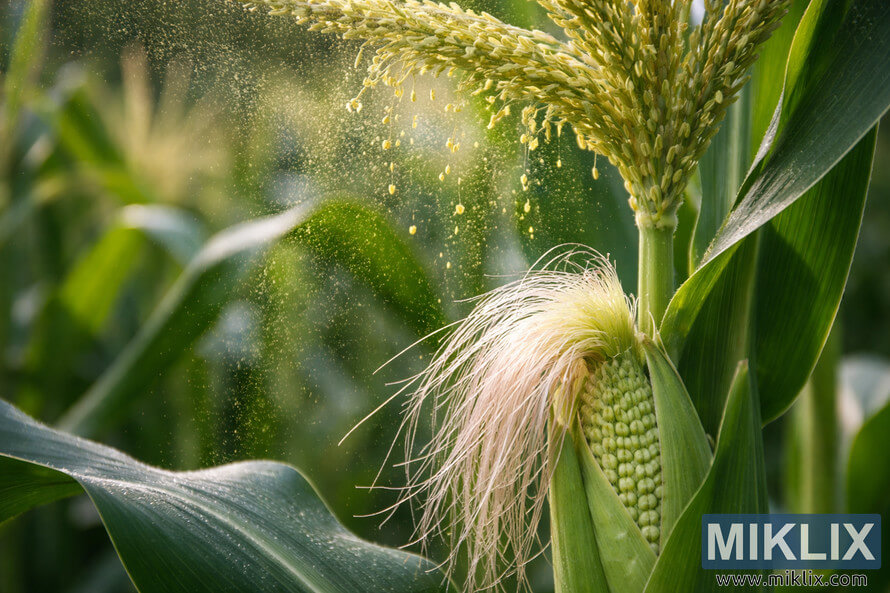
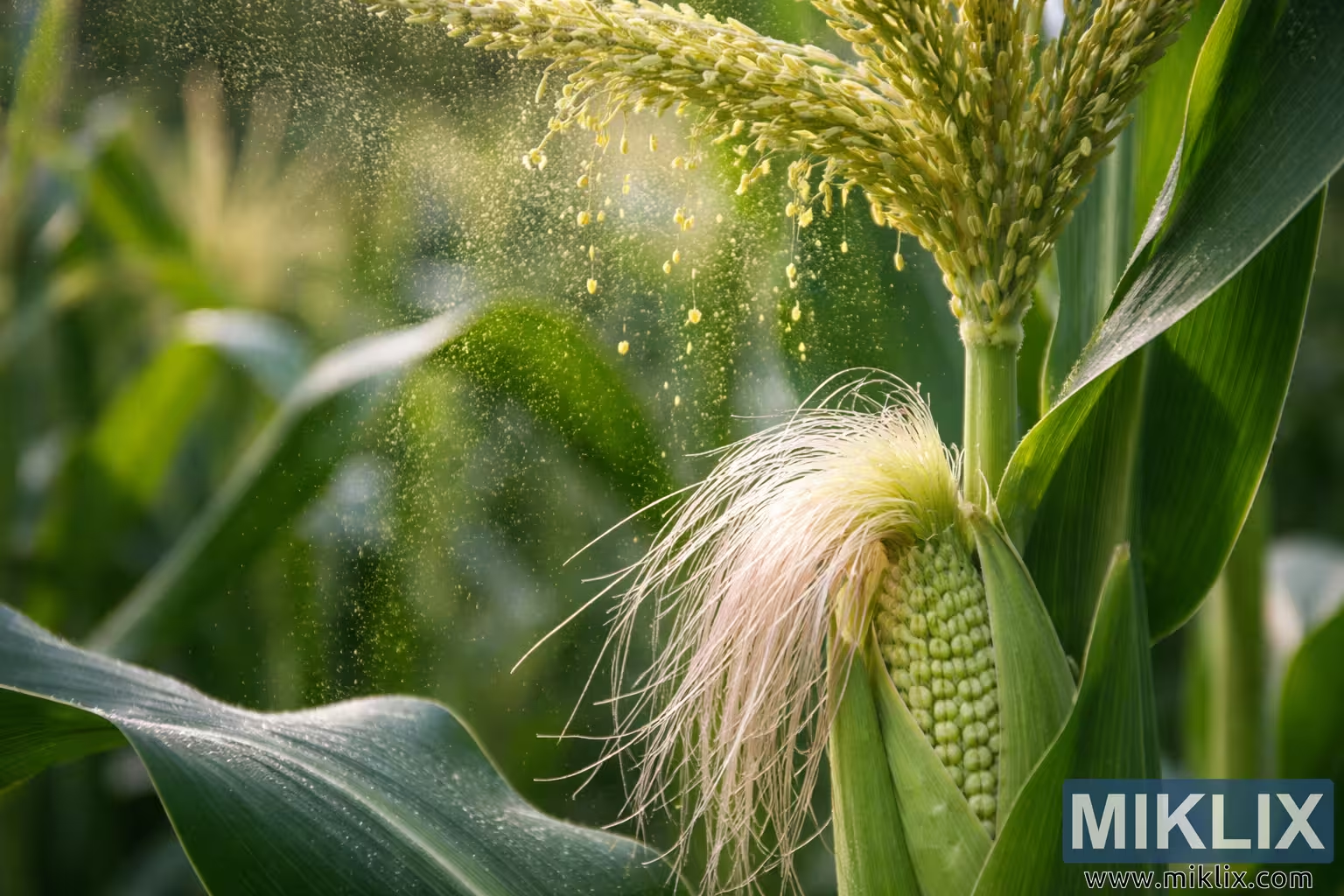
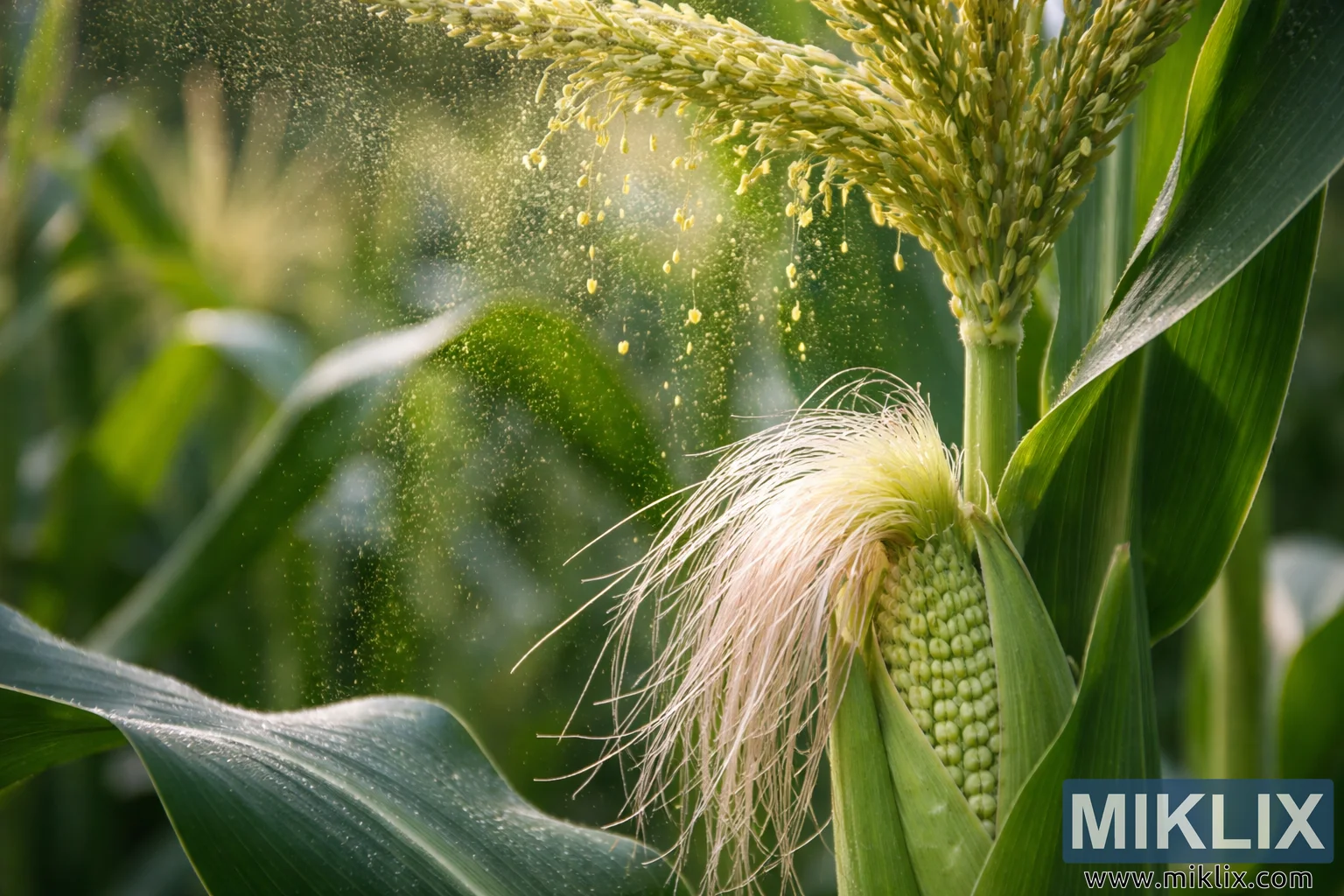
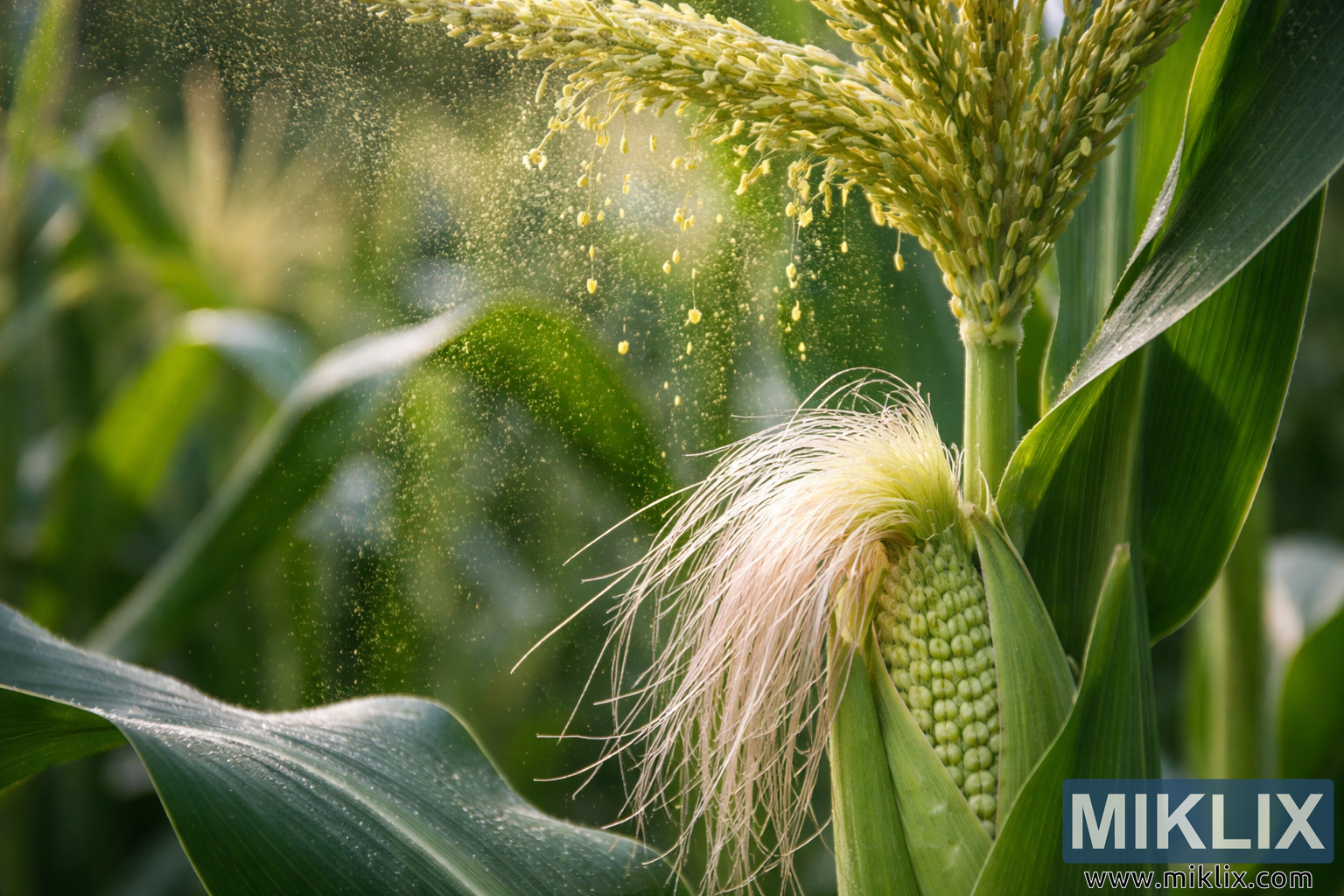
Macro photograph of a corn tassel releasing pollen above a developing ear with fresh silk visible, illustrating the pollination stage of maize growth.
Corn Tassel Releasing Pollen Above Developing Ear
Versions disponibles de cette image
Les fichiers images téléchargeables ci-dessous sont moins compressés et de meilleure résolution - et donc de meilleure qualité - que les images intégrées dans les articles et les pages de ce site web, qui sont davantage optimisées pour la taille des fichiers afin de réduire la consommation de la bande passante.
Taille normale (1,536 x 1,024)
Grande taille (3,072 x 2,048)
Très grande taille (4,608 x 3,072)
Taille extra-large (6,144 x 4,096)
Taille comique (1,048,576 x 699,051)
- Toujours en cours de téléchargement... ;-)
Description de l'image
This high-resolution macro photograph captures a detailed moment in the reproductive stage of a maize plant, focusing on the interaction between the tassel and the developing ear. The image is composed in landscape orientation and presents a close-up view of the upper section of a healthy green corn stalk in a cultivated field. At the top right portion of the frame, the tassel of the maize plant extends outward with numerous delicate branches. Each branch carries clusters of small anthers that are actively releasing fine yellow pollen grains into the surrounding air. The pollen forms a soft, golden cloud drifting downward and slightly outward, illuminated by warm natural light that enhances the visibility of the individual particles.
Below the tassel and slightly to the right of center, a developing ear of corn emerges from the stalk, partially wrapped in its green husk leaves. From the tip of the ear, a dense bundle of fresh corn silk extends outward in long, delicate strands. The silk appears pale cream to light yellow in color and has a soft, glossy texture that catches the sunlight. These silky threads represent the female reproductive structures of the plant, each strand capable of capturing pollen grains that fall from the tassel above. The proximity between the drifting pollen and the exposed silk visually illustrates the process of maize pollination, where pollen grains land on the silk and travel down to fertilize the developing kernels inside the ear.
The surrounding leaves of the corn plant frame the central subject with broad, curved shapes and deep green tones. One leaf arcs across the lower left portion of the image, adding depth and guiding the viewer’s eye toward the ear and tassel. The background is softly blurred with a shallow depth of field, suggesting a larger cornfield while keeping attention firmly on the reproductive structures in the foreground. Gentle highlights and shadows across the leaves emphasize their texture and natural structure.
Overall, the photograph highlights a critical stage in maize development, capturing both the male and female components of the plant during active pollination. The fine pollen particles suspended in the air, the vibrant green foliage, and the delicate silk strands together create a vivid and educational visual representation of corn reproduction in an agricultural setting.
L'image est liée à : Growing Corn: Your Complete Guide to Sweet Success in the Garden