
Image : Hands Mixing Compost into Garden Soil with Parsnips Growing
Publié :
Dernière mise à jour : 18 mars 2026 à 20:43:38 UTC
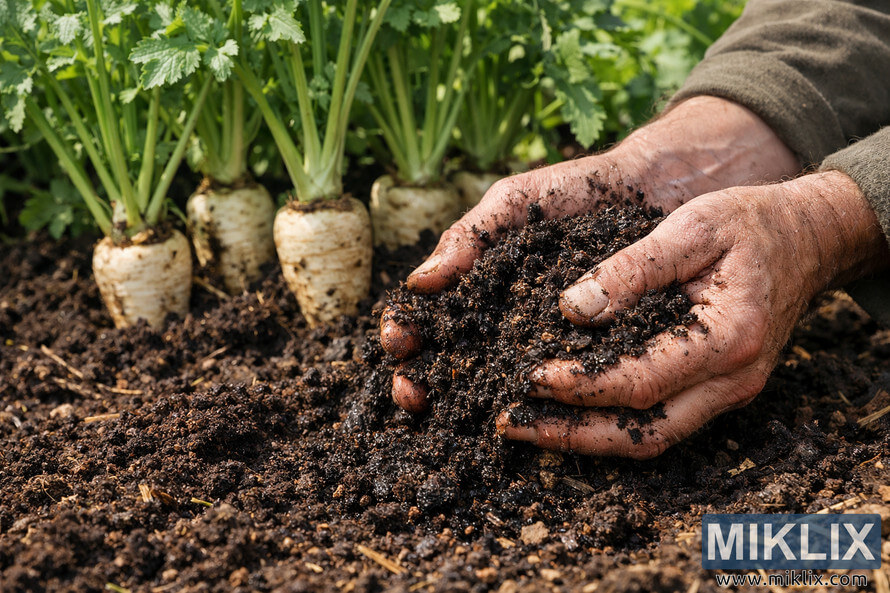
A close-up garden scene showing hands blending dark compost into soil while healthy parsnips grow in the background under natural daylight.
Hands Mixing Compost into Garden Soil with Parsnips Growing
Versions disponibles de cette image
Les fichiers images téléchargeables ci-dessous sont moins compressés et de meilleure résolution - et donc de meilleure qualité - que les images intégrées dans les articles et les pages de ce site web, qui sont davantage optimisées pour la taille des fichiers afin de réduire la consommation de la bande passante.
Taille normale (1,536 x 1,024)
Grande taille (3,072 x 2,048)
Très grande taille (4,608 x 3,072)
Taille extra-large (6,144 x 4,096)
Taille comique (1,048,576 x 699,051)
- Toujours en cours de téléchargement... ;-)
Description de l'image
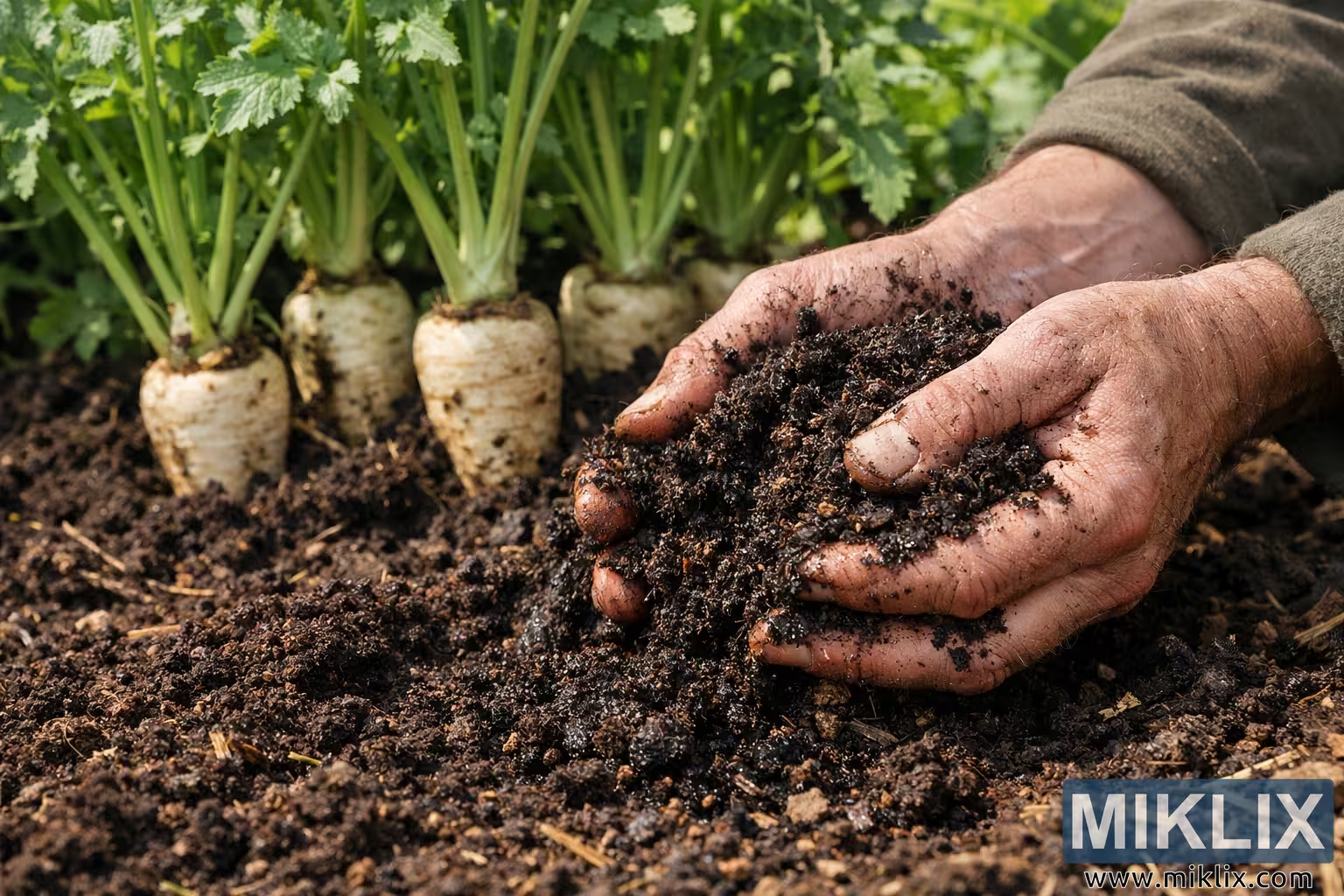
A close-up, landscape-oriented photograph captures a pair of weathered hands gently mixing dark, nutrient-rich compost into loose garden soil. The hands appear experienced and slightly rough, suggesting someone accustomed to working outdoors and tending plants. Their fingers cradle and sift through the compost, allowing small clumps of organic matter to fall back onto the earth as they blend it with the surrounding soil. The compost is deep brown and textured, filled with tiny fragments of decomposed leaves, plant material, and other organic matter that signal fertility and healthy soil life.
The foreground is dominated by the tactile interaction between the hands and the soil. Individual grains of earth and bits of compost are visible, creating a strong sense of texture and realism. The soil beneath the hands looks freshly turned and slightly moist, indicating that it has recently been prepared for planting or nourishment. Sunlight illuminates the scene from above and slightly to the side, highlighting the rich tones of the compost and casting soft shadows between the gardener’s fingers.
In the background, slightly out of focus, a neat row of parsnip plants rises from the ground. Their pale, cream-colored roots bulge just above the surface of the soil, hinting at the long tapered vegetables hidden beneath. The tops of the plants are lush with vibrant green leaves that fan outward, catching the sunlight and creating a lively contrast with the darker earth below. The leaves appear healthy and vigorous, suggesting that the soil enrichment taking place in the foreground will support strong growth.
The depth of field draws the viewer’s attention first to the hands and compost while allowing the parsnips behind them to provide context for the gardening activity. The overall composition conveys a quiet moment of care and cultivation in a vegetable garden. Natural daylight enhances the earthy color palette—deep browns of compost, warm tones of soil, and fresh greens of foliage—while emphasizing the authenticity of the gardening process.
Together, the elements in the image illustrate the cycle of soil care and food production: organic matter returning to the earth, hands nurturing the ground, and healthy vegetables growing as a result. The photograph communicates themes of sustainability, patience, and the simple satisfaction of tending a thriving garden.
L'image est liée à : Growing Parsnips: Your Complete Guide to Sweet, Homegrown Roots