
Image : Cold Frame Protecting Scallions in a Snowy Winter Garden
Publié :
Dernière mise à jour : 14 avril 2026 à 21:15:06 UTC
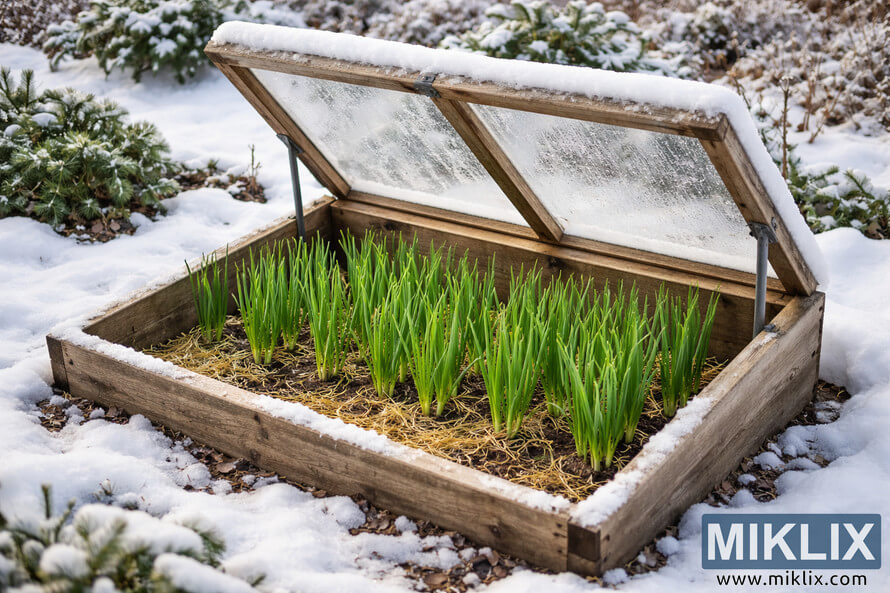
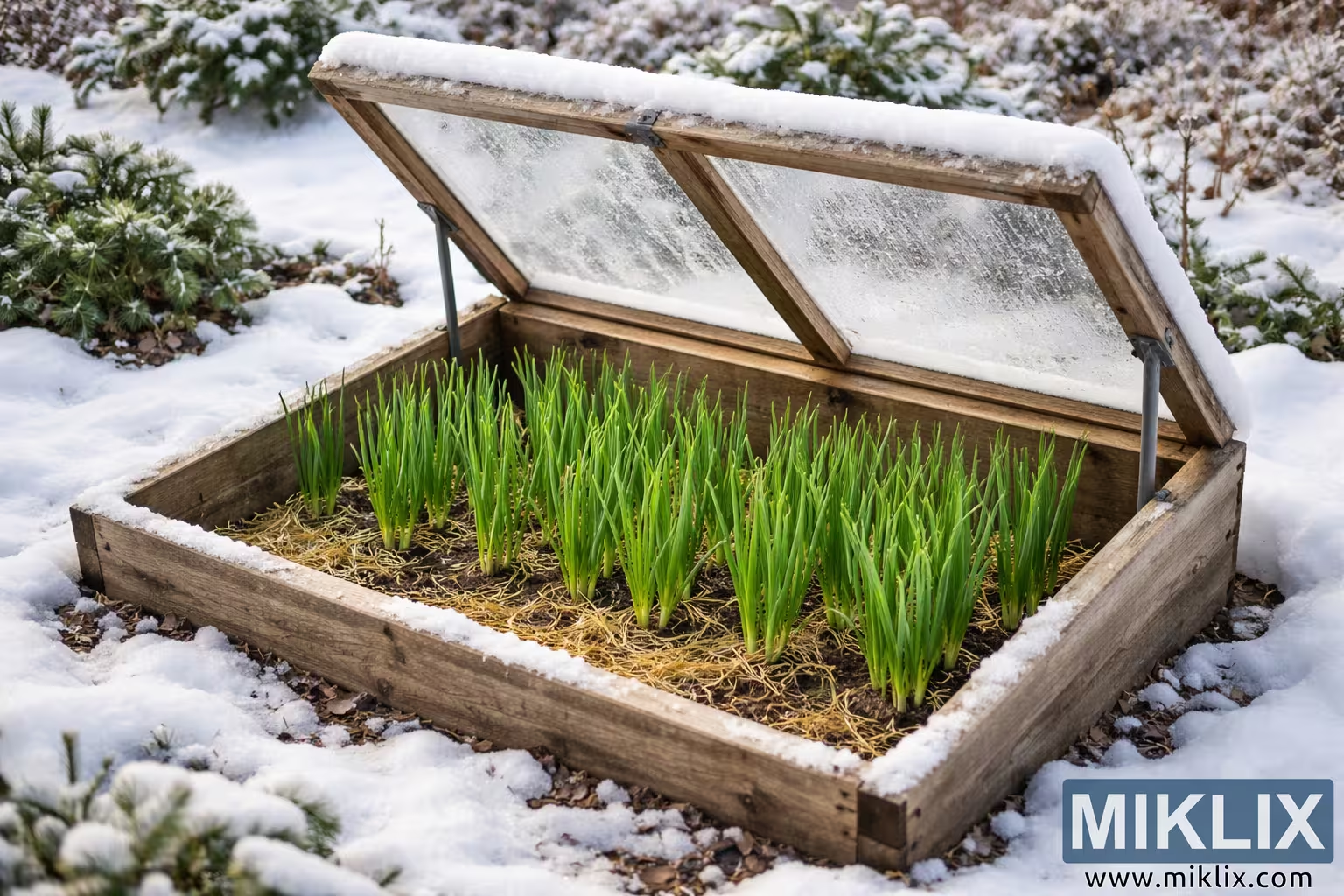
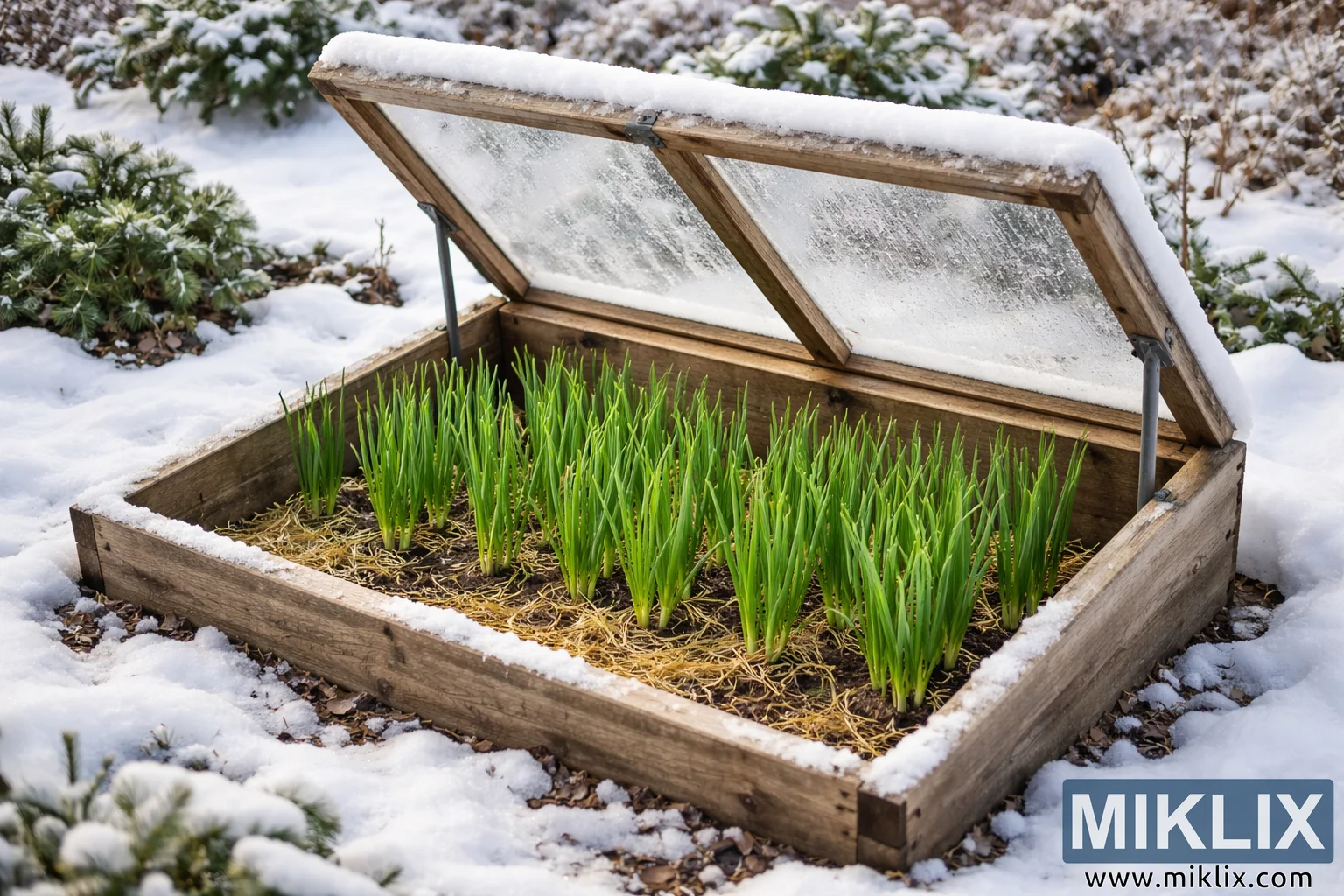
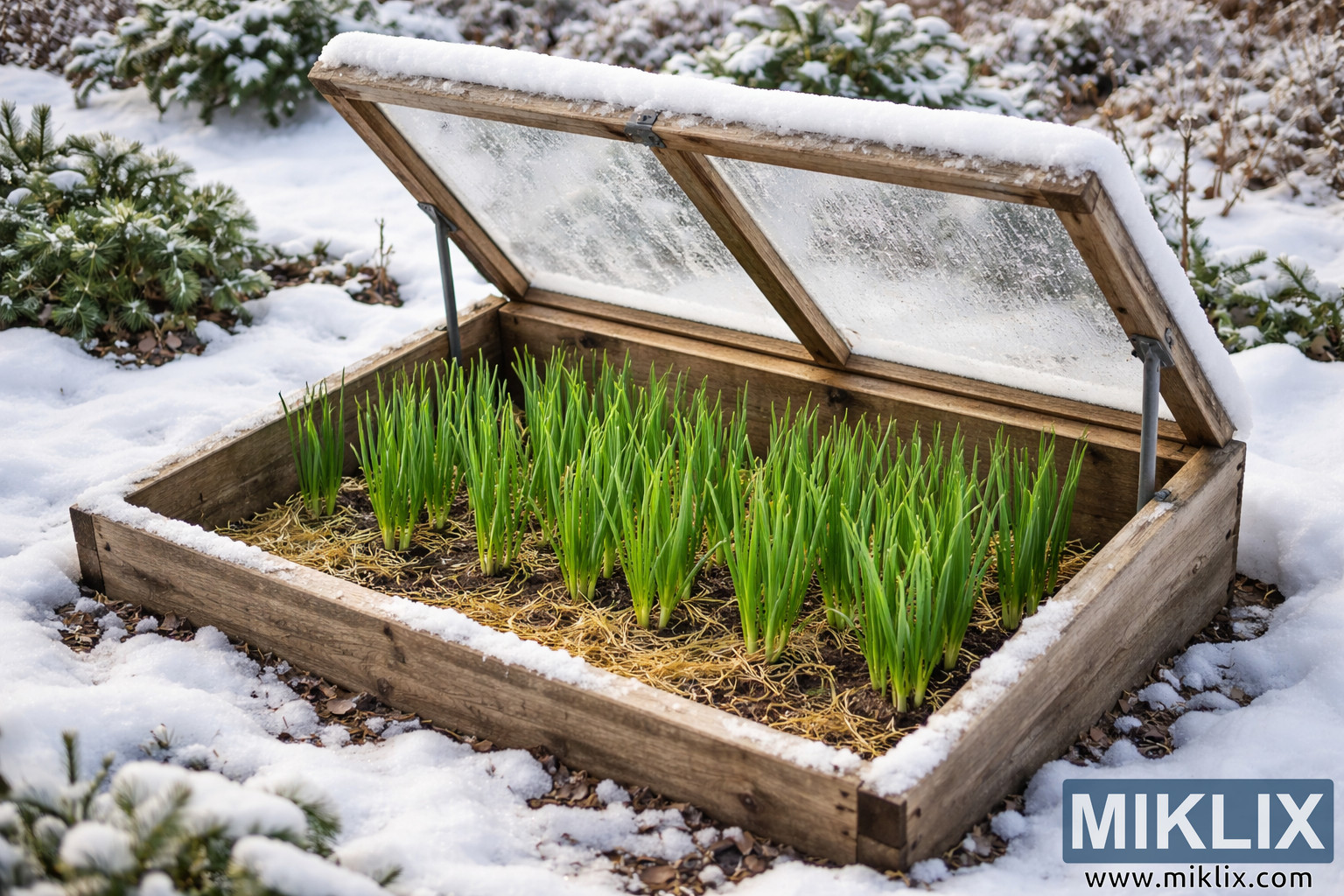
A wooden cold frame shelters rows of green scallions in a snowy winter garden, demonstrating a simple season-extending gardening technique.
Cold Frame Protecting Scallions in a Snowy Winter Garden
Versions disponibles de cette image
Les fichiers images téléchargeables ci-dessous sont moins compressés et de meilleure résolution - et donc de meilleure qualité - que les images intégrées dans les articles et les pages de ce site web, qui sont davantage optimisées pour la taille des fichiers afin de réduire la consommation de la bande passante.
Taille normale (1,536 x 1,024)
Grande taille (3,072 x 2,048)
Très grande taille (4,608 x 3,072)
Taille extra-large (6,144 x 4,096)
Taille comique (1,048,576 x 699,051)
- Toujours en cours de téléchargement... ;-)
Description de l'image
A winter garden scene centers on a sturdy wooden cold frame that protects a thriving patch of scallions despite the surrounding cold and snow. The rectangular cold frame sits low to the ground, built from weathered wooden boards that form a raised bed. Its transparent lid, made of clear polycarbonate or glass panels framed in wood, is propped open by simple metal brackets on either side. The lid itself is lightly dusted with snow and frost, hinting at the chilly outdoor conditions while allowing light to pass through to the plants below.
Inside the cold frame, rows of vibrant green scallions grow densely in dark, moist soil. Their slender, upright leaves form a lively contrast against the muted tones of the wooden frame and the pale winter landscape. A thin layer of straw or organic mulch is scattered across the soil surface, helping retain warmth and moisture while insulating the roots. The scallions appear healthy and vigorous, their bright green color standing out against the earthy browns of the bed and the white snow outside.
Beyond the cold frame, the garden is clearly in winter. Snow blankets the ground around the bed, collecting along the edges of the wooden boards and forming soft mounds in the surrounding soil. Frost clings lightly to the transparent lid and nearby surfaces. In the background, low shrubs and perennial plants are partially buried under snow, their branches dusted with white. A few evergreen plants remain visible, their dark green needles adding texture and depth to the scene.
The composition highlights the practical beauty of winter gardening. The open lid reveals the microclimate created within the cold frame, where sunlight can warm the soil and protect tender plants from harsh frost and wind. The rustic wood, the crisp snow, and the fresh green scallions together create a striking seasonal contrast that emphasizes resilience and careful cultivation. The scene conveys both tranquility and productivity: even in the quiet of winter, the garden continues to grow under thoughtful protection.
Soft natural light, likely from a low winter sun, illuminates the scene and enhances the textures of wood grain, snow crystals, and delicate green leaves. The overall atmosphere is calm and crisp, capturing a moment where simple gardening techniques extend the growing season and allow fresh food to thrive in the heart of winter.
L'image est liée à : How to Grow Scallions: Complete Guide for Beginners