
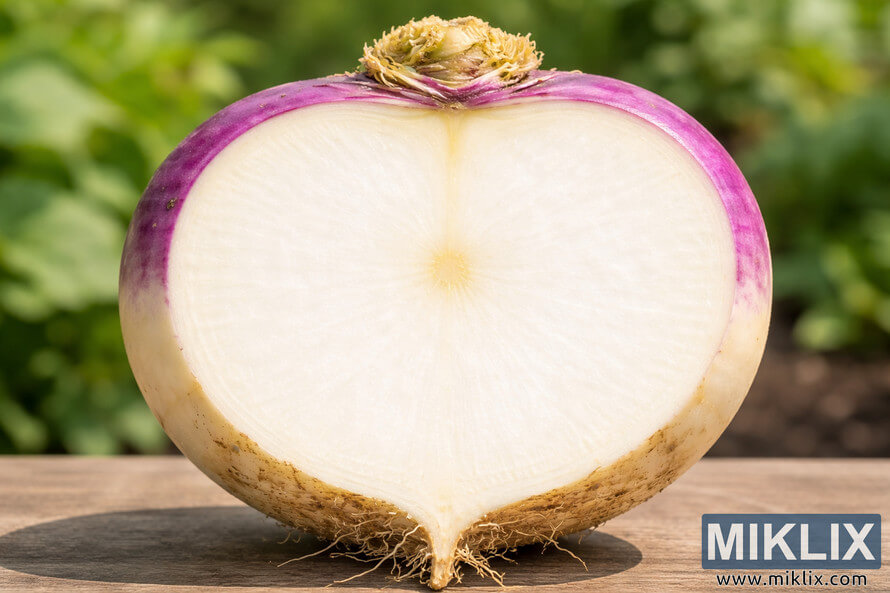
Image : Healthy Turnip Root Cross-Section Showing Clean Interior
Publié :
Dernière mise à jour : 19 avril 2026 à 21:36:58 UTC
Close-up image of a freshly cut healthy turnip root cross-section displaying a smooth white interior and purple skin, indicating a problem-free vegetable.
Healthy Turnip Root Cross-Section Showing Clean Interior
Versions disponibles de cette image
Les fichiers images téléchargeables ci-dessous sont moins compressés et de meilleure résolution - et donc de meilleure qualité - que les images intégrées dans les articles et les pages de ce site web, qui sont davantage optimisées pour la taille des fichiers afin de réduire la consommation de la bande passante.
Taille normale (1,536 x 1,024)
Grande taille (3,072 x 2,048)
Très grande taille (4,608 x 3,072)
Taille extra-large (6,144 x 4,096)
Taille comique (1,048,576 x 699,051)
- Toujours en cours de téléchargement... ;-)
Description de l'image
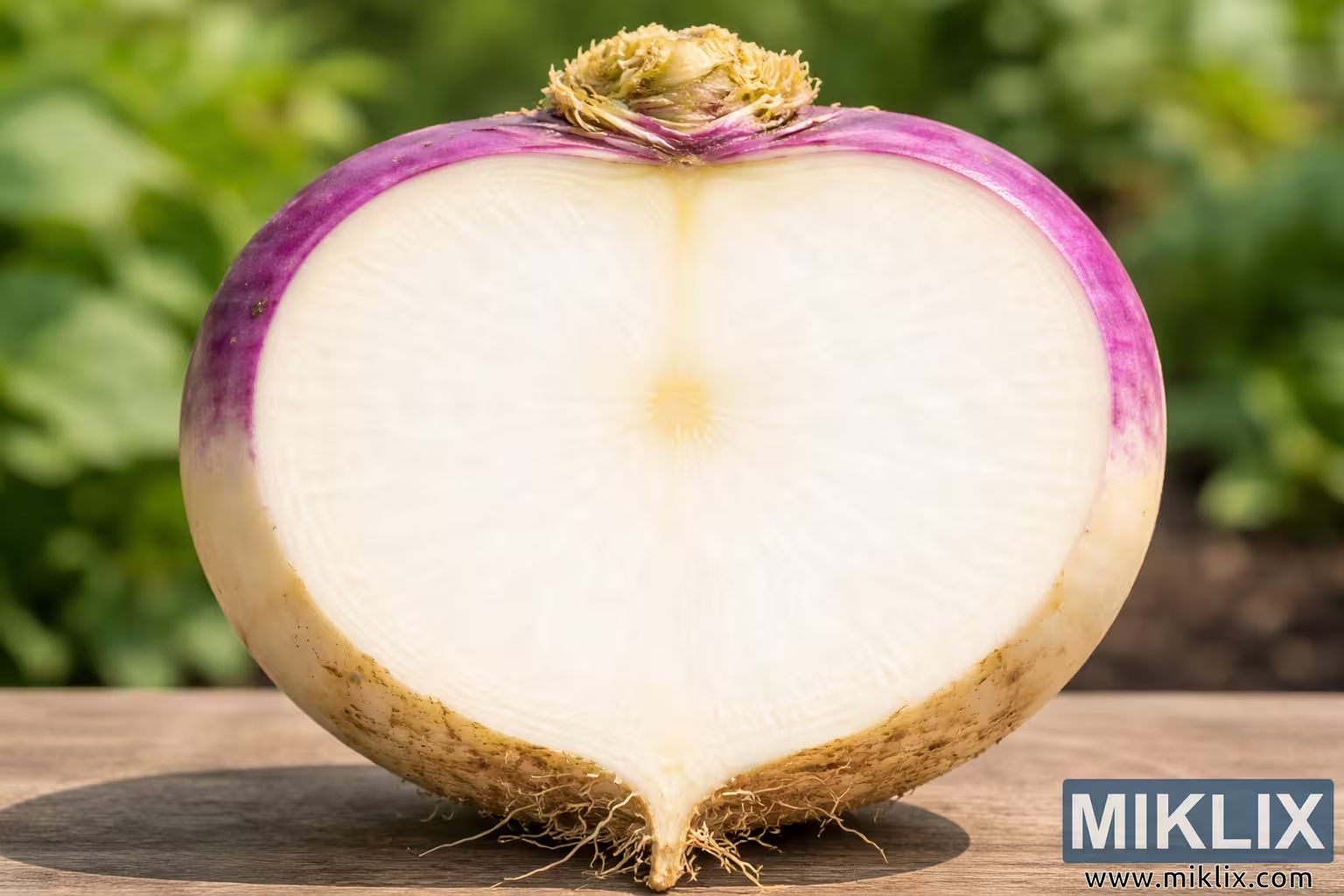
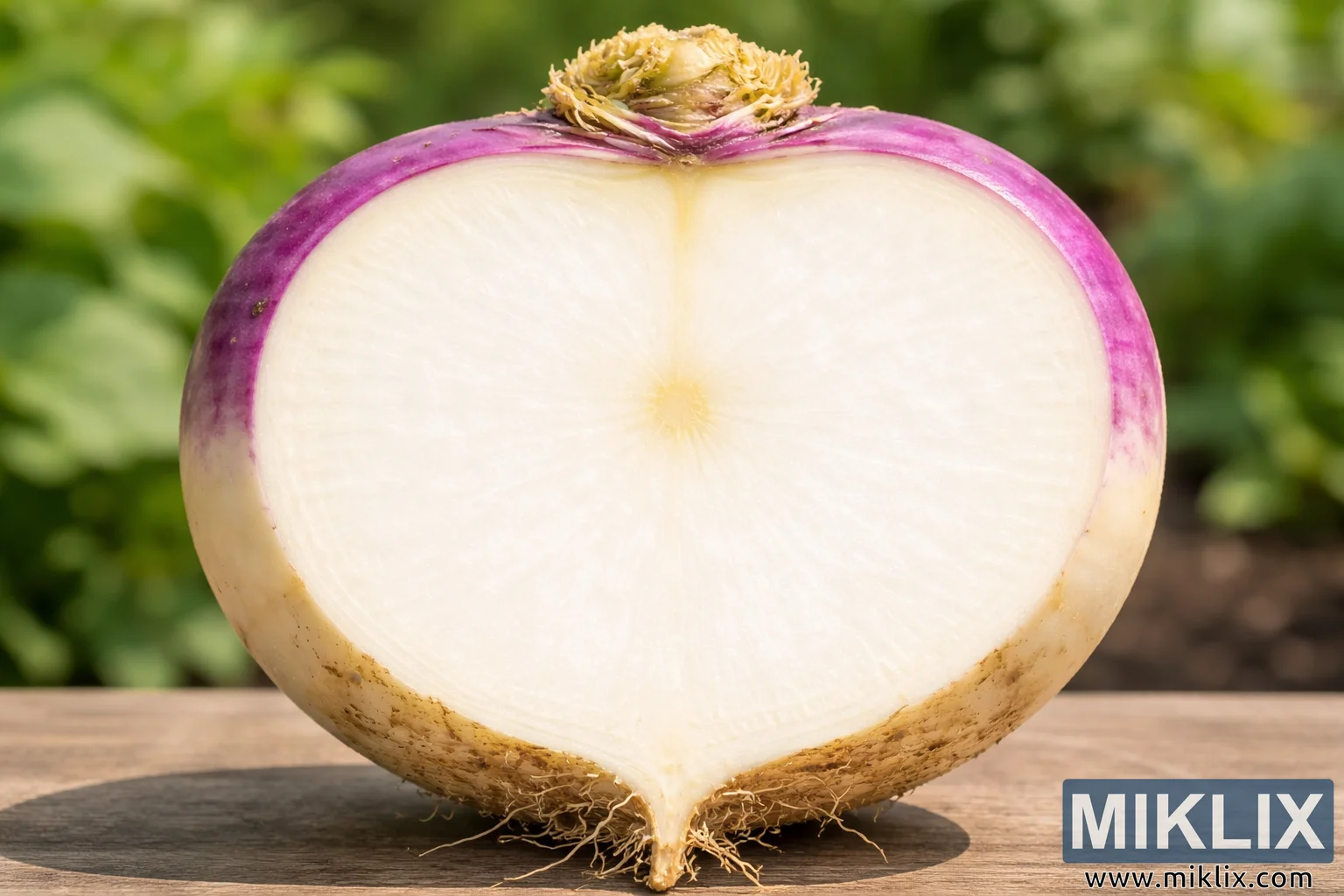
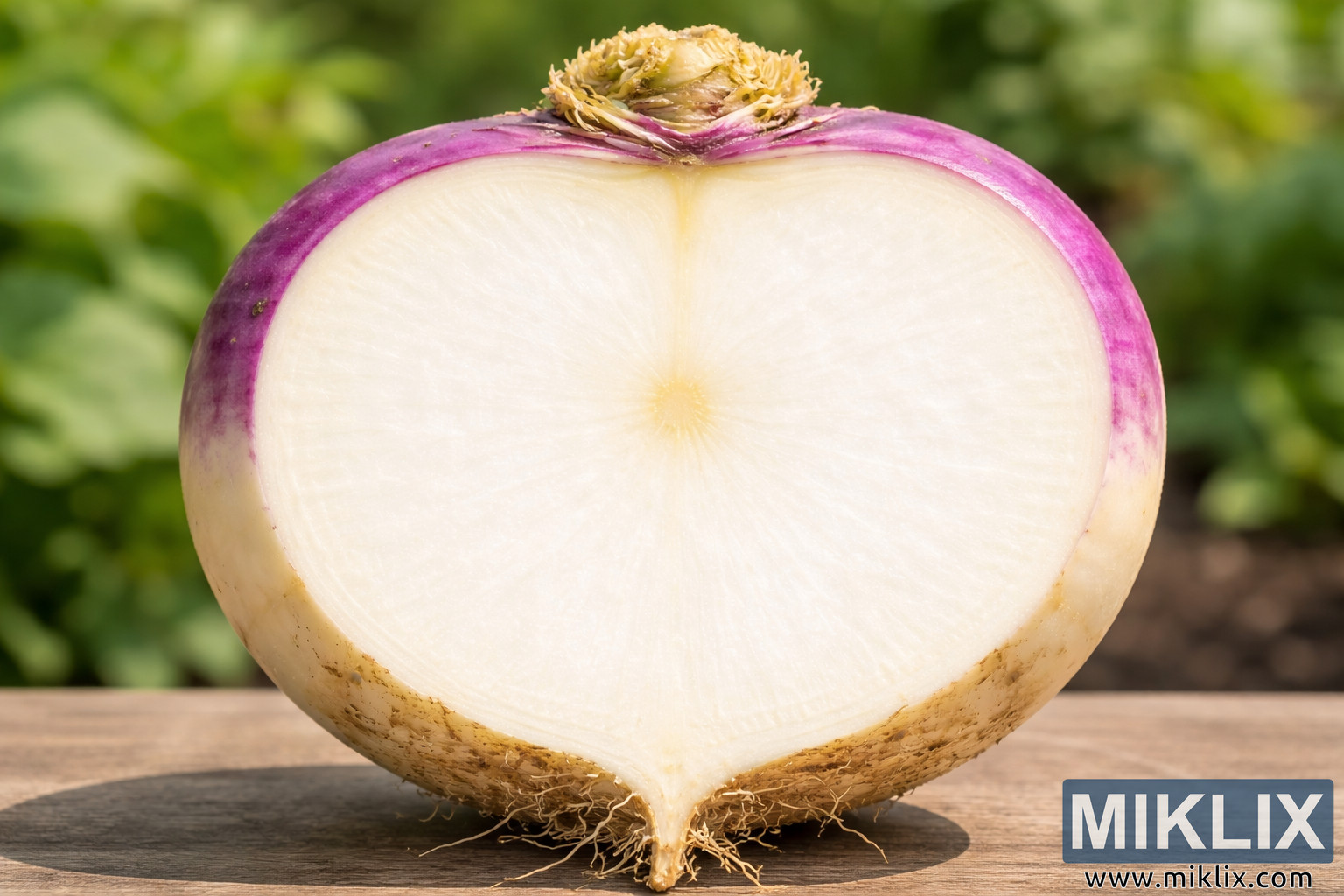
A high-resolution, landscape-oriented photograph shows a freshly cut turnip root displayed upright on a wooden surface outdoors. The turnip has been sliced cleanly in half, revealing a clear cross-section of its interior. The outer skin forms a thin ring around the vegetable, transitioning from creamy beige near the base to a vibrant purple band around the upper shoulder of the root. This purple coloration fades gradually into the smooth white flesh inside the turnip.
The interior of the turnip appears clean, firm, and uniform, indicating a healthy and problem-free root. The flesh is bright white with a faint yellowish tint at the center, where subtle radial lines extend outward toward the outer edge of the root. These natural growth patterns create a delicate starburst effect, showing the internal structure of the vegetable without any visible discoloration, cavities, browning, rot, or pest damage. The texture looks dense and crisp, typical of a freshly harvested turnip that has developed properly in the soil.
At the top of the root, the trimmed crown is visible where the leafy greens would normally attach. The crown area shows a small cluster of dried stem remnants and fibrous tissue, slightly rougher in texture than the smooth interior flesh. At the bottom of the turnip, a small tapered point remains where fine root fibers emerge. These thin, hairlike roots spread slightly across the wooden surface, reinforcing the impression that the vegetable was recently harvested from the ground.
The turnip rests on a natural wooden board or table that provides a warm brown contrast to the pale white flesh of the vegetable. The background is softly blurred with green tones, suggesting a garden or cultivated field environment. This shallow depth of field isolates the turnip as the main subject and emphasizes the clarity of the cross-section.
Lighting appears natural and even, likely from daylight, illuminating the surface of the turnip and highlighting the subtle color transitions between the purple skin, pale outer layer, and white interior. The image composition is centered and symmetrical, allowing viewers to clearly observe the healthy internal structure of the root. Overall, the photograph visually communicates the quality and health of the turnip, making it suitable as a reference image for agricultural documentation, horticultural education, or produce quality assessment.
L'image est liée à : How to Grow Turnips: Your Complete Growing Guide