
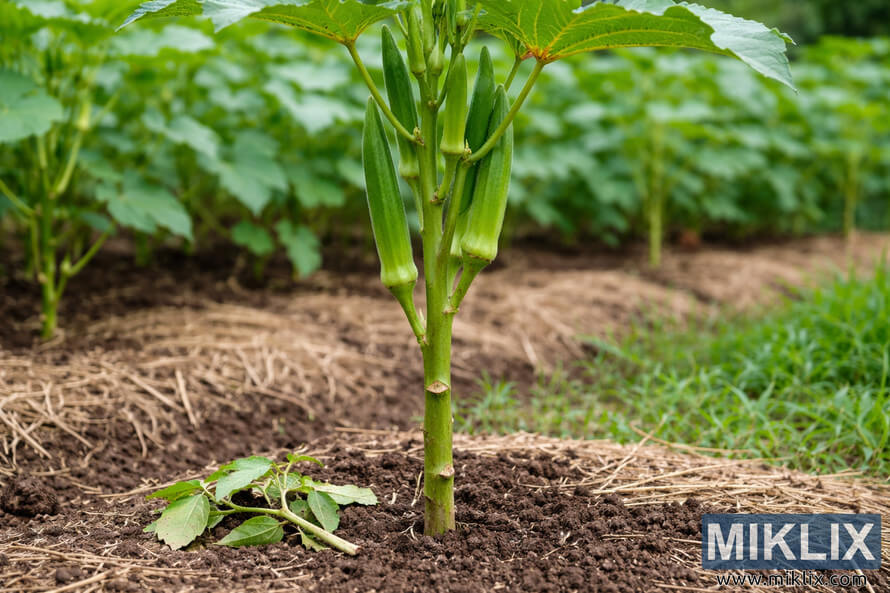
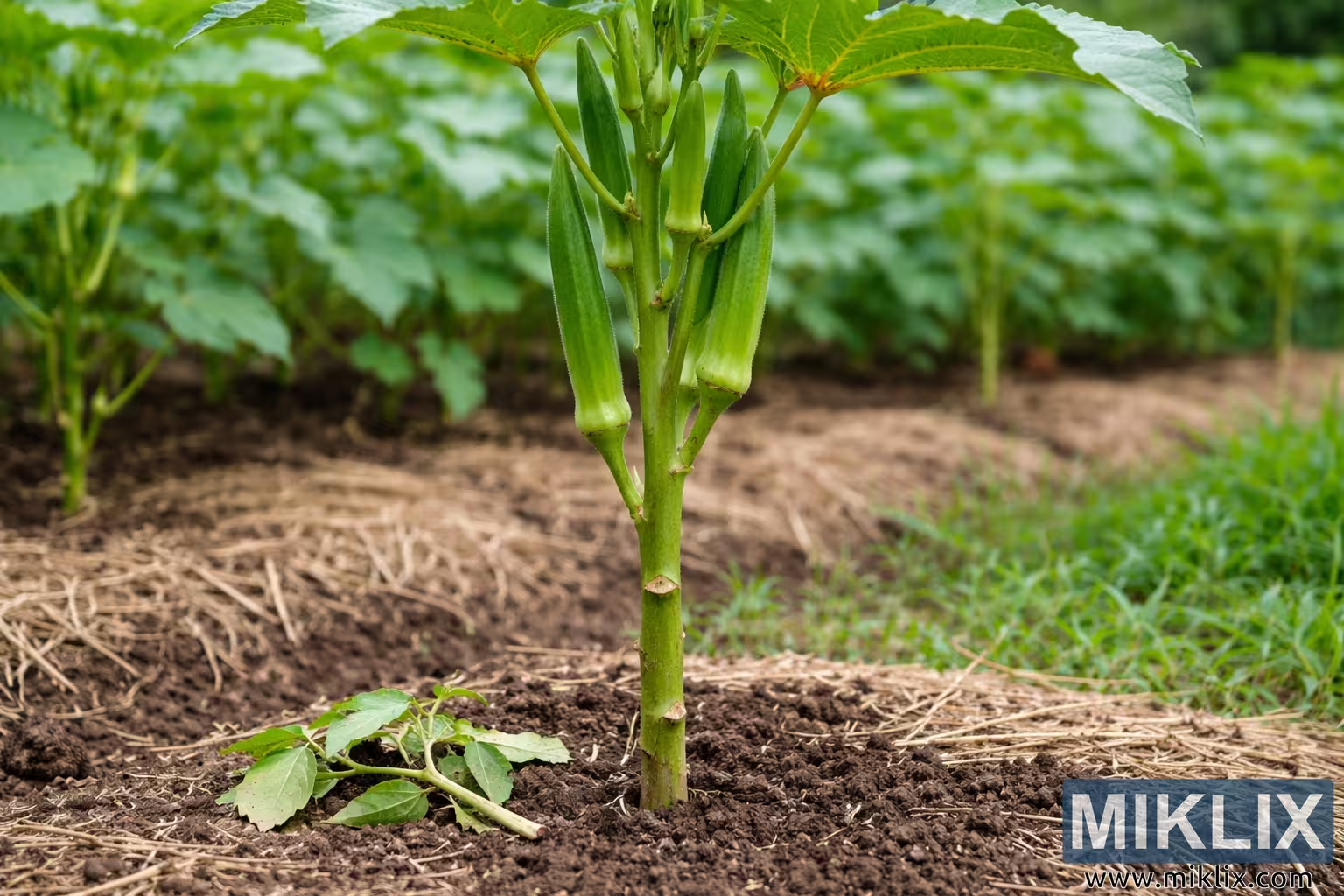
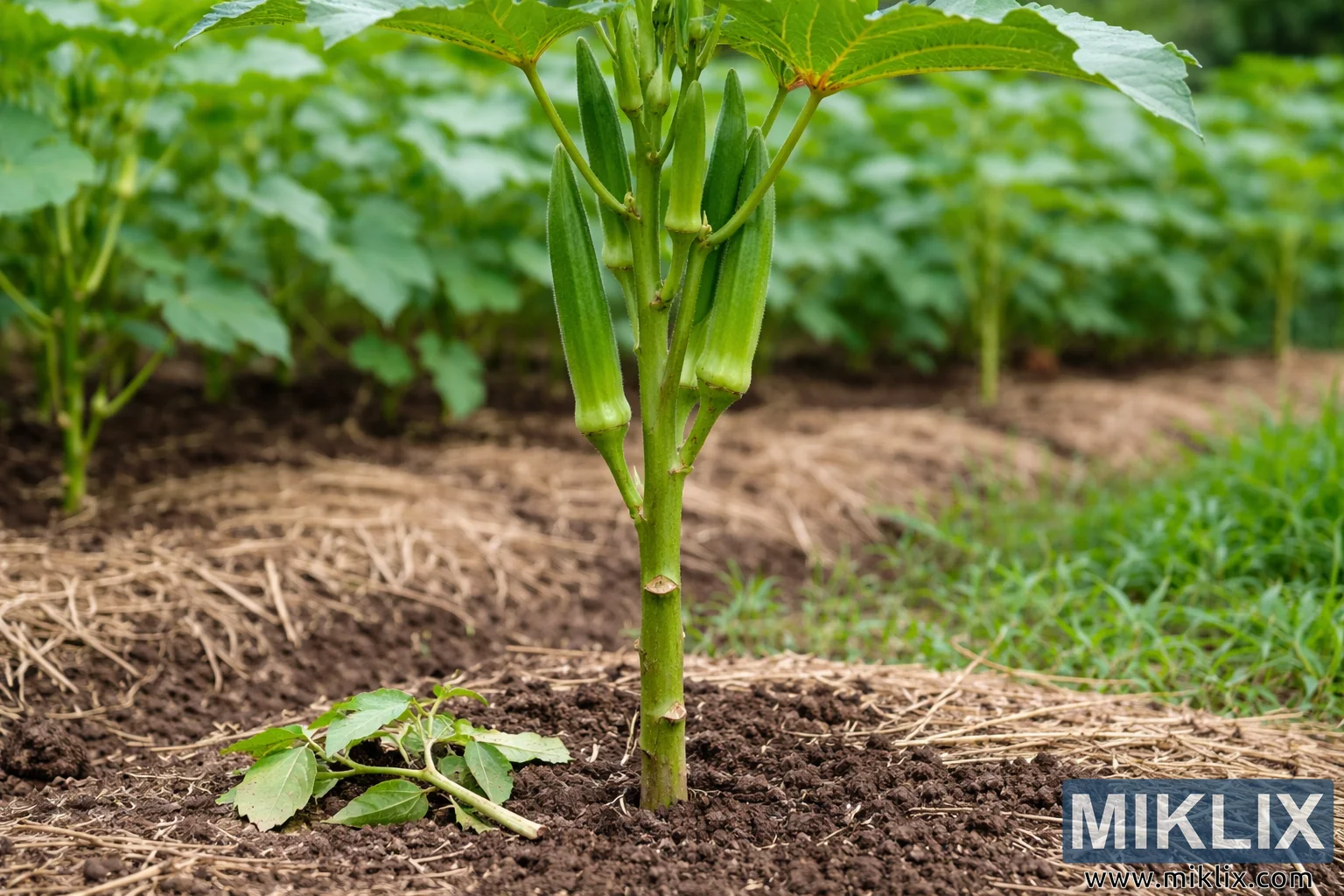
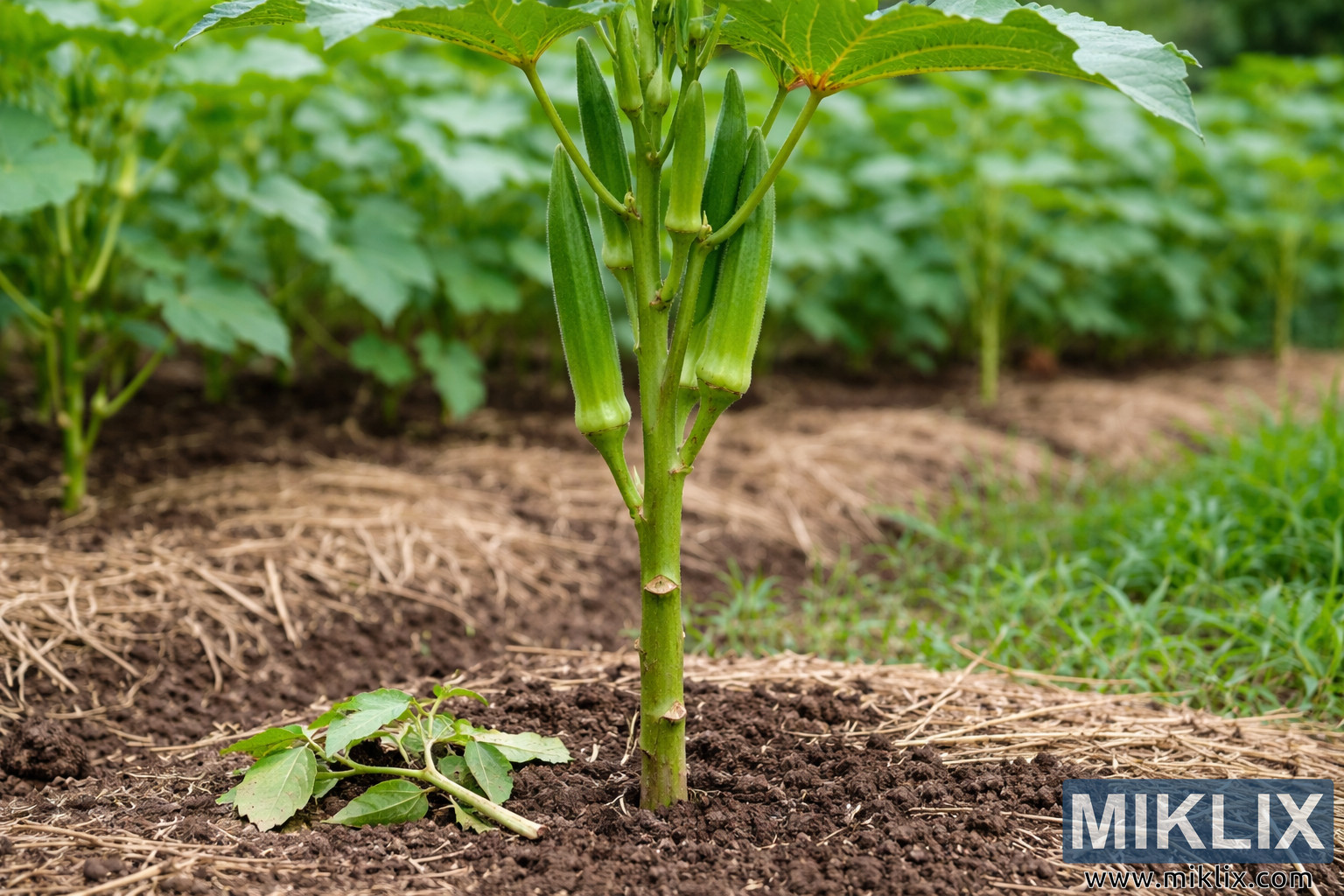
Image : Pruned Okra Plant with Lower Leaves Removed in Garden Bed
Publié :
Dernière mise à jour : 17 mars 2026 à 21:37:42 UTC
High-resolution close-up of a pruned okra plant with lower leaves removed, showing trimmed nodes and developing pods in a well-maintained garden bed with mulch.
Pruned Okra Plant with Lower Leaves Removed in Garden Bed
Versions disponibles de cette image
Les fichiers images téléchargeables ci-dessous sont moins compressés et de meilleure résolution - et donc de meilleure qualité - que les images intégrées dans les articles et les pages de ce site web, qui sont davantage optimisées pour la taille des fichiers afin de réduire la consommation de la bande passante.
Taille normale (1,536 x 1,024)
Grande taille (3,072 x 2,048)
Très grande taille (4,608 x 3,072)
Taille extra-large (6,144 x 4,096)
Taille comique (1,048,576 x 699,051)
- Toujours en cours de téléchargement... ;-)
Description de l'image
This high-resolution landscape photograph presents a detailed close-up of a healthy okra plant growing in a carefully maintained garden bed. The plant stands upright at the center of the frame, its thick green stem emerging from dark, freshly cultivated soil that is partially covered with light straw mulch. The most noticeable feature of the plant is the pruning that has been performed along its lower section. Several of the lowest leaves have been deliberately removed, leaving behind small, cleanly cut nodes and faint brown scars along the stem. These trimmed points indicate careful maintenance intended to improve airflow, reduce disease risk, and encourage productive growth higher on the plant.
Above the pruned section, the plant continues upward with vibrant green foliage and several developing okra pods attached at the leaf nodes. The pods are elongated, ridged, and a rich green color, hanging vertically from short stems that branch from the main stalk. Their fresh appearance suggests an actively producing plant in mid-season. The remaining leaves near the top are broad and lobed, forming a canopy that spreads outward and catches the soft natural light.
At the base of the plant, the soil appears loose and well-aerated, with small clumps of earth visible around the stem. A layer of straw mulch lies scattered across the bed, helping to conserve moisture and suppress weeds. Off to one side on the soil surface, a few recently removed leaves rest near the stem, providing visual evidence of the pruning process that shaped the plant’s current form.
The background of the image is softly blurred, drawing attention to the main subject while still revealing rows of additional okra plants growing in the same garden bed. Their stems and leaves form a lush green backdrop that suggests a thriving, productive planting. The shallow depth of field keeps the central plant sharply defined while the surrounding foliage fades gently into soft greens.
Natural daylight illuminates the scene evenly, highlighting the textures of the plant’s smooth stem, the subtle ridges of the okra pods, and the fibrous strands of straw mulch. The overall composition emphasizes both plant health and intentional cultivation practices, making the image a clear visual example of an okra plant that has been pruned by removing its lower leaves to support stronger growth and improved garden management.
L'image est liée à : The Complete Guide to Growing Okra in Your Home Garden