
Image : Eye Health Benefits From Lettuce Nutrients
Publié :
Dernière mise à jour : 25 mai 2026 à 14:39:53 UTC
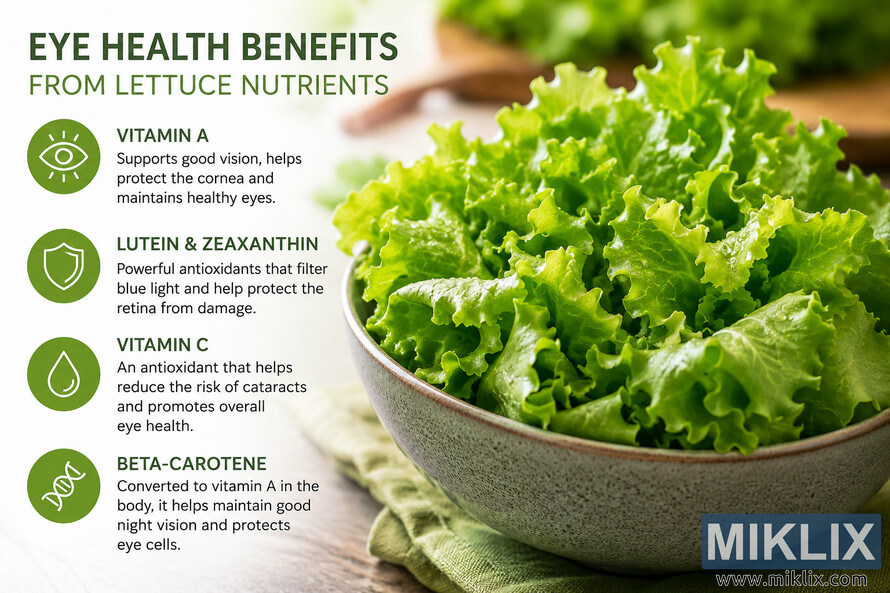
Discover how lettuce supports eye health with essential nutrients like vitamin A, lutein, zeaxanthin, vitamin C, and beta-carotene. This educational infographic explains how leafy greens can help maintain healthy vision and protect the eyes naturally.
Eye Health Benefits From Lettuce Nutrients
Versions disponibles de cette image
Les fichiers images téléchargeables ci-dessous sont moins compressés et de meilleure résolution - et donc de meilleure qualité - que les images intégrées dans les articles et les pages de ce site web, qui sont davantage optimisées pour la taille des fichiers afin de réduire la consommation de la bande passante.
Taille normale (1,536 x 1,024)
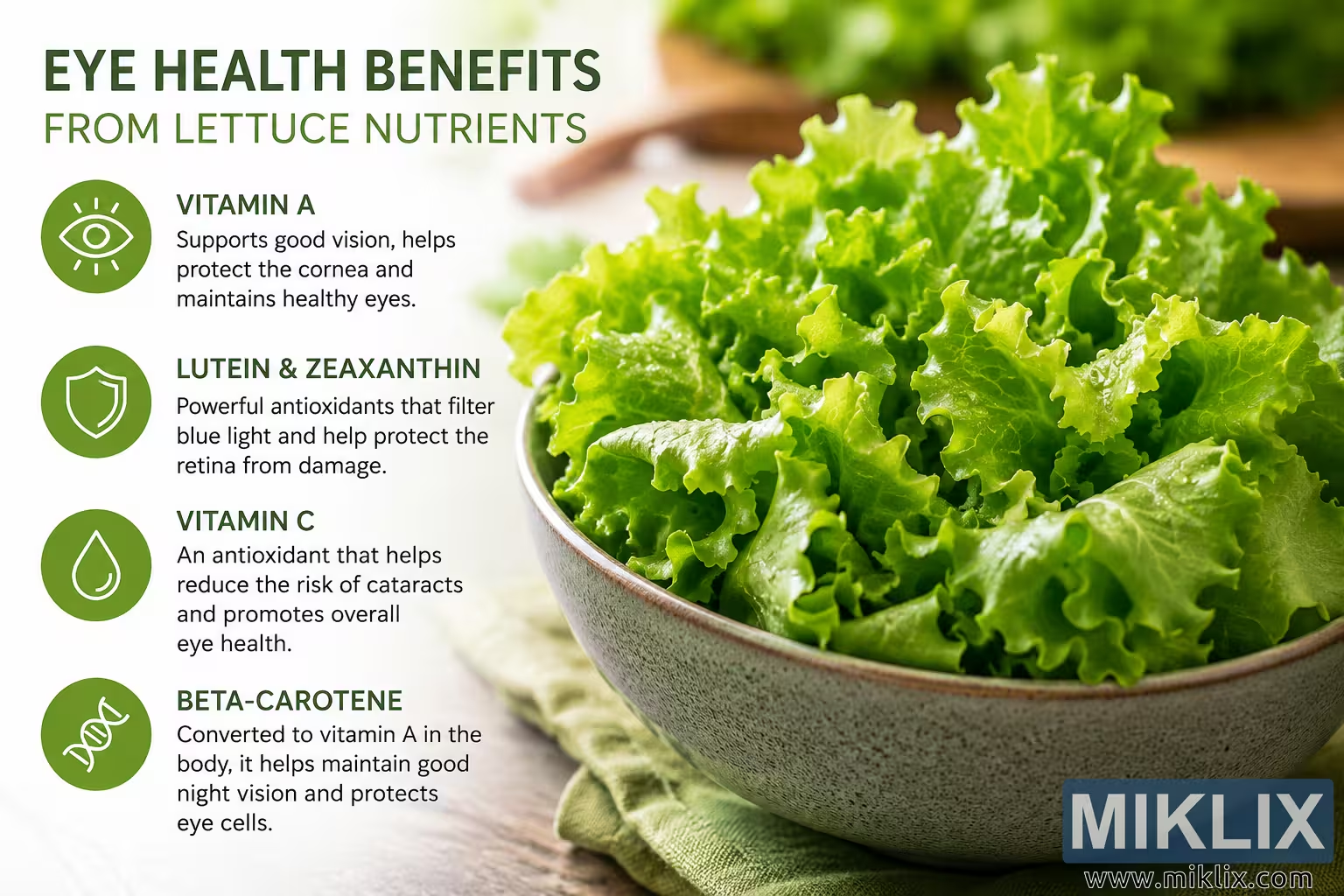
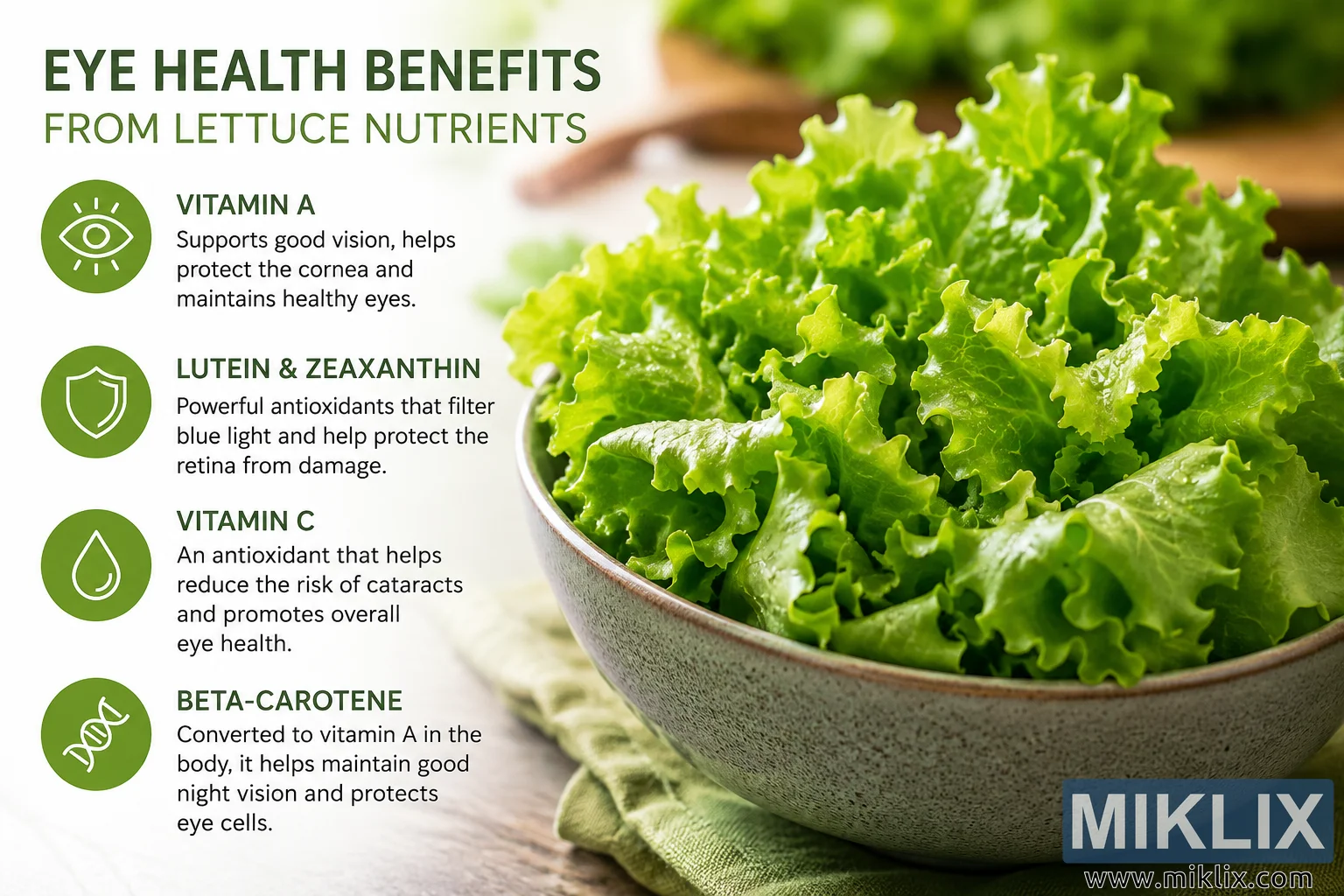
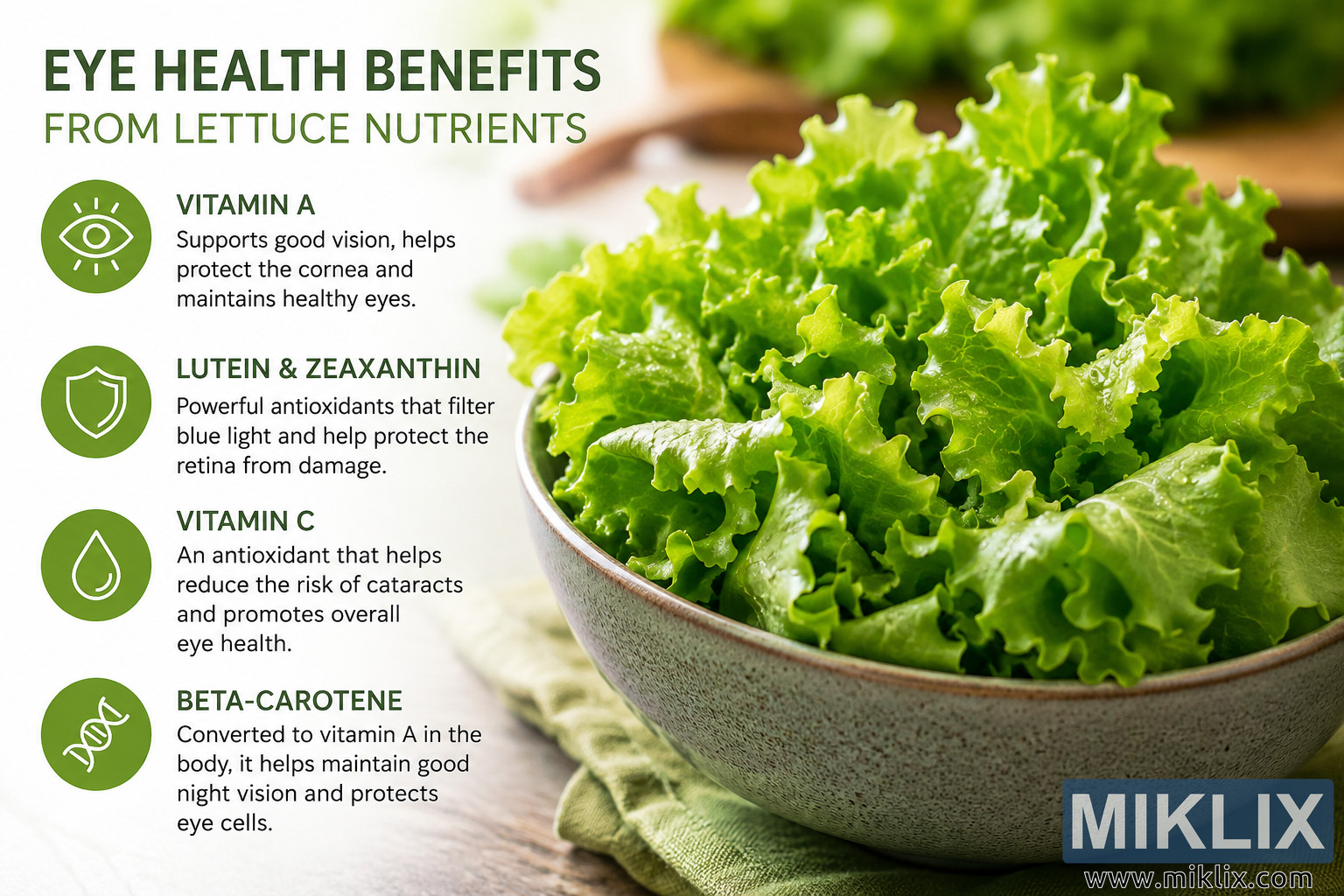
Grande taille (3,072 x 2,048)
Très grande taille (4,608 x 3,072)
Taille extra-large (6,144 x 4,096)
Taille comique (1,048,576 x 699,051)
- Toujours en cours de téléchargement... ;-)
Description de l'image
This landscape-oriented infographic presents the nutritional eye health benefits of lettuce in a clean, modern, and visually appealing educational design. The composition is divided into two primary sections, with the informational content displayed on the left side and a vibrant food photograph occupying the right side. The overall color palette is dominated by natural shades of green, white, and soft earthy tones, reinforcing themes of freshness, nutrition, and wellness.
At the top left corner of the image, a large bold heading reads “EYE HEALTH BENEFITS” in dark green uppercase letters. Directly beneath it, a secondary line of text states “FROM LETTUCE NUTRIENTS” in a lighter green color. The typography is modern, clean, and easy to read, giving the infographic a professional health-magazine appearance.
Below the title, four vertically stacked informational sections explain key nutrients found in lettuce and how they support eye health. Each section is paired with a circular green icon positioned to the left of the text. The icons are simple white line illustrations representing vision, protection, antioxidants, and nutrition.
The first nutrient section focuses on Vitamin A. Its icon depicts a stylized eye symbol. The accompanying text explains that vitamin A supports good vision, helps protect the cornea, and maintains healthy eyes. The text is arranged neatly in multiple lines using dark gray lettering for readability.
The second section highlights lutein and zeaxanthin. Its icon resembles a protective shield, symbolizing defense against eye damage. The text describes these nutrients as powerful antioxidants that help filter blue light and protect the retina. The wording emphasizes the protective role these compounds play in maintaining long-term visual health.
The third informational block covers Vitamin C. The associated icon is shaped like a water droplet. The text explains that vitamin C acts as an antioxidant that may help reduce the risk of cataracts while promoting overall eye health. The typography remains consistent with the rest of the infographic, maintaining a polished and organized visual structure.
The fourth nutrient section discusses beta-carotene. The icon resembles a stylized DNA or nutrient symbol. The text explains that beta-carotene converts into vitamin A within the body and contributes to healthy night vision while helping protect eye cells. The section reinforces the educational purpose of the infographic by connecting lettuce nutrients directly to eye wellness.
The entire left side of the image uses generous spacing and a minimalist layout, making the information easy to scan and visually balanced. The background behind the text is a clean white surface with soft gradients that subtly blend into the photograph on the right.
Dominating the right side of the infographic is a high-resolution close-up photograph of a bowl filled with fresh green leaf lettuce. The lettuce appears crisp, vibrant, and richly textured, with curly leaf edges and visible moisture droplets that enhance the impression of freshness. The leaves are illuminated by soft natural lighting that creates highlights and shadows across the textured surfaces.
The lettuce sits inside a rustic ceramic bowl with earthy gray and brown tones. The bowl rests on a folded green cloth napkin placed on a wooden tabletop. The warm wooden surface contributes a natural kitchen-like atmosphere while complementing the green tones of the lettuce.
In the softly blurred background, faint hints of additional lettuce and kitchen elements create depth without distracting from the main subject. The shallow depth of field keeps attention focused on the bowl of lettuce while giving the infographic a professional food-photography appearance.
The image overall communicates freshness, health, and nutritional wellness. Its educational infographic format combines professional typography, simple iconography, and appetizing food photography to create an engaging visual explanation of how lettuce nutrients contribute to maintaining healthy vision and protecting the eyes. The design is modern, uncluttered, and suitable for use in health blogs, nutrition articles, wellness presentations, educational materials, or social media content related to healthy eating and eye care.
L'image est liée à : A Complete Guide to the Health Benefits of Lettuce