
Image : Alfalfa Sprouts Vitamins and Minerals Nutritional Chart
Publié :
Dernière mise à jour : 13 mai 2026 à 16:28:35 UTC
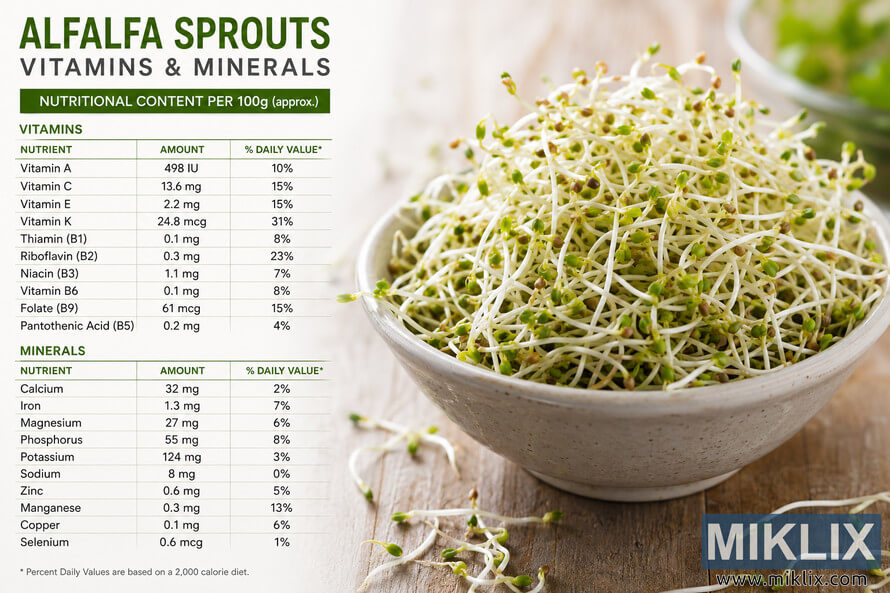
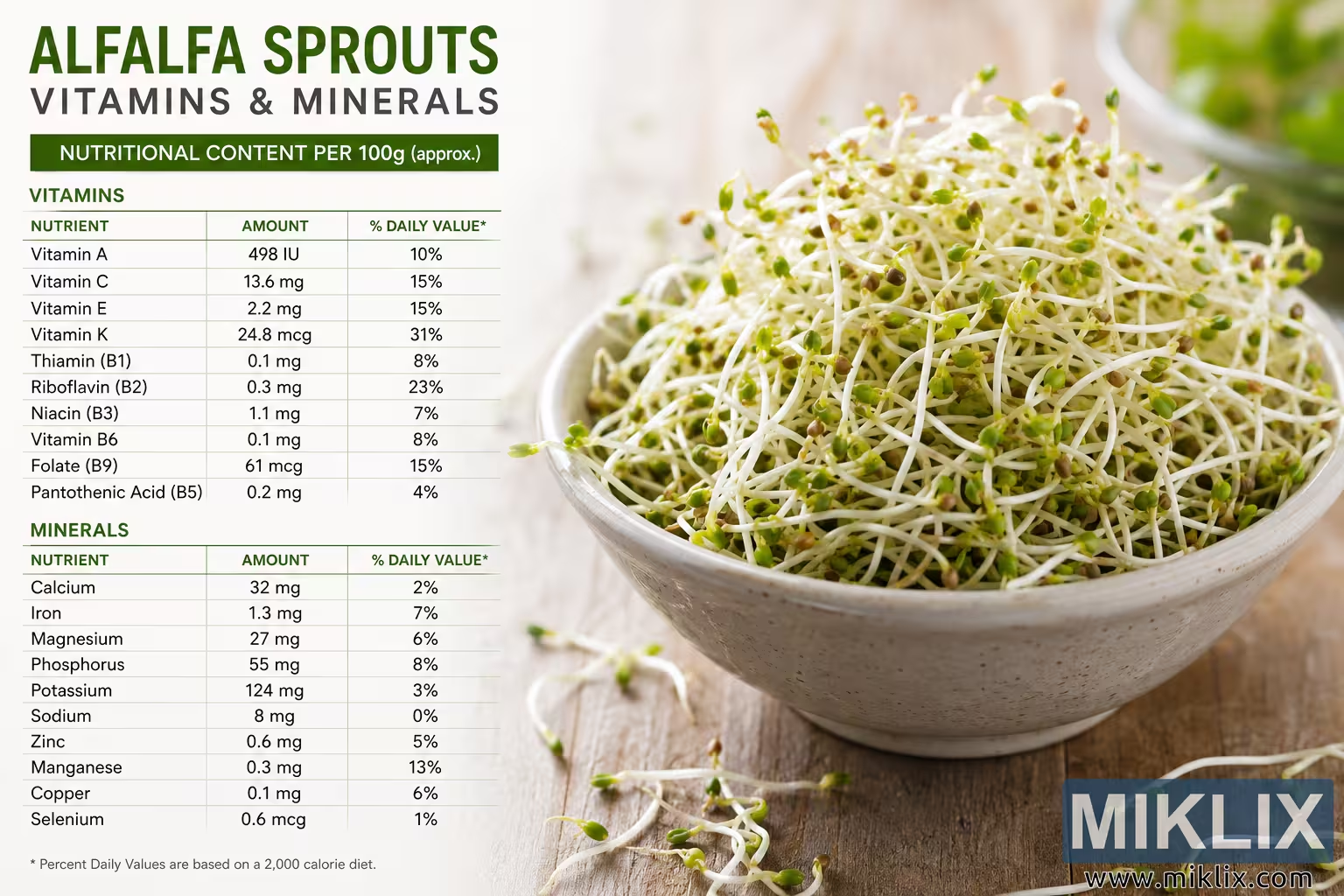
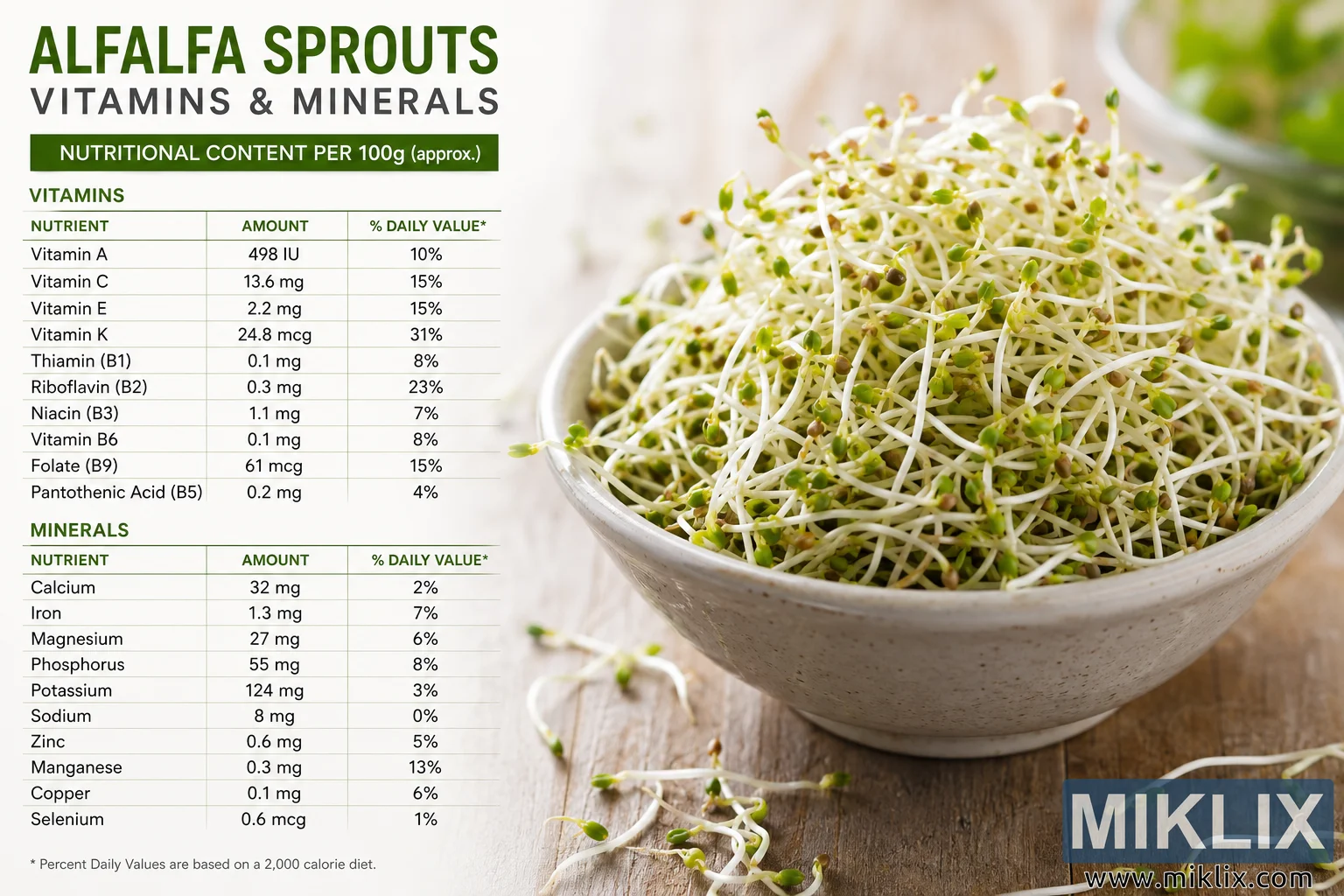
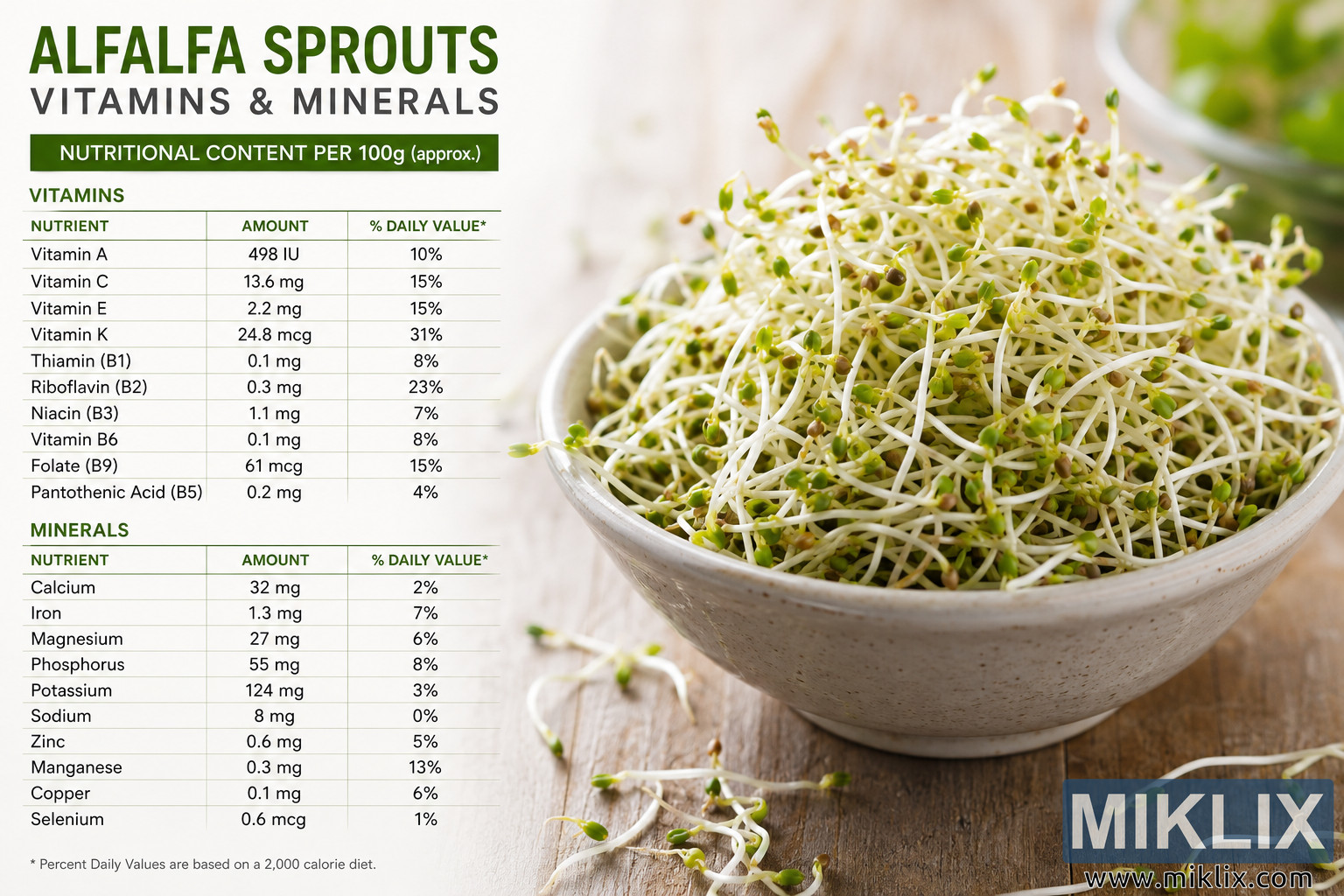
Detailed nutritional infographic featuring vitamins and minerals found in alfalfa sprouts, paired with a fresh food photography scene of organic sprouts in a ceramic bowl.
Alfalfa Sprouts Vitamins and Minerals Nutritional Chart
Versions disponibles de cette image
Les fichiers images téléchargeables ci-dessous sont moins compressés et de meilleure résolution - et donc de meilleure qualité - que les images intégrées dans les articles et les pages de ce site web, qui sont davantage optimisées pour la taille des fichiers afin de réduire la consommation de la bande passante.
Taille normale (1,536 x 1,024)
Grande taille (3,072 x 2,048)
Très grande taille (4,608 x 3,072)
Taille extra-large (6,144 x 4,096)
Taille comique (1,048,576 x 699,051)
- Toujours en cours de téléchargement... ;-)
Description de l'image
This landscape-oriented nutritional infographic presents a visually balanced combination of detailed health information and natural food photography centered around fresh alfalfa sprouts. The composition is divided into two primary sections. On the left side, a clean and organized nutritional chart displays the vitamin and mineral content found in alfalfa sprouts per 100 grams. The chart uses a modern layout with green accent colors, bold headings, and clearly separated rows for readability. Large uppercase typography at the top reads “ALFALFA SPROUTS” followed by the subtitle “VITAMINS & MINERALS,” establishing the educational focus of the image. Beneath the title, a highlighted banner introduces the nutritional data section with the phrase “Nutritional Content Per 100g (approx.).”
The chart is divided into two categories: vitamins and minerals. Each category includes columns labeled nutrient, amount, and percent daily value. The vitamin section lists nutrients such as Vitamin A, Vitamin C, Vitamin E, Vitamin K, Thiamin (B1), Riboflavin (B2), Niacin (B3), Vitamin B6, Folate (B9), and Pantothenic Acid (B5). Corresponding measurements are shown in milligrams, micrograms, or international units, along with estimated daily value percentages. The mineral section includes Calcium, Iron, Magnesium, Phosphorus, Potassium, Sodium, Zinc, Manganese, Copper, and Selenium. A small disclaimer note appears at the bottom of the chart indicating that percent daily values are based on a standard 2,000-calorie diet.
On the right side of the image, a close-up food photograph showcases a large ceramic bowl overflowing with fresh alfalfa sprouts. The sprouts appear crisp and vibrant, with thin white stems and tiny green leaves creating a dense, textured appearance. The bowl sits on a rustic wooden tabletop with a warm natural grain, enhancing the organic and wholesome atmosphere of the scene. A shallow depth of field softly blurs the background, drawing attention to the freshness and intricate texture of the sprouts. Small scattered sprouts on the table add realism and visual continuity.
The overall color palette combines earthy browns, soft whites, and fresh greens to reinforce themes of health, nutrition, freshness, and natural eating. Soft natural lighting illuminates the sprouts and chart evenly, creating a clean and inviting presentation suitable for health blogs, nutrition articles, wellness websites, educational materials, recipe platforms, or organic food marketing. The infographic style balances scientific clarity with appetizing food photography, making the image both informative and visually appealing.
L'image est liée à : Alfalfa Sprouts: Complete Guide to Health Benefits