
Image : Polyphenol Molecules in Plant Cells
Publié :
Dernière mise à jour : 16 juillet 2026 à 20:43:57 UTC
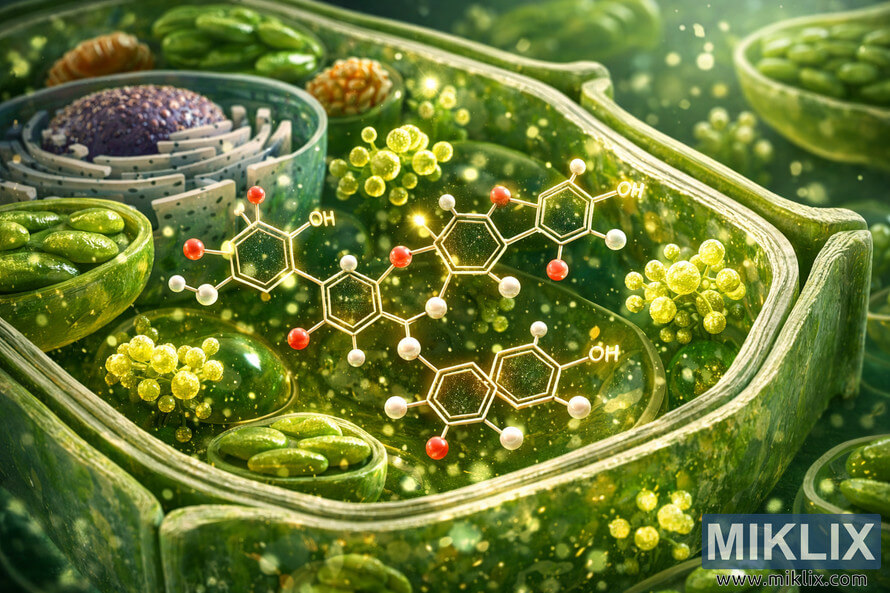
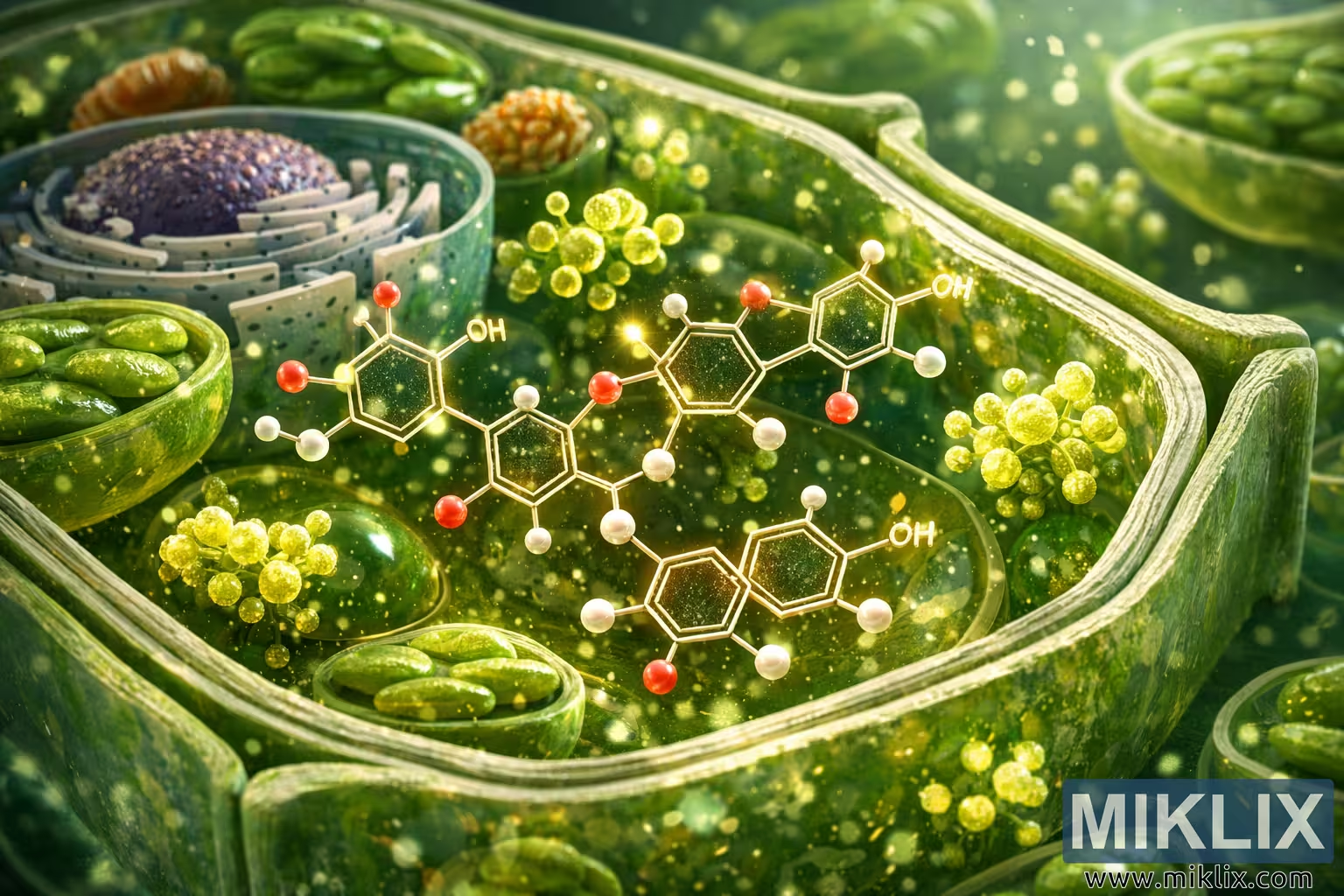
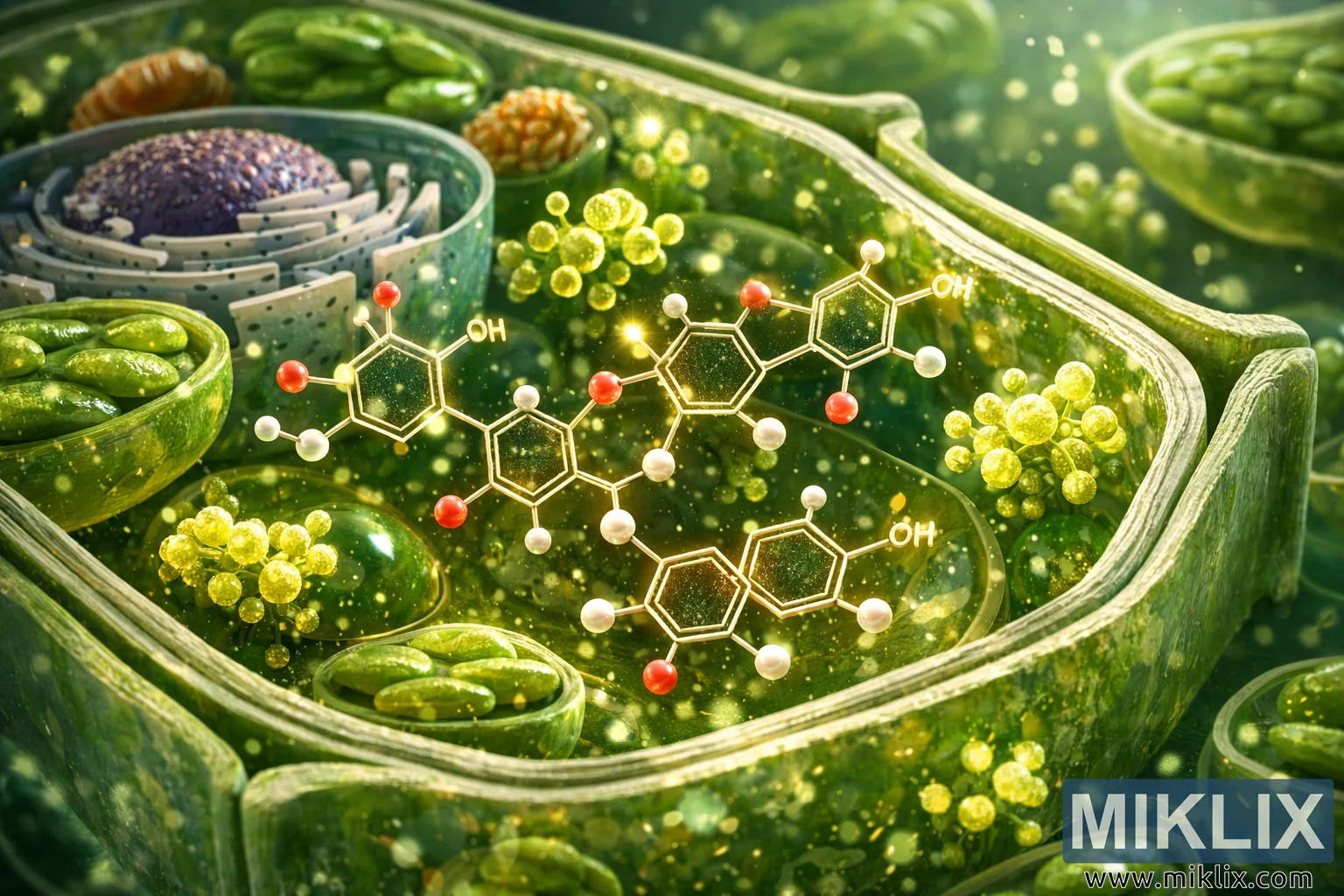
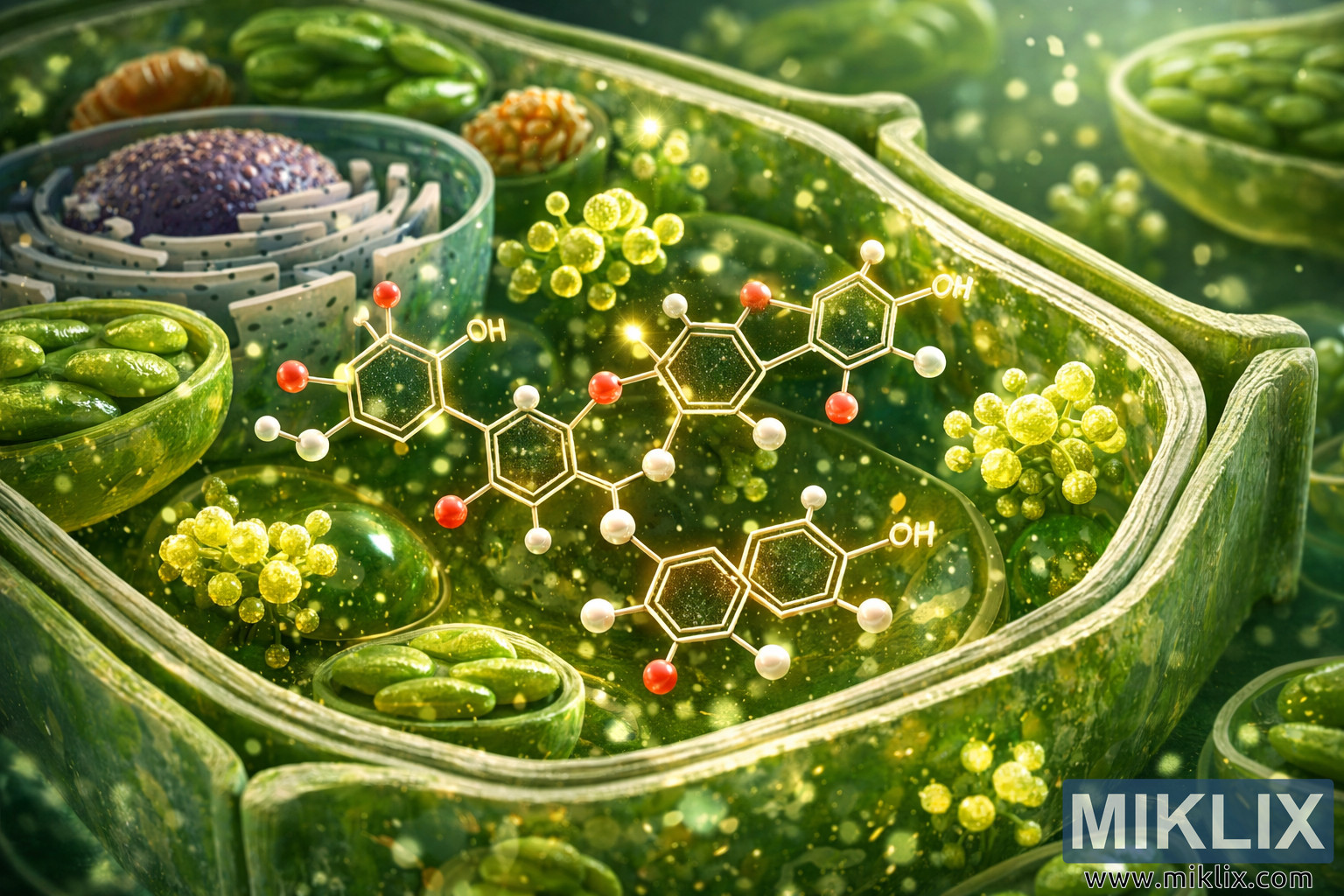
A detailed digital illustration depicting polyphenol molecules within plant cells, highlighting chloroplasts, vacuoles, and molecular structures in a vibrant green environment.
Polyphenol Molecules in Plant Cells
Versions disponibles de cette image
Les fichiers images téléchargeables ci-dessous sont moins compressés et de meilleure résolution - et donc de meilleure qualité - que les images intégrées dans les articles et les pages de ce site web, qui sont davantage optimisées pour la taille des fichiers afin de réduire la consommation de la bande passante.
Taille normale (1,536 x 1,024)
Grande taille (3,072 x 2,048)
Très grande taille (4,608 x 3,072)
Taille extra-large (6,144 x 4,096)
Taille comique (1,048,576 x 699,051)
- Toujours en cours de téléchargement... ;-)
Description de l'image
This image presents a highly detailed and scientifically inspired digital illustration that captures the microscopic world inside a plant cell, focusing on the presence and behavior of polyphenol molecules. The composition is rendered in landscape orientation, allowing the viewer to immerse themselves in the intricate cellular environment. The scene is bathed in luminous green tones, evoking the natural vibrancy of plant life and the biochemical complexity that sustains it.
At the center of the image lies a large vacuole filled with a translucent green fluid, symbolizing the aqueous environment where many metabolic processes occur. Surrounding the vacuole are chloroplasts, each depicted with remarkable precision. Their internal thylakoid membranes are arranged in stacked formations, glowing softly to represent the photosynthetic machinery at work. The chloroplasts are embedded within the cytoplasm, which is portrayed as a semi-transparent medium filled with tiny particles and molecular clusters, giving the impression of constant motion and biochemical activity.
The polyphenol molecules themselves are the focal point of the illustration. They are represented as interconnected hexagonal rings, each adorned with hydroxyl groups (OH) that protrude from the carbon framework. These molecular structures are color-coded for clarity: gray spheres for carbon atoms, red for oxygen, and white for hydrogen. The molecules emit a subtle luminescent glow, suggesting their reactive nature and their role in antioxidant defense within plant tissues. The artist has chosen to depict these molecules floating freely throughout the cytoplasm, interacting visually with the surrounding organelles.
Clusters of glowing yellow-green spheres accompany the polyphenol molecules, symbolizing polyphenol compounds or aggregates. These clusters are scattered throughout the cell, creating a dynamic interplay of light and color. The glow effect enhances the sense of molecular energy and emphasizes the biochemical significance of polyphenols in plant physiology.
In the background, the nucleus is visible with a soft purple hue, containing a distinct nucleolus that adds depth and realism to the cellular architecture. The endoplasmic reticulum weaves through the cytoplasm, its tubular structure rendered in delicate shades of blue and gray. Mitochondria appear as orange and yellow ovals, their internal membranes detailed to convey the complexity of cellular respiration. Together, these organelles form a harmonious backdrop that contextualizes the polyphenol molecules within the broader metabolic network of the plant cell.
The lighting in the image is vibrant yet balanced. A gentle illumination emanates from the polyphenol molecules themselves, casting subtle reflections on nearby structures. This interplay of light and shadow creates a sense of depth and realism, while the shallow depth of field ensures that the viewer’s attention remains focused on the molecular details. The background is slightly blurred, emphasizing the central molecules and enhancing the three-dimensional effect.
The overall color palette is dominated by greens and yellows, punctuated by occasional purples and oranges to represent different organelles. The artist’s use of color not only conveys biological accuracy but also evokes the aesthetic beauty of microscopic life. The textures are smooth and organic, with semi-transparent layers that mimic the refractive properties of cellular membranes.
Conceptually, the image celebrates the elegance of molecular biology and the unseen complexity of plant cells. Polyphenols, known for their antioxidant properties, are depicted as luminous guardians within the cell, interacting with light and matter in a way that symbolizes their protective role against oxidative stress. The illustration bridges scientific accuracy and artistic imagination, offering both educational insight and visual delight.
Every element—from the molecular bonds to the organelle structures—has been carefully composed to create a cohesive and immersive representation of plant cell biochemistry. The viewer is invited to explore the microscopic world where chemistry and life intertwine, appreciating the delicate balance that sustains plant vitality. The result is a stunning portrayal of molecular harmony, rendered with exceptional clarity and depth, capturing the essence of polyphenol molecules as vital components of plant health and resilience.
L'image est liée à : Health Benefits of Chives: Nature's Nutritional Powerhouse