
Image : Selecting Ripe Honeydew Melon at a Farmers Market
Publié :
Dernière mise à jour : 20 août 2026 à 14:16:26 UTC
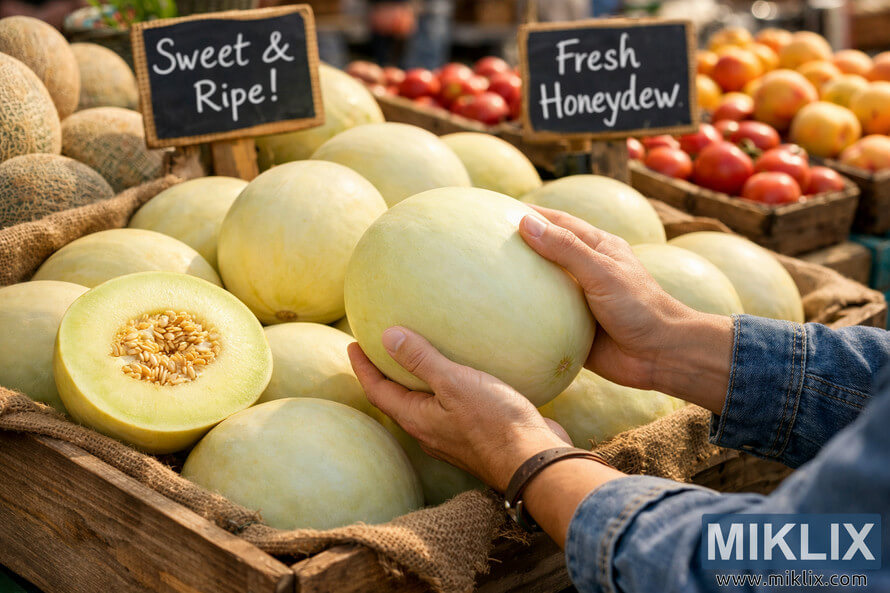
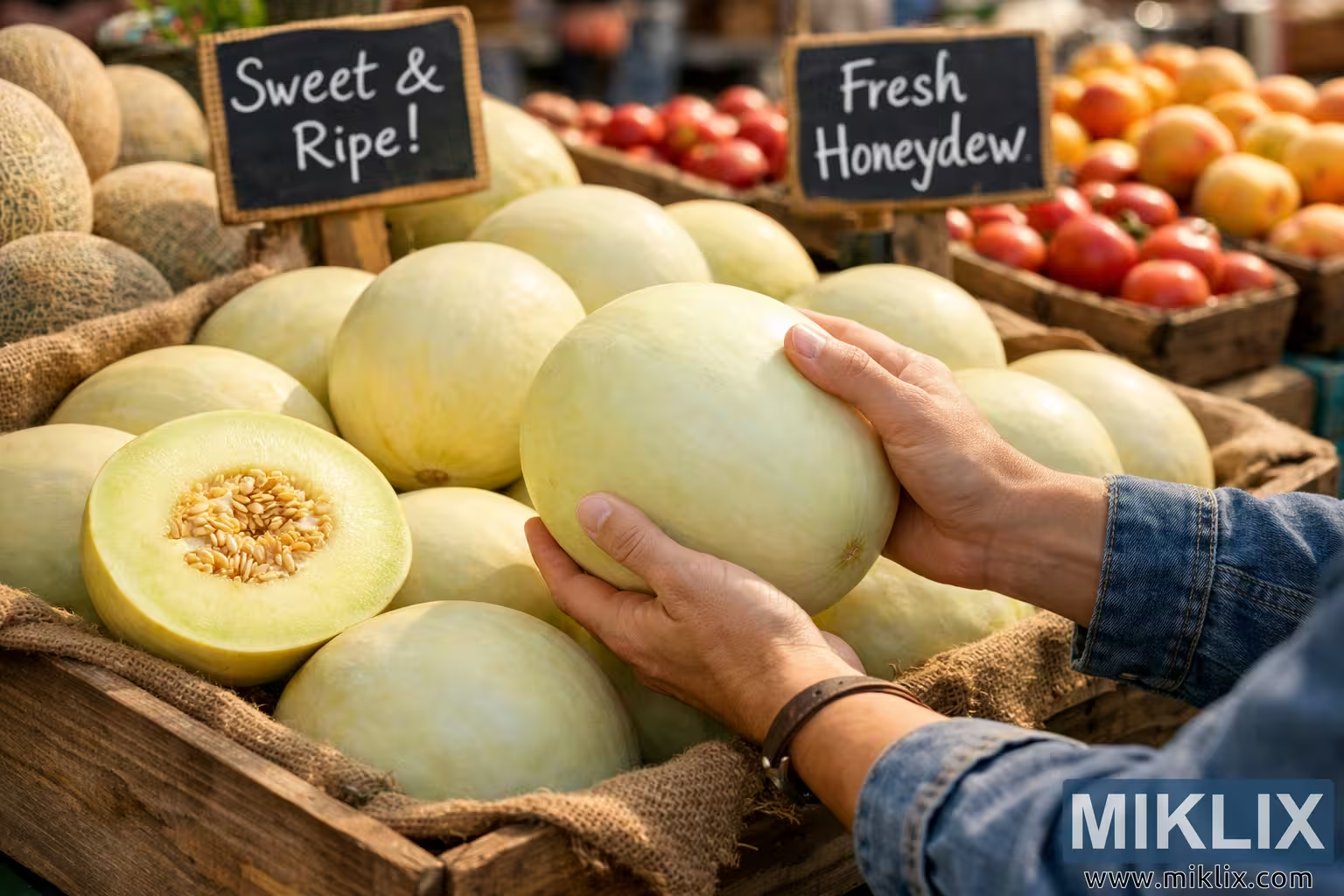
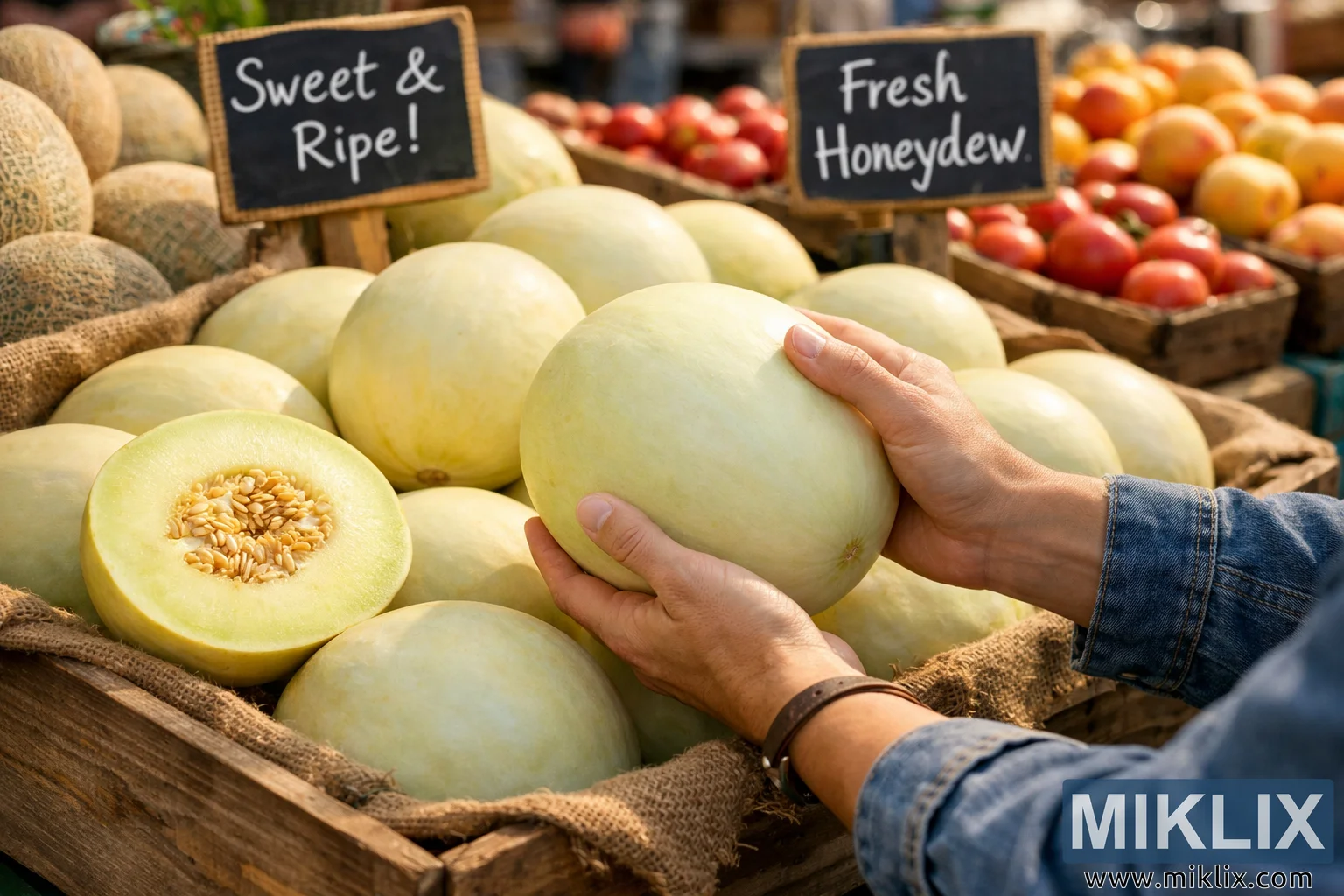
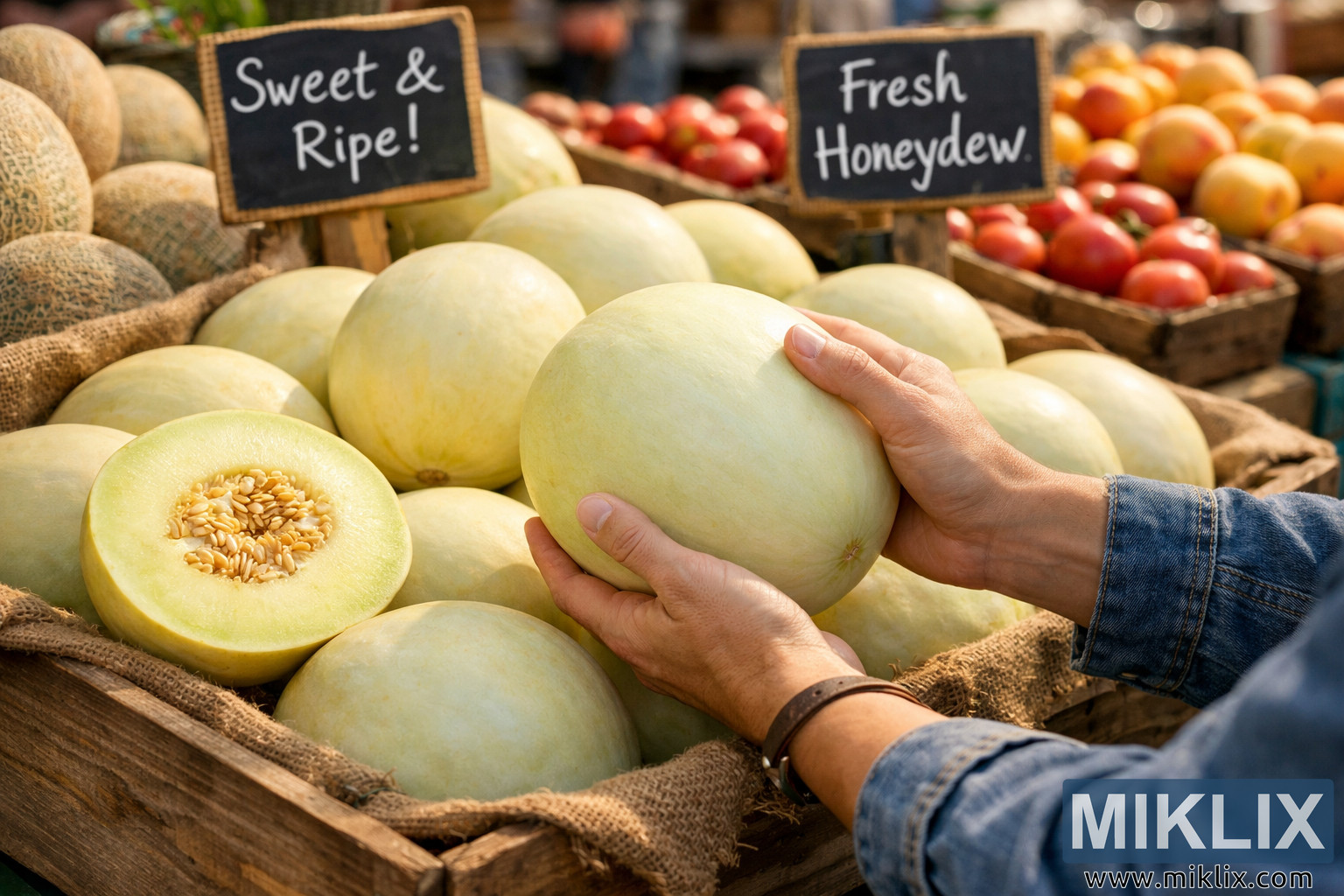
A detailed depiction of a person choosing a ripe honeydew melon at a bustling farmers market, highlighting the textures, colors, and atmosphere of fresh produce shopping.
Selecting Ripe Honeydew Melon at a Farmers Market
Versions disponibles de cette image
Les fichiers images téléchargeables ci-dessous sont moins compressés et de meilleure résolution - et donc de meilleure qualité - que les images intégrées dans les articles et les pages de ce site web, qui sont davantage optimisées pour la taille des fichiers afin de réduire la consommation de la bande passante.
Taille normale (1,536 x 1,024)
Grande taille (3,072 x 2,048)
Très grande taille (4,608 x 3,072)
Taille extra-large (6,144 x 4,096)
Taille comique (1,048,576 x 699,051)
- Toujours en cours de téléchargement... ;-)
Description de l'image
The image portrays a vivid and inviting scene at a local farmers market, where a person is carefully selecting a ripe honeydew melon from a rustic wooden produce stand. The composition is rich with natural light, textures, and colors that evoke the warmth and authenticity of outdoor market shopping. In the foreground, the individual’s hands are gently cradling a large honeydew melon, testing its firmness and ripeness. The left hand supports the melon from below, while the right hand presses lightly on the top, suggesting a tactile evaluation of its readiness. The person is dressed casually in a denim jacket, and a brown leather strap bracelet encircles their wrist, adding a subtle touch of personal style and realism to the scene.
The honeydew melon itself is smooth and pale green, with a faint yellowish tint that indicates maturity. Its surface bears delicate speckles and a soft sheen under the sunlight. Around it, several other melons are piled in wooden crates lined with burlap, creating a rustic and organic display. The crates are filled with melons of varying hues—from creamy green to golden yellow—each one slightly different in tone and texture, emphasizing the natural diversity of fresh produce. One melon has been sliced open and placed prominently to the left, revealing its succulent interior: pale green flesh glistening with moisture and a central cavity filled with tan seeds. The cut melon adds a sense of freshness and immediacy, inviting the viewer to imagine the sweet aroma and juicy flavor of ripe honeydew.
Small chalkboard signs are nestled among the melons, handwritten with cheerful messages such as “Sweet & Ripe!” and “Fresh Honeydew.” These signs, written in white chalk on black boards, contribute to the artisanal charm of the market and reinforce the authenticity of the setting. The midground expands the scene to include other fruits and vegetables—cantaloupes with rough, netted skin to the left, and baskets of red tomatoes and golden peaches to the right. The arrangement of produce is abundant yet orderly, suggesting a well-curated market stall run by a dedicated vendor.
In the background, the scene becomes softly blurred, drawing attention to the central action while still conveying the lively atmosphere of the market. Shoppers can be seen moving among the stalls, their figures indistinct but animated, contributing to the sense of community and activity. The sunlight filters through the open-air canopy, casting a warm, golden glow across the produce and highlighting the natural colors—the greens of the melons, the reds of the tomatoes, and the yellows of the peaches. The interplay of light and shadow adds depth and realism, making the textures of the fruits and the rough burlap stand out vividly.
The overall mood of the image is serene yet vibrant, celebrating the simple pleasure of selecting fresh fruit in a local market. It captures a moment of mindfulness and connection to nature, where the act of choosing a melon becomes a sensory experience—touching, smelling, and seeing the fruit in its natural context. The photograph’s composition balances intimacy and abundance: the close-up of the hands and melon draws the viewer into the tactile experience, while the surrounding produce and market activity provide a broader sense of place and community.
Every element in the image—from the texture of the wooden crates to the handwritten chalk signs—contributes to a narrative of authenticity and freshness. The honeydew melons, with their soft pastel tones, contrast beautifully against the deeper colors of neighboring fruits, creating a harmonious palette that feels both natural and inviting. The sunlight enhances this harmony, illuminating the scene with a gentle radiance that evokes the warmth of a summer morning.
Ultimately, the image conveys more than just the act of buying fruit; it tells a story of human connection, craftsmanship, and appreciation for the earth’s bounty. It invites the viewer to slow down, to savor the moment, and to recognize the beauty in everyday rituals like choosing the perfect melon. The photograph stands as a celebration of local agriculture, seasonal produce, and the timeless joy of fresh food shared among people in a communal space.
L'image est liée à : Honeydew Melon: The Refreshing Fruit Packed with Nutrients