
Image : Lemongrass Plant in a Tropical Garden
Publié :
Dernière mise à jour : 26 août 2026 à 15:35:25 UTC
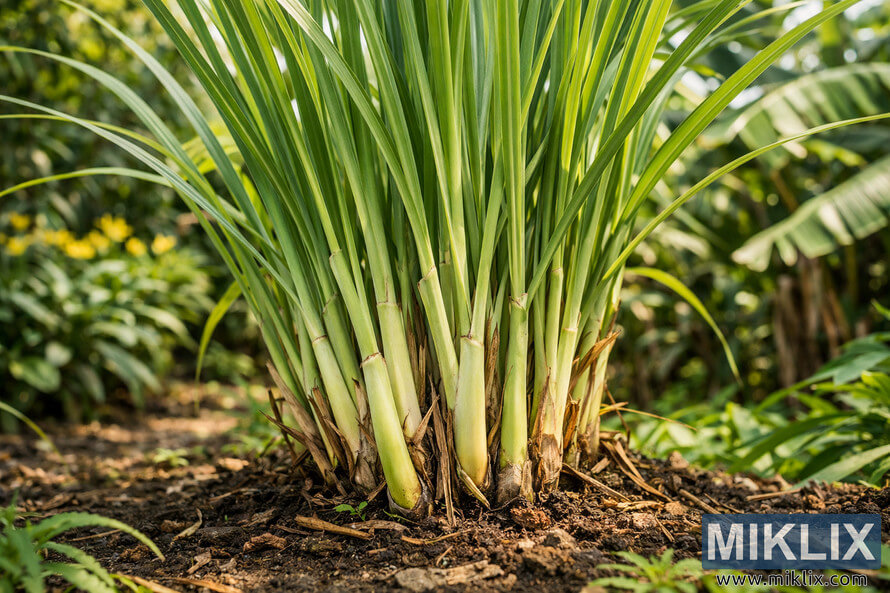
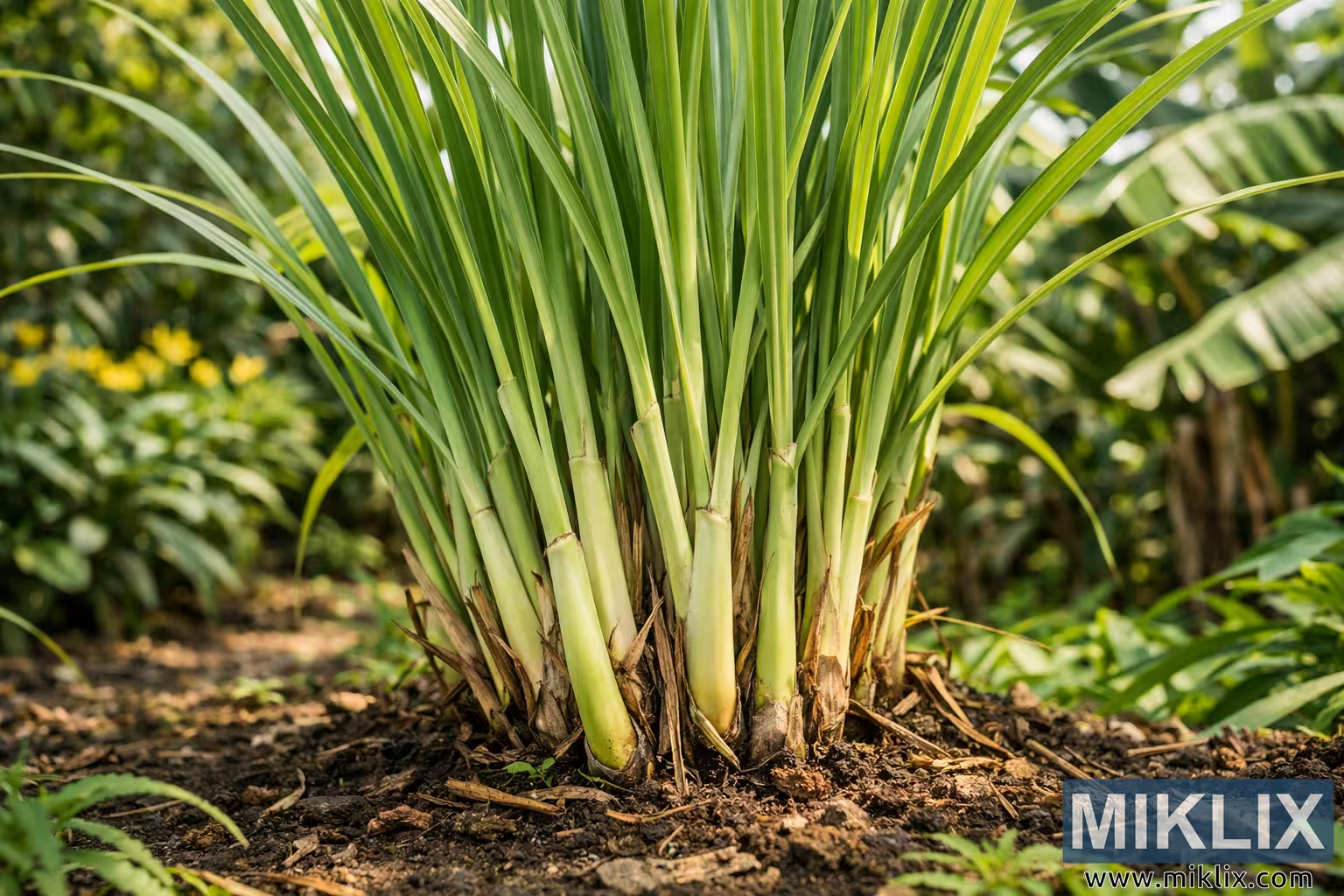
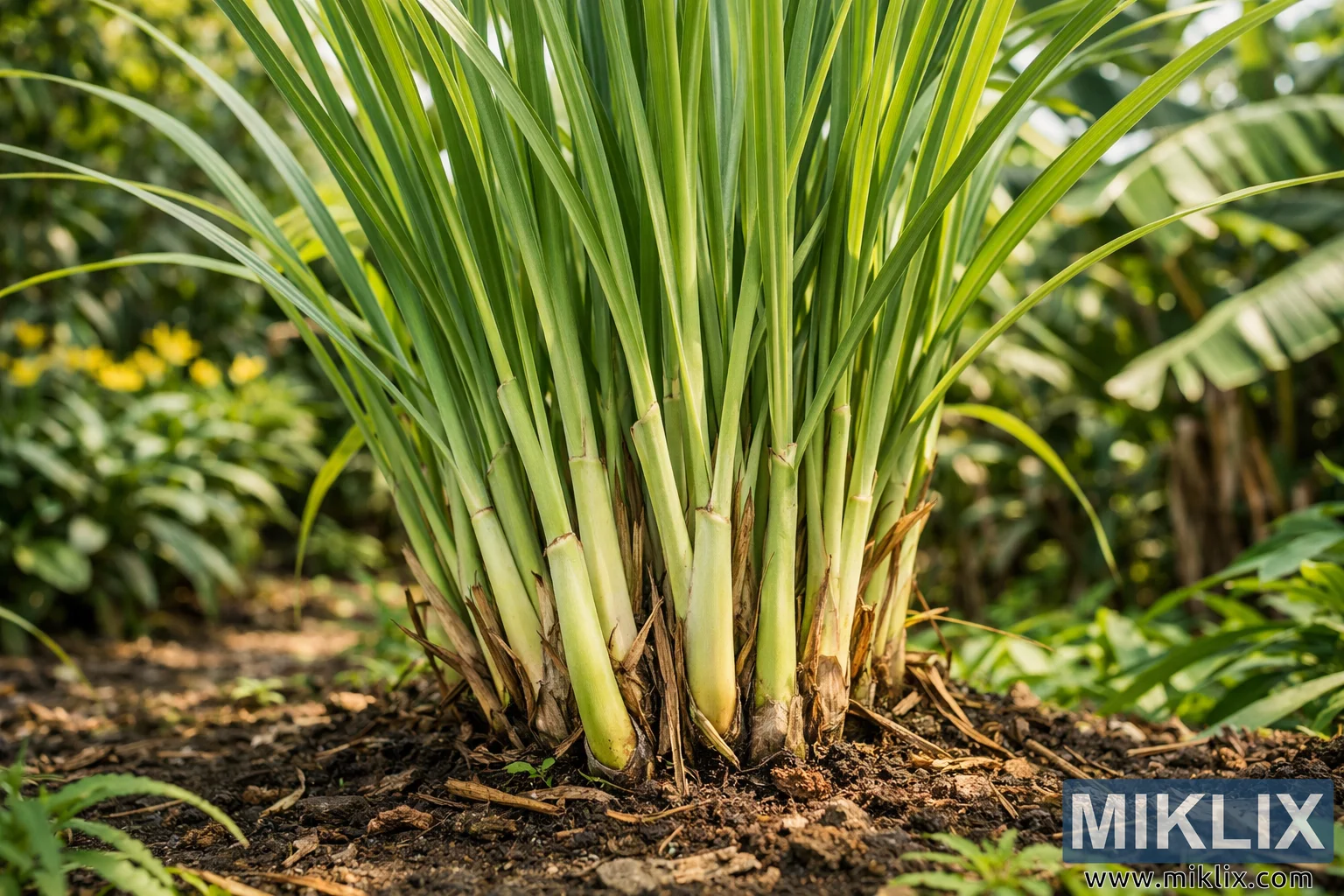
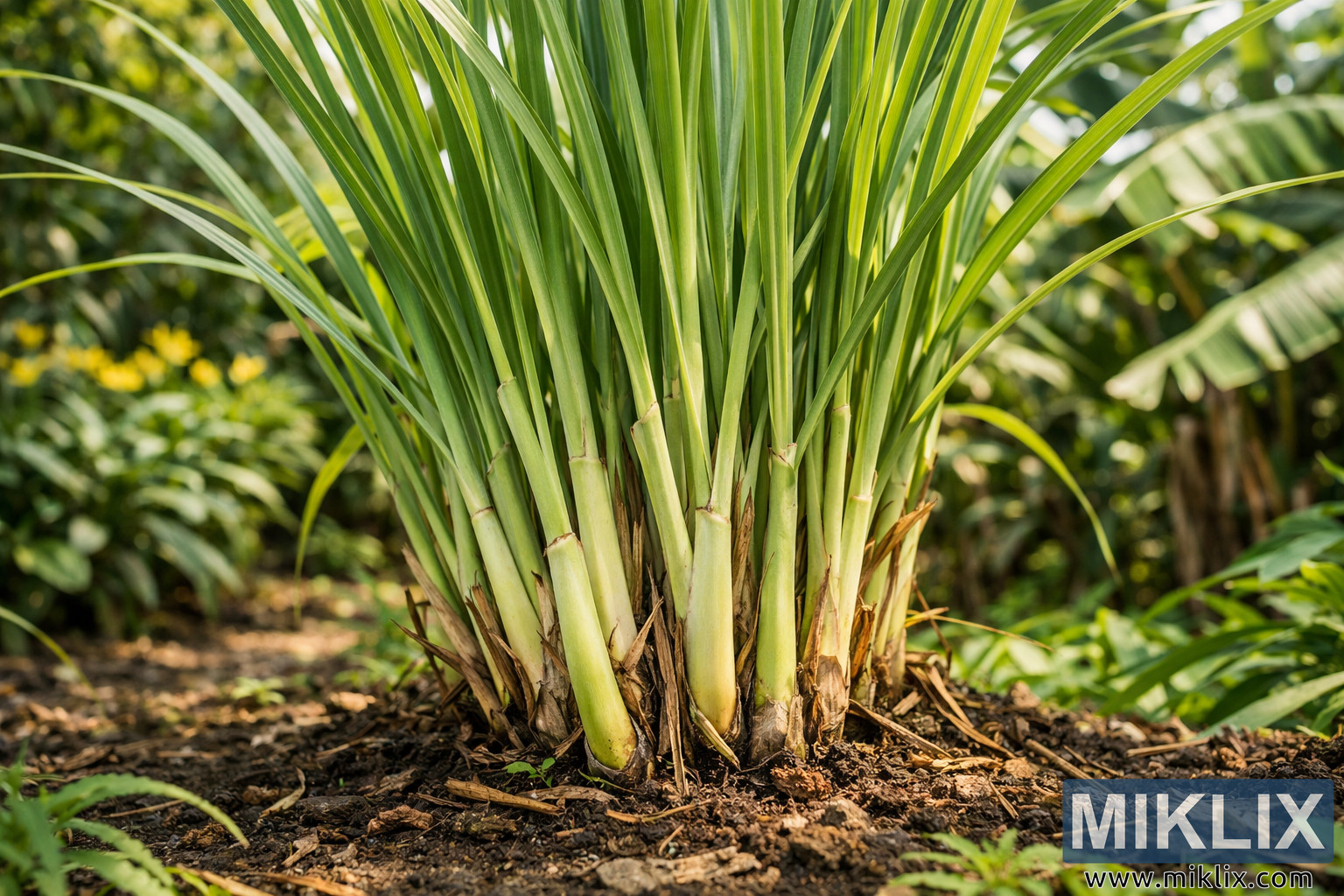
A detailed depiction of a lemongrass plant thriving in a tropical garden, showcasing its aromatic stalks, vibrant green leaves, and rich soil environment under natural sunlight.
Lemongrass Plant in a Tropical Garden
Versions disponibles de cette image
Les fichiers images téléchargeables ci-dessous sont moins compressés et de meilleure résolution - et donc de meilleure qualité - que les images intégrées dans les articles et les pages de ce site web, qui sont davantage optimisées pour la taille des fichiers afin de réduire la consommation de la bande passante.
Taille normale (1,536 x 1,024)
Grande taille (3,072 x 2,048)
Très grande taille (4,608 x 3,072)
Taille extra-large (6,144 x 4,096)
Taille comique (1,048,576 x 699,051)
- Toujours en cours de téléchargement... ;-)
Description de l'image
The image presents a vivid and immersive portrayal of a lemongrass (Cymbopogon citratus) plant flourishing in a tropical garden setting. The composition is captured in landscape orientation, emphasizing the natural expanse of the garden and the intricate details of the lemongrass itself. The foreground is dominated by the plant’s base, where tightly clustered stalks emerge from the dark, fertile soil. Each stalk is rendered with remarkable precision, showing subtle gradations of color—from creamy white at the lower sections to pale green and yellowish hues as they ascend. The stalks are encased in thin, papery sheaths that peel away naturally, revealing the smooth, fibrous texture beneath. These sheaths display earthy tones of brown and tan, adding a rustic authenticity to the scene.
The leaves of the lemongrass extend upward and outward in graceful arcs, forming a dense canopy of slender blades that catch and reflect the sunlight. Their surfaces exhibit a lively interplay of light and shadow, with the central veins appearing slightly lighter than the surrounding tissue. The leaves taper to fine, sharp points, and their edges are subtly serrated, contributing to the plant’s characteristic texture. The sunlight filtering through the garden canopy creates a dynamic pattern of illumination, highlighting the vibrant greens and casting soft, dappled shadows across the soil.
The background of the image is intentionally blurred to draw attention to the lemongrass in the foreground. Within this softened backdrop, one can discern the presence of other tropical flora—broad-leaved banana plants, delicate ferns, and occasional bursts of yellow flowers that punctuate the greenery. The overall atmosphere is warm and humid, evoking the essence of a tropical ecosystem where moisture and sunlight coexist in perfect balance. The air seems thick with vitality, and the soil beneath the plant appears rich with organic matter, scattered with dried leaves and small twigs that hint at the natural cycle of growth and decay.
The composition employs a shallow depth of field, ensuring that the lemongrass remains the focal point while the surrounding environment contributes to the sense of place without competing for attention. The camera angle is slightly low, offering a perspective that accentuates the height and density of the plant. This viewpoint allows the viewer to appreciate the structural complexity of the lemongrass—the way its stalks cluster tightly at the base and fan outward into a fountain of foliage. The image captures not only the botanical beauty of the plant but also its tactile qualities: the smoothness of the stalks, the fibrous resilience of the leaves, and the rough texture of the soil.
The lighting is natural and balanced, with sunlight filtering through the upper foliage to create a soft glow around the lemongrass. The interplay of light and shadow enhances the three-dimensionality of the scene, giving depth to each leaf and stalk. Tiny details, such as droplets of moisture clinging to the leaves or the faint sheen of the stalks, contribute to the realism and vitality of the image. The color palette is dominated by shades of green, ranging from deep emerald to bright lime, complemented by the earthy browns of the soil and the muted yellows of the stalk bases.
Overall, the image conveys a sense of serenity and natural abundance. It celebrates the lemongrass plant not merely as a culinary or medicinal herb but as a living organism thriving within its ecological context. The composition invites the viewer to appreciate the harmony between plant and environment—the way the lemongrass integrates seamlessly into the tropical landscape, nourished by sunlight, soil, and humidity. The photograph’s clarity and resolution allow for an intimate exploration of botanical detail, making it both scientifically informative and aesthetically captivating.
In essence, this depiction of lemongrass in a tropical garden is a study in natural beauty and organic structure. It captures the plant’s vitality, the richness of its surroundings, and the quiet elegance of tropical life. The image stands as a tribute to the intricate patterns of growth found in nature, where every leaf and stalk contributes to a larger symphony of color, texture, and light.
L'image est liée à : Lemongrass: The Aromatic Herb with Powerful Wellness Benefits