
Image : Homemade Loquat Jam in Rustic Glass Jar
Publié :
Dernière mise à jour : 3 septembre 2026 à 20:25:21 UTC
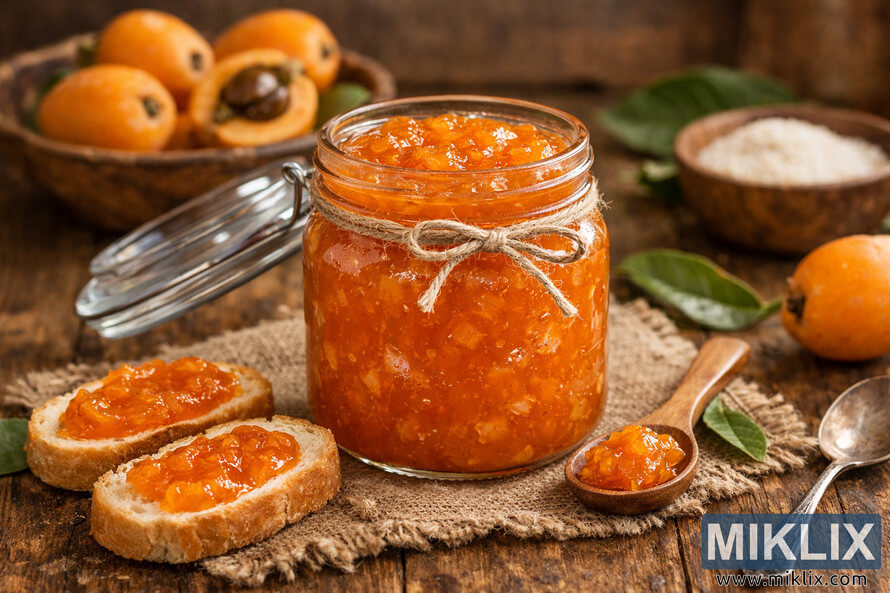
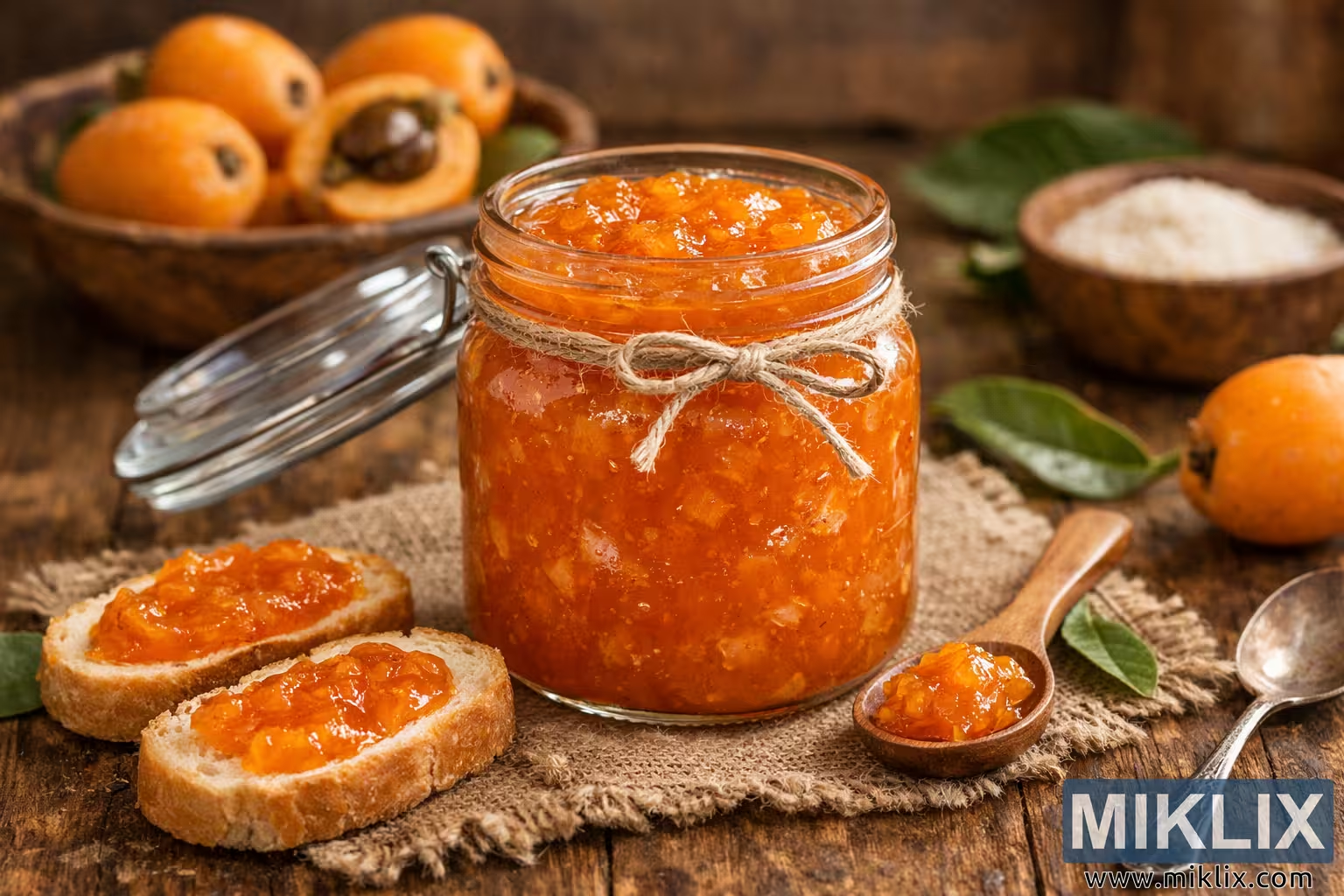
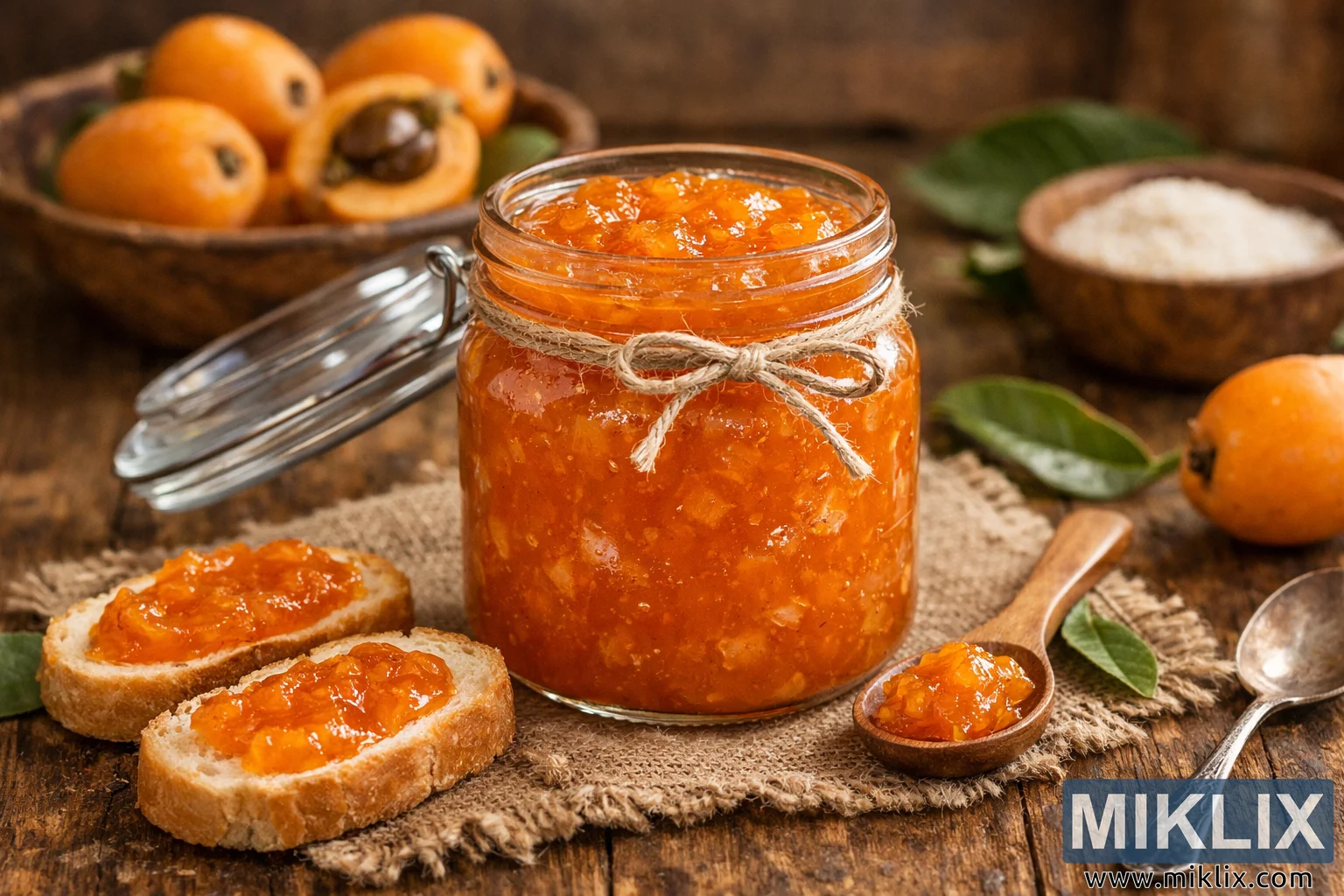
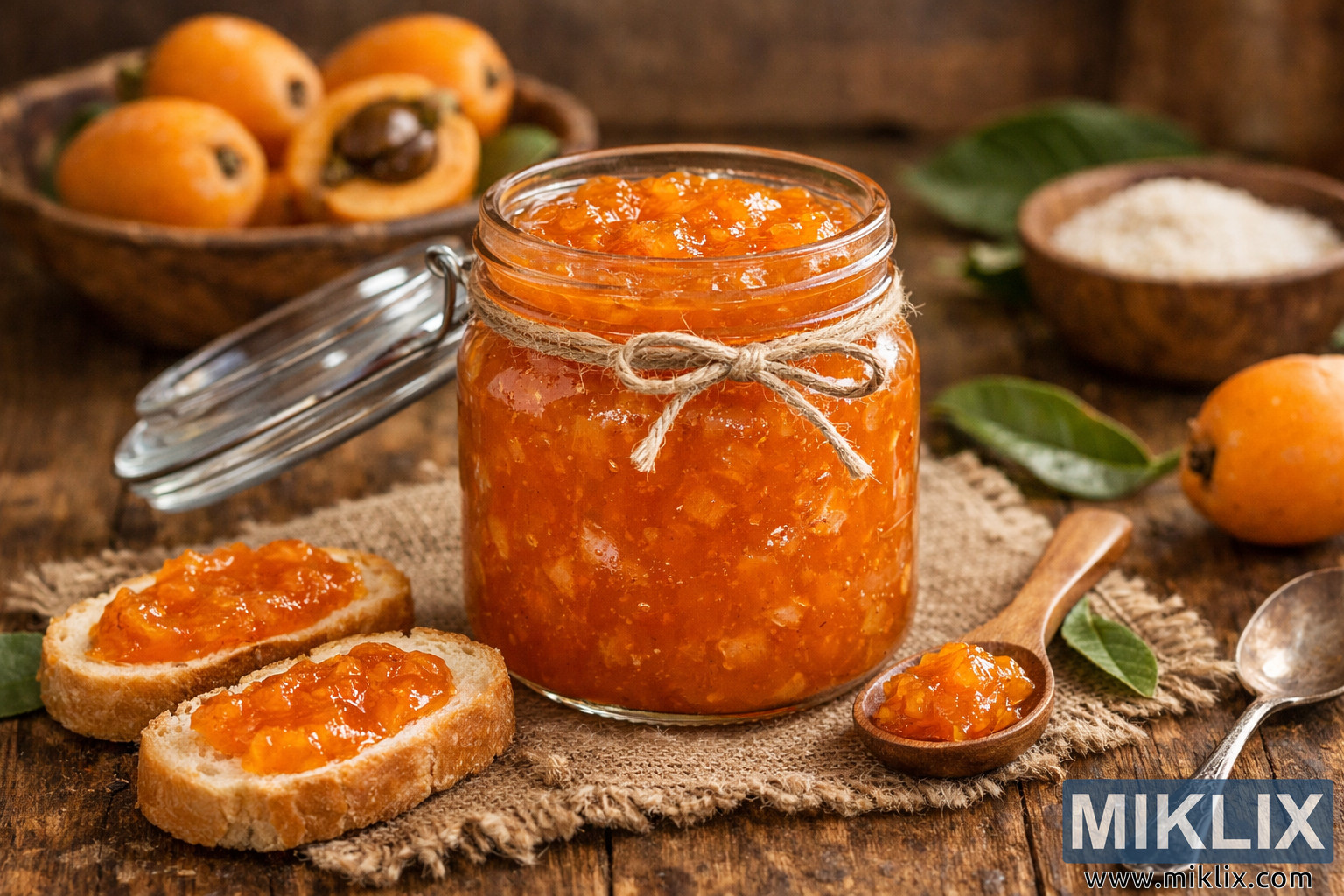
A warm, rustic kitchen scene featuring a glass jar of homemade loquat jam on a wooden table, surrounded by crusty bread with jam, fresh loquats, a wooden spoon, burlap cloth, and simple wooden bowls. The inviting orange jam, natural textures, and soft, natural lighting create a cozy, handcrafted atmosphere perfect for showcasing homemade preserves and seasonal fruit.
Homemade Loquat Jam in Rustic Glass Jar
Versions disponibles de cette image
Les fichiers images téléchargeables ci-dessous sont moins compressés et de meilleure résolution - et donc de meilleure qualité - que les images intégrées dans les articles et les pages de ce site web, qui sont davantage optimisées pour la taille des fichiers afin de réduire la consommation de la bande passante.
Taille normale (1,536 x 1,024)
Grande taille (3,072 x 2,048)
Très grande taille (4,608 x 3,072)
Taille extra-large (6,144 x 4,096)
Taille comique (1,048,576 x 699,051)
- Toujours en cours de téléchargement... ;-)
Description de l'image
A warmly lit, rustic kitchen scene centers around a glass jar of homemade loquat jam, inviting the viewer into a cozy, handcrafted atmosphere. The jar itself is a clear, cylindrical Mason-style glass container, filled almost to the brim with vibrant orange jam. The jam has a glistening, slightly chunky texture, with visible pieces of loquat fruit suspended throughout, suggesting a recipe that preserves the natural character of the fruit rather than blending it into a perfectly smooth spread. Around the neck of the jar, a simple piece of twine is tied into a neat bow, adding a touch of homespun charm and reinforcing the sense that this jam was made with care and attention rather than mass-produced.
The jar’s hinged, round, silver-colored metal lid with a rubber gasket is flipped open and rests to the left of the jar on the rustic wooden table. Its interior is visible, showing the functional design meant to keep the contents fresh. The open lid subtly implies that the jam has just been used or is about to be enjoyed, creating a feeling of immediacy and presence in the scene. The wooden table beneath everything has a weathered, textured surface, with visible grain and imperfections that contribute to the overall rustic aesthetic.
To the right of the jar, a small wooden spoon lies on a frayed piece of burlap cloth. The spoon has a rounded handle and a shallow bowl, and it holds a generous dollop of the loquat jam, which glows with a rich orange hue under the warm natural light. The jam on the spoon appears thick and glossy, with tiny fruit fragments catching the light. The burlap cloth beneath the spoon is rough and slightly worn, its edges frayed and uneven, adding another layer of tactile detail and reinforcing the handmade, farmhouse-style mood.
In the foreground, two slices of crusty bread rest on the same burlap cloth to the left of the jar. Each slice is generously spread with loquat jam, the orange color standing out against the pale, slightly toasted surface of the bread. The crust of the bread looks firm and textured, while the interior appears soft and porous, ready to absorb the sweetness and subtle tartness of the jam. The way the jam is spread—thick, uneven, and slightly dripping at the edges—suggests a casual, indulgent moment, as if someone has just prepared a simple but satisfying snack.
Surrounding the jar and bread, fresh loquats are scattered across the wooden table. These fruits have golden-orange skin and a smooth, slightly glossy surface. Some loquats are whole, with small green leaves still attached to their stems, hinting at their freshness and recent harvest. Two loquats are halved and placed to the left of the jar, revealing their juicy interior and glossy brown seeds nestled in the center. The cut surfaces of the fruit glisten under the light, emphasizing their ripeness and the natural sweetness that has been captured in the jam.
In the midground, slightly blurred to maintain focus on the jar, a small, shallow wooden bowl is filled with whole loquats. The bowl’s simple, rounded shape and natural wood tone complement the rustic setting. The loquats inside the bowl are piled casually, some leaning against each other, creating a sense of abundance and suggesting that more jam could be made or that the fruit might be eaten fresh. The soft blur of the bowl and its contents helps create depth in the image, guiding the viewer’s eye from the foreground to the background.
To the right of the jar, further back on the table, a small round wooden bowl holds granulated sugar. The sugar appears white and slightly crystalline, contrasting with the warm tones of the wood and the orange jam. A few loquat leaves are placed nearby, their green color adding a fresh accent to the composition. These elements hint at the jam-making process: fruit, sugar, and leaves that might have been part of the preparation or simply arranged to evoke the ingredients and care involved.
Scattered around the jar and bowls are additional loquat leaves, some lying flat on the table, others slightly curled. Their presence adds a natural, organic feel to the scene, as if the fruit and leaves were gathered directly from a garden or orchard. In the background, a blurred wooden cutting board is partially visible, suggesting a workspace where the loquats may have been sliced and prepared. The cutting board’s indistinct form keeps the focus on the jar and the immediate surroundings while still contributing to the narrative of homemade cooking.
On the right side of the frame, a vintage silver spoon with a slightly tarnished finish is partially visible. Its aged appearance fits seamlessly into the rustic aesthetic, hinting at a well-loved kitchen tool that has seen many recipes and family meals. The spoon’s subtle presence adds another layer of authenticity and history to the scene.
The lighting in the image is warm and natural, coming from the left side. This light casts gentle highlights on the glass jar, the jam, the loquats, and the bread, creating soft shadows that enhance the depth and texture of each element. The glow of the light makes the jam appear especially inviting, emphasizing its rich color and glossy surface. The overall color palette is dominated by warm oranges, browns, and soft neutrals, with touches of green from the leaves. This combination of colors, textures, and objects creates a harmonious, comforting atmosphere that evokes the pleasure of homemade food and simple, heartfelt moments.
The composition centers the jar of loquat jam, making it the focal point of the image. The surrounding elements—the slices of bread, the halved loquats, the bowl of fruit, the sugar, the leaves, and the vintage spoon—are arranged thoughtfully to frame the jar and tell a visual story of preparation, enjoyment, and tradition. The shallow depth of field keeps the jar and nearby items in sharp focus while gently blurring the background, drawing the viewer’s attention to the details of the jam and its immediate context. Overall, the image conveys warmth, craftsmanship, and the quiet joy of savoring something homemade, with every detail reinforcing the theme of rustic, natural simplicity.
L'image est liée à : Loquat: The Sweet Fruit Packed with Real Health Benefits