
Image : Colorful Antioxidant Molecules from Swiss Chard – Scientific Visualization
Publié :
Dernière mise à jour : 12 septembre 2026 à 14:50:10 UTC
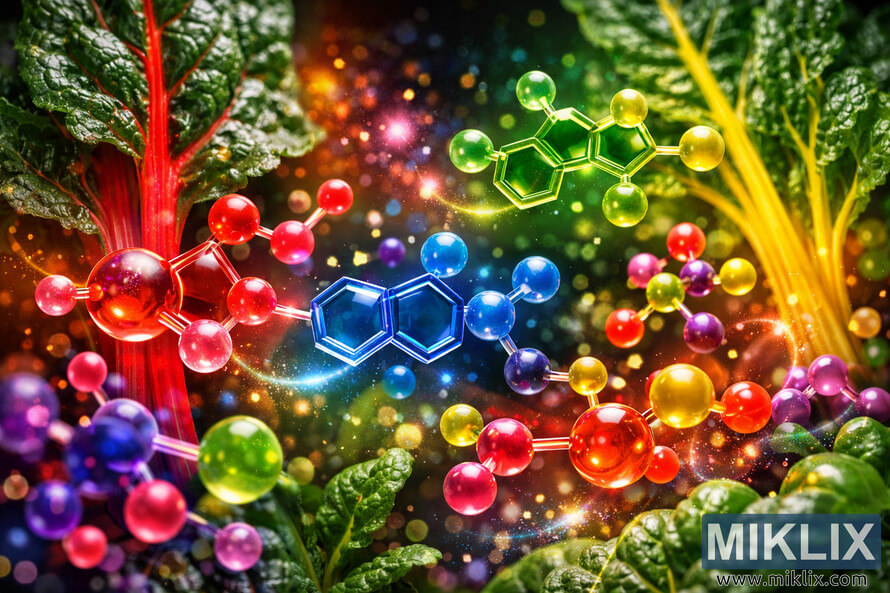
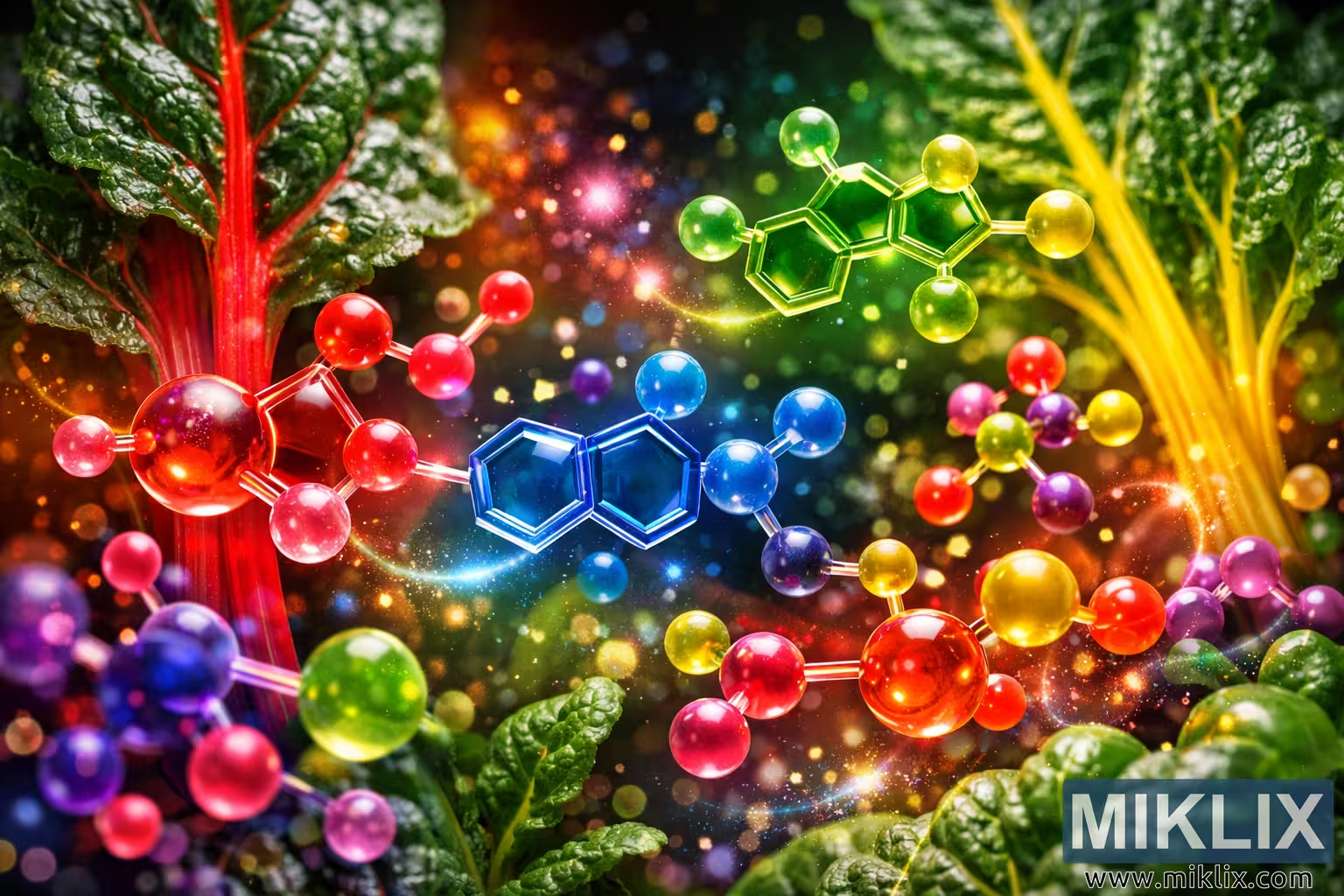
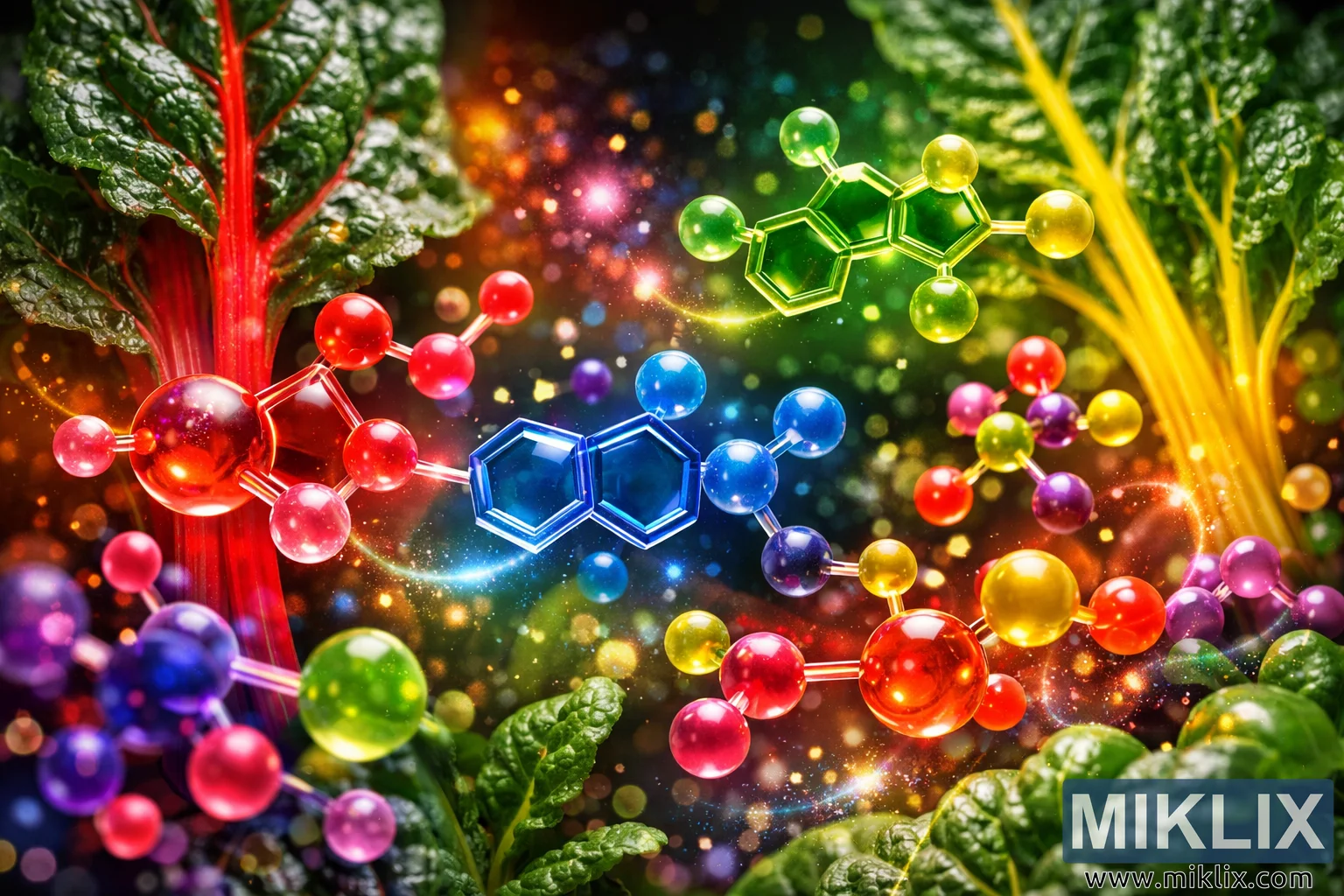
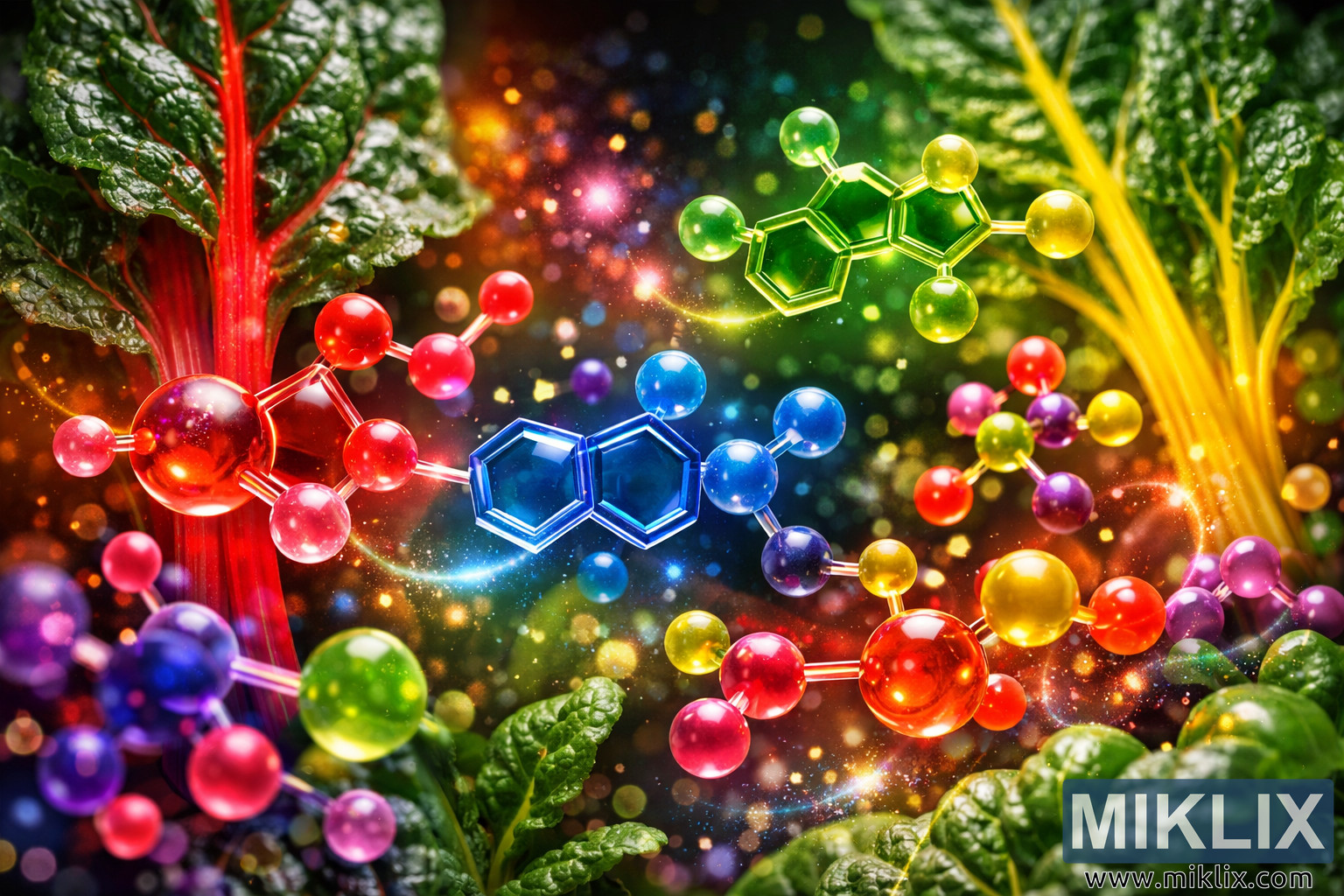
High-resolution scientific visualization of colorful antioxidant molecules from Swiss chard, featuring glowing molecular structures and softly blurred leaves in a vibrant, landscape-oriented composition.
Colorful Antioxidant Molecules from Swiss Chard – Scientific Visualization
Versions disponibles de cette image
Les fichiers images téléchargeables ci-dessous sont moins compressés et de meilleure résolution - et donc de meilleure qualité - que les images intégrées dans les articles et les pages de ce site web, qui sont davantage optimisées pour la taille des fichiers afin de réduire la consommation de la bande passante.
Taille normale (1,536 x 1,024)
Grande taille (3,072 x 2,048)
Très grande taille (4,608 x 3,072)
Taille extra-large (6,144 x 4,096)
Taille comique (1,048,576 x 699,051)
- Toujours en cours de téléchargement... ;-)
Description de l'image
This image presents a vivid, digitally created scientific visualization of antioxidant molecules derived from Swiss chard, rendered in a highly stylized and colorful molecular landscape. The composition is set in a landscape orientation, filling the frame with a dynamic interplay of glowing spheres, connecting bonds, swirling light trails, and softly blurred botanical forms in the background. The overall impression is that of a microscopic world magnified and transformed into an artistic, almost cosmic scene, where chemistry, biology, and light converge.
In the foreground, numerous molecular structures dominate the visual field. These molecules are represented as glossy spheres connected by luminous rods that symbolize chemical bonds. The spheres come in a wide spectrum of colors—deep reds, bright pinks, saturated blues, vivid greens, warm yellows, and rich purples—each hue contributing to the sense of diversity and complexity in the antioxidant environment. The surfaces of the spheres are reflective and polished, catching and scattering the surrounding light so that each molecule appears to glow from within. Some of the molecules include aromatic ring structures, depicted as hexagonal arrangements of spheres connected by double bonds, emphasizing the underlying chemical sophistication.
On the left side of the image, a particularly prominent molecule stands out. This large red and pink structure features a transparent, reddish-pink central sphere that acts almost like a nucleus or core, surrounded by smaller red and pink spheres connected by radiant bonds. The central sphere appears slightly translucent, allowing subtle hints of internal light and color gradients to show through, which gives it a sense of depth and volume. The connecting rods between the spheres are bright and glowing, suggesting energetic interactions or active chemical processes. This molecule anchors the left portion of the composition and immediately draws the viewer’s eye.
Toward the upper right, another key molecular structure is visible, this time dominated by green and yellow tones. This molecule incorporates a hexagonal ring, with spheres arranged in a precise geometric pattern that hints at the aromatic nature of certain antioxidant compounds. The green and yellow spheres are connected by luminous bonds that form a clear ring, and additional spheres extend outward, creating a branching, organic feel. The color choice here evokes freshness, plant life, and the natural origin of these molecules, reinforcing the connection to Swiss chard and its nutrient-rich leaves.
Near the center of the image, a striking blue molecule with a hexagonal ring structure adds contrast and balance to the composition. The bright blue spheres are arranged in a ring, with glowing bonds forming a crisp, recognizable pattern. This molecule appears slightly closer to the viewer than some of the others, and its cool color temperature contrasts with the warmer reds, yellows, and greens around it. The blue tones suggest stability and clarity, and the molecule’s position in the center helps unify the different regions of the image.
Scattered throughout the scene are smaller molecular clusters composed of various combinations of red, purple, yellow, and green spheres. These molecules are less dominant than the main structures but contribute to the sense of a rich, populated molecular environment. They float at different depths within the frame, some closer and sharply defined, others more distant and softly blurred. Tiny glowing particles of light—like microscopic photons or energetic fragments—are sprinkled across the image, adding texture and a sense of motion. Swirling trails of light weave between the molecules, forming arcs and curves that visually connect the different structures and suggest dynamic interactions or energy transfer.
In the background, the source of these antioxidant molecules is subtly indicated by the presence of Swiss chard leaves. On the left side, a red stem supports dark green leaves with visible veins and natural curvature. On the right side, a yellow stem emerges, also bearing green leaves that echo the shapes and textures of real Swiss chard. These leaves are slightly out of focus, with softened edges and a gentle blur that keeps the viewer’s attention on the molecular foreground while still providing important contextual information. The stems’ red and yellow colors mirror the hues found in the molecules, creating a visual bridge between the plant and its chemical constituents.
The background is further enriched by multicolored light effects and atmospheric textures. Soft bokeh lights—small, circular highlights—appear in various sizes and colors, including greens, oranges, and purples. These lights contribute to a sense of depth and a dreamy, almost otherworldly ambiance. Gaseous clouds of color drift across the backdrop, blending green, orange, and purple hues into a smooth gradient that feels both organic and ethereal. The interplay of sharp molecular detail in the foreground and diffuse color fields in the background creates a layered, immersive visual experience.
Lighting plays a crucial role in the image’s impact. The molecules themselves seem to emit light, with bright highlights and glowing edges that cast subtle reflections on nearby structures. The rods connecting the spheres are illuminated, forming luminous pathways that guide the eye through the composition. Glowing orbs of light hover between molecules, and the swirling trails of light appear to trace invisible currents of energy or chemical reactions. This dynamic lighting scheme suggests that the antioxidant molecules are active participants in a vibrant biochemical environment rather than static objects.
The overall color balance is carefully managed to maintain harmony between warm and cool tones. Warm reds, pinks, and yellows coexist with cool blues, greens, and purples, creating a rich palette that feels both scientific and artistic. The contrast between the bright, saturated molecules and the darker, more subdued background ensures that the molecular structures remain the focal point. At the same time, the presence of the Swiss chard leaves and the atmospheric colors in the background reminds the viewer of the natural origin of these compounds.
From a conceptual standpoint, the image aims to visualize the invisible world of antioxidants in a way that is accessible, engaging, and aesthetically pleasing. By representing molecules as colorful, glowing entities and placing them in a context that hints at their plant-based source, the visualization bridges the gap between scientific abstraction and everyday experience. The viewer is invited to imagine the biochemical richness hidden within a simple leaf of Swiss chard and to appreciate the complexity of the molecular interactions that contribute to health and nutrition.
In summary, this scientific-style visualization portrays colorful antioxidant molecules from Swiss chard as an intricate, luminous network of spheres and bonds set against a backdrop of softly rendered leaves and atmospheric light. The prominent red and pink molecule on the left, the green and yellow ring structure on the upper right, and the central blue hexagonal molecule serve as key focal points, while numerous smaller molecular clusters and glowing particles fill the space. The Swiss chard leaves in the background, along with multicolored bokeh lights and gaseous color clouds, provide context and depth. The result is a high-resolution, landscape-oriented image that combines scientific symbolism with artistic expression, celebrating the beauty and complexity of antioxidant chemistry in a visually compelling way.
L'image est liée à : Swiss Chard: Why It Is One of the Healthiest Leafy Greens