
Image : White Daikon Radish on a Wooden Cutting Board in a Rustic Kitchen Setting
Publié :
Dernière mise à jour : 10 juillet 2026 à 16:29:54 UTC
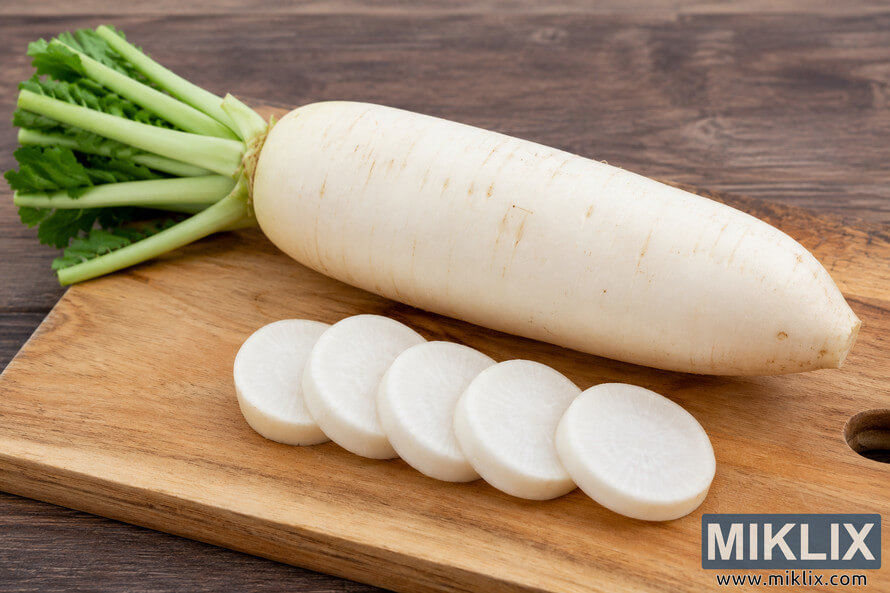
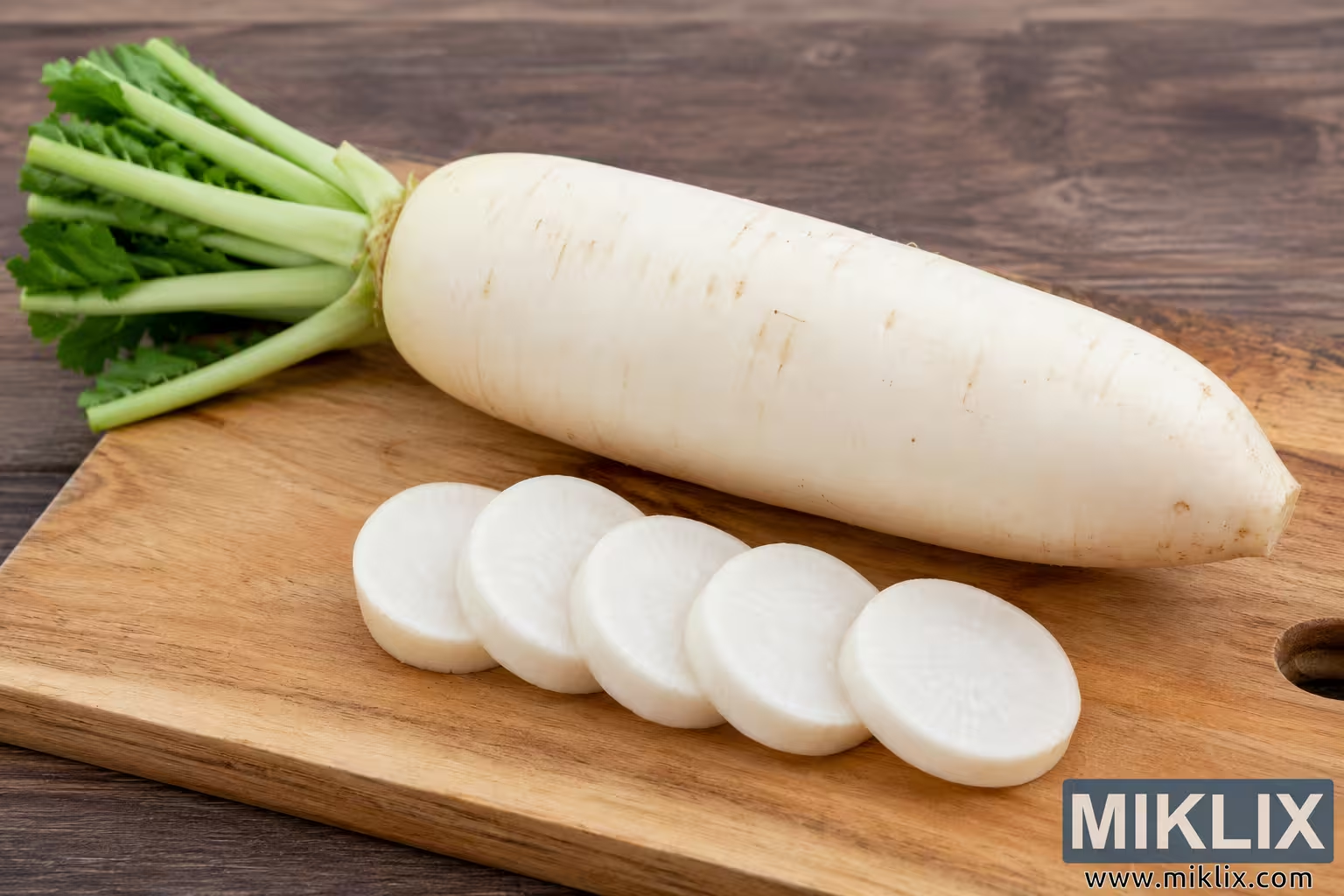
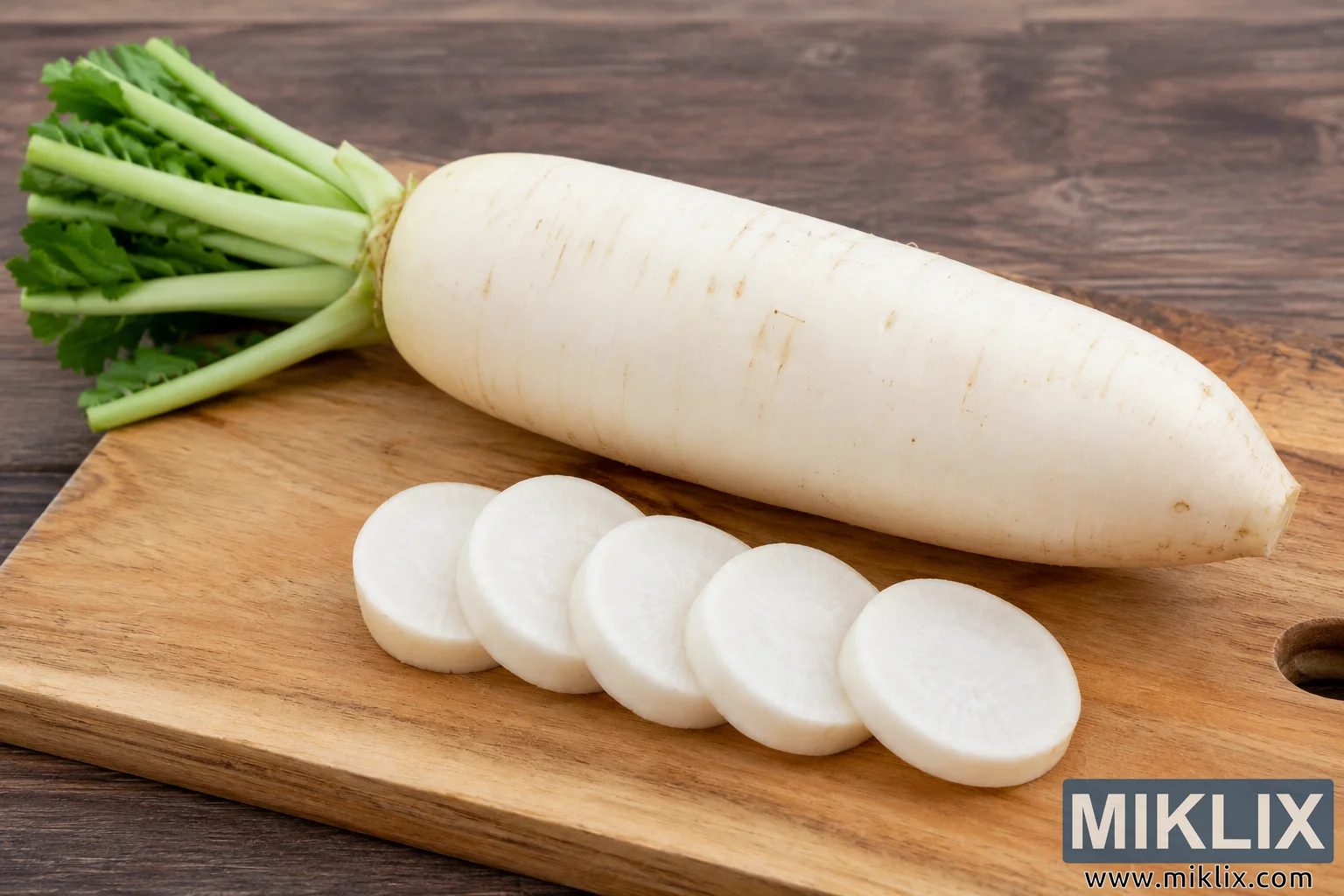
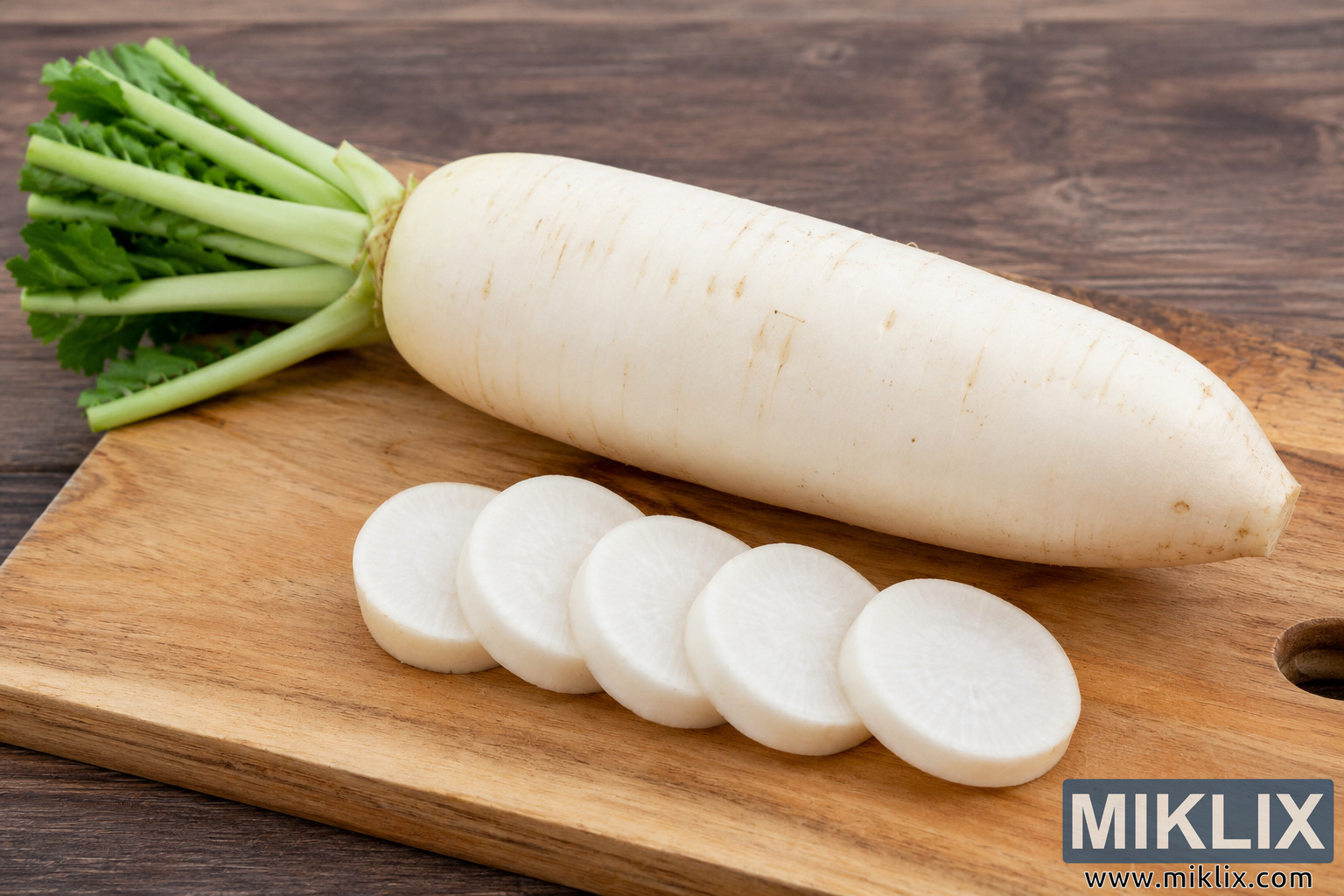
Photorealistic image of a fresh white daikon radish placed on a wooden cutting board with several sliced rounds and leafy green tops in a warm rustic kitchen setting, ideal for food, cooking, and vegetable-related content.
White Daikon Radish on a Wooden Cutting Board in a Rustic Kitchen Setting
Versions disponibles de cette image
Les fichiers images téléchargeables ci-dessous sont moins compressés et de meilleure résolution - et donc de meilleure qualité - que les images intégrées dans les articles et les pages de ce site web, qui sont davantage optimisées pour la taille des fichiers afin de réduire la consommation de la bande passante.
Taille normale (1,536 x 1,024)
Grande taille (3,072 x 2,048)
Très grande taille (4,608 x 3,072)
Taille extra-large (6,144 x 4,096)
Taille comique (1,048,576 x 699,051)
- Toujours en cours de téléchargement... ;-)
Description de l'image
This image presents a high-resolution, photorealistic close-up of a fresh white daikon radish positioned on a wooden cutting board in a warm, rustic kitchen environment. The composition is arranged in landscape orientation and emphasizes the natural textures and subtle color variations of both the vegetable and the surrounding wooden surfaces. The atmosphere is calm, clean, and inviting, suggesting food preparation or culinary photography rather than a busy cooking scene. There are no visible brands, labels, logos, utensils, or distracting decorative elements, allowing the daikon radish to remain the unmistakable focal point of the image.
The daikon is placed diagonally across the cutting board, extending from the upper left portion of the frame toward the lower right. Its elongated cylindrical body gradually tapers toward a rounded tip, showcasing the distinctive shape associated with this root vegetable. The skin is predominantly creamy white with a slightly warm tone rather than a stark, artificial white. Fine natural markings, faint scratches, tiny specks of soil staining, and delicate surface imperfections provide realistic detail that conveys freshness and authenticity. These subtle variations in texture prevent the vegetable from appearing overly polished or synthetic and instead reinforce the impression that it has recently been harvested and prepared for cooking.
Attached to one end of the daikon is a cluster of vibrant green stems and leafy tops. The stems are pale green and smooth, while the leaves display deeper green tones with gently serrated edges and visible veins. The foliage introduces an attractive color contrast against the pale white root and the warm brown hues of the wooden cutting board. The greens appear crisp and healthy, suggesting that the vegetable is fresh and has not been trimmed for extended storage.
In front of the whole daikon are five neatly sliced circular pieces arranged in a slightly overlapping row. Each slice reveals the dense, smooth white interior of the radish. The cut surfaces appear moist and freshly sliced, reflecting soft highlights from the ambient lighting. The slices are similar in thickness, giving the arrangement an orderly appearance while still feeling natural rather than perfectly manufactured. The edges are clean and sharply defined, emphasizing the crisp texture commonly associated with fresh daikon.
The cutting board beneath the vegetable is crafted from natural wood with a warm honey-brown tone. Visible wood grain patterns, subtle variations in color, and gentle signs of everyday use contribute to the rustic character of the scene. The board occupies much of the foreground and includes softly rounded edges. A circular handle opening is visible near one corner, adding another authentic kitchen detail without distracting from the main subject.
The background consists of a darker wooden tabletop or countertop with horizontal grain patterns that complement the cutting board without competing for attention. It remains softly out of focus, creating a shallow depth of field that isolates the daikon and enhances the professional food-photography aesthetic. The lighting is soft, even, and warm, producing delicate shadows beneath the vegetable and slices while preserving detail throughout both highlights and darker regions. There are no harsh reflections or dramatic contrasts, resulting in a balanced and natural presentation.
Overall, the composition communicates freshness, simplicity, and culinary appeal. The restrained styling and realistic textures make the image suitable for recipe articles, food blogs, nutrition guides, agricultural publications, grocery promotions, cooking tutorials, educational materials, and vegetable identification resources. The absence of branding or commercial packaging increases the image's versatility across editorial and commercial contexts. Every visual element—from the crisp leafy tops and naturally textured root to the orderly sliced rounds and richly grained wooden surfaces—works together to create an inviting, authentic depiction of a freshly prepared white daikon radish ready for cooking, slicing, pickling, roasting, or serving in a wide variety of dishes.
L'image est liée à : The Powerful Health Benefits of Radishes: Your Complete Nutrition Guide