
Image : Medical Consultation About Food Allergies and Dietary Considerations
Publié :
Dernière mise à jour : 12 juin 2026 à 20:57:51 UTC
Professional medical consultation focused on food allergies, nutrition, and dietary considerations in a modern healthcare setting, featuring a doctor explaining common allergens to a patient.
Medical Consultation About Food Allergies and Dietary Considerations
Versions disponibles de cette image
Les fichiers images téléchargeables ci-dessous sont moins compressés et de meilleure résolution - et donc de meilleure qualité - que les images intégrées dans les articles et les pages de ce site web, qui sont davantage optimisées pour la taille des fichiers afin de réduire la consommation de la bande passante.
Taille normale (1,536 x 1,024)
Grande taille (3,072 x 2,048)
Très grande taille (4,608 x 3,072)
Taille extra-large (6,144 x 4,096)
Taille comique (1,048,576 x 699,051)
- Toujours en cours de téléchargement... ;-)
Description de l'image
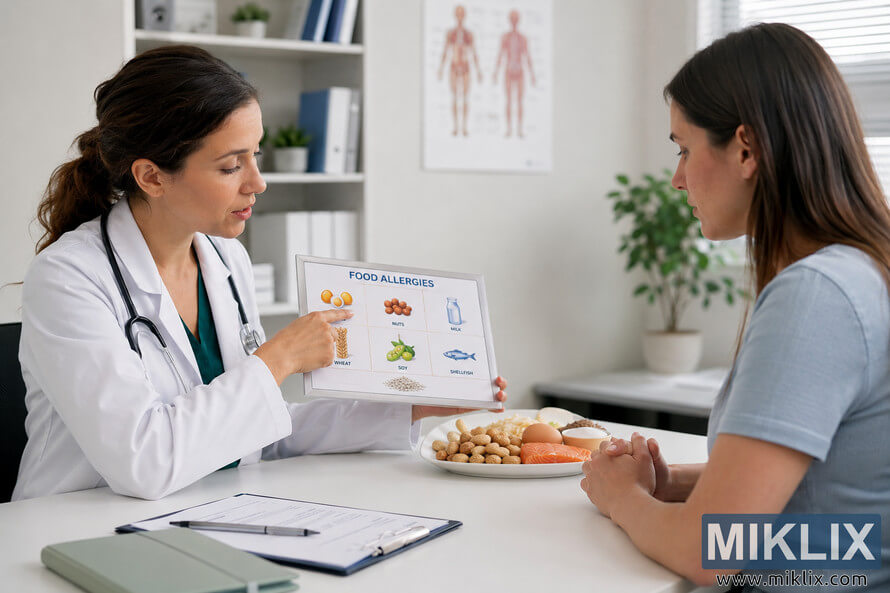
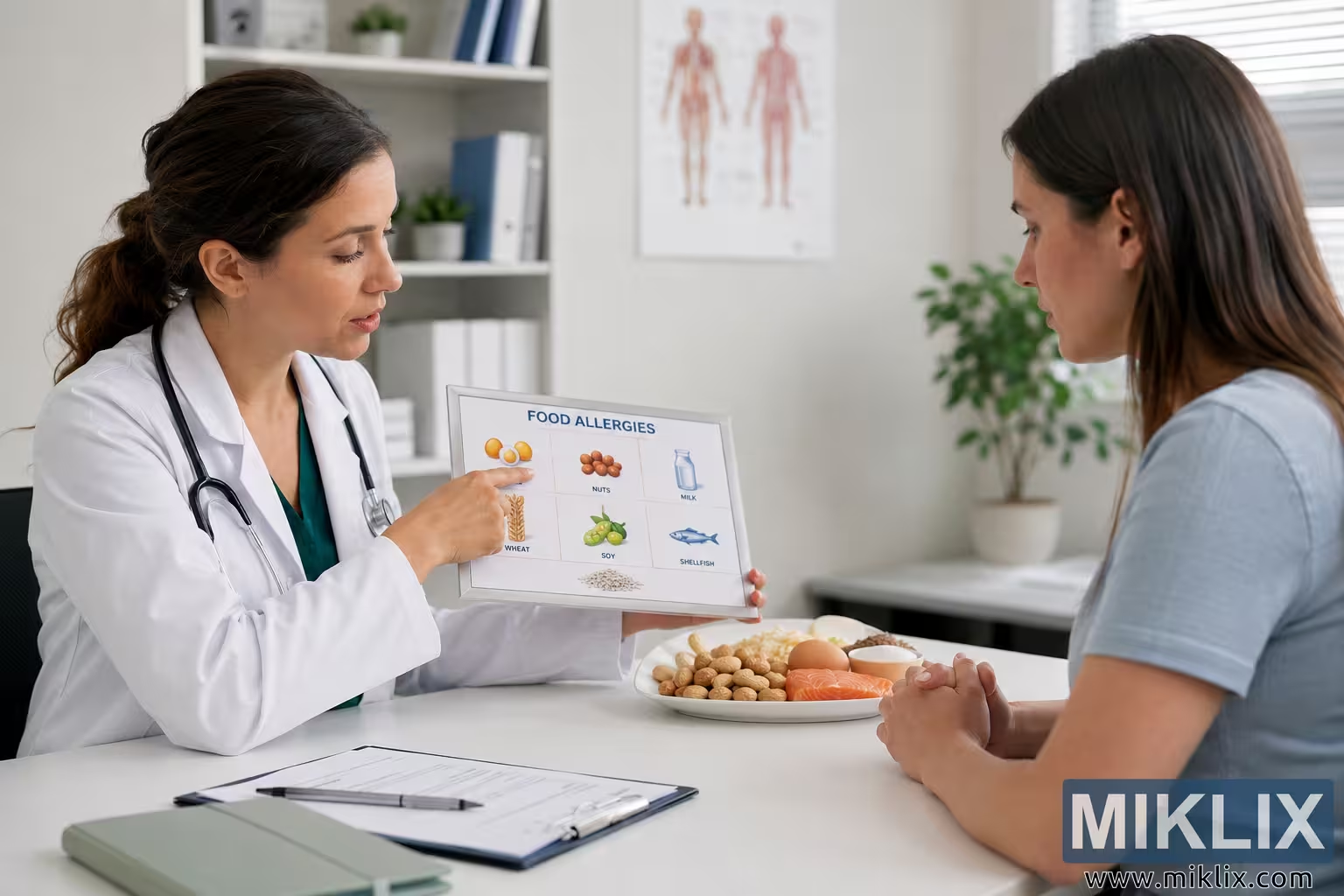
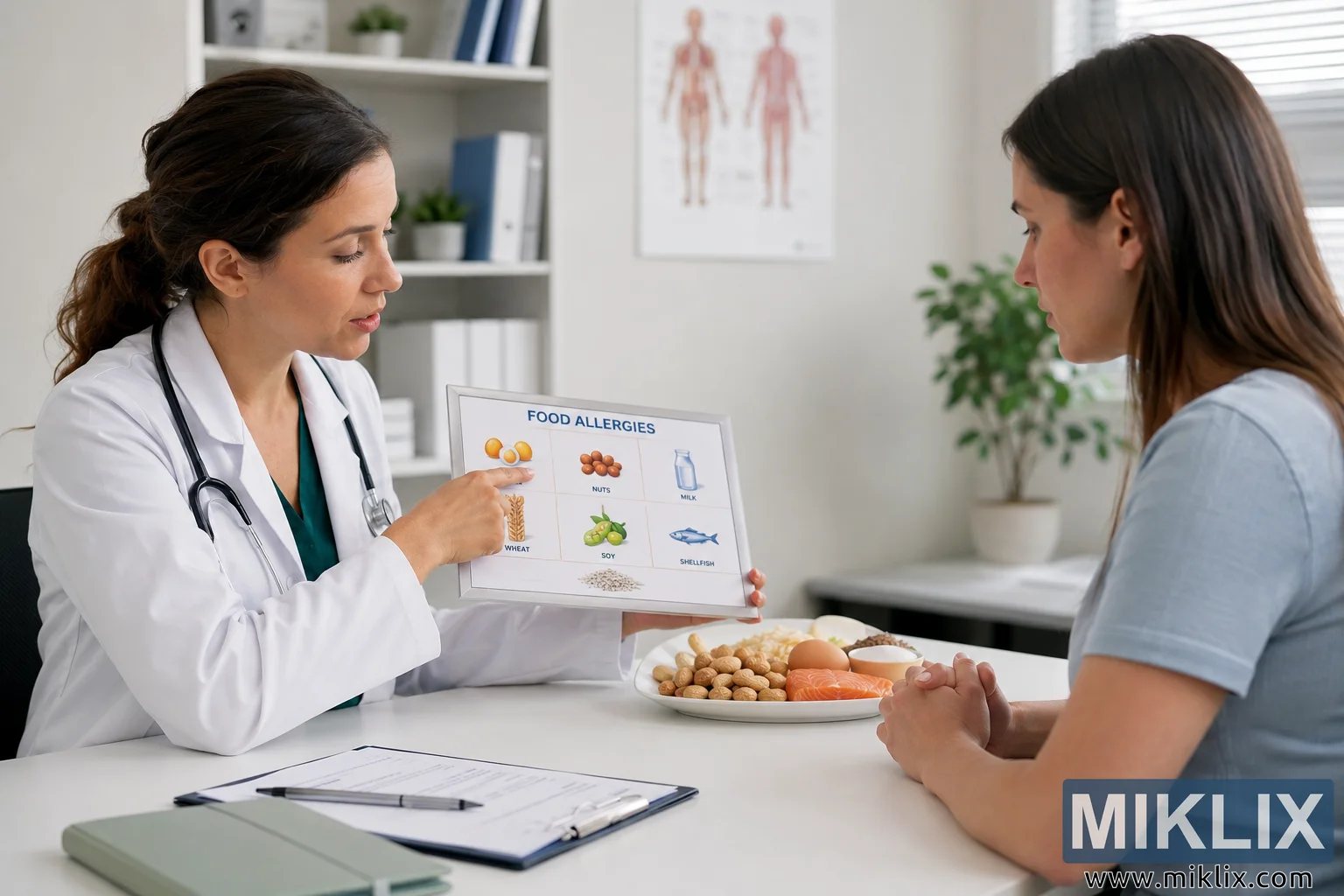
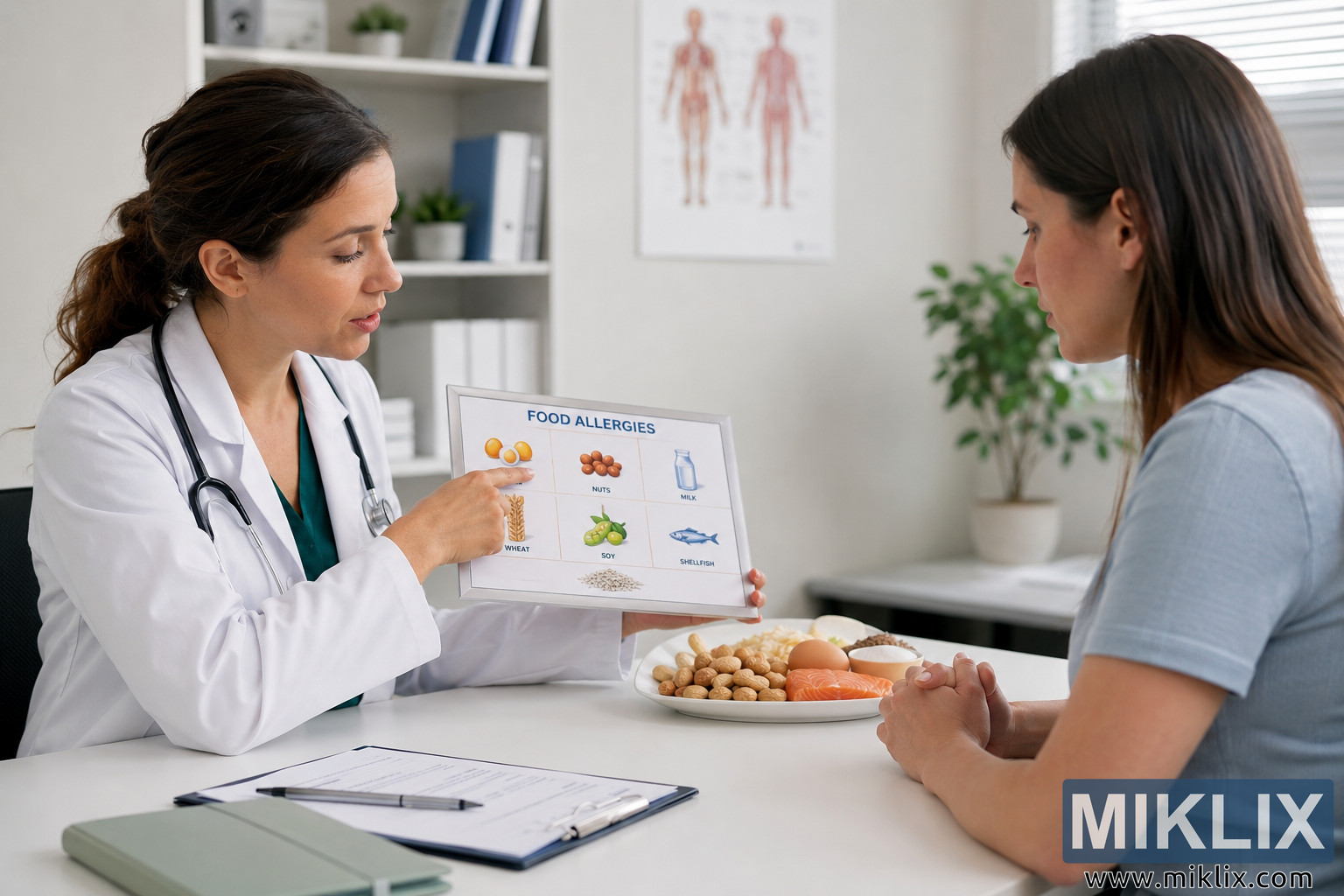
A high-resolution landscape-oriented photograph depicts a professional medical consultation centered on food allergies and dietary considerations in a clean, modern healthcare office. The scene captures a calm and informative interaction between a female doctor and her patient seated across from one another at a white consultation desk. The environment feels welcoming, organized, and clinically professional, emphasizing healthcare guidance, nutrition awareness, and patient education.
On the left side of the image, the doctor is shown wearing a white medical coat layered over teal-colored professional clothing. A stethoscope rests naturally around her neck, visually reinforcing her medical role. Her dark hair is tied back in a loose ponytail, giving her a practical yet approachable appearance. The doctor is engaged in conversation and appears focused on explaining dietary concerns to the patient. Her facial expression is attentive, calm, and reassuring, conveying empathy and professionalism during the consultation.
The doctor is holding and pointing toward a printed educational chart titled “Food Allergies.” The chart contains illustrated sections showing several common allergenic foods and dietary triggers, including nuts, milk, soy, shellfish, eggs, and wheat. Each food item is represented with simple, colorful illustrations that make the educational material visually easy to understand. The doctor’s hand gesture and body posture indicate that she is actively explaining how certain foods may affect allergic reactions or dietary restrictions.
On the right side of the image sits the patient, a young woman wearing a light blue short-sleeved top. She faces the doctor attentively with her hands clasped together on the desk. Her posture suggests active listening and concern about her health or dietary needs. The patient’s expression appears thoughtful and engaged as she carefully observes the chart and listens to the doctor’s explanation. The interaction between both individuals communicates trust, support, and collaborative healthcare decision-making.
In the foreground of the desk, several food items are arranged on a white plate to visually reinforce the topic of food allergies and nutrition. Visible foods include peanuts, eggs, grains, and a salmon fillet, representing common allergens as well as nutritional considerations. Nearby, a clipboard with medical paperwork and a pen rests neatly on the desk, suggesting patient documentation or dietary planning notes. A closed notebook or tablet lies partially visible in the lower-left foreground, contributing to the organized and professional atmosphere.
The consultation room itself is bright and softly illuminated by natural daylight entering from a nearby window with white blinds. The lighting creates a clean, airy, and calming environment suitable for healthcare discussions. In the background, minimalist shelving contains white binders, books, and small decorative plants that soften the clinical appearance of the office while maintaining professionalism. A medical anatomy poster hangs on the wall behind the subjects, subtly reinforcing the healthcare setting.
The color palette of the image is soft and neutral, dominated by whites, light grays, muted blues, and gentle natural tones. These colors contribute to a calming healthcare atmosphere while ensuring the educational chart and food items remain visually prominent. The composition is balanced and thoughtfully framed in landscape orientation, allowing both participants and the surrounding clinical environment to remain clearly visible.
Overall, the image communicates themes of preventive healthcare, nutritional counseling, allergy awareness, patient education, and compassionate medical support. It visually represents an informative doctor-patient discussion focused on identifying food sensitivities, understanding allergens, and making healthy dietary choices. The realistic photographic style, professional setting, and natural interaction between the doctor and patient make the image highly suitable for healthcare websites, nutrition articles, allergy awareness campaigns, medical brochures, wellness blogs, hospital marketing materials, and educational resources related to dietary health and food allergy management.
L'image est liée à : The Ultimate Guide to the Health Benefits of Scallions