
Image : Neuroprotective Effects of Lycopene from Watermelon on Brain Cells
Publié :
Dernière mise à jour : 16 août 2026 à 19:08:25 UTC
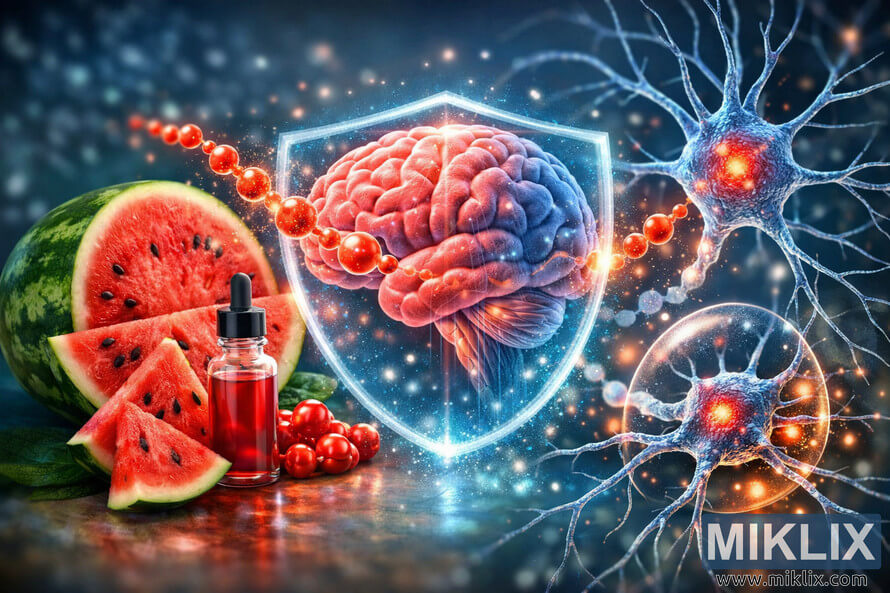
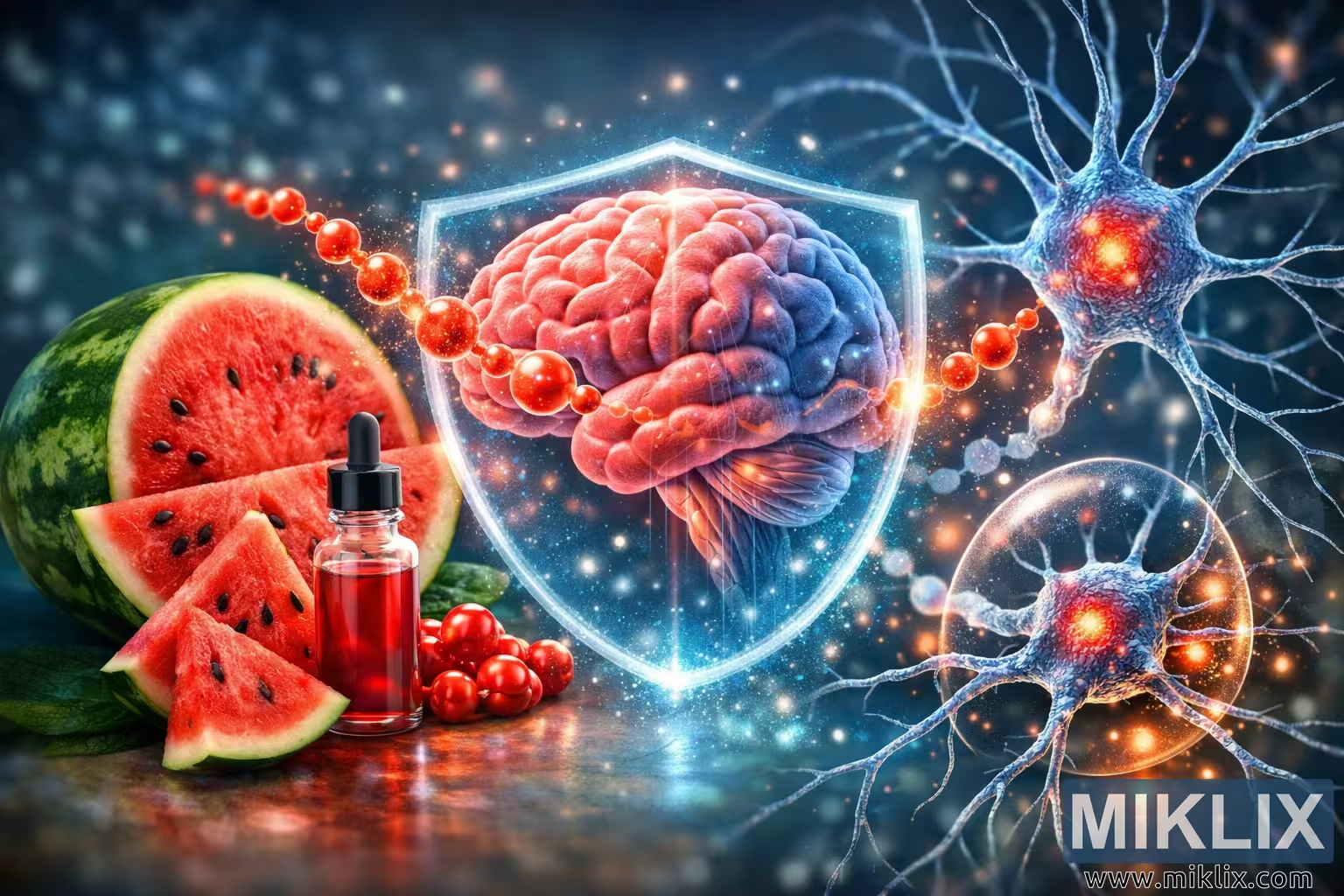
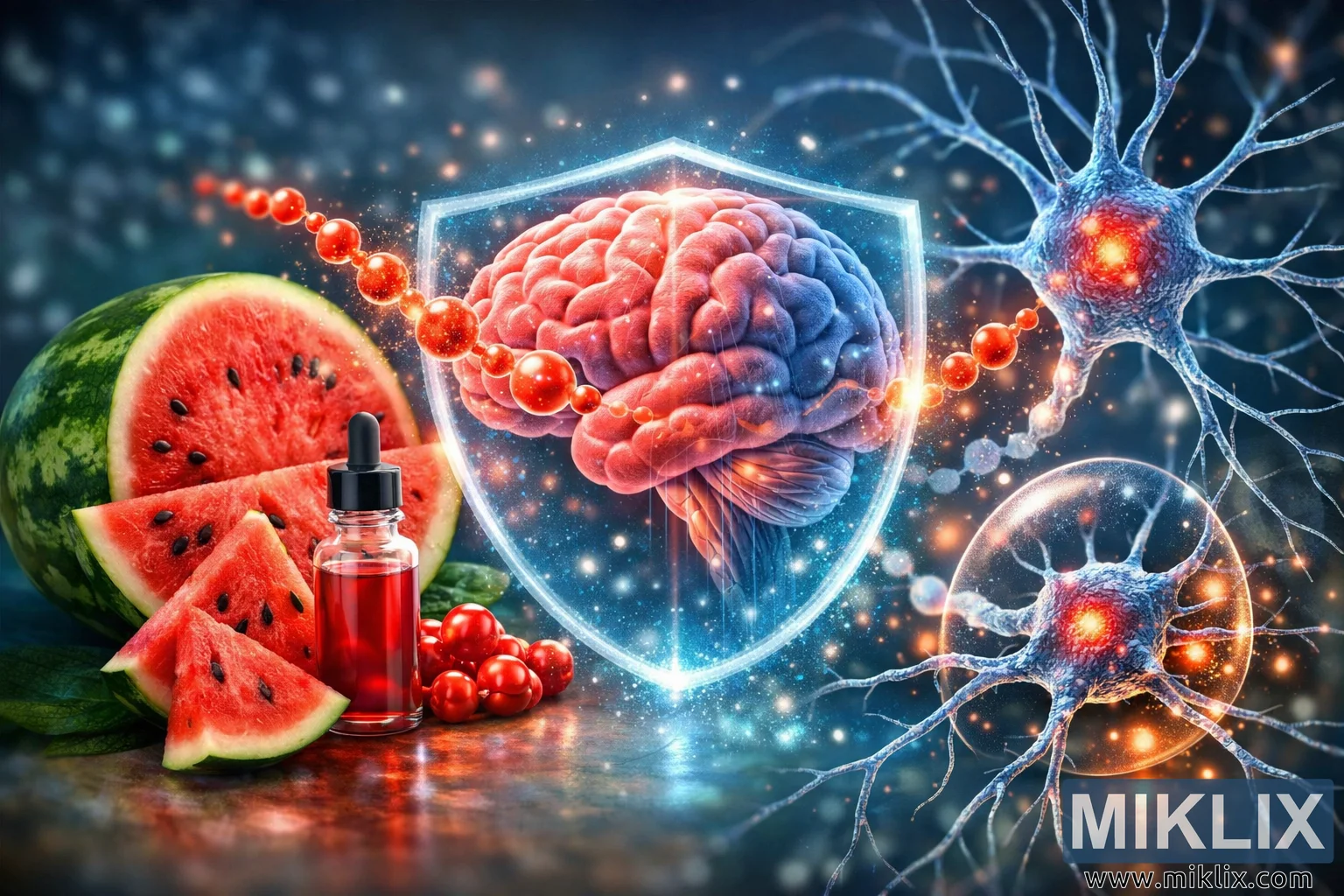
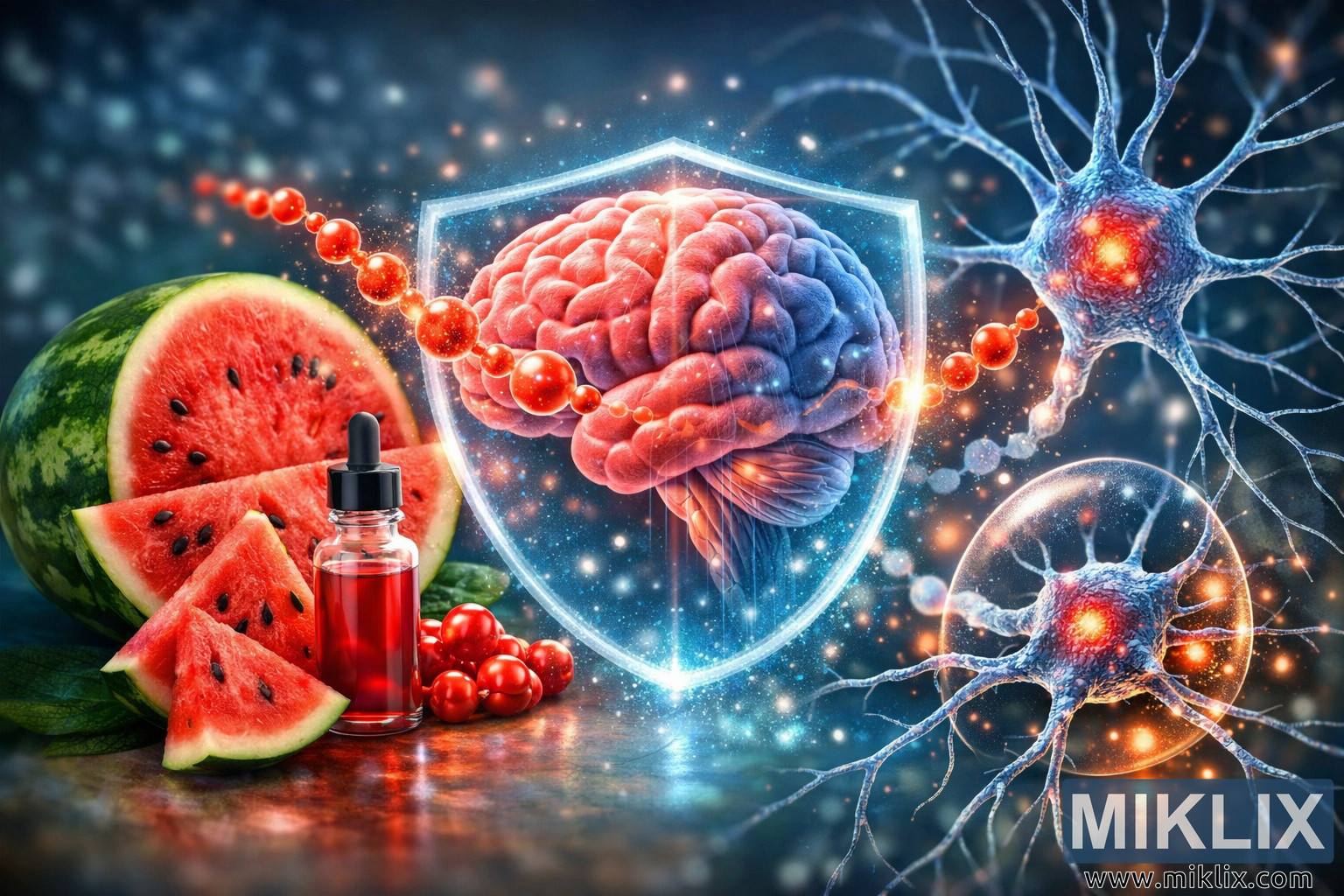
A high-resolution scientific artwork depicting the neuroprotective effects of lycopene from watermelon on brain cells, combining natural and molecular elements in a vibrant landscape composition.
Neuroprotective Effects of Lycopene from Watermelon on Brain Cells
Versions disponibles de cette image
Les fichiers images téléchargeables ci-dessous sont moins compressés et de meilleure résolution - et donc de meilleure qualité - que les images intégrées dans les articles et les pages de ce site web, qui sont davantage optimisées pour la taille des fichiers afin de réduire la consommation de la bande passante.
Taille normale (1,536 x 1,024)
Grande taille (3,072 x 2,048)
Très grande taille (4,608 x 3,072)
Taille extra-large (6,144 x 4,096)
Taille comique (1,048,576 x 699,051)
- Toujours en cours de téléchargement... ;-)
Description de l'image
This image is a detailed digital illustration that visually encapsulates the concept of neuroprotection offered by lycopene derived from watermelon, merging scientific precision with artistic vibrancy. The composition unfolds across a panoramic landscape, where the left side features a ripe watermelon sliced open to reveal its rich, red flesh and glossy black seeds. The fruit sits on a reflective surface, its texture rendered with photorealistic detail, symbolizing the natural source of lycopene. Beside the watermelon, a small glass vial filled with a deep crimson extract stands upright, its dropper suspended above, releasing a droplet of concentrated lycopene essence. Around the vial, molecular structures of lycopene are depicted as interconnected red spheres glowing with energy, representing the compound’s biochemical identity and its journey toward the brain.
At the center of the composition, a human brain glows in hues of blue, pink, and violet, surrounded by a luminous shield-like aura that signifies protection. The brain’s surface is intricately detailed, showing folds and neural pathways illuminated by subtle electric currents. Streams of red lycopene molecules flow from the watermelon toward the brain, forming a dynamic arc of motion that bridges nature and neuroscience. Each molecule emits a faint glow, symbolizing the antioxidant and protective properties of lycopene as it interacts with neural tissue.
On the right side, the scene transitions into a microscopic view of neurons rendered in vivid blue tones. Their dendrites and axons extend outward, connecting through synapses that pulse with light. One neuron is highlighted, enveloped by a red lycopene molecule that forms a protective halo around it. This visual metaphor illustrates the compound’s role in shielding brain cells from oxidative stress and neurodegenerative damage. Tiny particles of light scatter throughout the scene, representing molecular activity and the diffusion of protective agents within the neural environment.
The background blends gradients of turquoise, teal, and emerald green, evoking a sense of vitality and cellular harmony. A soft glow permeates the entire image, creating a balance between the organic and the scientific. The interplay of warm reds and cool blues symbolizes the synergy between natural antioxidants and biological defense mechanisms. The composition’s lighting is carefully orchestrated to draw the viewer’s eye from the watermelon on the left, through the flowing molecular stream, to the glowing brain and neurons on the right, narrating a visual story of transformation and protection.
Every element in the illustration contributes to a cohesive narrative: the watermelon embodies nature’s gift, the lycopene molecules represent scientific discovery, and the brain signifies human health and cognition. The image captures the essence of biochemical harmony, where natural compounds interact with complex neural systems to preserve function and vitality. The overall atmosphere is one of optimism and scientific wonder, portraying how a simple fruit compound can have profound effects on cellular resilience and brain health. The high-resolution rendering ensures that textures, reflections, and molecular details are crisp and lifelike, inviting viewers to explore the intersection of nutrition, neuroscience, and art in a single, unified visual experience.
L'image est liée à : Watermelon: The Hydrating Superfruit You Should Eat More Often