
Image: Goldy Honey Bear Sunflower — Multi-Stem Close-Up
Published: October 21, 2025 at 9:41:37 PM UTC
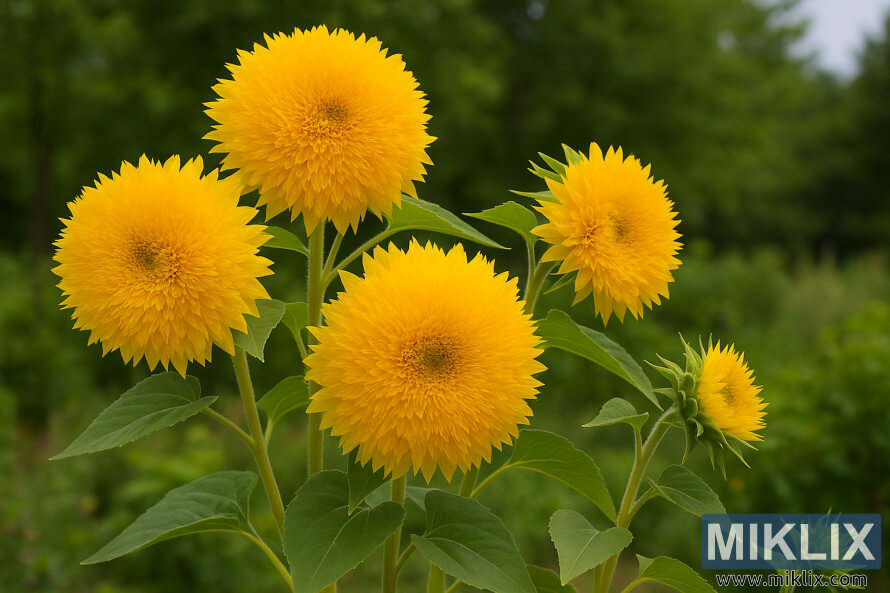
High-resolution close-up of a multi-stem Goldy Honey Bear sunflower in a garden setting, featuring several plush, double-petaled golden blooms on branching stems with lush green foliage.
Available versions of this image
The image files available for download below are less compressed and higher resolution - and as a result of that, higher quality - than the images embedded in articles and pages on this website, which are more optimized for file size in order to reduce bandwidth consumption.
Regular size (1,536 x 1,024)
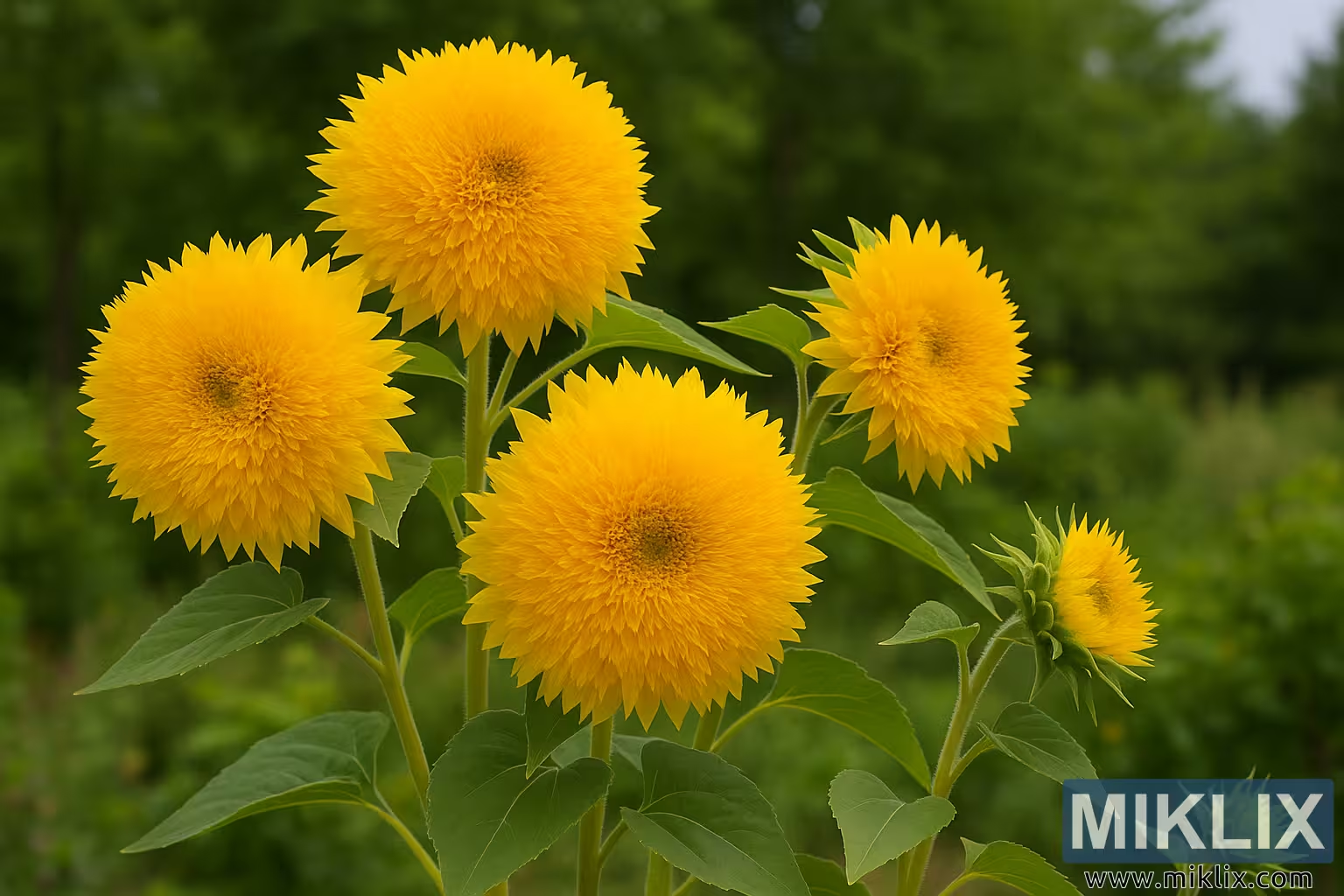
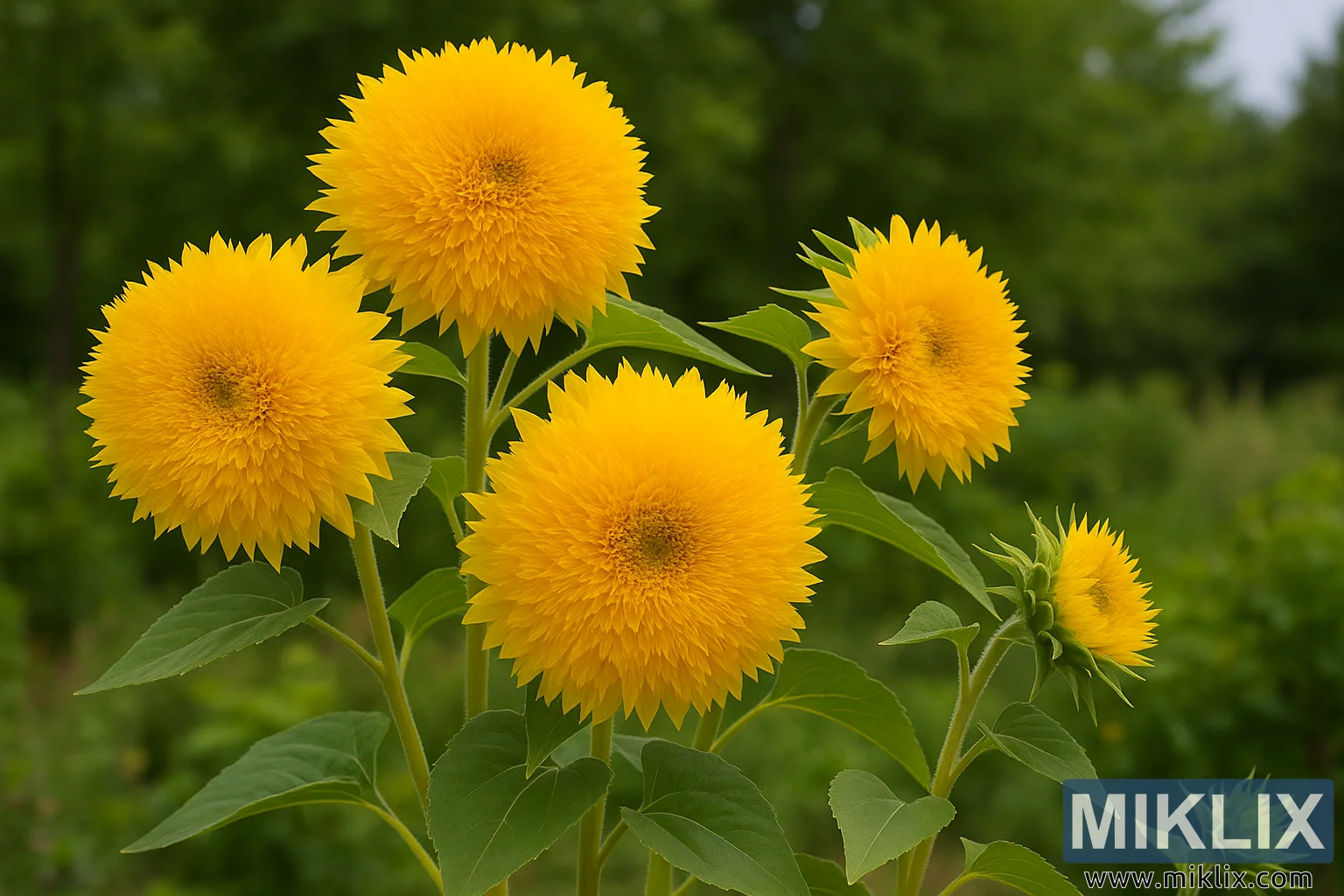
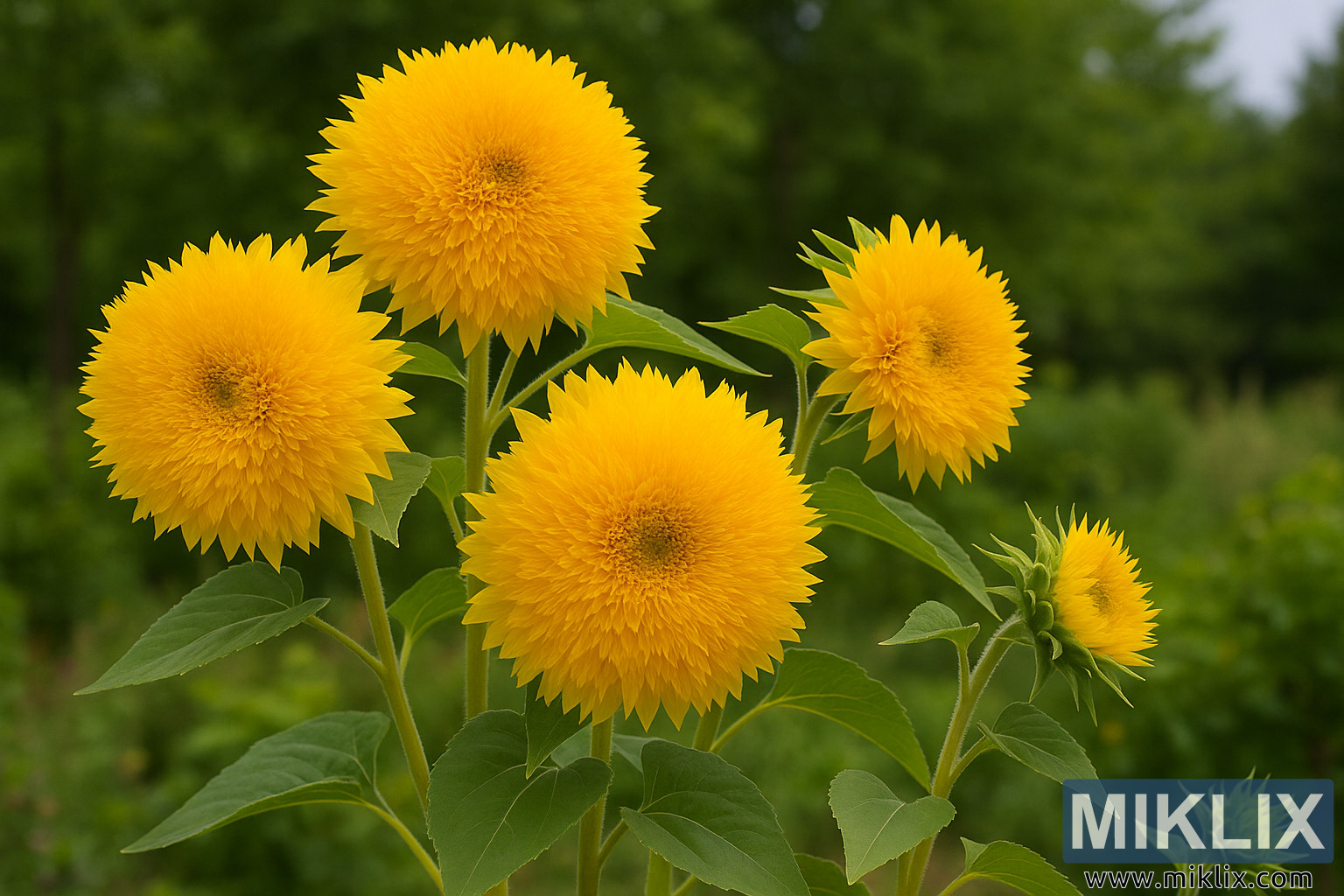
Large size (3,072 x 2,048)
Very large size (4,608 x 3,072)
Extra large size (6,144 x 4,096)
Comically large size (1,048,576 x 699,051)
- Still uploading... ;-)
Image description
This high-resolution photograph presents a close-up, garden-setting portrait of a Goldy Honey Bear sunflower (Helianthus annuus) exhibiting its classic multi-stem growth habit. Several thick, leafy stems branch upward from a single plant, each terminating in a plush, rounded blossom that looks almost like a golden pom-pom. The blooms are densely packed with short, narrow ray florets layered in concentric whorls, creating a soft, cushiony texture that distinguishes the Goldy Honey Bear from standard single-row sunflowers. Bathed in bright, open-shade summer light, the flowers glow in saturated tones of honeyed yellow and warm gold, with the innermost florets forming a slightly deeper, sun-kissed core.
Because the image is framed at close range, the branching architecture is easy to read. Primary stems rise from the central crown, then fork into secondary shoots that each hold a flower head at a slightly different height and angle. This stepped arrangement lends the composition a lively, natural rhythm and shows why the variety is prized for season-long displays: as one bloom nears maturity, buds on neighboring stems are just opening, keeping the plant in color. The stems are stout and faintly pubescent, their pale hairs catching the light; at each node, a pair of broad, heart-shaped leaves juts outward, serrated margins and pronounced venation adding structure and a cool green counterpoint to the flowers’ warmth.
The blooms themselves read like spheres of filamentous petals. Each ray is slender and slightly tapered, with a subtle satin sheen that reflects the ambient light and exaggerates the flower’s plush volume. Unlike typical sunflowers with a visible central disk, the double form of Goldy Honey Bear conceals most of the disk beneath layers of petals; only a tiny suggestion of the capitulum peeks through near the very center, hinting at the seed-bearing anatomy hidden below. This densely petalled, double style is what gives the variety its “teddy bear” association and makes it exceptional in containers, borders, and cutting—the flowers hold their rounded shape and offer a luxuriant texture in mixed arrangements.
Behind the plant, the garden dissolves into a soft green bokeh—a tapestry of shrubs and distant foliage rendered out of focus so the eye stays on the branching stems and multiple flowering heads. The slightly diffused summer illumination avoids harsh contrast, allowing rich color without clipped highlights. The overall palette is harmonious: brilliant sunflower golds sit against layered greens, with occasional cool notes from the sky filtering through gaps in the canopy.
The photograph doesn’t just document the variety; it communicates the habit and personality of Goldy Honey Bear. You can sense its vigor in the thickness of the stems, its generosity in the abundance of buds, and its charm in the playful, plush faces of the flowers. It’s a plant designed to perform—branching readily, offering repeat blooms, and filling modest spaces with cheerful volume. As a botanical study, the image clarifies the multi-stem trait and double-petal form; as a garden portrait, it captures a moment of peak abundance, when five or more globes of gold hover above the foliage like lanterns, brightening the scene with effortless warmth.
The image is related to: A Guide to the Most Beautiful Sunflower Varieties to Grow in Your Garden