
Image: USDA Hardiness Zones for Kiwi Growing in the United States
Published: January 12, 2026 at 4:49:09 PM UTC
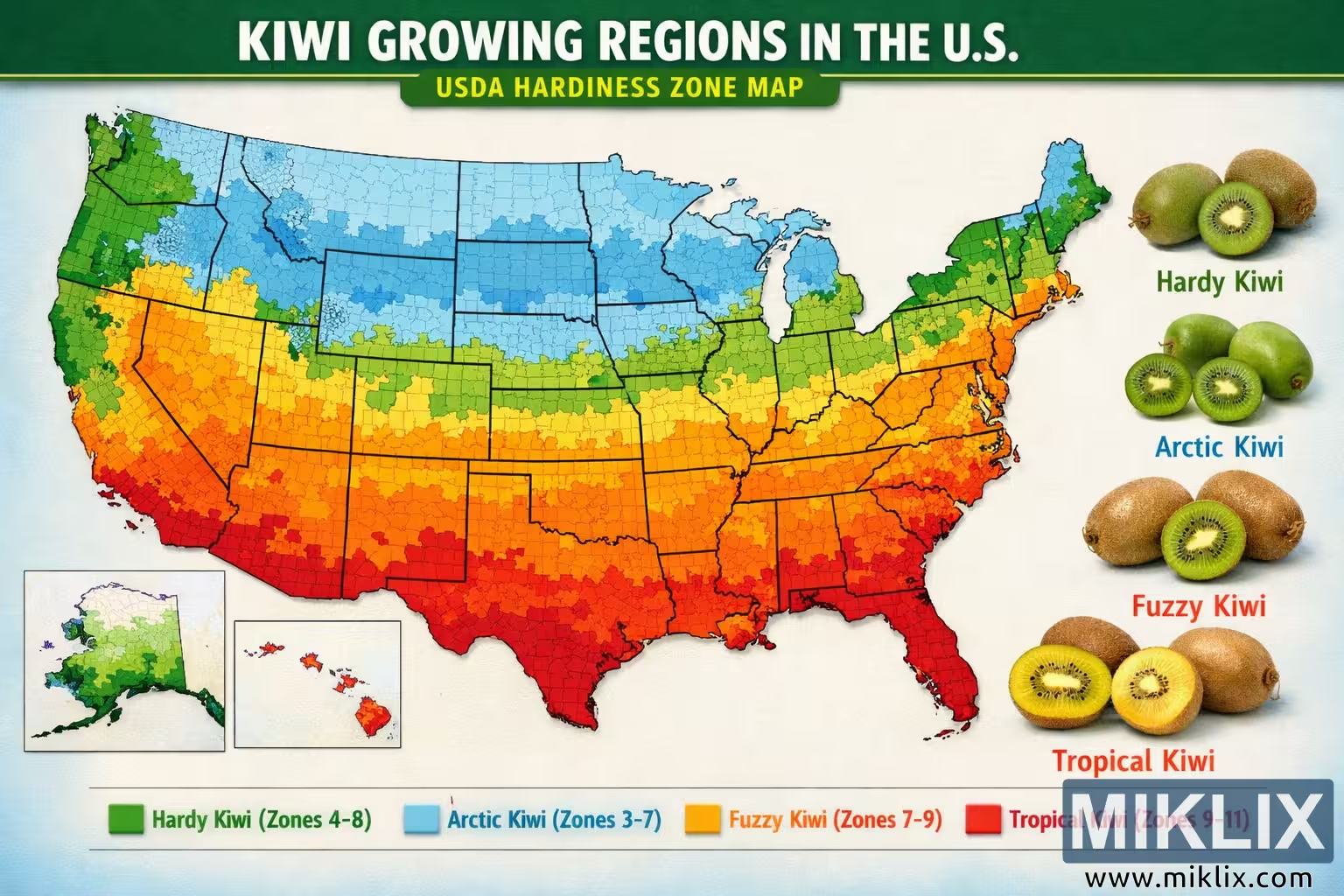
Landscape USDA hardiness zone map illustrating where different kiwi varieties grow best across the United States, with color-coded zones, legends, and inset maps for Alaska and Hawaii.

Available versions of this image
The image files available for download below are less compressed and higher resolution - and as a result of that, higher quality - than the images embedded in articles and pages on this website, which are more optimized for file size in order to reduce bandwidth consumption.
Regular size (1,536 x 1,024)


Large size (3,072 x 2,048)
Very large size (4,608 x 3,072)
Extra large size (6,144 x 4,096)
Comically large size (1,048,576 x 699,051)
- Still uploading... ;-)
Image description
The image is a detailed, landscape-oriented USDA hardiness zone map of the United States designed to illustrate where different kiwi varieties can be grown successfully. The main focus is a full map of the contiguous U.S., with state boundaries outlined in black and counties subtly visible beneath color shading. The map uses a smooth gradient of colors running generally from north to south, reflecting increasing warmth and higher USDA hardiness zones. Cooler northern regions are shaded in blues and blue-greens, transitioning through greens and yellows in the central portions of the country, and finally into oranges and deep reds across the southern states and coastal areas.
At the top of the image, a bold title reads "KIWI GROWING REGIONS IN THE U.S." with a subtitle indicating that this is a USDA Hardiness Zone Map. On the right-hand side of the map, there is a vertical legend pairing photographic illustrations of kiwi fruit with text labels for four kiwi categories. These include Hardy Kiwi, Arctic Kiwi, Fuzzy Kiwi, and Tropical Kiwi. Each kiwi type is visually represented by realistic fruit images, some whole and some sliced to show the interior flesh, helping viewers quickly associate the plant type with its growing requirements.
Along the bottom of the image, a horizontal color legend explains the zoning system in more detail. Each kiwi variety is matched with a specific color band and corresponding USDA zone range. Hardy Kiwi is associated with green shades and zones 4–8, Arctic Kiwi with cooler blue shades and zones 3–7, Fuzzy Kiwi with warm yellow-to-orange tones and zones 7–9, and Tropical Kiwi with red tones indicating zones 9–11. This legend visually reinforces how temperature tolerance and climate suitability differ among kiwi varieties.
Inset maps of Alaska and Hawaii appear in the lower-left corner, scaled down but still color-coded to reflect their respective hardiness zones. Alaska shows predominantly cooler colors, while Hawaii displays warmer tones. The overall design is clean and educational, combining cartographic accuracy with agricultural guidance. The image is clearly intended for gardeners, growers, and educators who want to understand which regions of the United States are suitable for cultivating specific types of kiwi based on climate and hardiness zones.
The image is related to: A Complete Guide to Growing Kiwis at Home