
Image: Comparison of Swiss Chard Varieties: Bright Lights, Ruby Red, and Fordhook Giant
Published: April 16, 2026 at 7:40:54 PM UTC
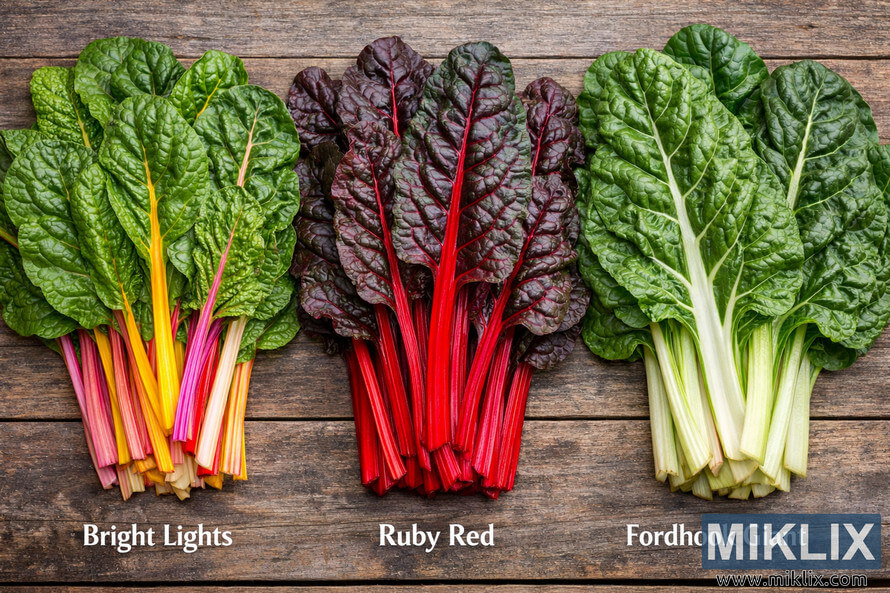
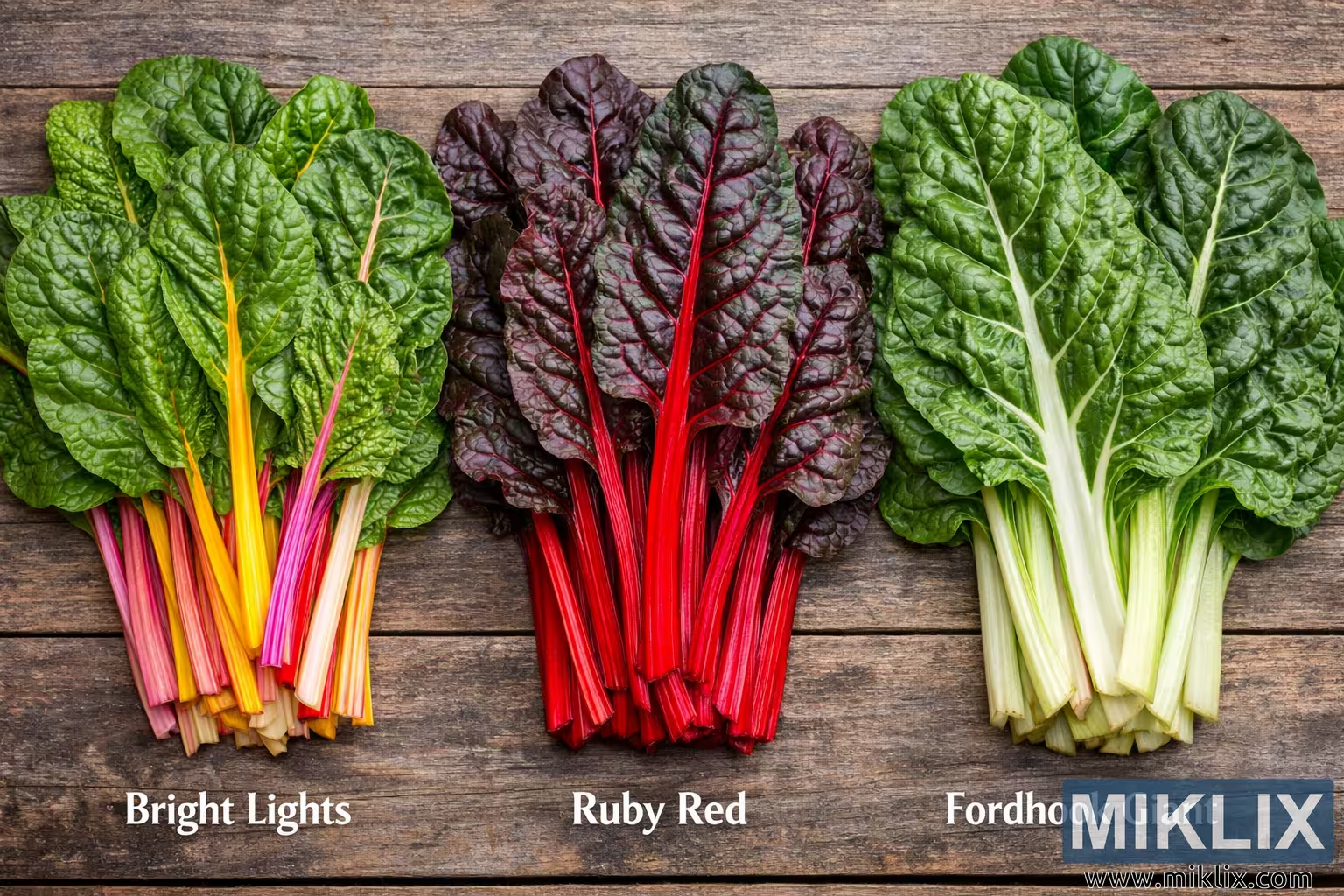
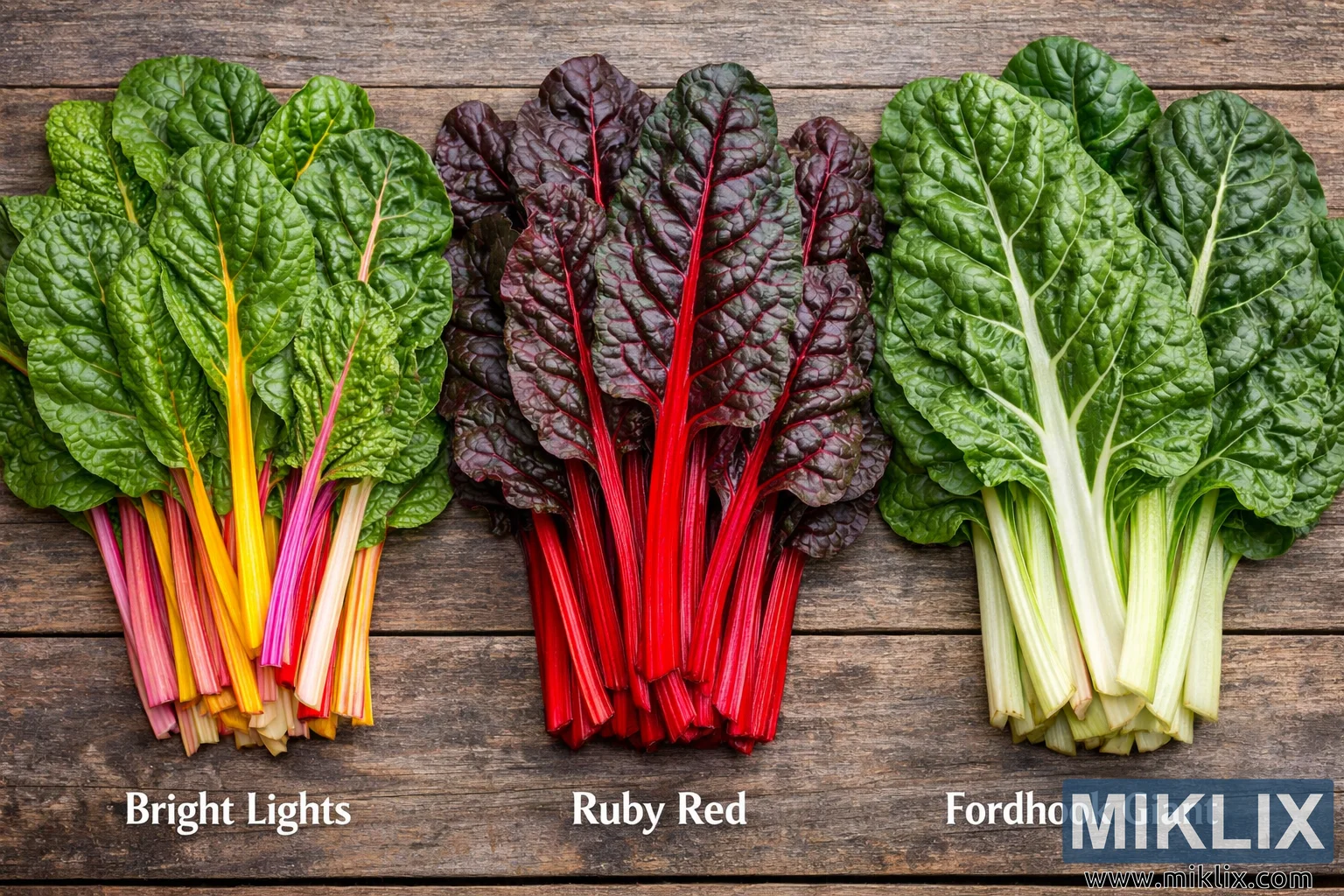
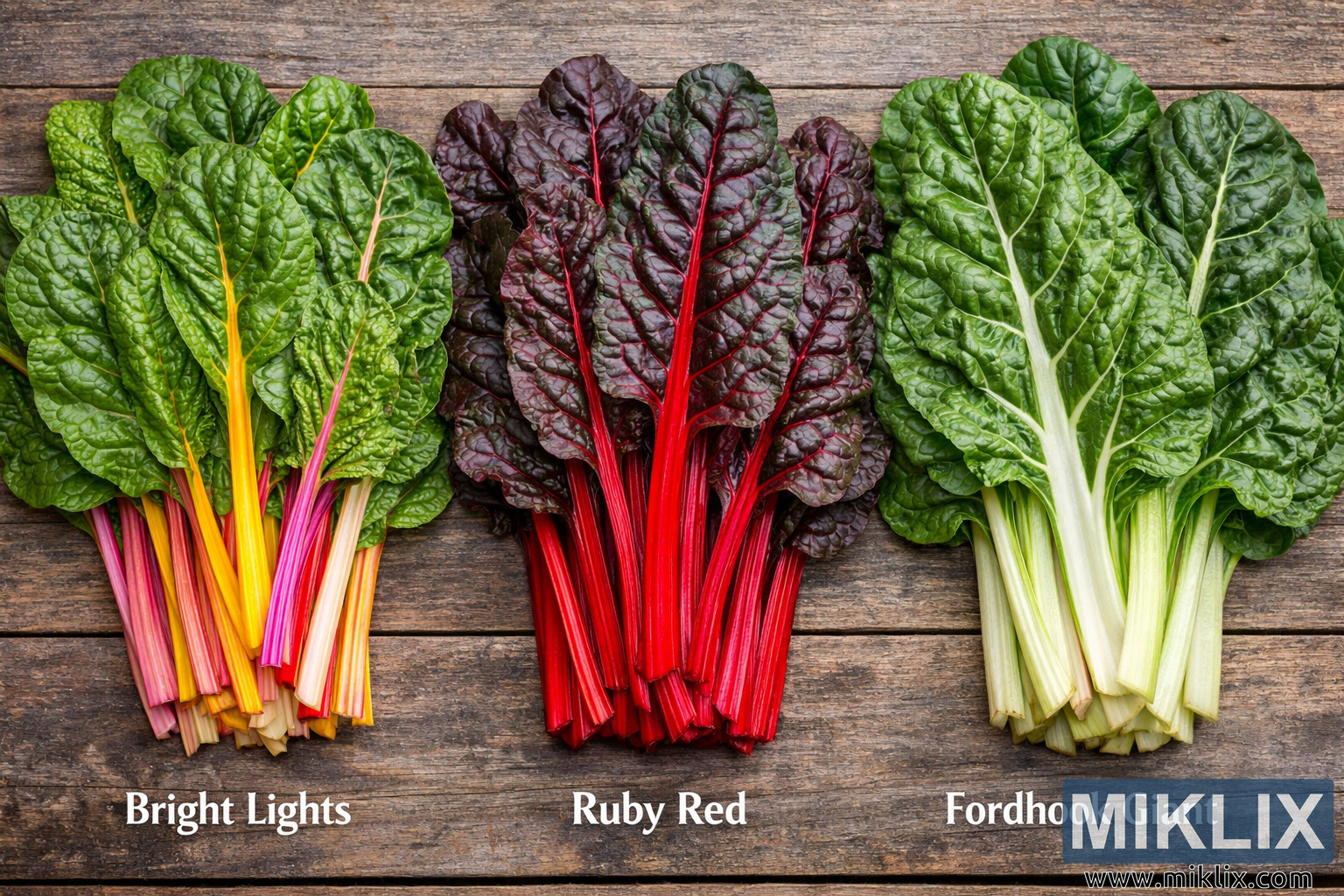
High-resolution comparison of three Swiss chard varieties: Bright Lights with colorful stems, Ruby Red with vivid crimson stalks, and Fordhook Giant with broad green leaves and pale stems.
Available versions of this image
The image files available for download below are less compressed and higher resolution - and as a result of that, higher quality - than the images embedded in articles and pages on this website, which are more optimized for file size in order to reduce bandwidth consumption.
Regular size (1,536 x 1,024)
Large size (3,072 x 2,048)
Very large size (4,608 x 3,072)
Extra large size (6,144 x 4,096)
Comically large size (1,048,576 x 699,051)
- Still uploading... ;-)
Image description
This high-resolution landscape photograph presents a clear visual comparison of three well-known Swiss chard varieties arranged side by side on a rustic wooden tabletop. The vegetables are carefully organized into three distinct bunches positioned from left to right, each representing a different cultivar: Bright Lights, Ruby Red, and Fordhook Giant. The background consists of weathered wooden planks with visible grain patterns and warm brown tones, providing a natural and slightly rustic setting that contrasts with and highlights the vibrant colors of the leafy greens.
On the left side of the image is the Bright Lights variety. This bunch stands out immediately because of its vivid rainbow-like stems. The stalks display a mix of bright yellow, orange, pink, and red hues, all leading into glossy, textured green leaves. The leaves are slightly crinkled with visible veins and a healthy sheen, suggesting freshness and vitality. The colorful stems fan outward at the base and transition into darker green foliage toward the top, creating a lively and visually striking cluster.
In the center of the composition is the Ruby Red variety. Compared to the multicolored Bright Lights, this bunch features a dramatic and cohesive deep red color scheme. The thick stalks and central veins are a rich crimson shade, extending upward into darker green leaves that carry subtle burgundy undertones. The leaves are slightly curled and textured, with strong veining that echoes the red coloration running through them. The Ruby Red bunch appears dense and robust, with the vibrant red stems forming a bold focal point in the middle of the arrangement.
On the right side is the Fordhook Giant variety. This bunch presents a more traditional appearance, characterized by large, broad leaves and pale white to light green stems. The leaves are noticeably larger and smoother than the others, with pronounced but lighter-colored veins. The thick stems gather tightly at the base and extend upward into lush, dark green foliage. Compared with the other varieties, Fordhook Giant emphasizes size and leafy mass rather than vivid stem coloration, giving it a hearty and classic garden vegetable look.
Below each bunch, clear labels identify the varieties: "Bright Lights" under the left group, "Ruby Red" beneath the center cluster, and "Fordhook Giant" below the right bundle. The lighting in the image is soft and even, enhancing the textures of the leaves and the saturation of the stems without creating harsh shadows. Overall, the photograph functions as both a visually appealing produce display and an educational comparison of three distinctive Swiss chard cultivars.
The image is related to: How to Grow Swiss Chard: A Complete Beginner's Guide