
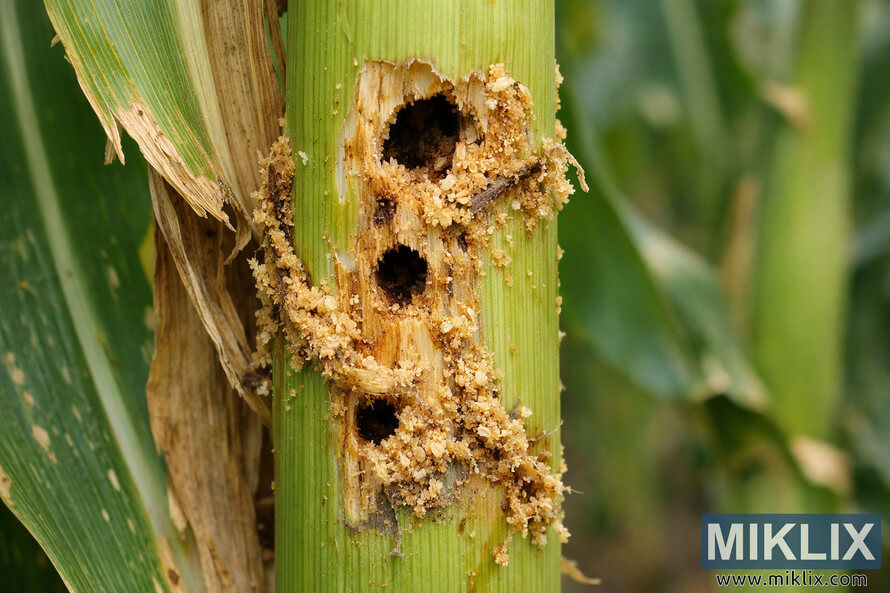
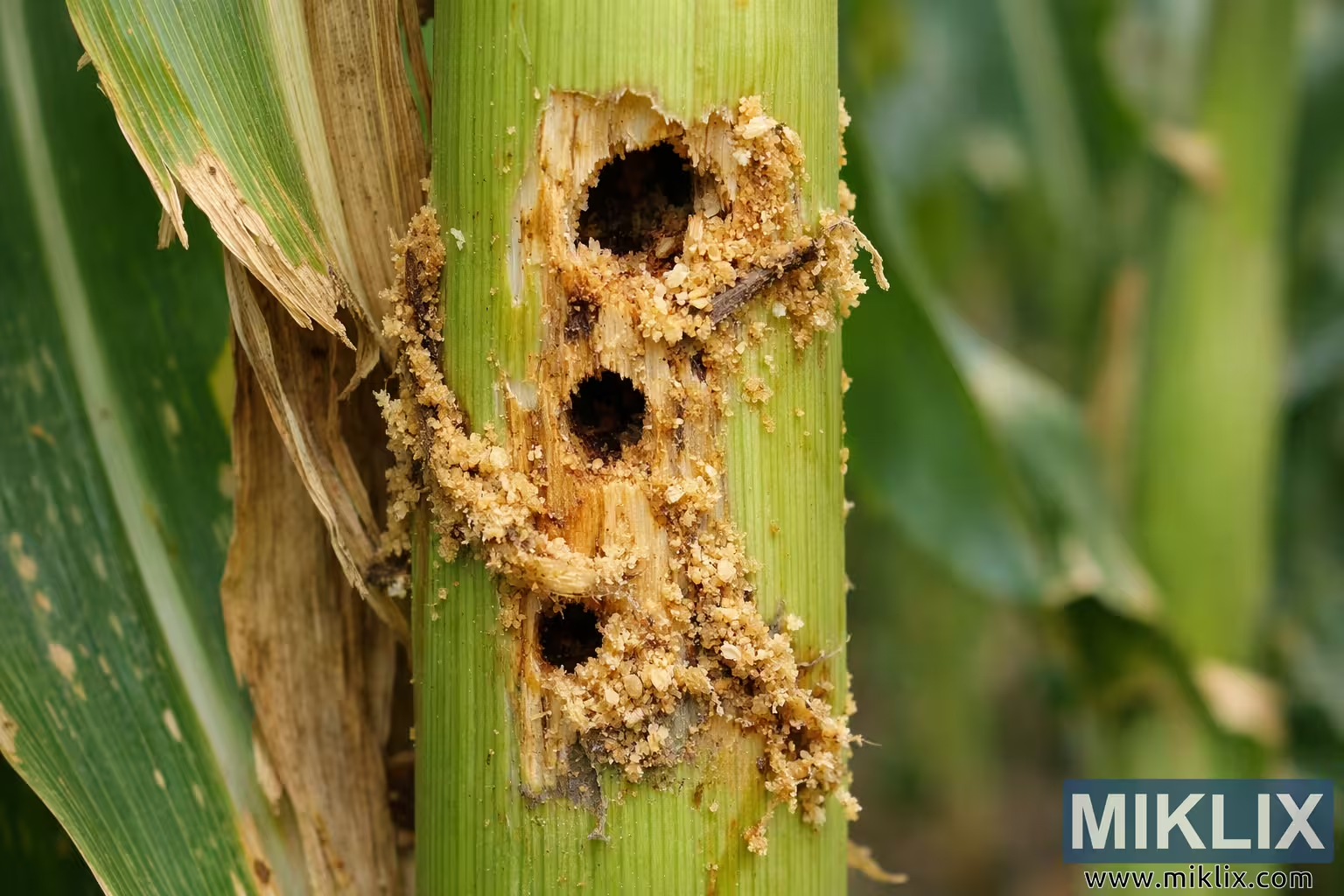
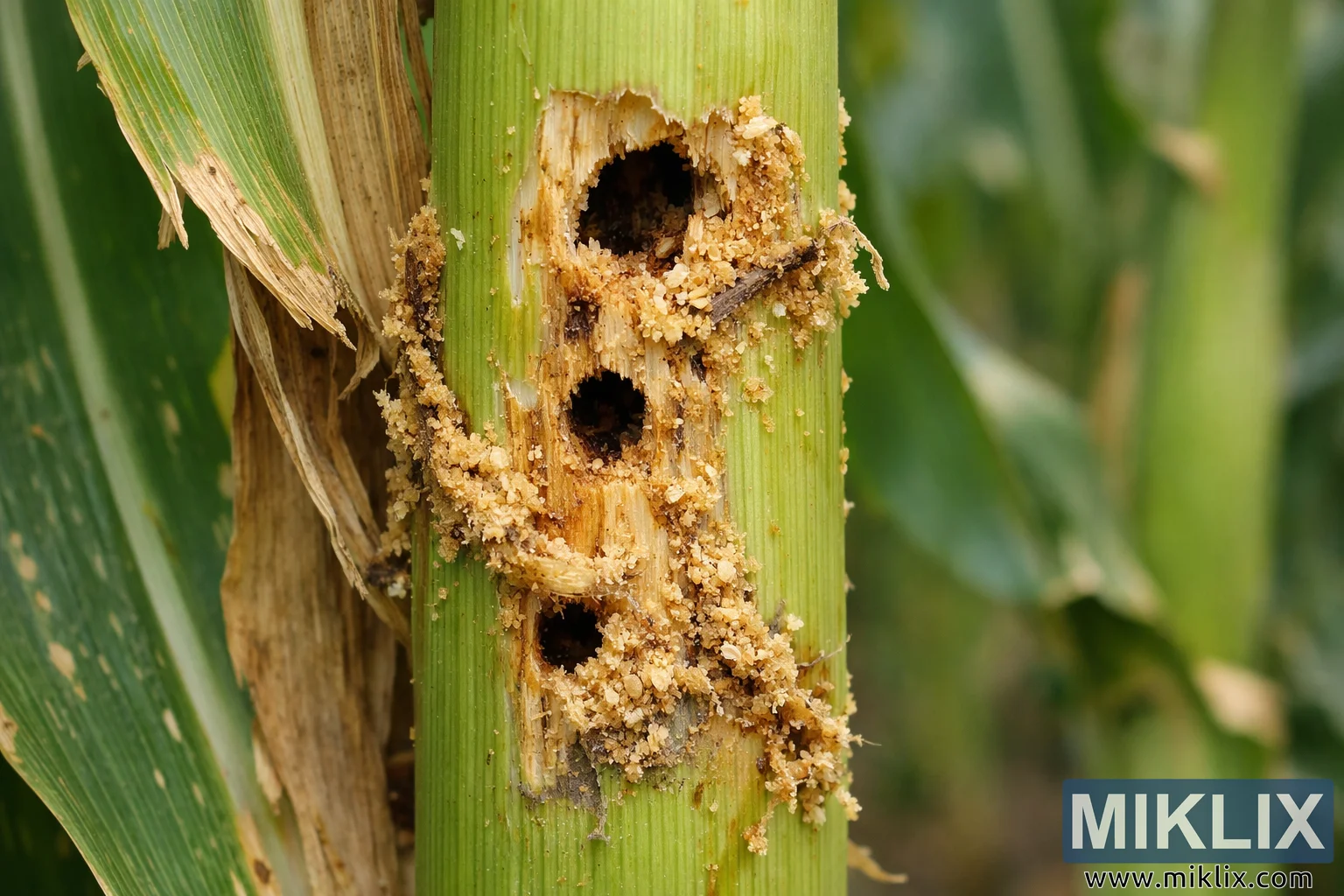
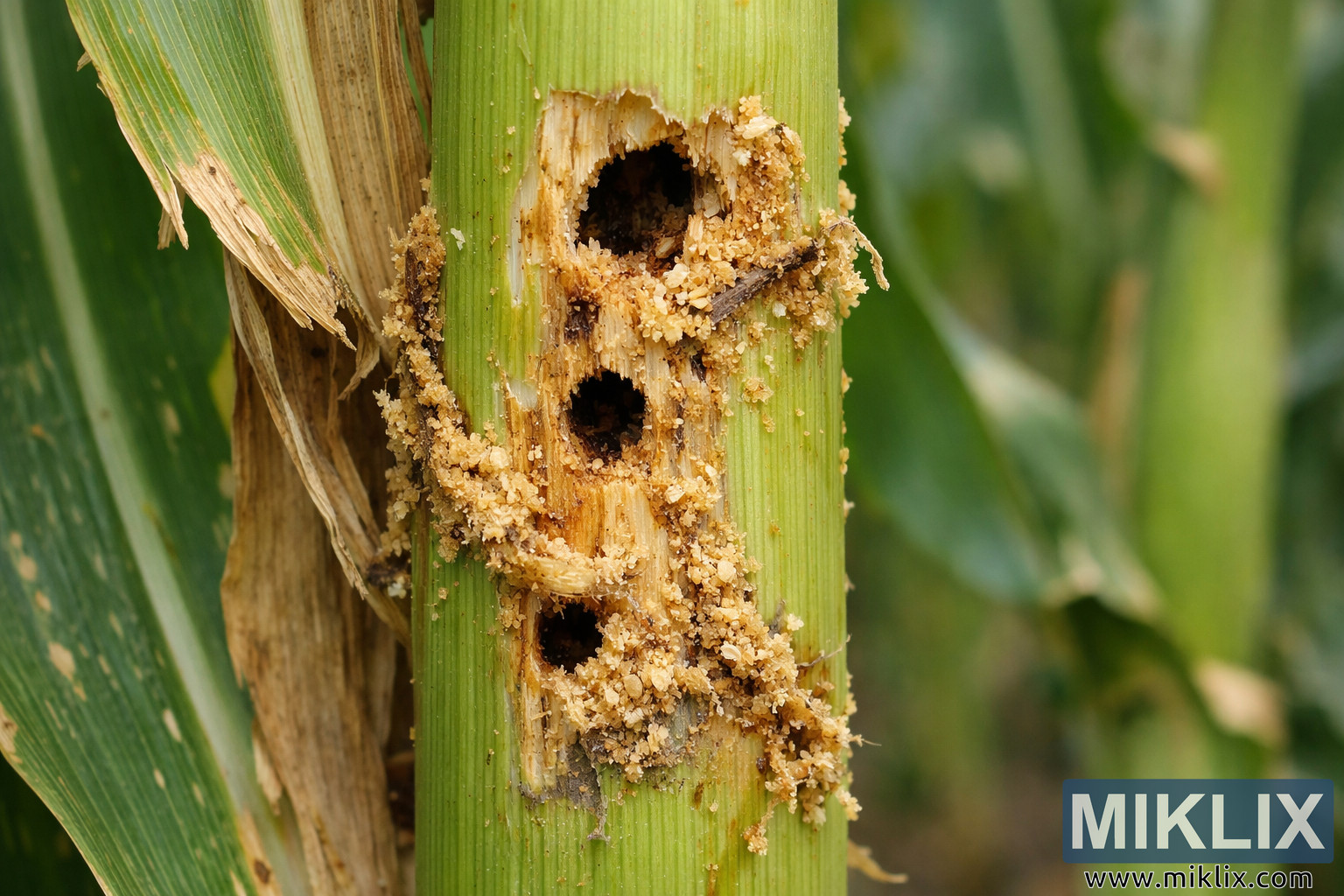
Hoto: Corn Plant Stalk Showing Corn Borer Entry Holes and Frass Damage
Buga:
An sabunta ta ƙarshe: 13 Maris, 2026 da 20:38:49 UTC
Detailed close-up image of corn borer damage on a corn stalk, showing entry holes and frass accumulation typical of European corn borer infestation.
Corn Plant Stalk Showing Corn Borer Entry Holes and Frass Damage
Sigar da ake da ita ta wannan hoton
Fayilolin hotunan da ake da su don saukewa a ƙasa ba su da matsewa kuma suna da ƙuduri mafi girma - kuma sakamakon haka, inganci mafi girma - fiye da hotunan da aka saka a cikin labarai da shafuka akan wannan gidan yanar gizon, waɗanda aka fi inganta su don girman fayil don rage yawan amfani da bandwidth.
Girman yau da kullun (1,536 x 1,024)
Babban girma (3,072 x 2,048)
Girma mai girma sosai (4,608 x 3,072)
Girman da ya fi girma (6,144 x 4,096)
Girman barkwanci mai girma (1,048,576 x 699,051)
- Har yanzu ana lodawa... ;-)
Bayanin Hoto
A detailed close-up photograph of a corn plant stalk displaying clear signs of damage caused by corn borer larvae. The central subject of the image is a green corn stalk with several irregularly shaped entry holes clustered vertically along the stem. These holes have rough, torn edges where the larvae have bored into the plant tissue. Surrounding the openings is a noticeable accumulation of frass, the sawdust-like mixture of chewed plant material and insect waste produced by feeding larvae. The frass appears as coarse, tan to light brown granules that cling to the surface of the stalk and gather in small piles around the entry points.
The stalk’s outer surface shows disruption of the smooth green epidermis, with exposed fibrous inner tissue visible around the larger holes. Some areas of the plant tissue appear shredded or scraped, indicating continued feeding and tunneling activity within the stalk. The holes vary slightly in size, suggesting repeated or prolonged infestation as larvae penetrate the plant and move internally through the stem. The frass accumulation forms a loose, crumbly texture that contrasts with the smoother vertical ridges of the corn stalk.
To the left side of the stalk, a partially dried and torn corn leaf sheath hangs downward. Its pale, brownish color and frayed edges indicate stress and damage associated with the infestation. The leaf tissue appears thin and brittle compared with the healthy green stalk. This damaged leaf material adds visual context to the injury caused by the pest activity.
The background of the image is softly blurred, showing hints of additional corn plants and green foliage typical of a cultivated cornfield. The shallow depth of field keeps the viewer’s focus on the damaged stalk and the diagnostic signs of corn borer infestation. Natural daylight illuminates the scene, highlighting the texture of the plant fibers and the granular structure of the frass.
Overall, the photograph clearly illustrates characteristic symptoms of corn borer damage, including multiple entry holes, frass deposits, and structural injury to the stalk. These visual cues are commonly used in agricultural scouting and pest management to identify infestations of corn borers in maize crops.
Hoton yana da alaƙa da: Growing Corn: Your Complete Guide to Sweet Success in the Garden