
Hoto: Ideal Swiss Chard Growing Location in Full Sun with Well-Drained Soil
Buga:
An sabunta ta ƙarshe: 16 Afirilu, 2026 da 19:41:43 UTC
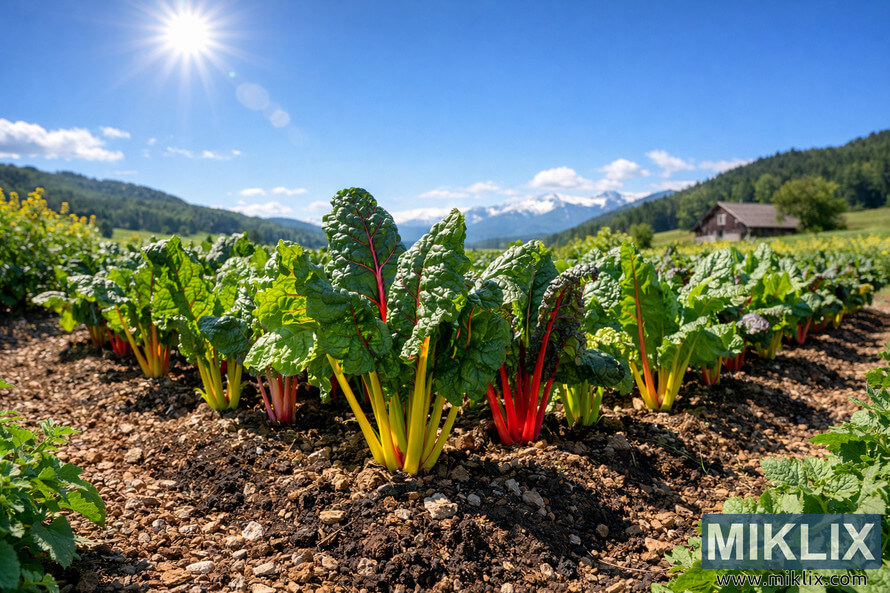
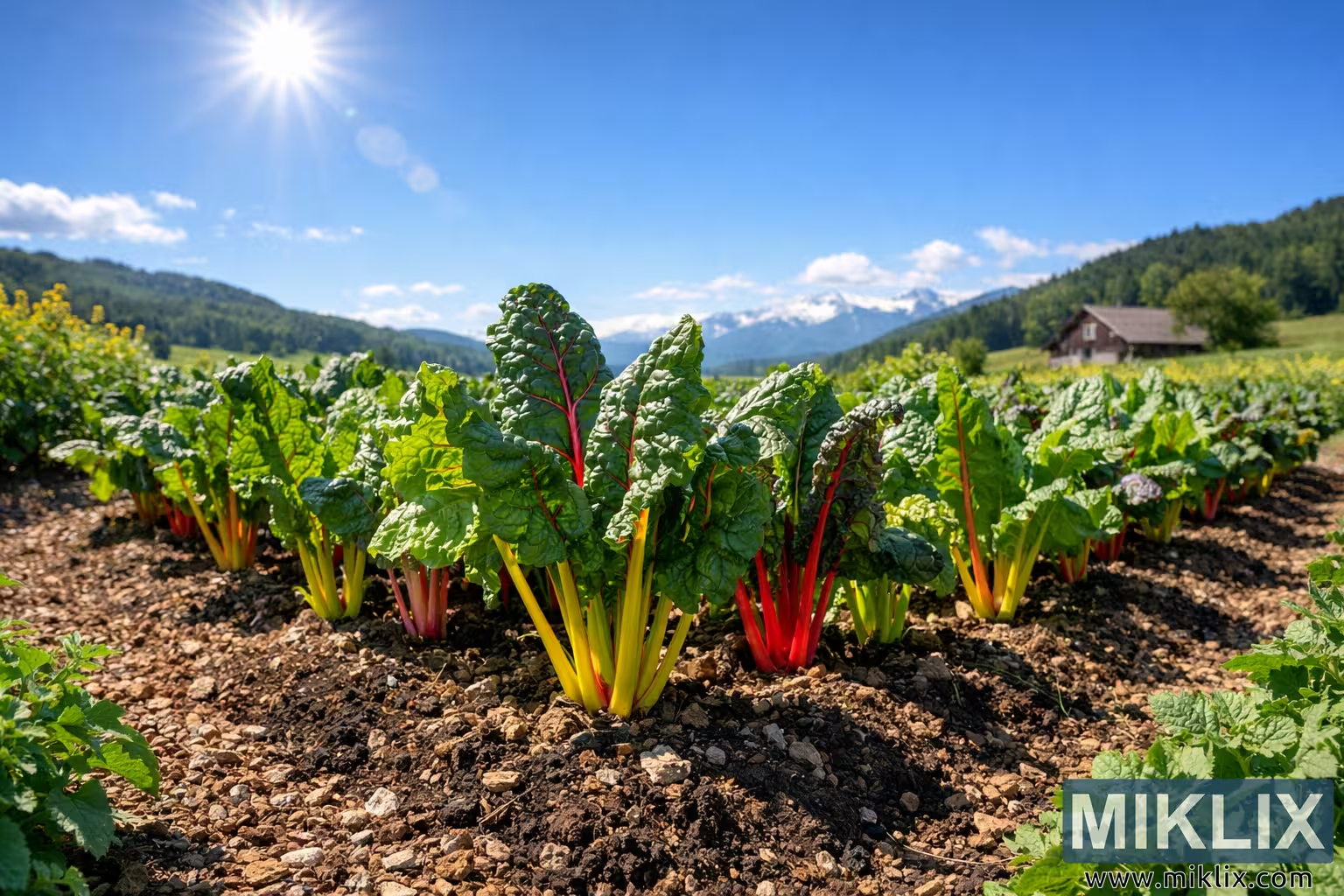
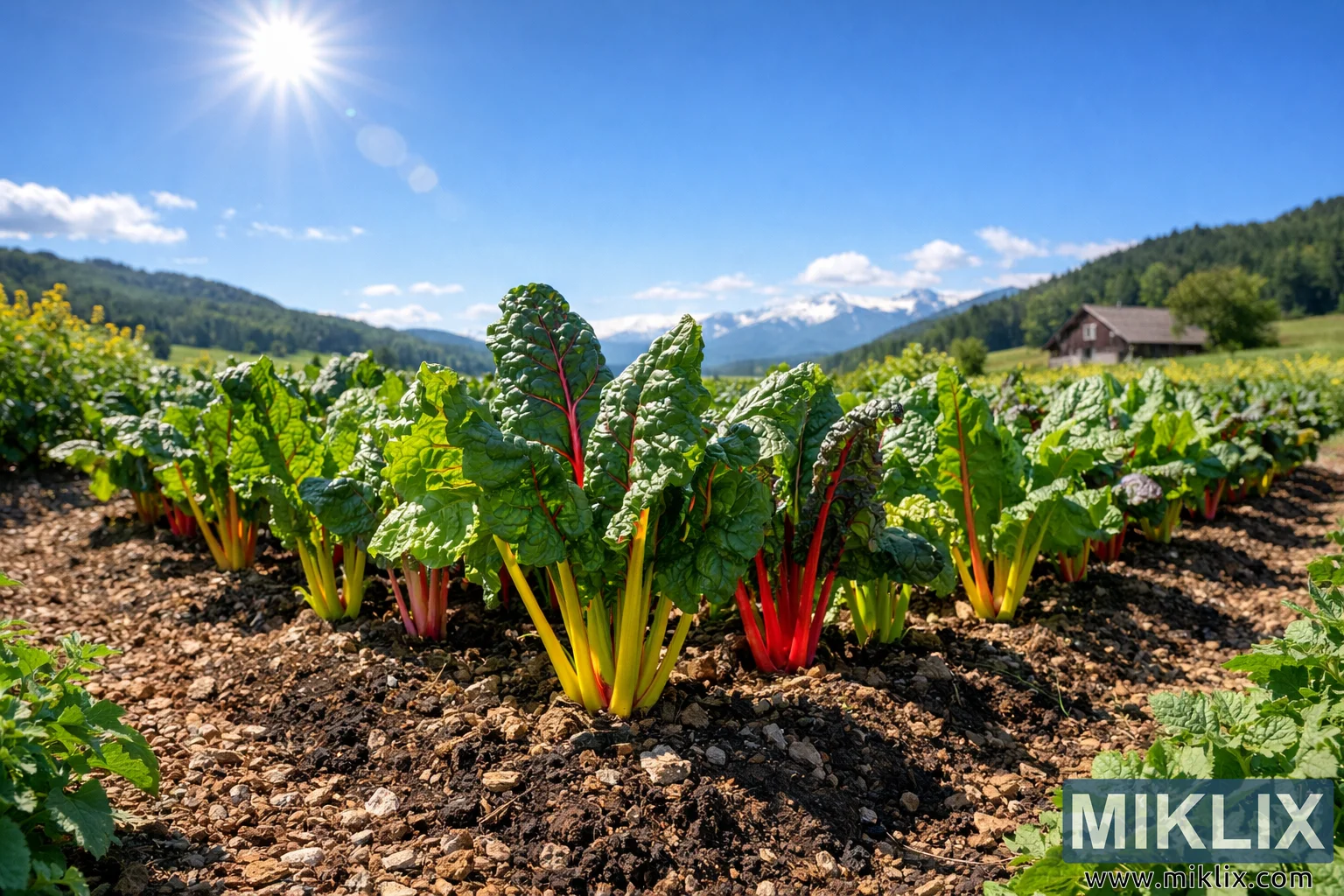
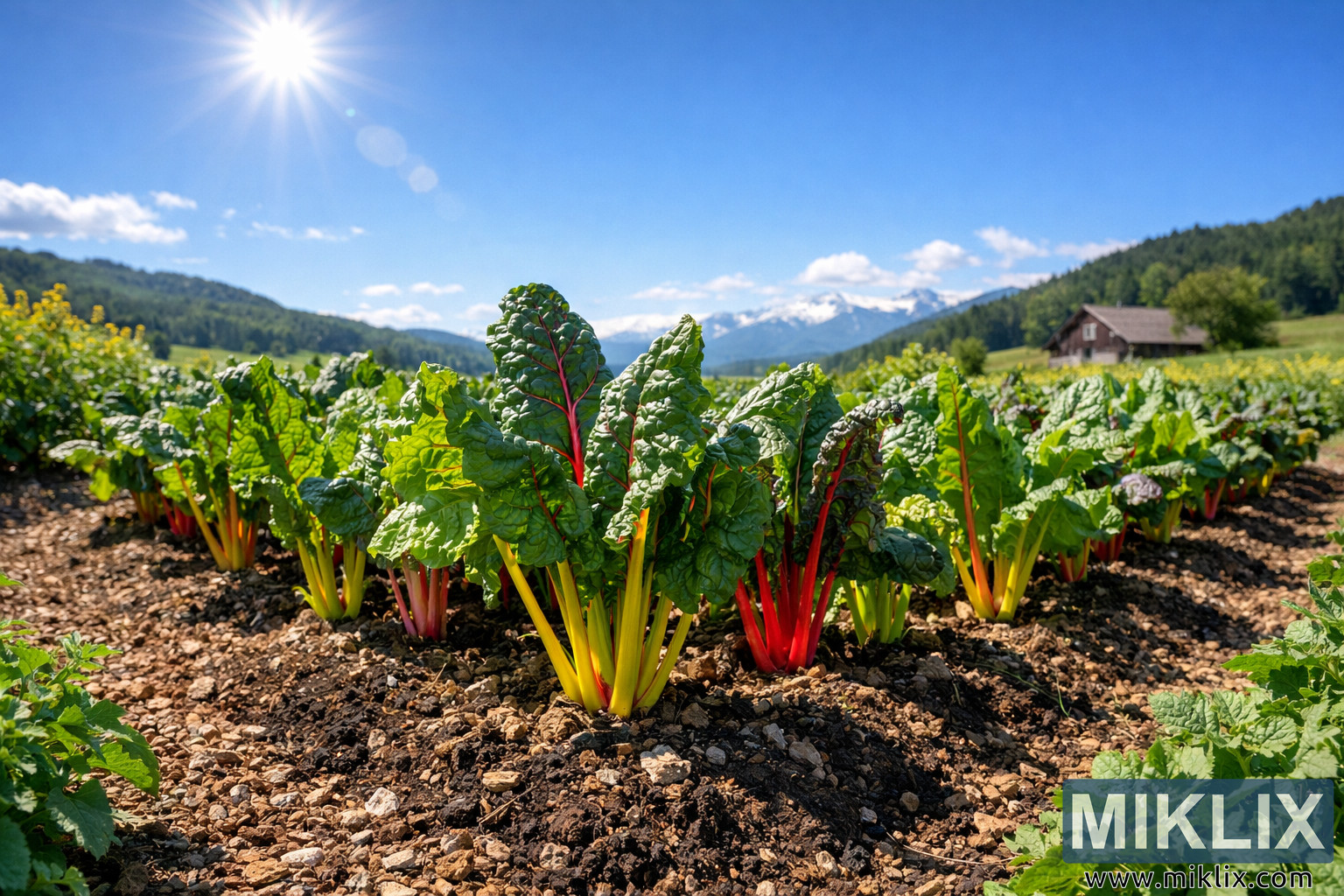
Colorful Swiss chard plants grow in rich, well-drained soil under bright full sunlight, illustrating ideal conditions for cultivating healthy leafy greens.
Ideal Swiss Chard Growing Location in Full Sun with Well-Drained Soil
Sigar da ake da ita ta wannan hoton
Fayilolin hotunan da ake da su don saukewa a ƙasa ba su da matsewa kuma suna da ƙuduri mafi girma - kuma sakamakon haka, inganci mafi girma - fiye da hotunan da aka saka a cikin labarai da shafuka akan wannan gidan yanar gizon, waɗanda aka fi inganta su don girman fayil don rage yawan amfani da bandwidth.
Girman yau da kullun (1,536 x 1,024)
Babban girma (3,072 x 2,048)
Girma mai girma sosai (4,608 x 3,072)
Girman da ya fi girma (6,144 x 4,096)
Girman barkwanci mai girma (1,048,576 x 699,051)
- Har yanzu ana lodawa... ;-)
Bayanin Hoto
A wide landscape photograph shows a thriving bed of Swiss chard growing in an open garden under bright, direct sunlight. The scene is composed from a low perspective at plant level, allowing the viewer to see several rows of healthy chard stretching across gently raised soil beds. Each plant displays broad, textured green leaves and vivid stems in shades of red, yellow, and orange, highlighting the natural diversity of rainbow chard varieties. The leaves appear crisp and vigorous, with clearly defined veins and slightly curled edges that catch the sunlight. The sunlight itself is strong and unobstructed, positioned high in the clear blue sky toward the upper corner of the image, indicating full sun exposure—one of the key requirements for productive Swiss chard growth.
The soil surrounding the plants appears loose, crumbly, and well structured, with small stones and organic matter visible across the surface. The raised rows and the granular texture of the soil visually communicate good drainage, which is important for preventing waterlogging and supporting healthy root development. The beds are evenly spaced, allowing airflow and light penetration between plants. Shadows cast by the leaves fall sharply onto the soil, reinforcing the impression of intense midday sunlight and emphasizing the well-drained ridges of the garden rows.
In the middle distance, the garden transitions into a broader rural landscape of rolling green fields and gentle hills. A small farmhouse sits quietly near the edge of the cultivated area, providing a sense of scale and agricultural context. Beyond the fields, forested hills rise toward distant mountains whose peaks are lightly dusted with snow. These mountains form a dramatic yet peaceful backdrop beneath the cloudless sky.
The composition emphasizes both plant health and environmental conditions. The Swiss chard plants stand upright and robust, their colorful stems glowing where sunlight passes through them. The bright sky, open terrain, and absence of shade demonstrate ideal full-sun exposure, while the raised beds and textured soil illustrate effective drainage. Together, these elements visually represent the optimal growing environment for Swiss chard: a sunny location with fertile, well-aerated soil that allows excess water to move away from the roots while still retaining enough moisture for steady growth.
Hoton yana da alaƙa da: How to Grow Swiss Chard: A Complete Beginner's Guide