
Hoto: Swiss Chard Leaves Infected with Downy Mildew
Buga:
An sabunta ta ƙarshe: 16 Afirilu, 2026 da 19:41:43 UTC
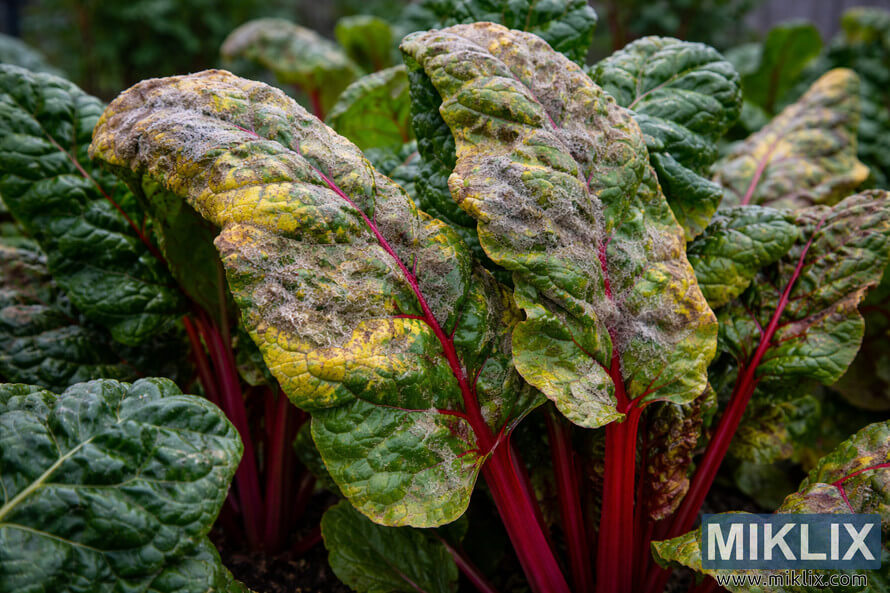
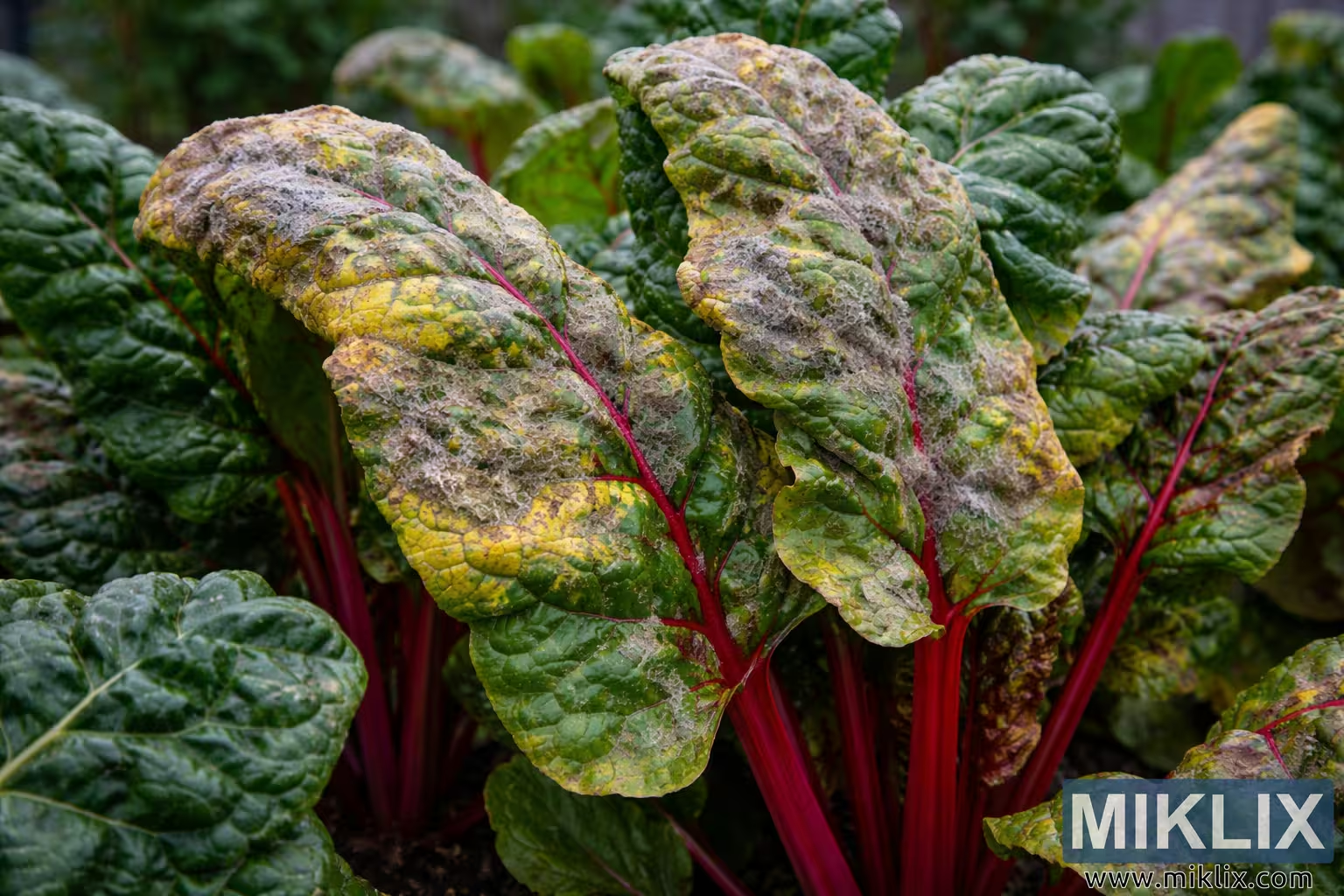
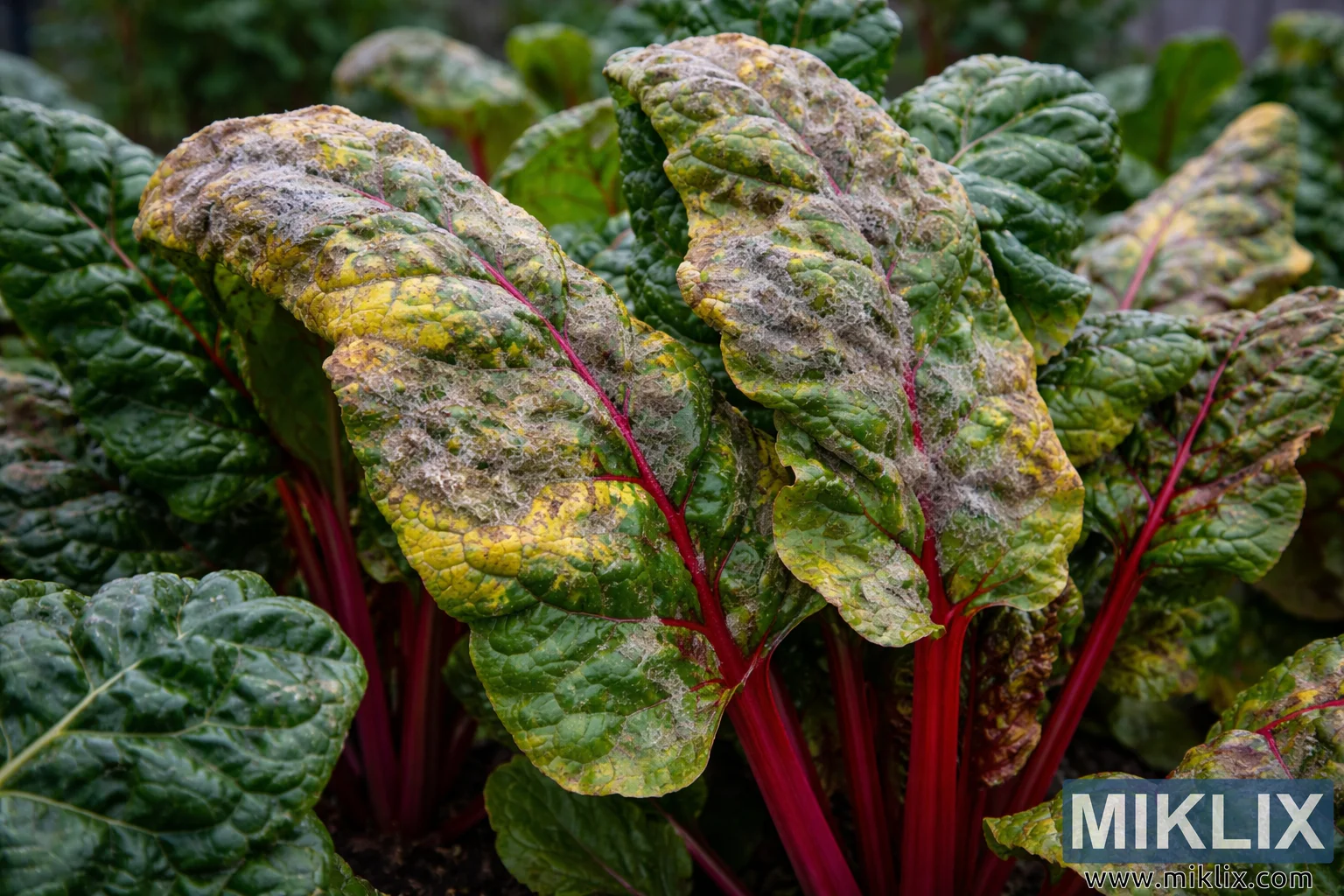
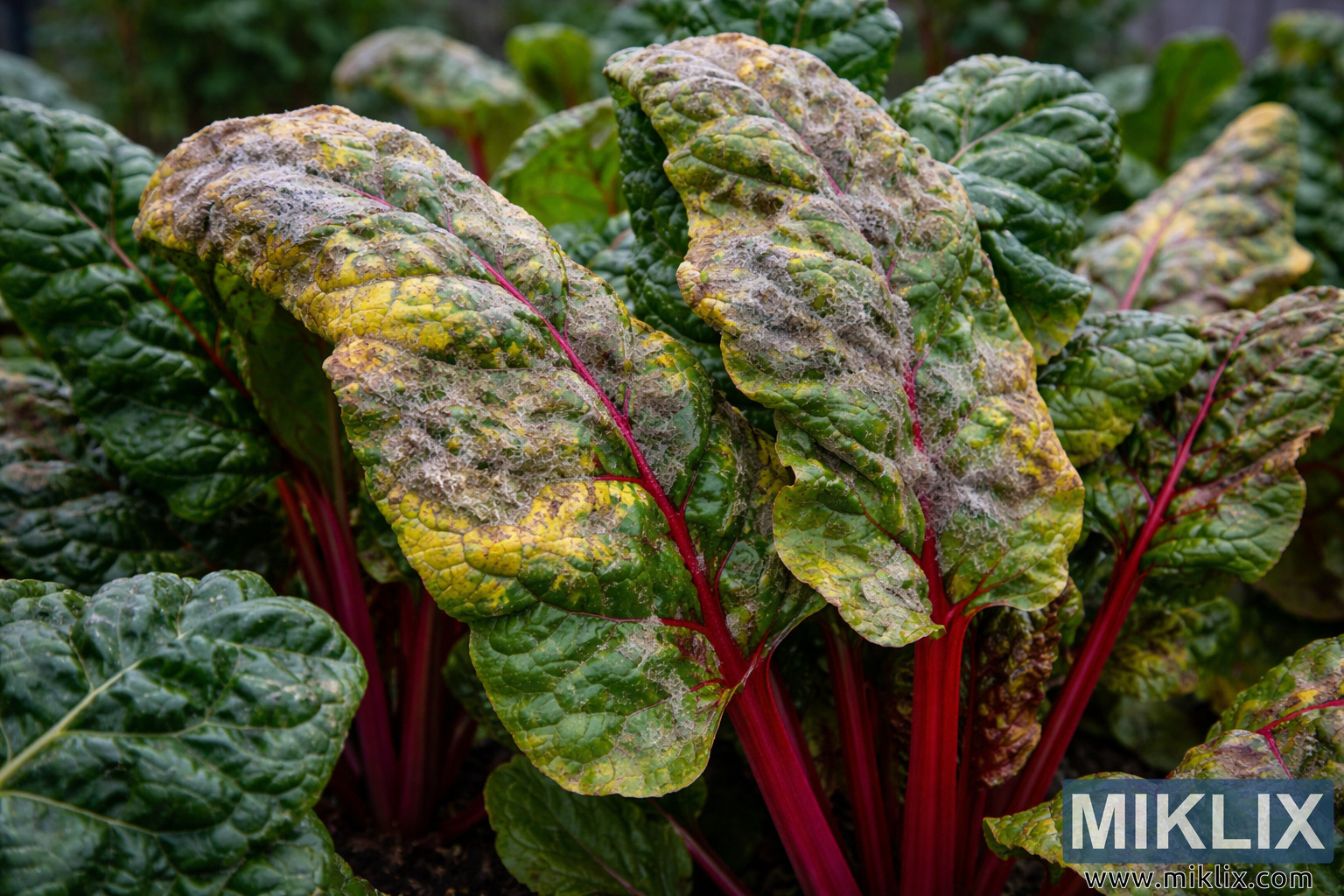
High-resolution close-up photograph of Swiss chard plants infected with Downy Mildew, showing yellow mottling, curled leaves, and gray fungal growth on the leaf surface.
Swiss Chard Leaves Infected with Downy Mildew
Sigar da ake da ita ta wannan hoton
Fayilolin hotunan da ake da su don saukewa a ƙasa ba su da matsewa kuma suna da ƙuduri mafi girma - kuma sakamakon haka, inganci mafi girma - fiye da hotunan da aka saka a cikin labarai da shafuka akan wannan gidan yanar gizon, waɗanda aka fi inganta su don girman fayil don rage yawan amfani da bandwidth.
Girman yau da kullun (1,536 x 1,024)
Babban girma (3,072 x 2,048)
Girma mai girma sosai (4,608 x 3,072)
Girman da ya fi girma (6,144 x 4,096)
Girman barkwanci mai girma (1,048,576 x 699,051)
- Har yanzu ana lodawa... ;-)
Bayanin Hoto
A high-resolution, landscape-oriented close-up photograph shows a cluster of Swiss chard plants affected by Downy Mildew, a fungal-like disease that commonly infects leafy vegetables. The image focuses on several large chard leaves in the foreground that display clear symptoms of infection. These leaves appear thick, wrinkled, and slightly curled, with irregular patches of yellow discoloration spreading across the dark green surface. The yellowing follows a mottled pattern between the veins, creating a mosaic-like appearance that contrasts strongly with the deeper green areas that remain healthy. Across parts of the leaves, especially near the central veins and along the folded sections, a fuzzy grayish-white layer of fungal growth is visible. This powdery or down-like coating is characteristic of Downy Mildew and appears as soft, textured patches that cling to the leaf surface.
The veins of the Swiss chard are prominent and vividly colored. Thick red stems rise from the base of the plant and branch into the leaf veins, creating striking red lines that run through the damaged foliage. These bright stems provide a dramatic visual contrast against the diseased areas and the surrounding green leaves. The infected leaves appear slightly distorted and sagging compared with the healthier foliage nearby, indicating stress caused by the disease. Some areas of the leaves show subtle browning or necrotic spots where the tissue has begun to deteriorate.
In the background, additional Swiss chard plants form a dense patch of foliage. These background leaves are out of focus due to a shallow depth of field, creating a soft blur that emphasizes the diseased leaves in the foreground. The background leaves appear darker green and healthier, with fewer visible signs of infection, suggesting that the disease may be spreading unevenly across the crop. Natural outdoor lighting illuminates the plants, highlighting the textures of the wrinkled leaves and the velvety fungal growth. The moisture and slight sheen on parts of the leaf surface suggest humid conditions, which often favor the development and spread of Downy Mildew.
Overall, the photograph presents a detailed visual example of plant disease symptoms in Swiss chard. The combination of yellow mottling, gray fungal growth, leaf distortion, and contrasting red stems clearly illustrates the impact of Downy Mildew infection on leafy greens grown in a garden or agricultural field.
Hoton yana da alaƙa da: How to Grow Swiss Chard: A Complete Beginner's Guide