
Hoto: Garden Root Barrier Containing Mint Plants
Buga:
An sabunta ta ƙarshe: 16 Maris, 2026 da 22:58:11 UTC
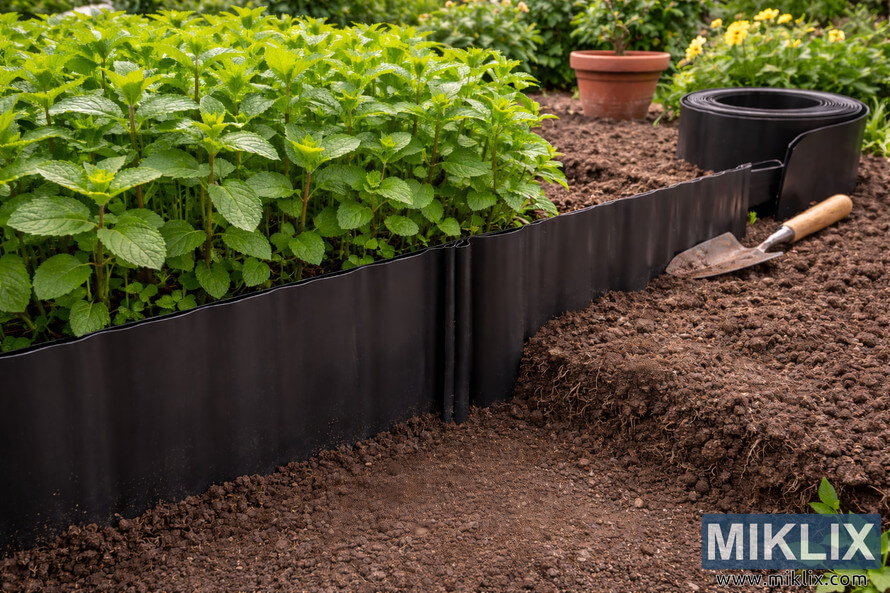
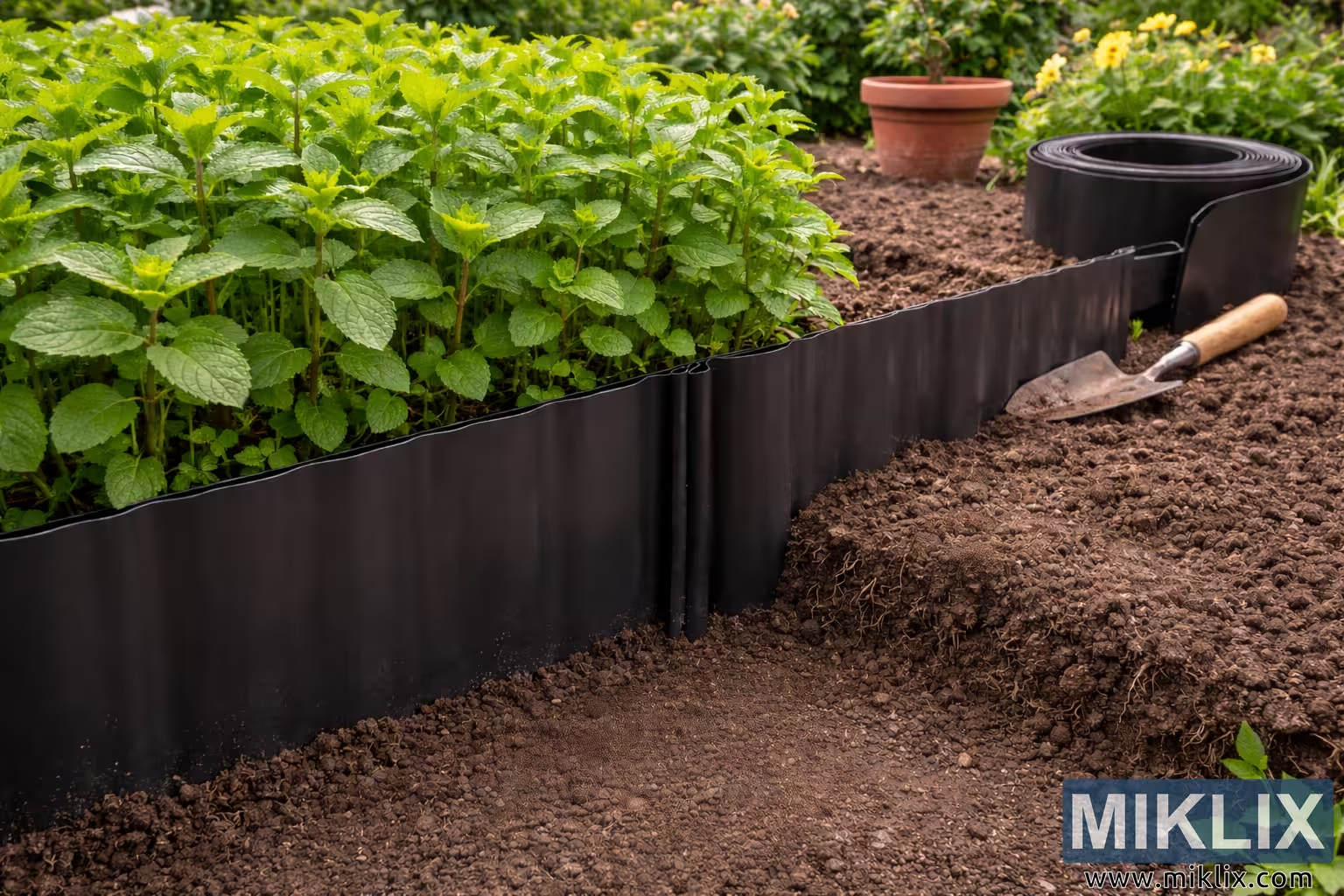
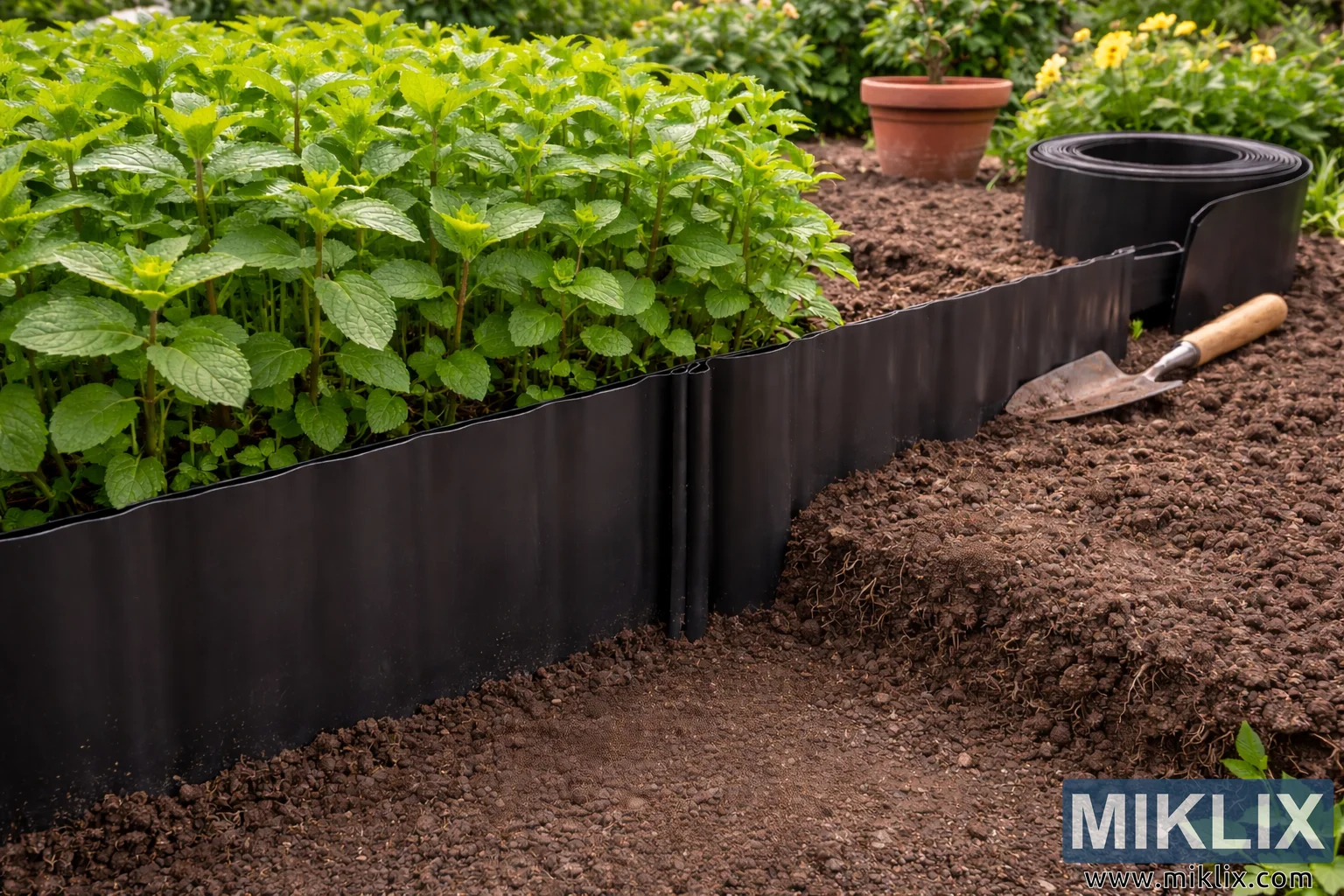
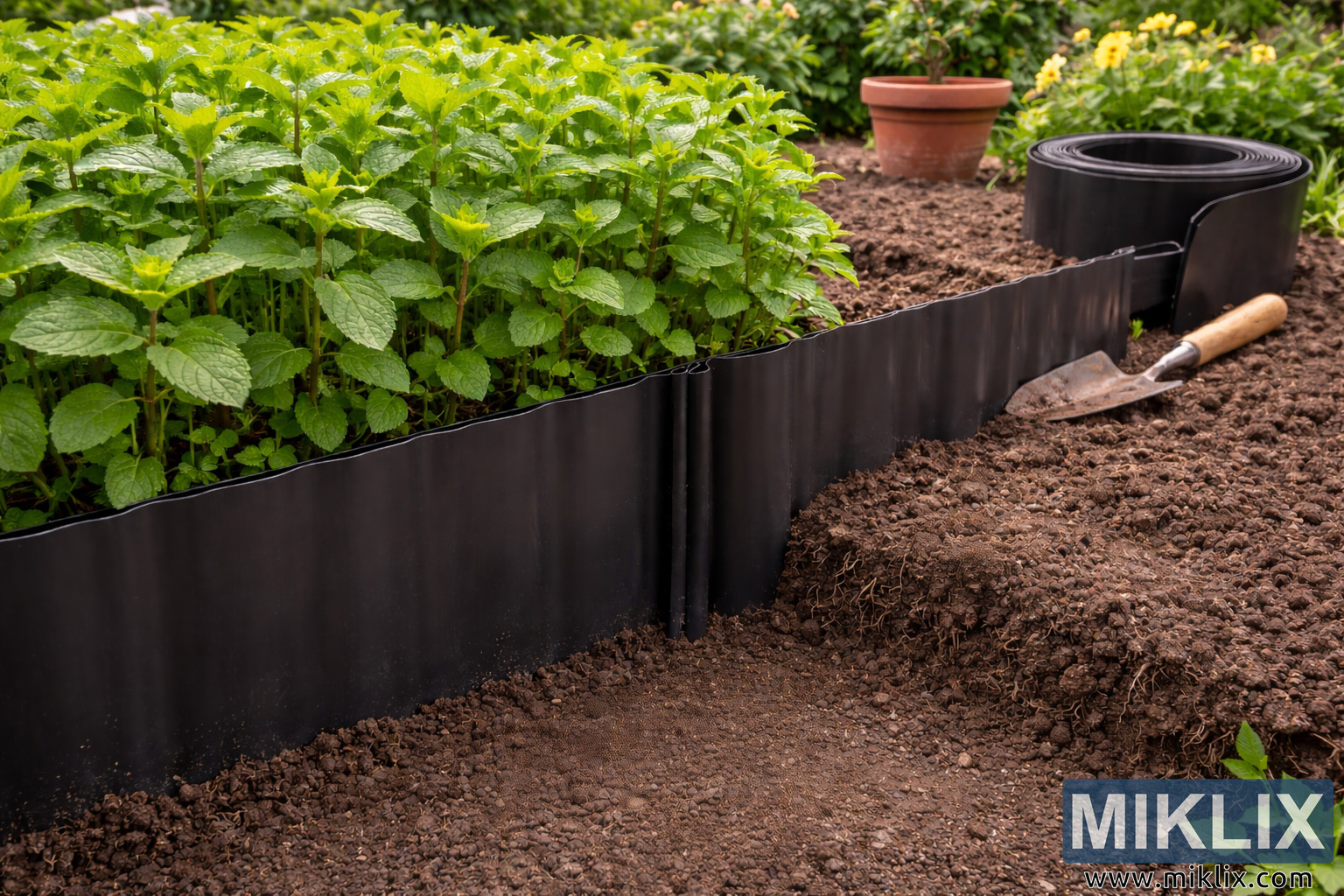
High-resolution garden scene showing a plastic root barrier installed in soil to prevent mint plants from spreading beyond a designated planting area.
Garden Root Barrier Containing Mint Plants
Sigar da ake da ita ta wannan hoton
Fayilolin hotunan da ake da su don saukewa a ƙasa ba su da matsewa kuma suna da ƙuduri mafi girma - kuma sakamakon haka, inganci mafi girma - fiye da hotunan da aka saka a cikin labarai da shafuka akan wannan gidan yanar gizon, waɗanda aka fi inganta su don girman fayil don rage yawan amfani da bandwidth.
Girman yau da kullun (1,536 x 1,024)
Babban girma (3,072 x 2,048)
Girma mai girma sosai (4,608 x 3,072)
Girman da ya fi girma (6,144 x 4,096)
Girman barkwanci mai girma (1,048,576 x 699,051)
- Har yanzu ana lodawa... ;-)
Bayanin Hoto
A high-resolution landscape photograph shows a carefully arranged garden scene focused on a root barrier installed to contain the spread of mint plants. The composition is captured from a low, slightly angled perspective so both the plants and the soil structure around the barrier are clearly visible. On the left side of the frame, a dense cluster of healthy mint plants grows vigorously. The mint leaves are bright green with serrated edges and textured veins, and the stems rise closely together, forming a lush, compact patch of foliage. The vibrant greenery contrasts strongly with the dark soil and the smooth black barrier material that runs along the border of the planting area.
The central subject of the image is the root barrier itself. It is made from a sturdy black plastic material designed to be buried vertically in the soil to prevent underground runners from spreading into other parts of the garden. The barrier forms a clean, continuous boundary between the mint bed and the surrounding soil. Its top edge emerges slightly above the ground surface, demonstrating how it is installed to stop roots from creeping over the top. The surface of the barrier appears smooth and slightly reflective, catching the daylight and highlighting its durable construction. Importantly, the barrier remains intact and unbroken, with no visible roots penetrating or wrapping around it.
In the foreground, freshly turned earth reveals the trench where the barrier has been placed. The soil is loose and textured, with small clumps and granules suggesting recent digging. This exposed section of ground helps illustrate how the barrier extends downward into the soil to block underground rhizomes from spreading outward. The clean separation between the planted side and the bare soil side emphasizes the function of the barrier as a protective containment system.
On the right side of the image, a small garden trowel rests on the soil with its metal blade partially embedded in the earth. The wooden handle points slightly toward the viewer, adding context that the barrier installation is part of an active gardening task. Nearby, a roll of additional root barrier material sits upright on the ground, indicating that more edging may be installed elsewhere in the garden.
In the softly blurred background, decorative flowers and a terracotta pot add color and depth to the scene. Yellow blossoms and surrounding greenery suggest a well-maintained garden environment. Natural daylight illuminates the entire scene evenly, bringing out the rich greens of the mint, the dark matte finish of the barrier, and the earthy tones of the soil. Overall, the image clearly demonstrates how a physical root barrier can be used to manage aggressive spreading plants like mint while maintaining a neat and controlled garden layout.
Hoton yana da alaƙa da: The Ultimate Guide to Growing Mint at Home