
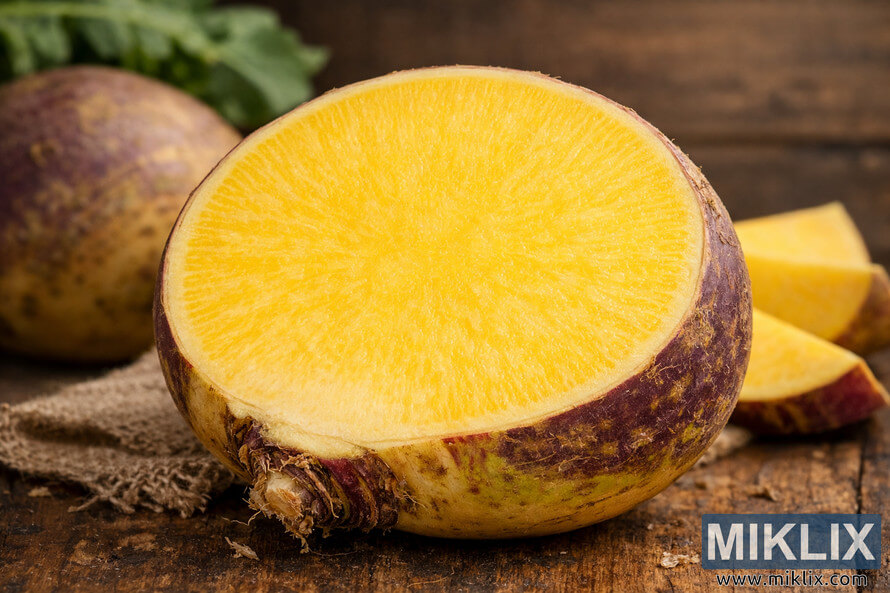
Hoto: Cross-Section of a Rutabaga with Antioxidant-Rich Yellow Flesh
Buga:
An sabunta ta ƙarshe: 10 Satumba, 2026 da 09:57:57 UTC
A detailed visual study of a rutabaga cross-section revealing its antioxidant-rich yellow flesh, earthy skin tones, and natural textures in a rustic setting.
Cross-Section of a Rutabaga with Antioxidant-Rich Yellow Flesh
Sigar da ake da ita ta wannan hoton
Fayilolin hotunan da ake da su don saukewa a ƙasa ba su da matsewa kuma suna da ƙuduri mafi girma - kuma sakamakon haka, inganci mafi girma - fiye da hotunan da aka saka a cikin labarai da shafuka akan wannan gidan yanar gizon, waɗanda aka fi inganta su don girman fayil don rage yawan amfani da bandwidth.
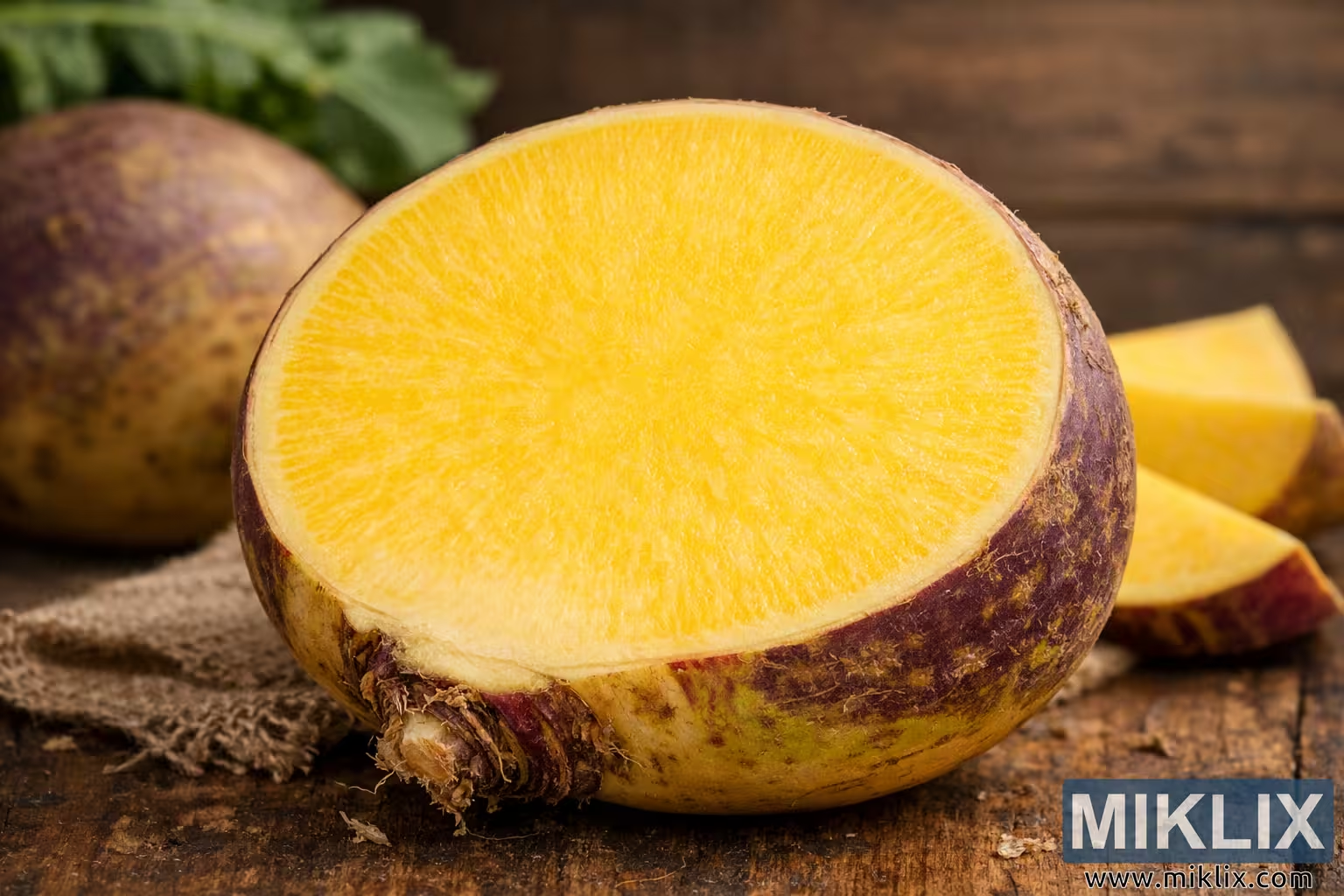
Girman yau da kullun (1,536 x 1,024)
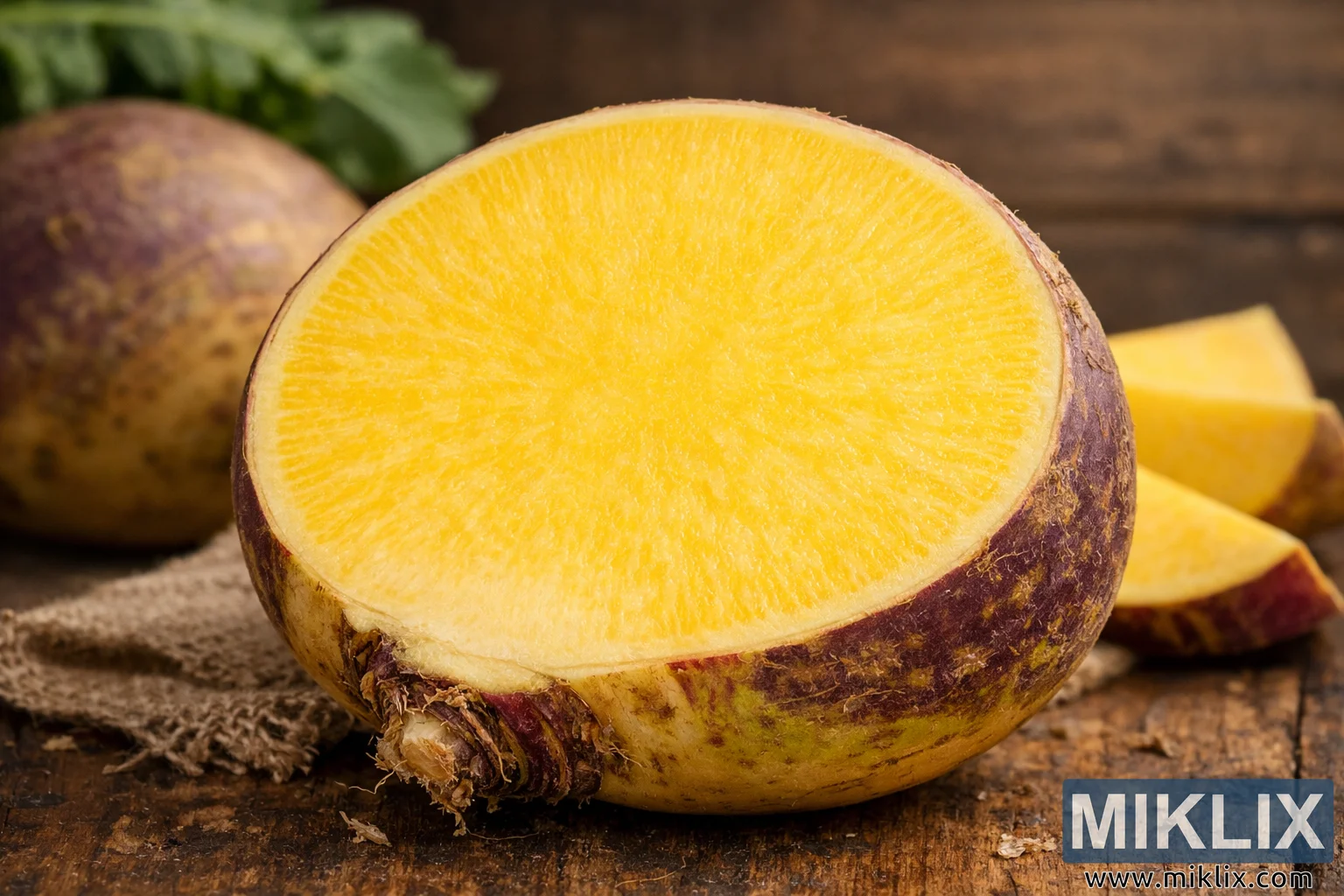
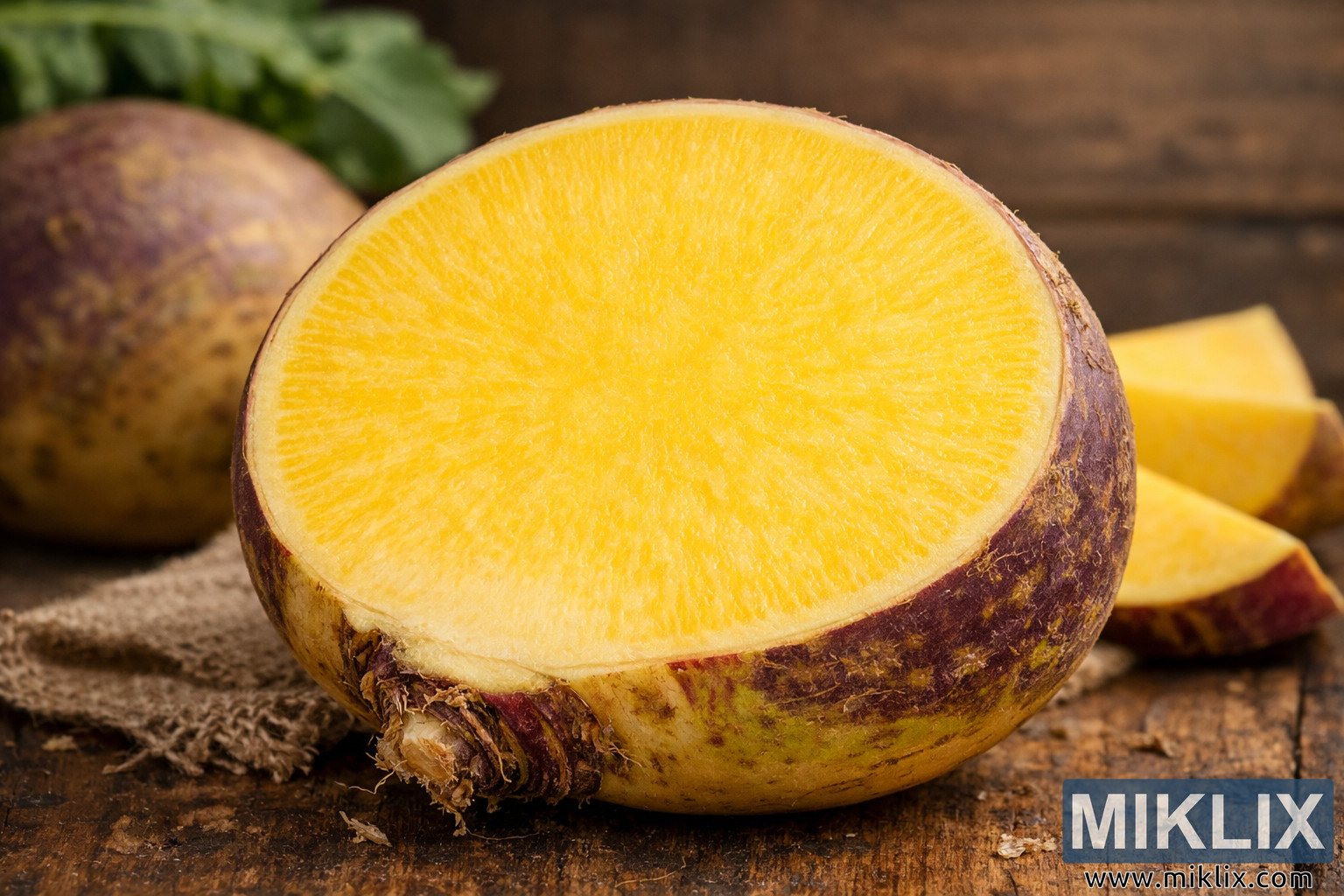
Babban girma (3,072 x 2,048)
Girma mai girma sosai (4,608 x 3,072)
Girman da ya fi girma (6,144 x 4,096)
Girman barkwanci mai girma (1,048,576 x 699,051)
- Har yanzu ana lodawa... ;-)
Bayanin Hoto
The image presents a meticulously detailed close-up of a halved rutabaga placed on a weathered wooden surface, capturing the vegetable’s natural beauty and nutritional richness. The composition is horizontally oriented, emphasizing the breadth of the rutabaga’s cross-section and the interplay of textures between its smooth, moist interior and rough, earthy exterior. The focal point of the photograph is the rutabaga’s vibrant yellow flesh, which glows warmly under soft, diffused lighting. The flesh appears dense yet tender, with subtle variations in hue ranging from deep golden yellow at the center to a lighter, creamy tone near the edges. This gradient of color suggests the presence of antioxidant compounds concentrated toward the core, giving the vegetable its characteristic vitality and nutritional appeal.
Encasing the luminous interior is the rutabaga’s thick skin, which transitions from a deep purple at the top to a muted greenish-brown near the base. The skin’s surface is rugged and slightly uneven, marked by faint ridges and natural imperfections that speak to the vegetable’s organic origin. The root end at the bottom of the halved rutabaga shows a small, fibrous stub with a few thin, dried rootlets still attached, adding authenticity and a sense of connection to the soil from which it was harvested.
In the softly blurred background, a whole rutabaga rests to the left, its purple and greenish-brown skin echoing the colors of the halved specimen. To the right, several sliced pieces of rutabaga lie scattered on the wooden surface, their yellow interiors catching the light and reinforcing the image’s theme of natural abundance. A few green rutabaga leaves peek into the upper left corner, slightly out of focus, providing a gentle contrast to the warm tones of the flesh and wood.
The wooden surface beneath the rutabaga is dark brown and visibly aged, with cracks, grain lines, and subtle color variations that enhance the rustic atmosphere. A piece of burlap fabric lies partially beneath the sliced rutabaga, its coarse texture complementing the roughness of the skin and the smoothness of the flesh. Small crumbs and root fibers are scattered around the halved rutabaga, suggesting recent preparation and adding a touch of realism to the scene.
The lighting is carefully balanced to highlight the rutabaga’s natural colors without overwhelming them. Gentle shadows fall across the wooden surface, creating depth and dimension while maintaining a warm, inviting tone. The overall palette of the image is harmonious—golden yellows, earthy browns, muted greens, and purples blend seamlessly to evoke a sense of wholesome nourishment and organic authenticity.
The photograph’s composition draws the viewer’s eye directly to the cross-section, emphasizing the rutabaga’s antioxidant-rich yellow flesh as the centerpiece. The surrounding elements—the whole rutabaga, the sliced pieces, the leaves, and the textured background—serve as supporting details that enrich the narrative of freshness and vitality. The image conveys not only the physical characteristics of the rutabaga but also its symbolic connection to natural health and sustainable agriculture.
Every detail, from the moist sheen on the flesh to the fibrous texture of the root end, contributes to a sense of tactile realism. The viewer can almost feel the smoothness of the cut surface and the roughness of the skin. The photograph celebrates the rutabaga as more than a humble root vegetable—it becomes a visual testament to the beauty of everyday produce, the richness of natural color, and the quiet elegance found in simple, organic forms.
This image would serve perfectly in contexts emphasizing nutrition, farm-to-table cuisine, or botanical study. Its high resolution and landscape orientation make it ideal for educational materials, culinary publications, or visual art exploring the intersection of food and nature. The rutabaga’s antioxidant-rich yellow flesh stands as a symbol of vitality, captured here with precision and artistry that invites both scientific appreciation and aesthetic admiration.
Hoton yana da alaƙa da: Rutabaga: The Root Vegetable Packed with Nutrients