
Image: Cooking with Fresh Sage: Natural Ways to Use Sage for Health and Wellness
Published: June 8, 2026 at 6:48:50 PM UTC
Discover the health benefits of fresh sage with this beautifully styled cooking infographic featuring herbal tea, savory dishes, and natural wellness tips. Learn how sage may support digestion, brain health, immunity, and inflammation reduction while exploring practical culinary uses.
Available versions of this image
The image files available for download below are less compressed and higher resolution - and as a result of that, higher quality - than the images embedded in articles and pages on this website, which are more optimized for file size in order to reduce bandwidth consumption.
Regular size (1,536 x 1,024)
Large size (3,072 x 2,048)
Very large size (4,608 x 3,072)
Extra large size (6,144 x 4,096)
Comically large size (1,048,576 x 699,051)
- Still uploading... ;-)
Image description
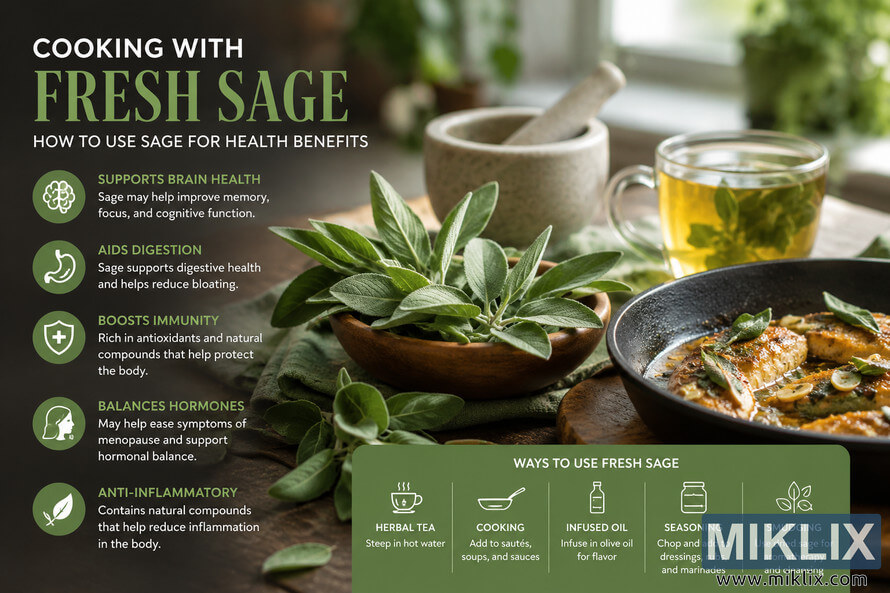
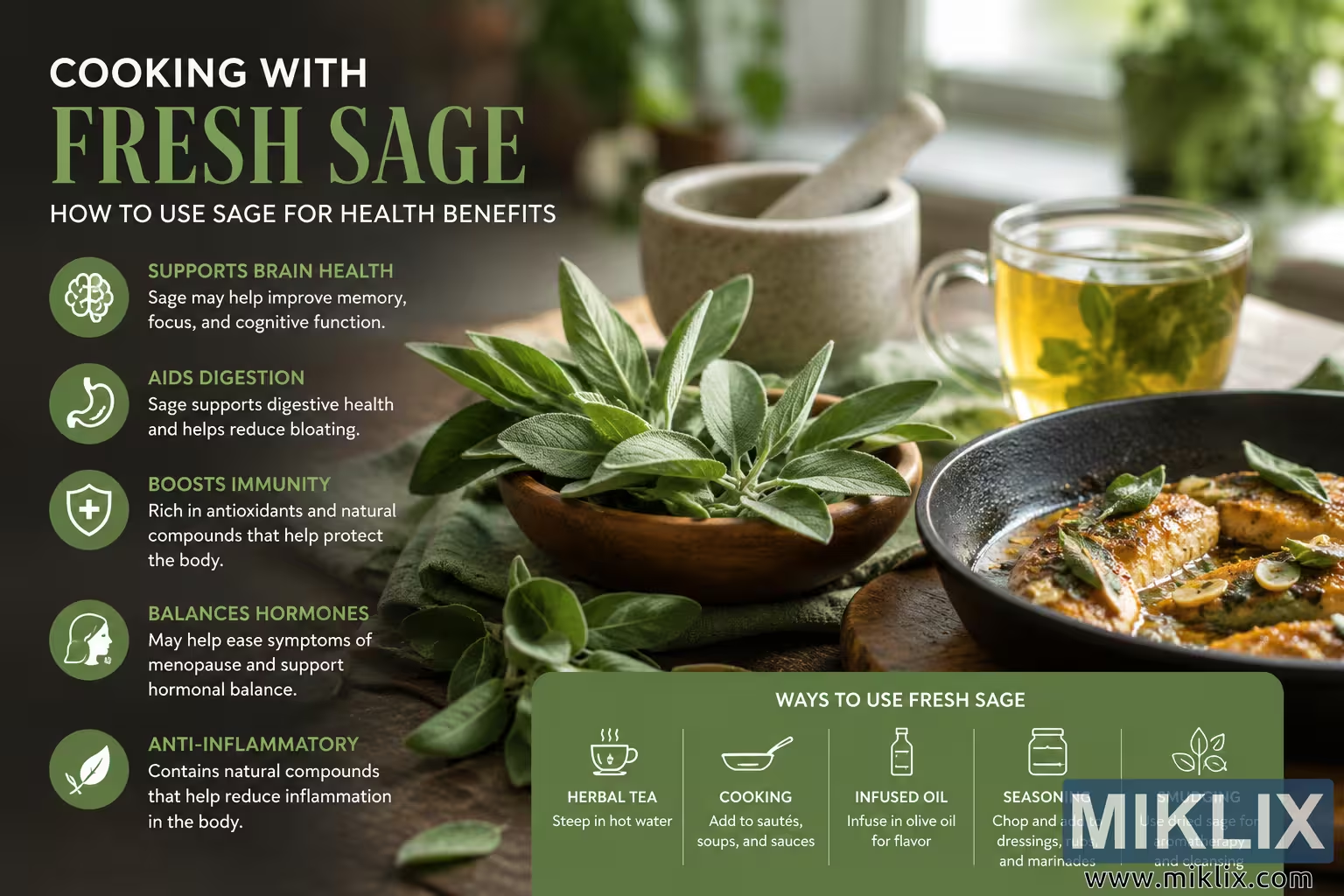
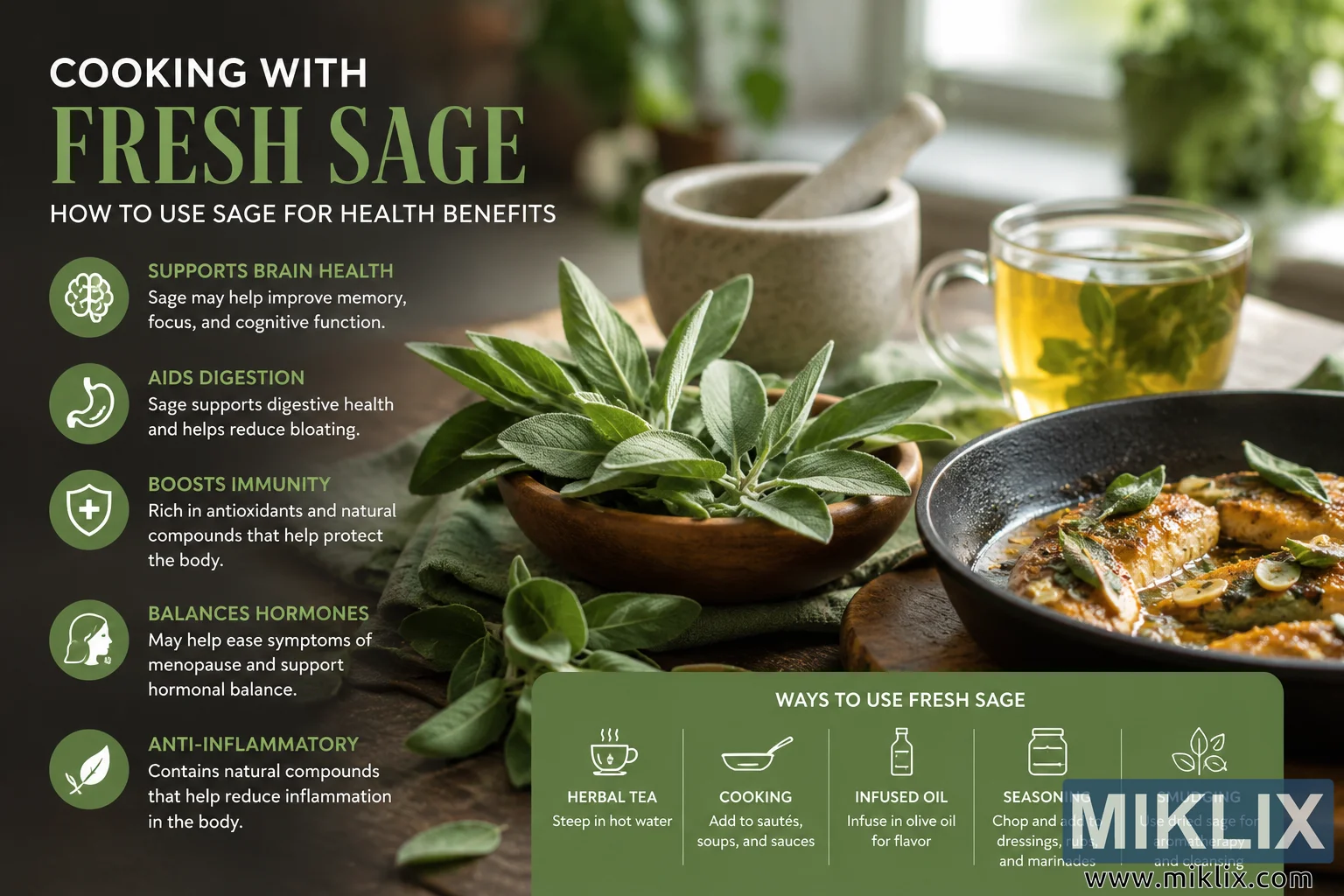
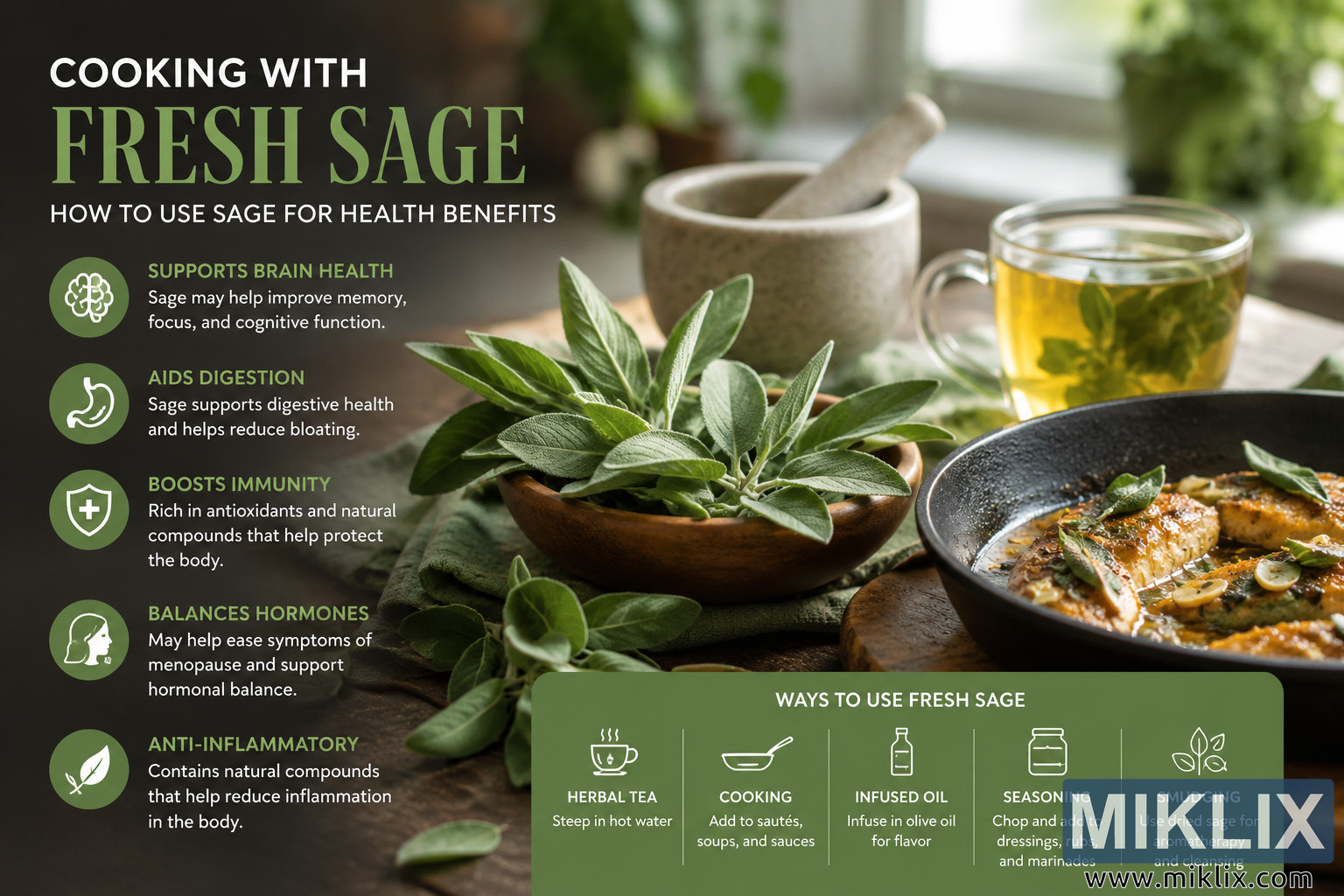
This high-resolution landscape-format image presents a cozy and educational culinary scene centered around the use of fresh sage for cooking and natural wellness. The composition combines the atmosphere of a rustic home kitchen with a clean infographic-style layout designed to teach viewers about the health-supporting properties of sage while visually inspiring its use in everyday meals and herbal preparations. The lighting is soft, warm, and natural, giving the entire image an inviting appearance that feels calm, wholesome, and organic. Sunlight filters gently through an out-of-focus kitchen window in the background, creating a subtle glow that highlights the rich textures of the herbs, wood, ceramic surfaces, and prepared food.
The left side of the image features large typography in elegant green and white lettering that reads “Cooking with Fresh Sage” followed by the subtitle “How to Use Sage for Health Benefits.” Beneath the title is a vertically arranged infographic section that explains several wellness-related benefits commonly associated with sage. Each health topic is paired with a clean circular icon rendered in a modern minimalist style using muted green tones that complement the herbal theme of the image.
The first section discusses brain health and explains that sage may help support memory, focus, and cognitive function. The icon beside this text resembles a stylized brain. The second section focuses on digestion and describes how sage may support digestive comfort and help reduce bloating. This section is accompanied by a simple stomach-shaped icon. The third section highlights immunity support and references the antioxidant compounds naturally found in sage. A shield icon reinforces the idea of protection and wellness. The fourth informational point references hormone balance and explains that sage has traditionally been associated with support for menopausal comfort and overall hormonal wellness. This area includes a profile silhouette icon. The fifth and final health-related point emphasizes anti-inflammatory properties and notes that sage contains natural compounds associated with reducing inflammation in the body. A leaf icon visually supports the natural herbal message.
On the right side of the composition, the viewer sees an inviting food and kitchen arrangement showcasing fresh sage in practical culinary use. At the center foreground is a wooden bowl overflowing with vibrant green sage leaves. The leaves appear soft and velvety with visible texture and realistic botanical detail. Some loose sage sprigs are scattered naturally across the rustic wooden table surface, reinforcing the freshness of the ingredients.
Behind the bowl is a stone mortar and pestle, suggesting the preparation of herbs, spice blends, or infused remedies. Nearby sits a clear glass mug filled with golden herbal tea steeped with sage leaves. The tea catches the warm sunlight and creates a glowing amber effect that contributes to the soothing atmosphere of the image.
In the lower-right portion of the scene is a dark skillet containing a savory cooked dish garnished with fresh sage leaves and herbs. The food appears lightly seared and seasoned, illustrating how sage can be incorporated into cooking for both flavor and wellness. The skillet rests on a wooden serving board that complements the rustic kitchen aesthetic.
Along the bottom of the image is an additional infographic banner titled “Ways to Use Fresh Sage.” This section contains several evenly spaced icons and short descriptions illustrating practical applications for sage. The first suggests using sage as an herbal tea by steeping leaves in hot water. The second recommends adding sage to sautés, soups, and sauces during cooking. The third illustrates infused oils, showing how sage can flavor oils naturally. The fourth recommends using chopped sage in seasonings, dressings, rubs, and marinades. The fifth references traditional aromatic use of dried sage for cleansing and wellness rituals.
The overall color palette consists primarily of earthy greens, warm browns, muted golds, and soft natural neutrals. The design intentionally avoids commercial branding and instead focuses on timeless organic styling. The image blends food photography, wellness education, and lifestyle design into a cohesive visual presentation suitable for blogs, recipe websites, nutrition articles, herbal wellness guides, cooking tutorials, or educational social media content related to herbs and natural living.
The image is related to: A Complete Guide to the Health Benefits of Sage