
Image: Different Cantaloupe Varieties Displayed with Size and Color Variations
Published: May 14, 2026 at 4:35:57 PM UTC
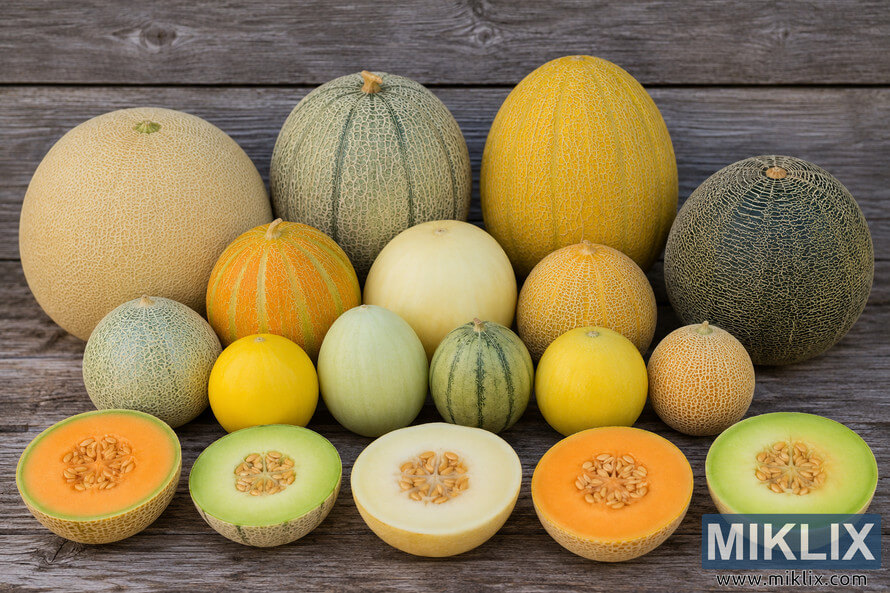
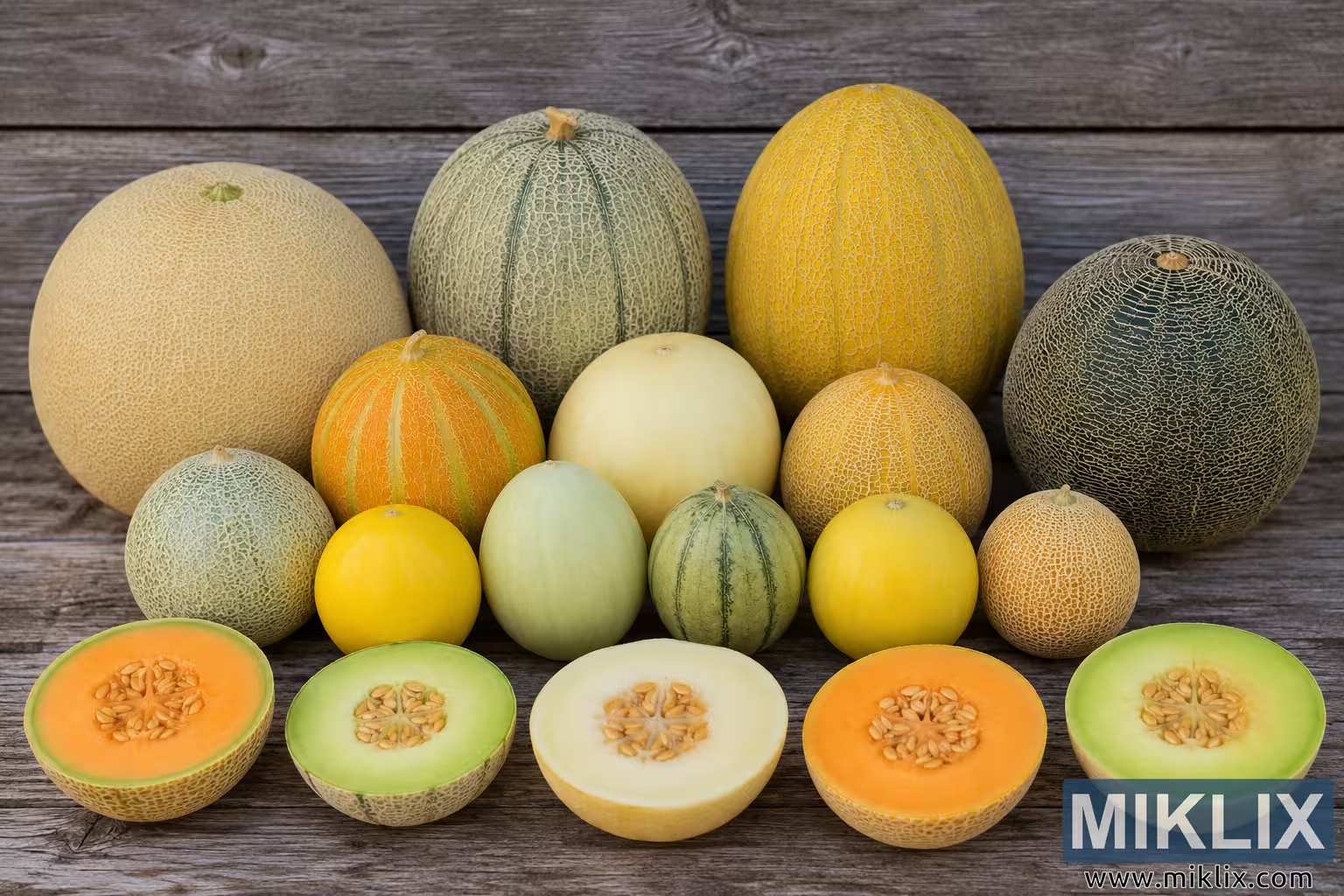
Explore a vibrant collection of cantaloupe and melon varieties displayed in a rustic still-life arrangement. This high-resolution landscape image highlights differences in size, rind texture, and flesh color, including orange, green, and pale varieties.
Available versions of this image
The image files available for download below are less compressed and higher resolution - and as a result of that, higher quality - than the images embedded in articles and pages on this website, which are more optimized for file size in order to reduce bandwidth consumption.
Regular size (1,536 x 1,024)
Large size (3,072 x 2,048)
Very large size (4,608 x 3,072)
Extra large size (6,144 x 4,096)
Comically large size (1,048,576 x 699,051)
- Still uploading... ;-)
Image description
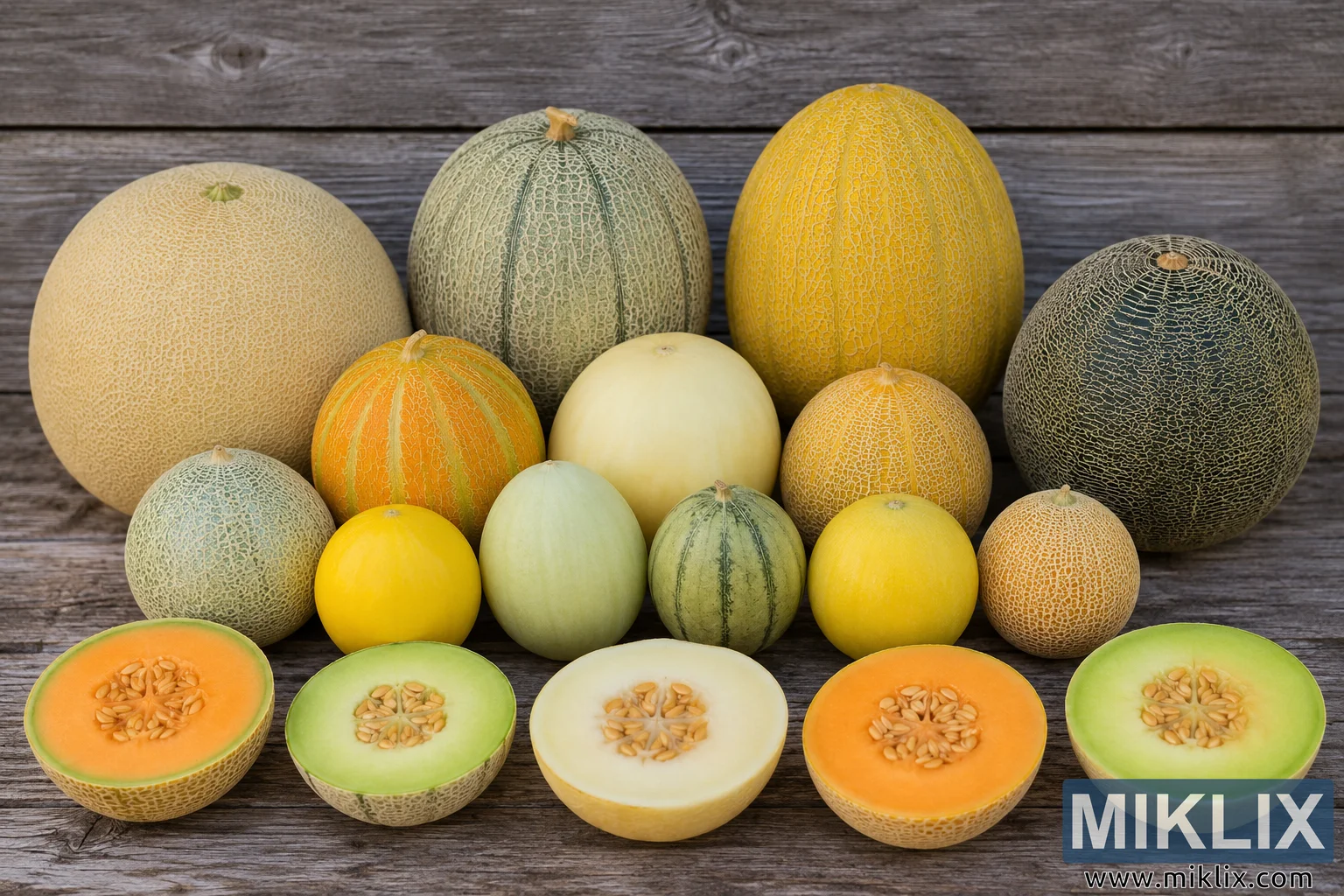
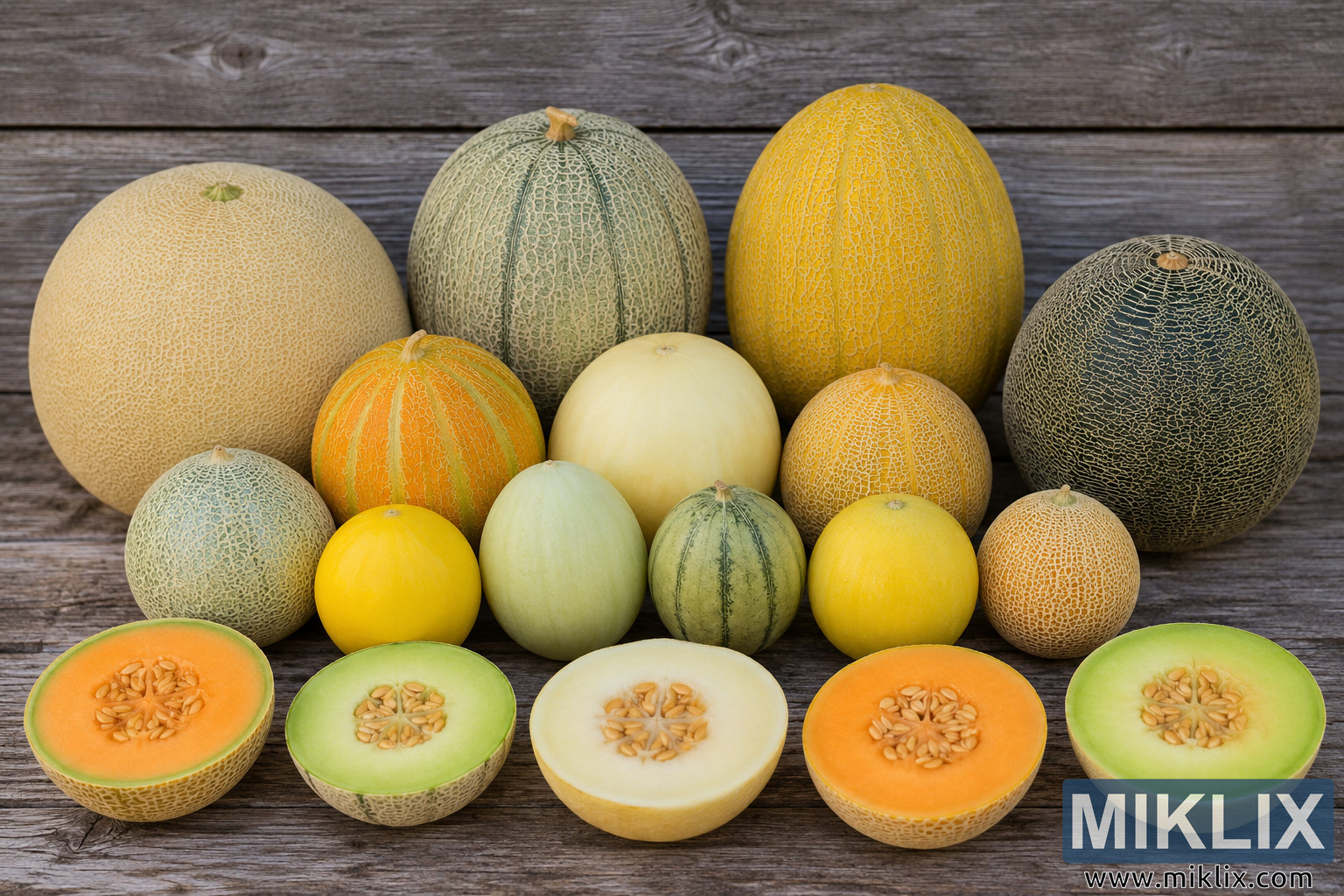
This high-resolution landscape photograph presents an abundant display of cantaloupe and melon varieties carefully arranged on a weathered wooden table against a rustic wooden plank background. The composition showcases a broad range of melon sizes, shapes, rind textures, and color variations, creating an informative and visually balanced still-life scene inspired by natural produce photography. Warm natural lighting evenly illuminates the fruits, emphasizing their intricate surface patterns and subtle tonal differences while preserving a realistic and organic appearance.
The back row features several large melons in varying shades of cream, green, yellow, and deep olive. Some have heavily netted rinds typical of cantaloupes, while others display smoother skins or pronounced striped patterns. Their shapes range from nearly spherical to elongated oval forms, illustrating the diversity found among melon cultivars. The detailed rind textures are especially prominent, with fine web-like patterns and ridges creating a tactile visual effect across the surfaces.
In the middle section of the arrangement, medium-sized melons introduce additional diversity in color and structure. Pale ivory melons sit beside bright yellow varieties and green-striped fruits, while a vivid orange-striped melon adds contrast near the center of the composition. The fruits are positioned closely together to emphasize differences in scale and proportion while maintaining a cohesive display. The arrangement creates depth and symmetry without appearing overly staged, preserving the natural aesthetic of a farm market or agricultural produce showcase.
Along the front row, several halved melons reveal their interior flesh and seed cavities. The exposed fruit interiors display a striking range of colors, including rich orange flesh, pale cream tones, and light green varieties. Each cut melon contains a central cluster of seeds surrounded by moist, glossy flesh that reflects the soft natural light. The sliced surfaces introduce additional visual texture and provide insight into the internal differences between melon varieties, complementing the diversity already visible in the outer rinds.
The rustic wooden tabletop and aged plank backdrop contribute warmth and authenticity to the image while allowing the colorful melons to remain the focal point. The natural grain patterns and weathered textures of the wood contrast effectively with the smooth and netted melon surfaces. Overall, the photograph functions both as an attractive still-life composition and as a visual comparison of cantaloupe and melon varieties, highlighting agricultural diversity through differences in color, size, texture, and interior appearance.
The image is related to: A Guide to the Health Benefits of Cantaloupe