
Image: Celery Nutritional Content Breakdown Infographic
Published: May 17, 2026 at 7:35:28 PM UTC
Explore the nutritional benefits of celery with this detailed infographic featuring calories, vitamins, minerals, hydration levels, fiber content, and antioxidant properties in an easy-to-read landscape design.
Available versions of this image
The image files available for download below are less compressed and higher resolution - and as a result of that, higher quality - than the images embedded in articles and pages on this website, which are more optimized for file size in order to reduce bandwidth consumption.
Regular size (1,536 x 1,024)
Large size (3,072 x 2,048)
Very large size (4,608 x 3,072)
Extra large size (6,144 x 4,096)
Comically large size (1,048,576 x 699,051)
- Still uploading... ;-)
Image description
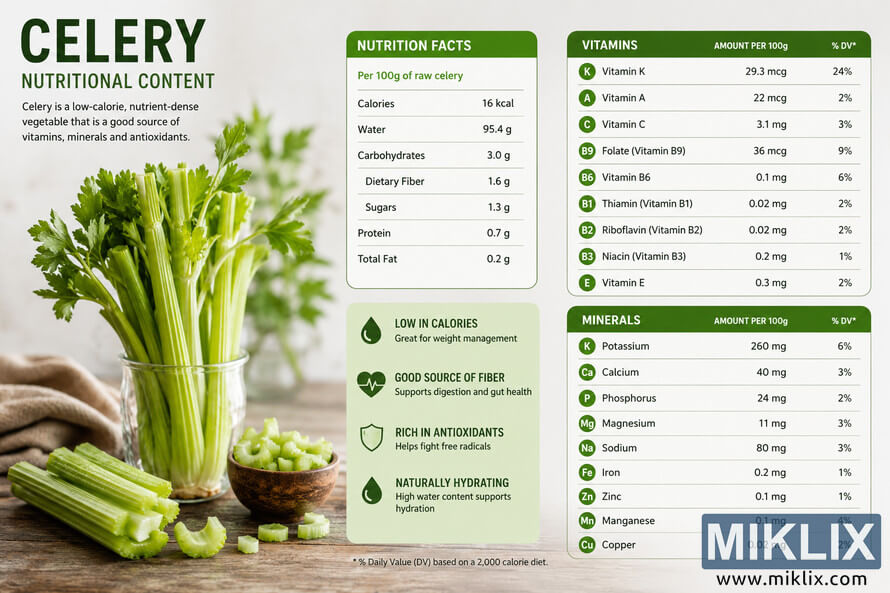
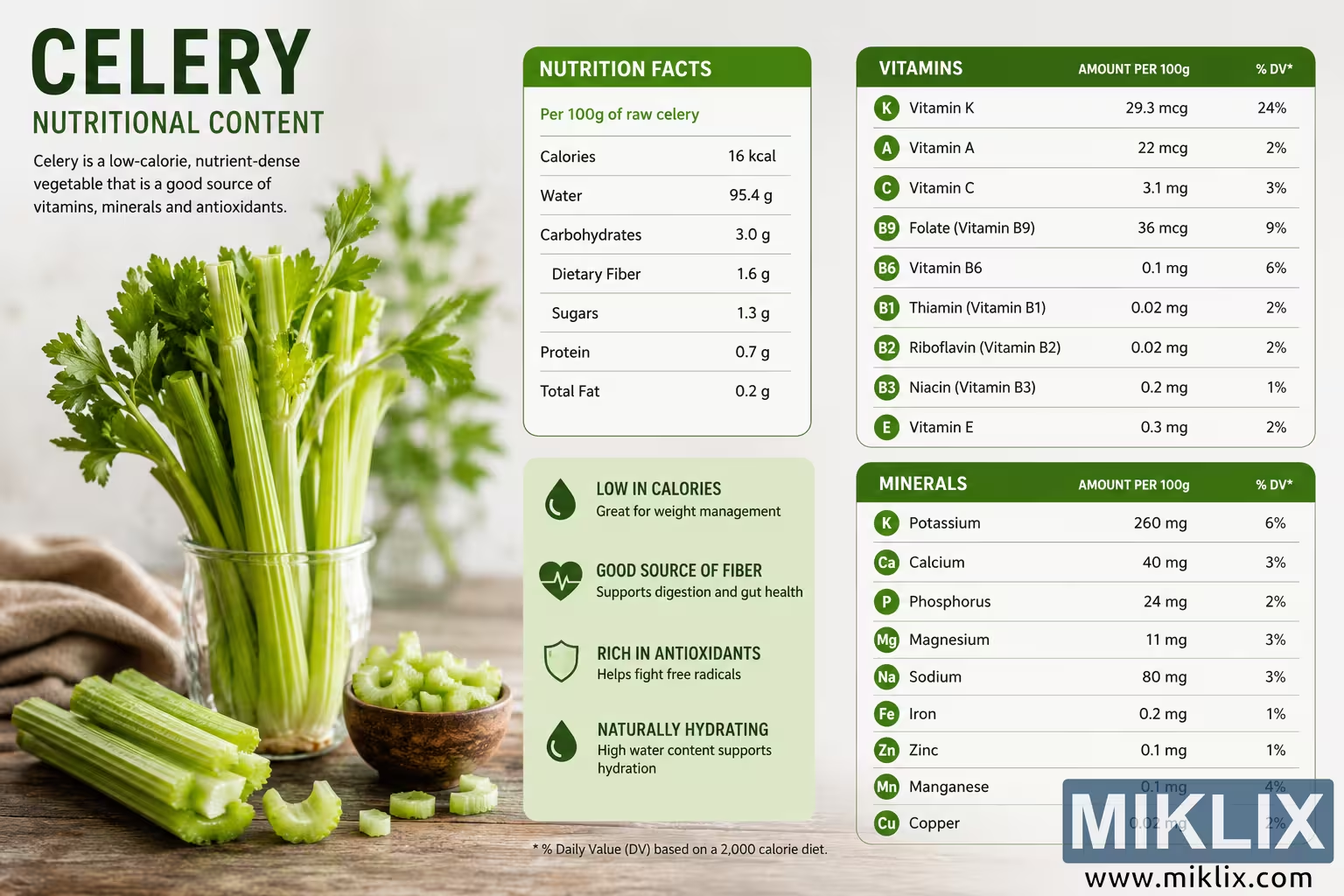
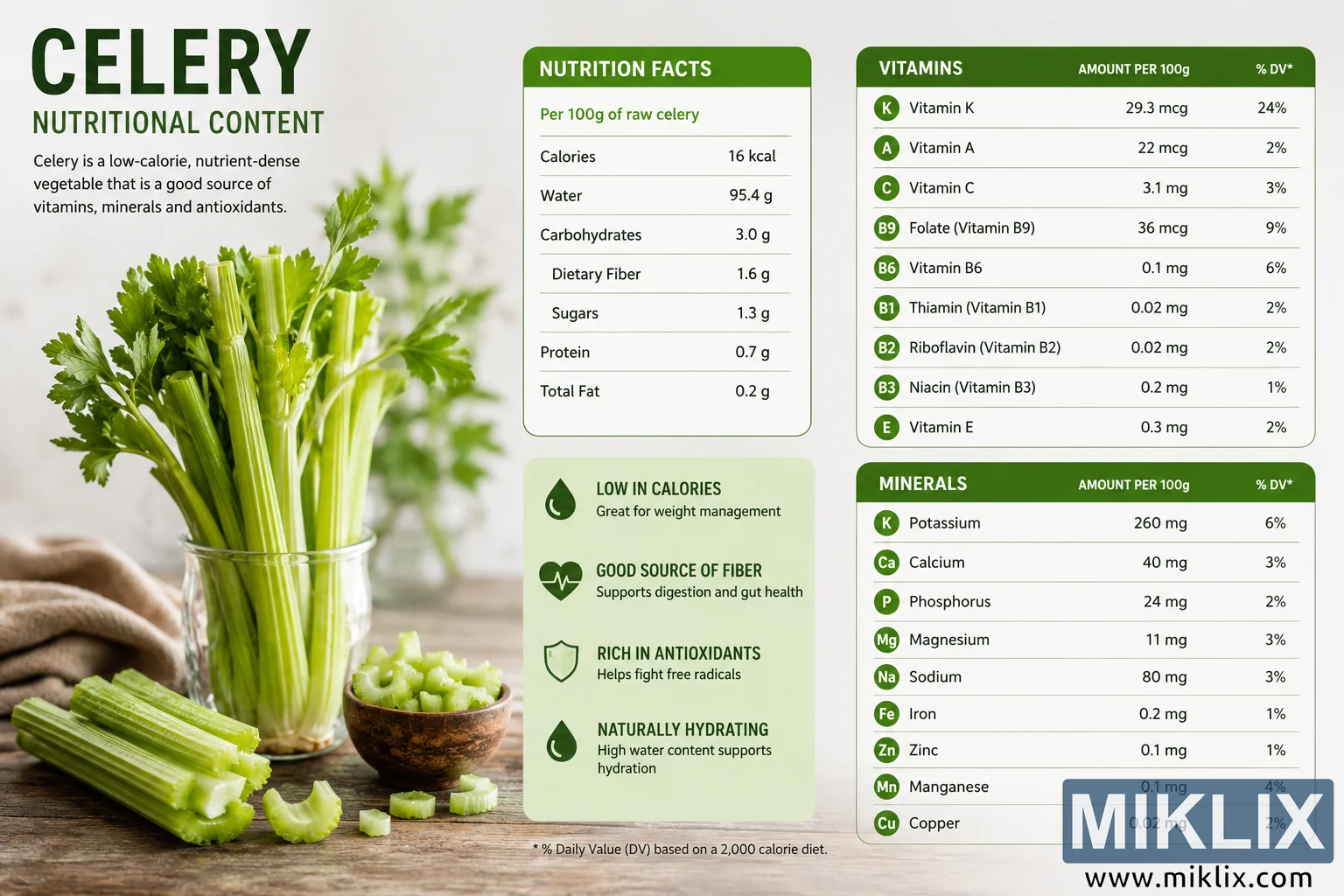
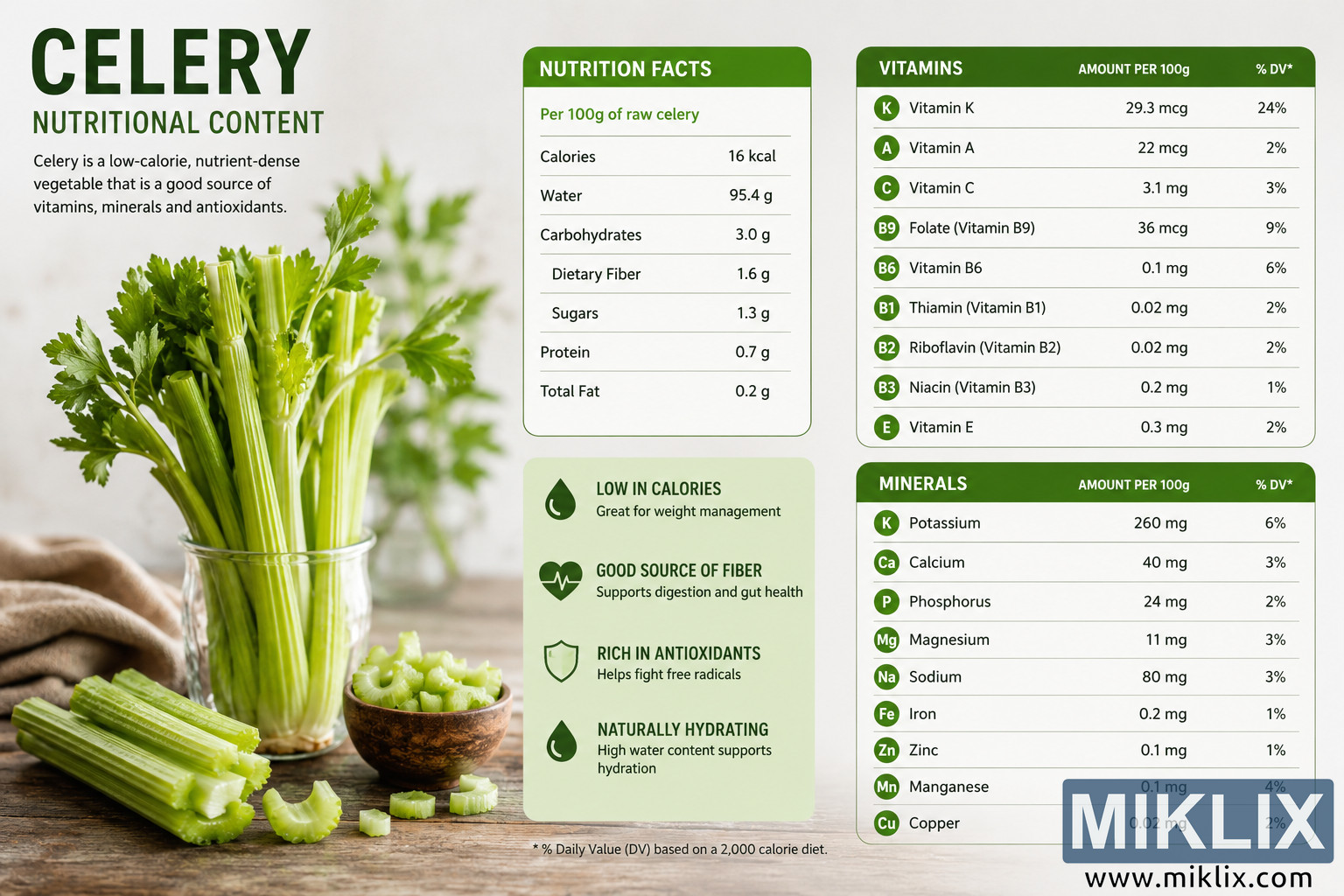
This landscape-oriented infographic presents a comprehensive nutritional breakdown of celery using a clean green-and-white visual style inspired by modern health and wellness publications. The composition is divided into two primary sections. On the left side, a high-quality food photograph showcases several fresh celery stalks standing upright inside a clear glass jar placed on a rustic wooden surface. Additional chopped celery pieces and leafy celery tops are arranged naturally around the jar, creating a fresh and organic kitchen aesthetic. Soft natural lighting highlights the crisp texture and vibrant green color of the celery while a softly blurred background enhances depth and realism.
Above the photograph appears a large bold heading reading “CELERY” followed by a secondary title labeled “NUTRITIONAL CONTENT.” Beneath the title, a short introductory paragraph explains that celery is a low-calorie, nutrient-dense vegetable and a valuable source of vitamins, minerals, and antioxidants.
The right side of the infographic is organized into multiple neatly aligned information panels with rounded corners and green header bars. The first panel is titled “Nutrition Facts” and lists values per 100 grams of raw celery. The data includes calories, water content, carbohydrates, dietary fiber, sugars, protein, and total fat. Typography is clean and highly legible, using dark gray text against a bright white background.
Adjacent to this section is a detailed “Vitamins” table displaying nutrient amounts and daily value percentages. The vitamins shown include Vitamin K, Vitamin A, Vitamin C, Folate, Vitamin B6, Thiamin, Riboflavin, Niacin, and Vitamin E. Each vitamin is paired with a small circular green icon containing an abbreviated letter identifier.
Below the nutrition facts section is a benefits panel using minimalist health-themed icons and concise explanatory text. The benefits highlighted include low calorie content for weight management, dietary fiber for digestive support, antioxidants for fighting free radicals, and natural hydration due to high water content.
The lower-right panel focuses on minerals and micronutrients. It lists potassium, calcium, phosphorus, magnesium, sodium, iron, zinc, manganese, and copper along with their approximate quantities and percentage daily values. Circular green icons accompany each mineral entry for visual consistency.
At the bottom of the infographic, a small disclaimer notes that percentage daily values are based on a standard 2,000-calorie diet. The overall visual presentation combines photography, tabular nutrition data, and iconography to create an educational and visually appealing nutritional reference about celery.
The image is related to: A Guide to the Health Benefits of Celery