
Image: Complete Anatomy and Health Benefits of the Dandelion Plant
Published: May 22, 2026 at 6:02:54 PM UTC
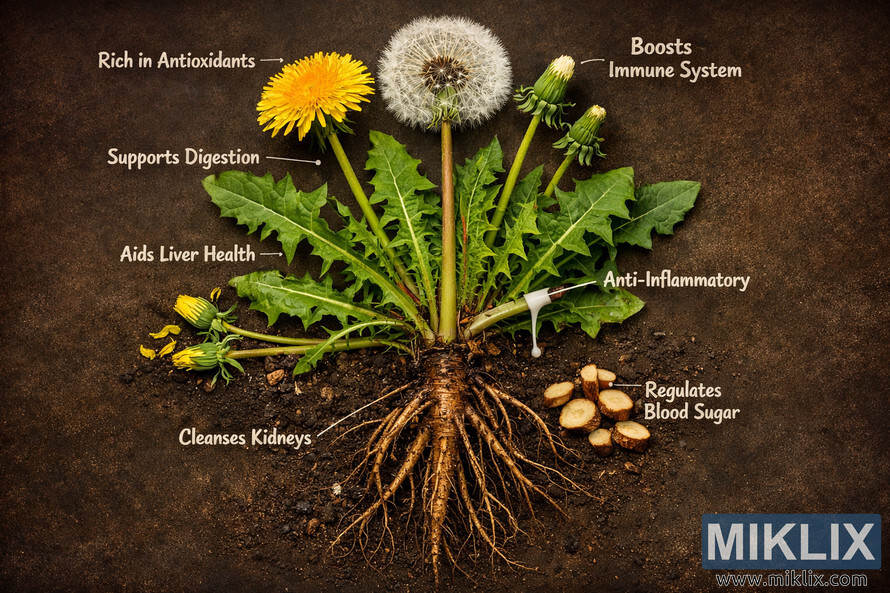
Explore a detailed visual of the dandelion plant from root to flower, highlighting its natural health benefits including antioxidant support, liver cleansing, and digestive improvement.
Available versions of this image
The image files available for download below are less compressed and higher resolution - and as a result of that, higher quality - than the images embedded in articles and pages on this website, which are more optimized for file size in order to reduce bandwidth consumption.
Regular size (1,536 x 1,024)
Large size (3,072 x 2,048)
Very large size (4,608 x 3,072)
Extra large size (6,144 x 4,096)
Comically large size (1,048,576 x 699,051)
- Still uploading... ;-)
Image description
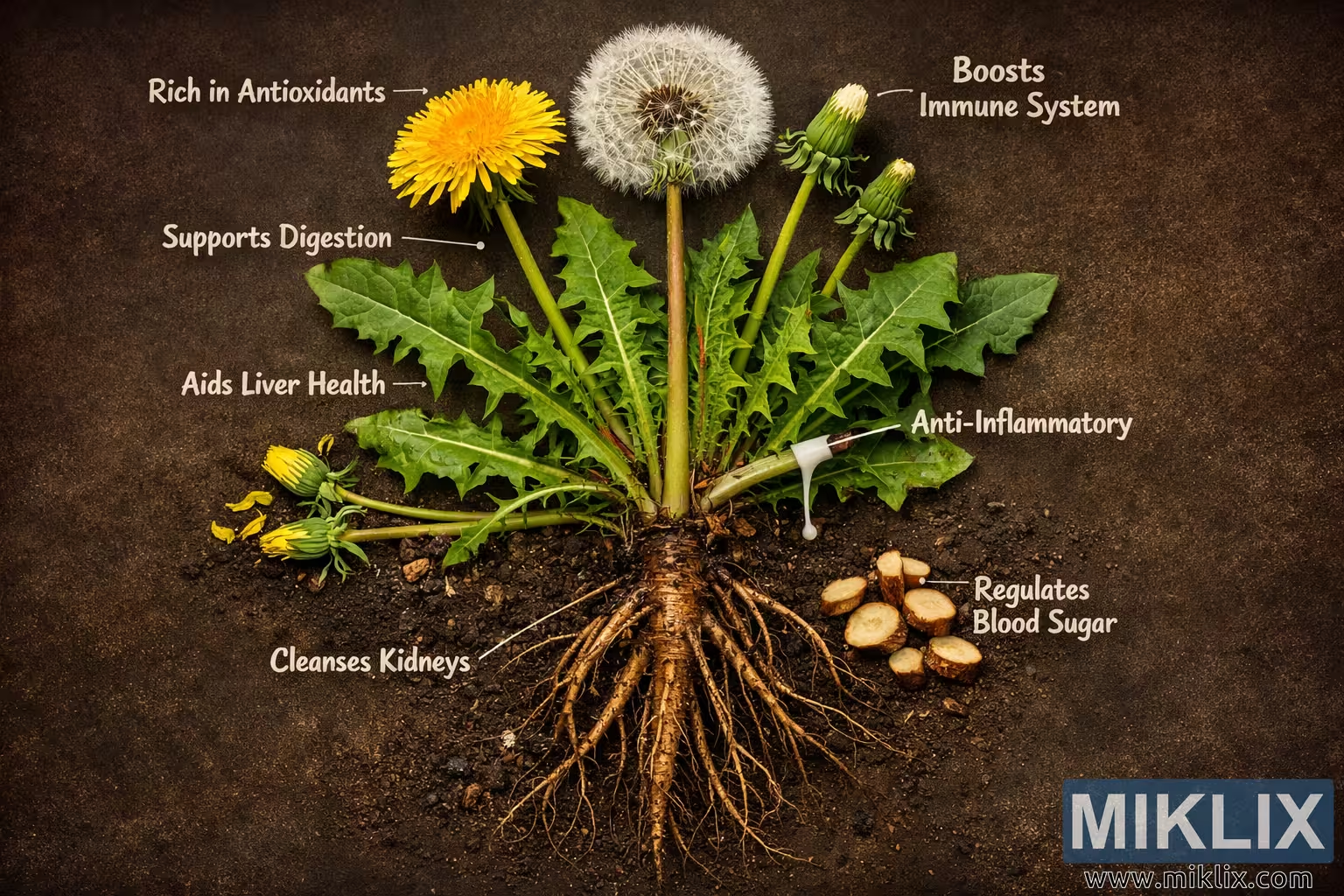
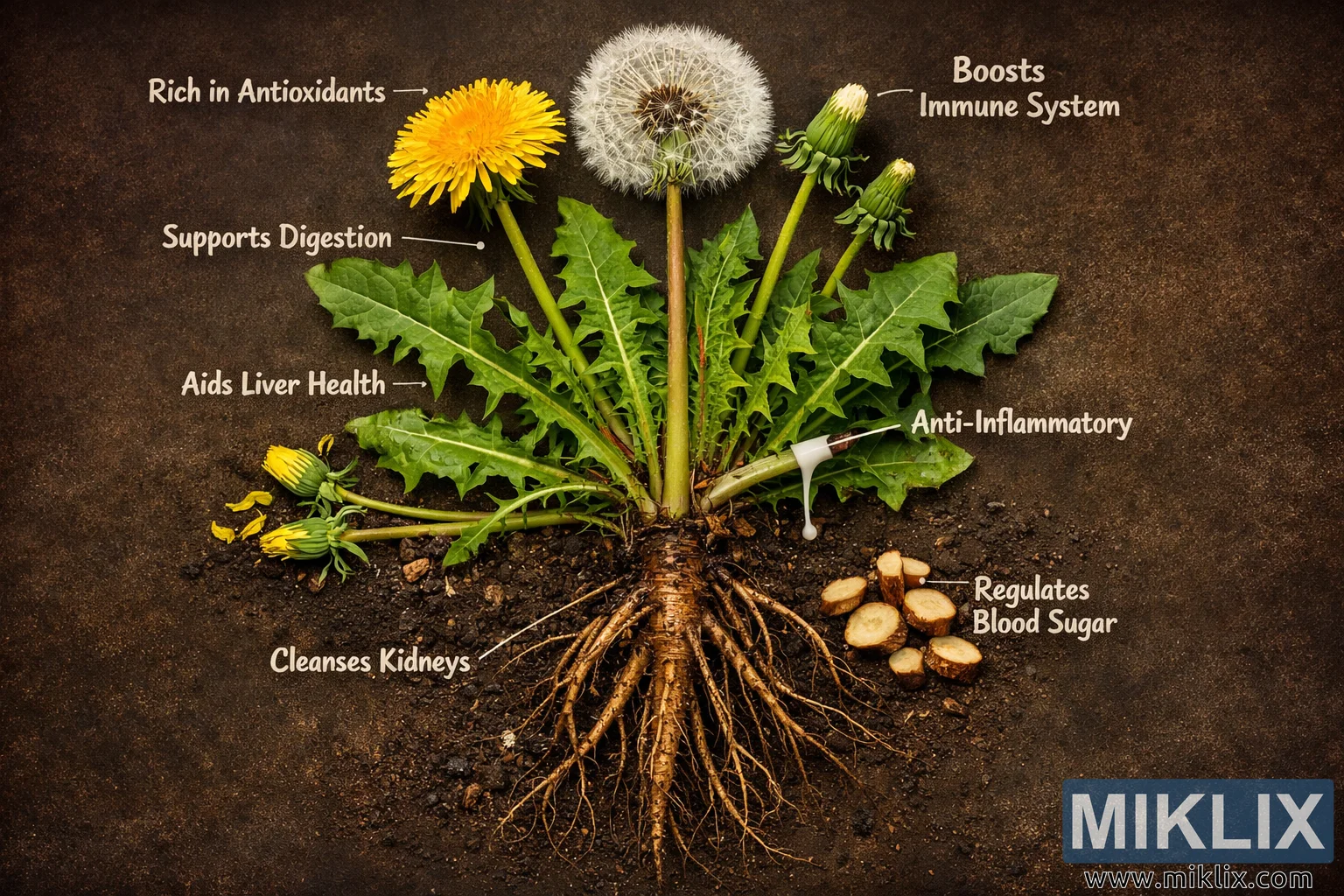
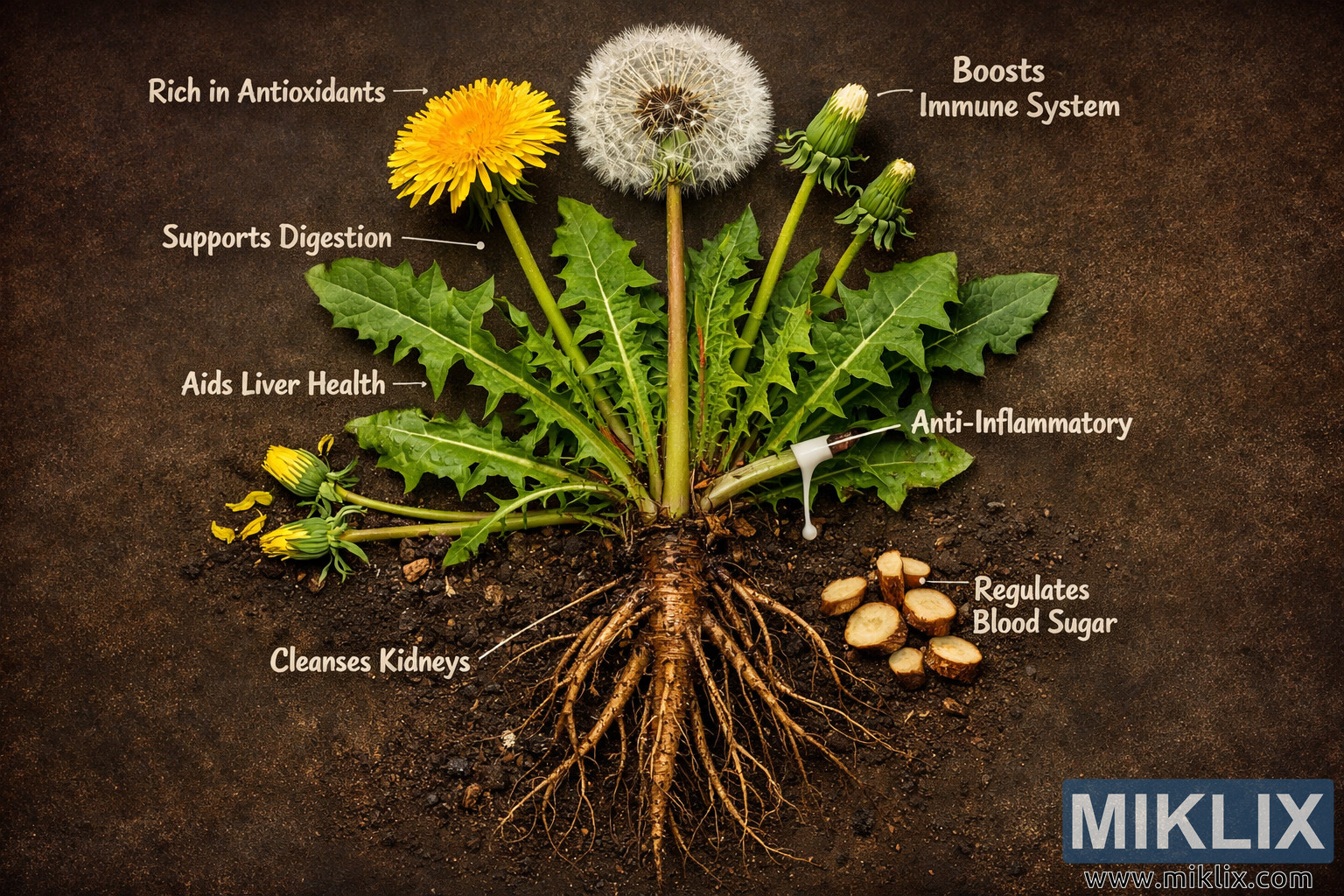
This high-resolution landscape image presents a scientifically accurate and visually engaging depiction of the entire dandelion plant (Taraxacum officinale), from its deep taproot to its bright yellow flower and delicate white seed head. The composition is centered on the plant itself, which emerges from rich, dark soil that contrasts beautifully with the vibrant greens and yellows of the dandelion’s foliage and blossoms. The image is designed to educate viewers about the plant’s anatomy and its numerous health benefits, combining botanical precision with aesthetic appeal.
At the base of the image, the dandelion’s root system is prominently displayed. The thick, tapering taproot extends downward into the soil, branching into smaller roots that suggest the plant’s resilience and ability to draw nutrients from deep underground. The roots are labeled with health benefits such as “Cleanses Kidneys” and “Regulates Blood Sugar,” emphasizing the traditional medicinal uses of dandelion root in detoxification and metabolic regulation. To the right of the main root, sliced root pieces are arranged neatly, illustrating how the plant can be processed for teas or supplements.
Moving upward, the stem is shown in detail, with milky white sap seeping from a small incision. This sap is labeled “Anti-Inflammatory,” referencing the plant’s natural latex and its potential soothing properties. The stem connects to a rosette of jagged green leaves that radiate outward. Each leaf is sharply defined, with serrated edges and a rich green hue that conveys vitality. The leaves are labeled “Supports Digestion,” highlighting their role in stimulating appetite and aiding digestive health. To the left, a cluster of unopened buds and dried petals is labeled “Aids Liver Health,” symbolizing the plant’s detoxifying effects and its use in herbal medicine to support liver function.
Above the leaves, the image transitions to the flowering portion of the plant. On the left side, a fully bloomed yellow dandelion flower stands tall, its petals arranged in a perfect radial pattern. This flower is labeled “Rich in Antioxidants,” underscoring its concentration of beneficial compounds that help combat oxidative stress. To the right of the yellow flower, a mature white seed head is depicted in exquisite detail, each tiny seed attached to a delicate parachute-like structure. This seed head is labeled “Supports Detoxification,” symbolizing renewal and the plant’s cleansing properties. Further to the right, unopened buds are labeled “Boosts Immune System,” representing the plant’s role in strengthening overall health.
The background of the image is a deep, earthy brown, providing a natural contrast that enhances the plant’s vivid colors. The lighting is soft yet directional, illuminating the plant from above and slightly to the side, which creates gentle shadows and emphasizes texture. The annotations are rendered in an off-white font, with fine arrows pointing precisely to each corresponding part of the plant. The text labels are clear and educational, making the image suitable for use in botanical guides, health publications, or educational posters.
Overall, the image conveys a sense of harmony between nature and wellness. It captures the dandelion not merely as a common weed but as a symbol of vitality and holistic health. The careful arrangement of the plant’s components—from root to flower—illustrates the interconnectedness of its biological structure and therapeutic properties. Each labeled benefit corresponds to a specific part of the plant, reinforcing the idea that every element of the dandelion contributes to human well-being. The composition is balanced, informative, and aesthetically pleasing, making it an ideal visual representation of the dandelion’s complete anatomy and its diverse health benefits.
The image is related to: A Guide to the Health Benefits of Dandelions