
Image: Various Ways to Use Marjoram in Cooking – Rustic Culinary Herb Infographic
Published: July 5, 2026 at 5:32:29 PM UTC
Explore creative ways to use marjoram in cooking with this rustic food infographic featuring meats, soups, roasted vegetables, dressings, marinades, sauces, cheeses, and fresh herbs in a warm farmhouse kitchen style.
Available versions of this image
The image files available for download below are less compressed and higher resolution - and as a result of that, higher quality - than the images embedded in articles and pages on this website, which are more optimized for file size in order to reduce bandwidth consumption.
Regular size (1,536 x 1,024)
Large size (3,072 x 2,048)
Very large size (4,608 x 3,072)
Extra large size (6,144 x 4,096)
Comically large size (1,048,576 x 699,051)
- Still uploading... ;-)
Image description
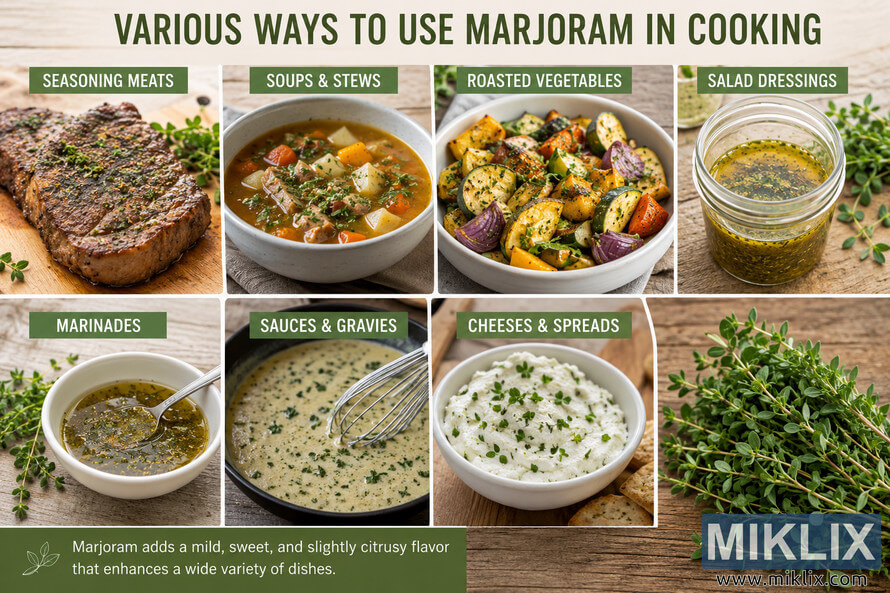
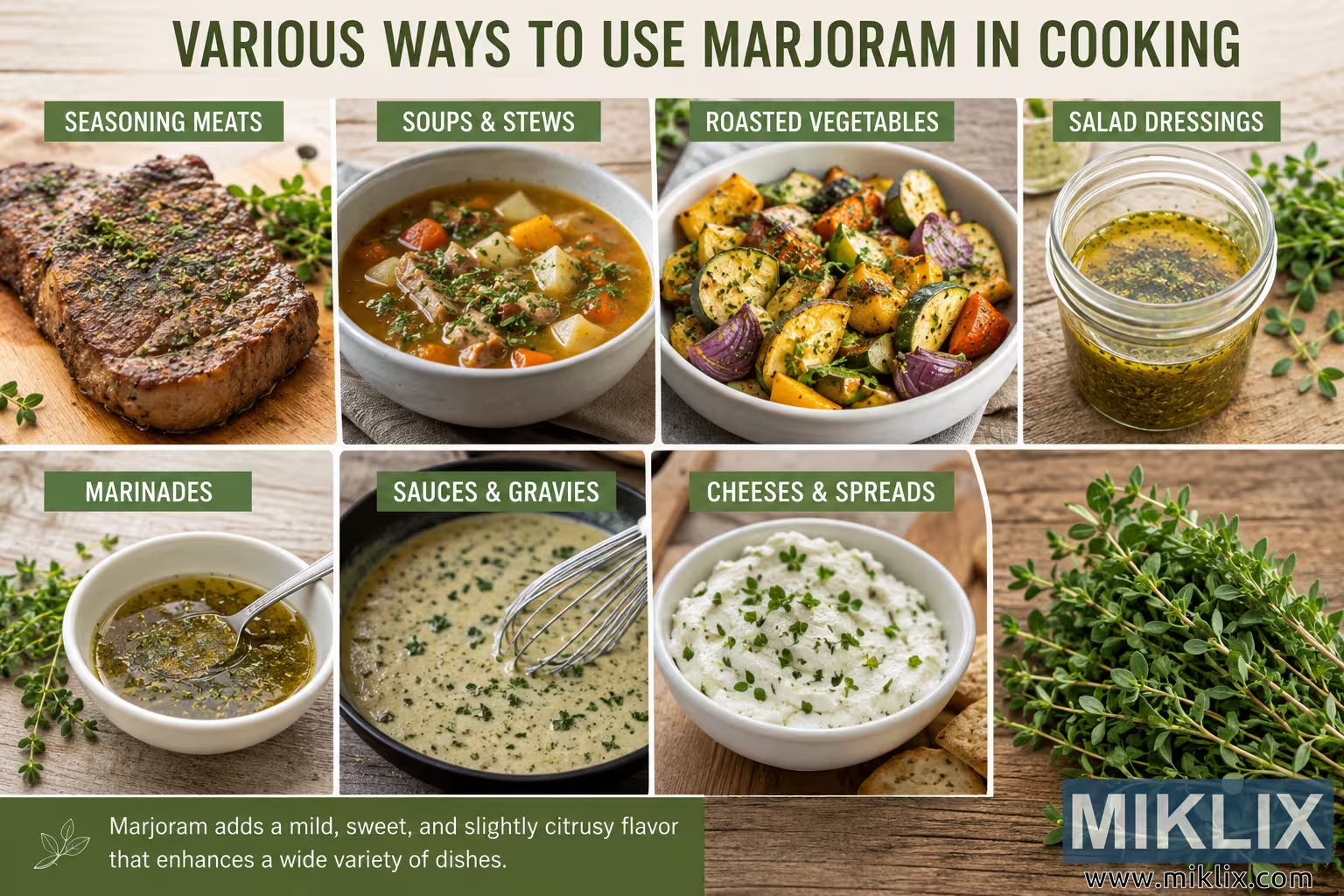
This high-resolution landscape-oriented culinary infographic presents a visually rich overview of the many ways marjoram can be used in cooking. The composition is arranged in a clean grid layout against a rustic wooden tabletop background, creating a warm farmhouse kitchen atmosphere. The overall design combines food photography with educational infographic styling, using earthy tones, fresh green herbs, and natural textures to communicate freshness, comfort, and versatility in home cooking.
At the very top of the image, a large bold headline reads “Various Ways to Use Marjoram in Cooking” in uppercase lettering. The typography is dark green and highly legible, matching the natural herbal theme of the image. The title spans nearly the entire width of the composition and immediately establishes the subject matter. Beneath the title, several rectangular photographic panels are arranged in rows, each dedicated to a different culinary application of marjoram.
The first panel on the upper left is labeled “Seasoning Meats.” It features a close-up image of a grilled steak resting on a wooden cutting board. The meat is richly browned with visible grill marks and is sprinkled with finely chopped herbs resembling marjoram. Small green herb sprigs are placed around the steak for decoration, emphasizing freshness and savory flavor enhancement.
Next to it is a panel labeled “Soups & Stews.” This section displays a hearty bowl of soup containing diced vegetables such as carrots and potatoes in a warm broth. Green herb flakes are scattered across the surface of the soup, visually representing marjoram being used as a finishing herb and aromatic seasoning ingredient.
The third panel in the top row is titled “Roasted Vegetables.” A bowl filled with colorful roasted vegetables such as zucchini, onions, and yellow squash is shown in close-up. The vegetables are caramelized and lightly coated with herbs and seasoning. The marjoram appears integrated into the roasting blend, suggesting its compatibility with oven-roasted dishes and Mediterranean-style vegetable preparations.
The fourth panel on the top row is labeled “Salad Dressings.” It shows a small glass jar filled with a golden vinaigrette dressing flecked with dried herbs and spices. Fresh marjoram sprigs are placed beside the jar on the wooden surface. The visual presentation highlights marjoram’s ability to contribute herbal aroma and complexity to homemade dressings and vinaigrettes.
The lower row begins with a panel labeled “Marinades.” This section displays a shallow bowl of herb-infused oil with visible seasonings floating in the liquid. A spoon rests inside the marinade, and fresh herb sprigs are positioned nearby. The image conveys marjoram’s role in flavoring oils, meat marinades, and preparation sauces.
The center lower panel is titled “Sauces & Gravies.” It features a creamy sauce in a skillet or pan with a whisk partially submerged in the mixture. Green herbs are dispersed throughout the sauce, illustrating marjoram being incorporated into warm savory gravies and creamy sauce recipes.
Another lower panel is labeled “Cheeses & Spreads.” It depicts a bowl of creamy white cheese spread garnished with chopped herbs. Crackers rest beside the bowl, reinforcing the idea of marjoram as a flavorful addition to dips, soft cheeses, and appetizer spreads.
On the far right side of the infographic is a large decorative image of fresh marjoram sprigs arranged on the wooden surface. The herb leaves appear vibrant green with delicate stems, serving as both a visual anchor and a botanical reference for viewers unfamiliar with marjoram’s appearance.
At the bottom of the image, a green gradient text banner contains an additional descriptive sentence explaining marjoram’s flavor profile. The text notes that marjoram adds a mild, sweet, and slightly citrusy flavor that enhances a wide variety of dishes. A small leaf icon appears beside the text, reinforcing the natural culinary herb theme.
The image uses a cohesive palette of earthy browns, soft greens, creamy neutrals, and warm food tones. Lighting throughout the infographic is bright yet natural, with soft highlights that mimic daylight food photography. The overall visual style blends educational cooking content with polished editorial food imagery, making the composition suitable for recipe blogs, culinary websites, herb guides, kitchen decor prints, cooking tutorials, and social media content focused on herbs and home cooking.
No commercial brands, logos, or trademarked packaging appear anywhere in the image. The focus remains entirely on homemade food preparation, natural ingredients, and the versatility of marjoram as a culinary herb.
The image is related to: A Guide to the Health Benefits of Marjoram