
Image: Heart Health Benefits of Artichokes – Cardiovascular System Illustration
Published: July 19, 2026 at 1:00:25 PM UTC
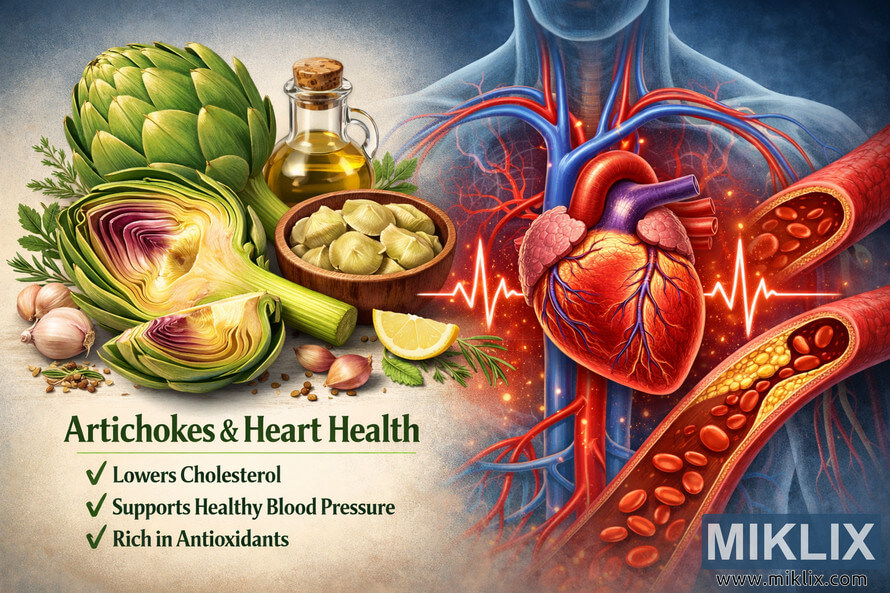
Detailed heart health illustration featuring artichokes and the human cardiovascular system. The left side shows fresh artichokes, garlic, seeds, lemon wedges, and herbs with text highlighting benefits like lowering cholesterol, supporting healthy blood pressure, and providing antioxidants. The right side displays an anatomically accurate heart, glowing arteries and veins, an ECG line, and cross-sections of blood vessels comparing plaque buildup with healthy blood flow, visually connecting nutrition to cardiovascular wellness.
Available versions of this image
The image files available for download below are less compressed and higher resolution - and as a result of that, higher quality - than the images embedded in articles and pages on this website, which are more optimized for file size in order to reduce bandwidth consumption.
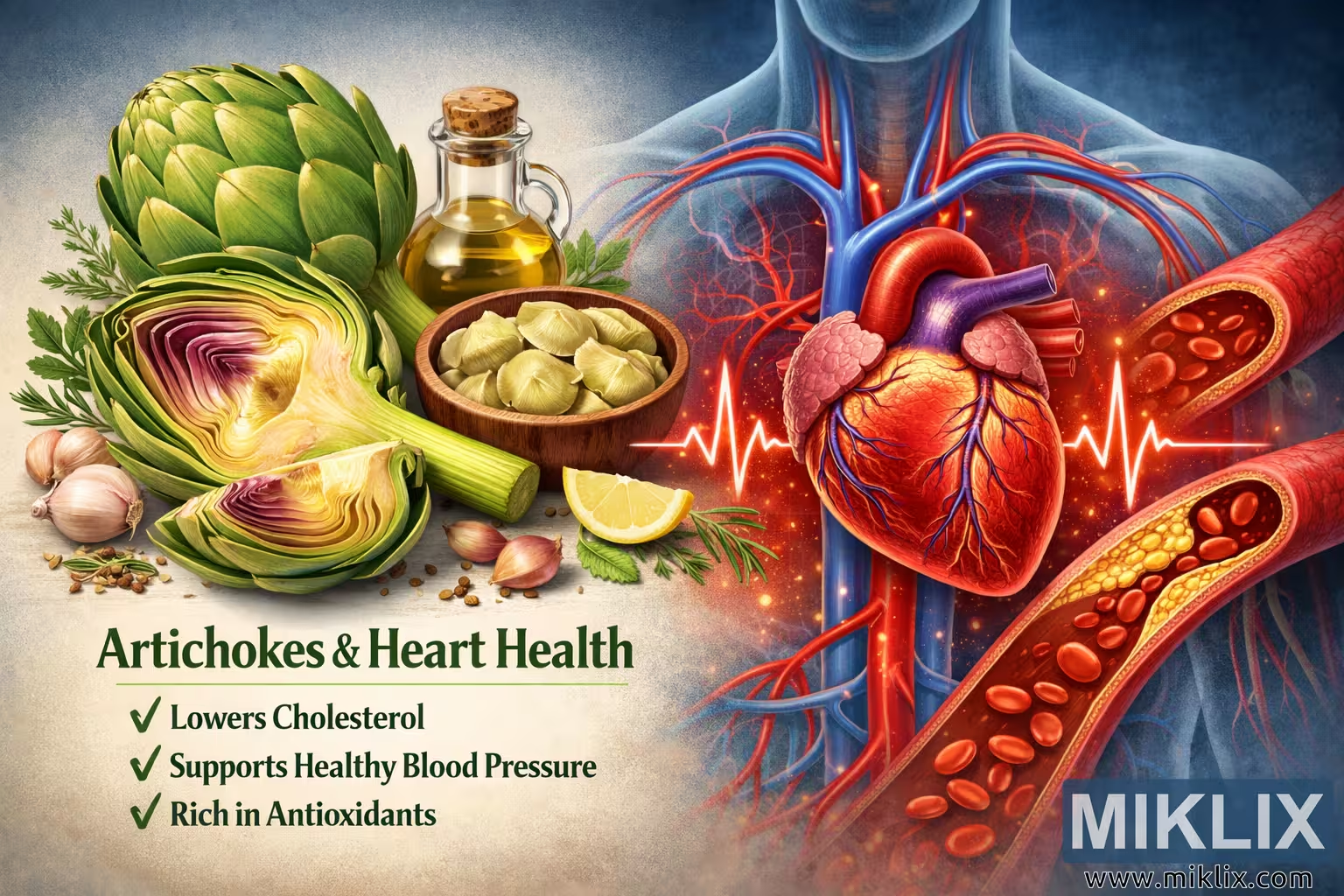
Regular size (1,536 x 1,024)
Large size (3,072 x 2,048)
Very large size (4,608 x 3,072)
Extra large size (6,144 x 4,096)
Comically large size (1,048,576 x 699,051)
- Still uploading... ;-)
Image description
This image is a detailed, educational digital illustration that visually communicates the heart health benefits of artichokes by combining realistic food photography-style elements with a stylized medical depiction of the cardiovascular system. The composition is horizontally oriented, divided into two main sections: the left side focuses on artichokes and supportive ingredients associated with heart-friendly nutrition, while the right side presents an anatomically accurate heart and blood vessels, emphasizing the connection between diet and cardiovascular health.
On the left side of the image, a rustic wooden surface serves as the base, giving the scene a natural, wholesome atmosphere. Resting on this surface is a carefully arranged selection of artichokes in different forms. At the upper left, a whole fresh artichoke sits prominently, its layered green leaves tightly packed and slightly glossy, suggesting freshness and vitality. The leaves display subtle variations in color, ranging from deep forest green near the outer edges to lighter, almost lime-green tones closer to the center, capturing the organic texture and complexity of the vegetable.
In the foreground, a halved artichoke is positioned so that its inner structure is clearly visible. The cut surface reveals the tender heart, with delicate purple and yellow hues radiating from the center. The inner leaves transition from pale green to soft violet, and the heart itself appears smooth and succulent, symbolizing the nutrient-rich core that is often associated with health benefits. Nearby, a small bowl is filled with cooked artichoke hearts, lightly glistening as if drizzled with a modest amount of oil. Their pale yellow-green color and soft texture suggest they are ready to be eaten, reinforcing the idea of artichokes as a practical, enjoyable part of a heart-healthy diet.
Surrounding the artichokes are several complementary ingredients that are commonly linked to cardiovascular wellness. A few garlic cloves, with their papery white skins and slightly rough surfaces, rest near the artichokes, hinting at their role in supporting healthy blood pressure and cholesterol levels. A small glass bottle filled with golden oil stands nearby, its warm color catching the light and creating subtle reflections. The oil suggests a heart-friendly fat source, such as a plant-based oil, without referencing any specific brand. A wooden bowl contains a mix of seeds, possibly representing fiber-rich and omega-3-rich ingredients that can contribute to improved lipid profiles and overall heart health. Lemon wedges, with bright yellow rinds and juicy interiors, add a fresh, tangy visual accent, while sprigs of rosemary introduce a deep green herbal element, reinforcing the natural, wholesome theme.
Beneath this arrangement of food items, clear text is displayed in bold green letters: "Artichokes & Heart Health." The typography is clean and modern, designed to be easily readable and visually aligned with the health-focused message. Below the main heading, three bullet points summarize key benefits associated with artichokes. Each bullet point is accompanied by a green checkmark icon, reinforcing the idea of positive, evidence-supported health effects. The bullet points read: "Lowers Cholesterol," "Supports Healthy Blood Pressure," and "Rich in Antioxidants." These concise statements connect the visual elements to specific cardiovascular benefits, making the image suitable for educational materials, health blogs, or nutrition-focused presentations.
On the right side of the image, the focus shifts to the human cardiovascular system. At the center of this section is an anatomically accurate illustration of a human heart, depicted in vivid red and blue tones. The heart is shown in three-dimensional detail, with clearly defined chambers, major arteries, and veins. Red areas represent oxygen-rich blood, while blue areas indicate oxygen-poor blood returning to the heart, visually conveying the dynamic circulation process. The heart appears to glow slightly, with subtle highlights and reflections that give it a sense of energy and vitality.
Radiating from the heart are glowing arteries and veins, rendered in bright, luminous lines that extend outward across the right side of the image. These vessels are intertwined with a red electrocardiogram (ECG) line that runs horizontally across the composition. The ECG line features characteristic peaks and troughs, symbolizing a healthy heartbeat and reinforcing the theme of cardiovascular monitoring and wellness. The glowing effect of the ECG line and vessels creates a sense of movement and life, suggesting that the heart is actively functioning and responsive to positive lifestyle choices, such as a nutritious diet.
In the background, a faint outline of an upper human torso is visible, depicted in cool blue tones. Within this outline, the circulatory system is highlighted, with major blood vessels glowing softly to indicate the pathways through which blood travels. This subtle anatomical context helps viewers understand that the heart is part of a larger system, and that dietary choices can influence not only the heart itself but also the health of arteries and veins throughout the body.
To the side of the heart illustration, there are detailed depictions of blood vessels in cross-section. One vessel shows plaque buildup, with cholesterol deposits accumulating along the inner walls. This vessel appears constricted, with irregular yellowish formations representing the plaque, and fewer red blood cells passing through the narrowed space. This visual emphasizes the potential consequences of poor dietary habits and high cholesterol levels. In contrast, another vessel is shown as healthy and unobstructed, with smooth inner walls and a steady flow of bright red blood cells. The comparison between the two vessels visually reinforces the idea that heart-healthy foods, such as artichokes, may contribute to improved blood flow and reduced plaque formation.
The overall color palette of the image is carefully balanced. On the left, vibrant greens from the artichokes and herbs dominate, complemented by warm yellows from the lemon wedges and oil, and earthy browns from the wooden surface and bowls. These colors evoke freshness, nature, and nourishment. On the right, intense reds and blues from the heart and blood vessels create a striking contrast, symbolizing life, circulation, and medical precision. The glowing highlights and subtle gradients add depth and dimension, making the illustration visually engaging and informative.
Lighting in the image is even and well-balanced, with gentle shadows that add realism without obscuring important details. The artichokes and accompanying ingredients are rendered in sharp focus, allowing viewers to appreciate their textures and colors. The heart and blood vessels are also depicted with clarity, while the background elements, such as the torso outline and distant vessels, are slightly blurred to maintain emphasis on the main subjects.
Together, the left and right sections of the image form a cohesive narrative: the foods on the left represent practical, everyday choices that can support heart health, while the medical illustration on the right shows the internal impact of those choices on the cardiovascular system. The text and icons tie these elements together, making the image suitable for use in articles, infographics, educational posters, or presentations about nutrition, preventive cardiology, and lifestyle medicine. The absence of any visible brands ensures that the image remains neutral, versatile, and appropriate for a wide range of contexts focused on promoting heart health through diet.
The image is related to: Artichokes: The Delicious Vegetable That's Good for Your Health