
Image: Artichoke Consumption and Cholesterol Reduction: A Visual Exploration of Health Benefits
Published: July 19, 2026 at 1:00:25 PM UTC
A detailed visual representation of how artichoke consumption contributes to lowering cholesterol levels and improving overall health, featuring symbolic imagery of heart health, liver support, weight management, and arterial wellness.
Available versions of this image
The image files available for download below are less compressed and higher resolution - and as a result of that, higher quality - than the images embedded in articles and pages on this website, which are more optimized for file size in order to reduce bandwidth consumption.
Regular size (1,536 x 1,024)
Large size (3,072 x 2,048)
Very large size (4,608 x 3,072)
Extra large size (6,144 x 4,096)
Comically large size (1,048,576 x 699,051)
- Still uploading... ;-)
Image description
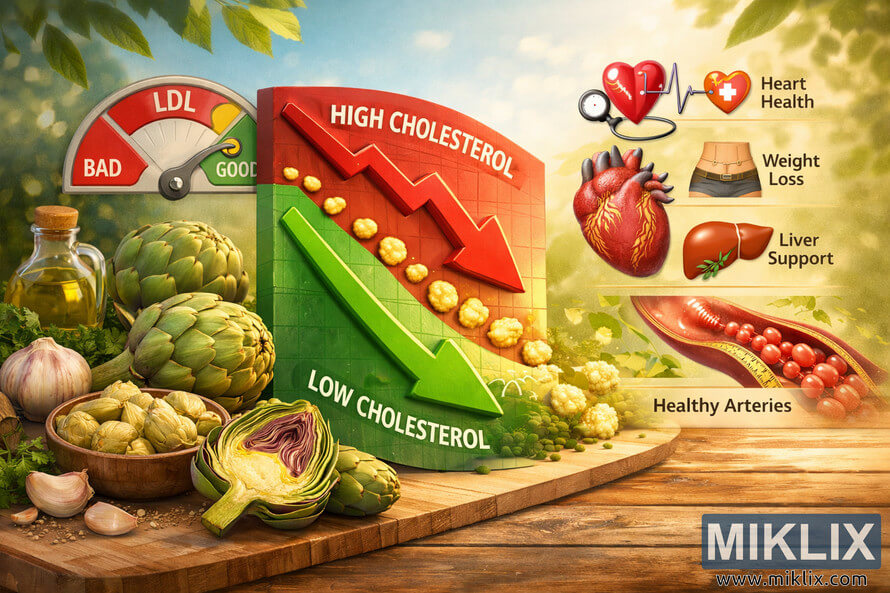
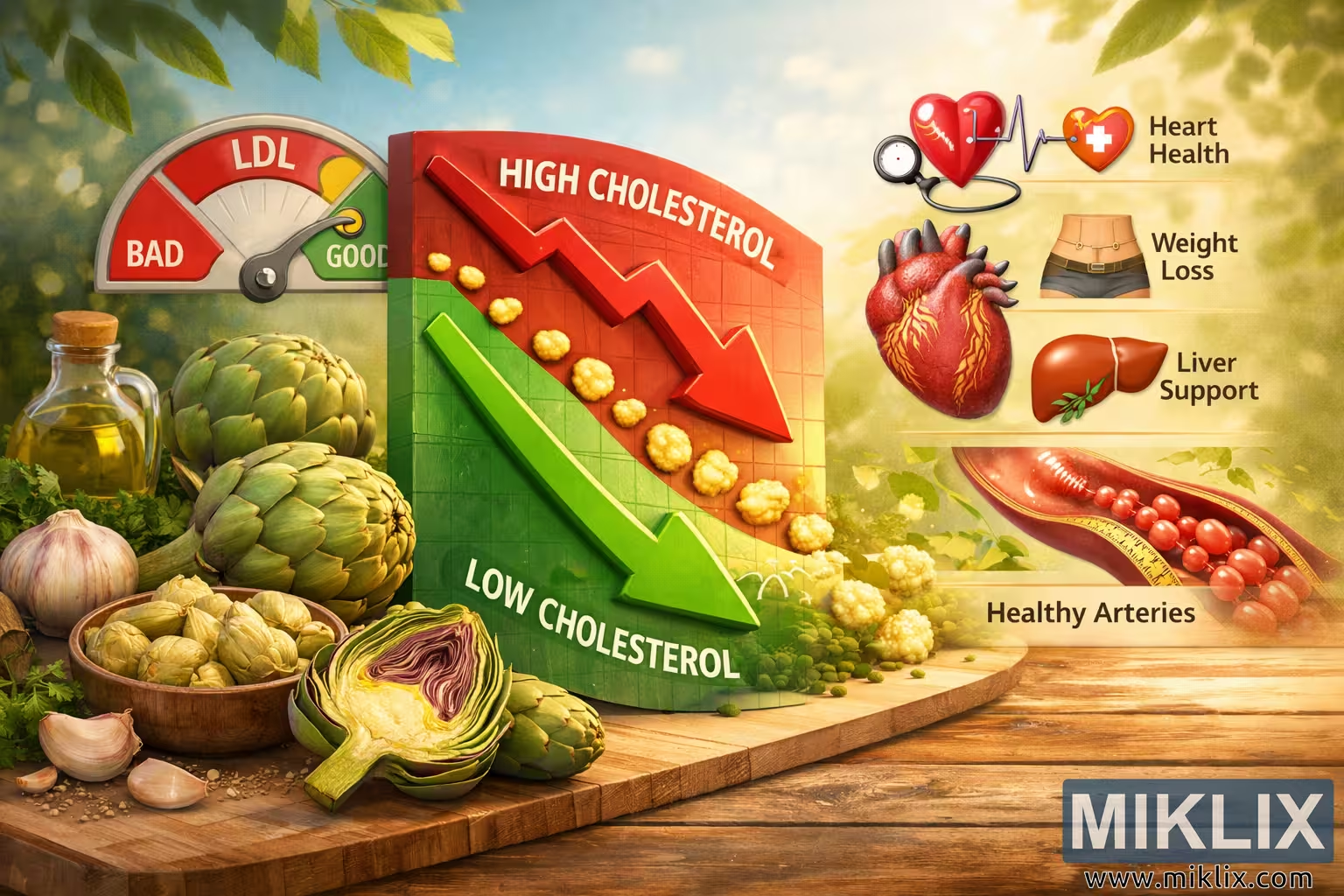
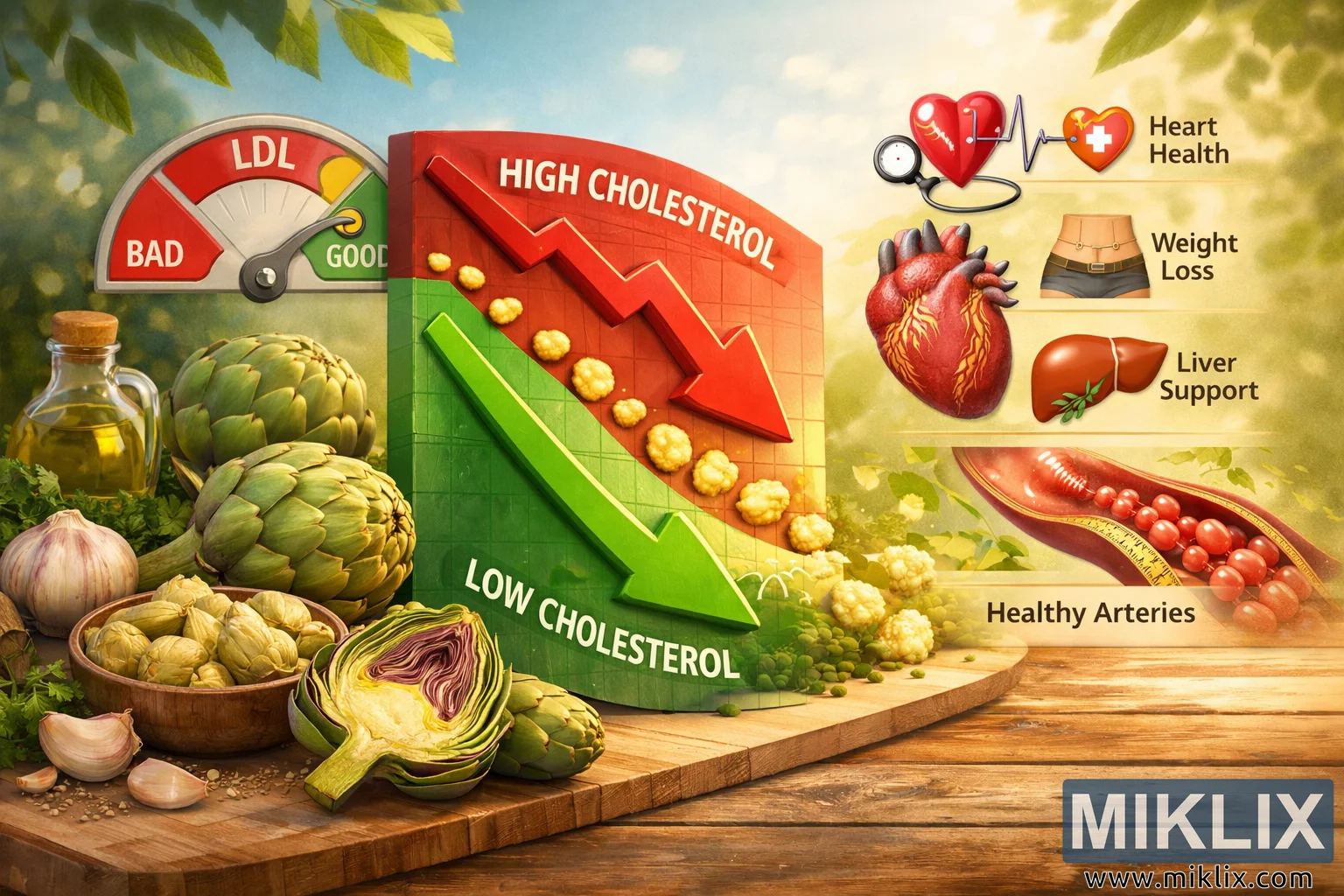
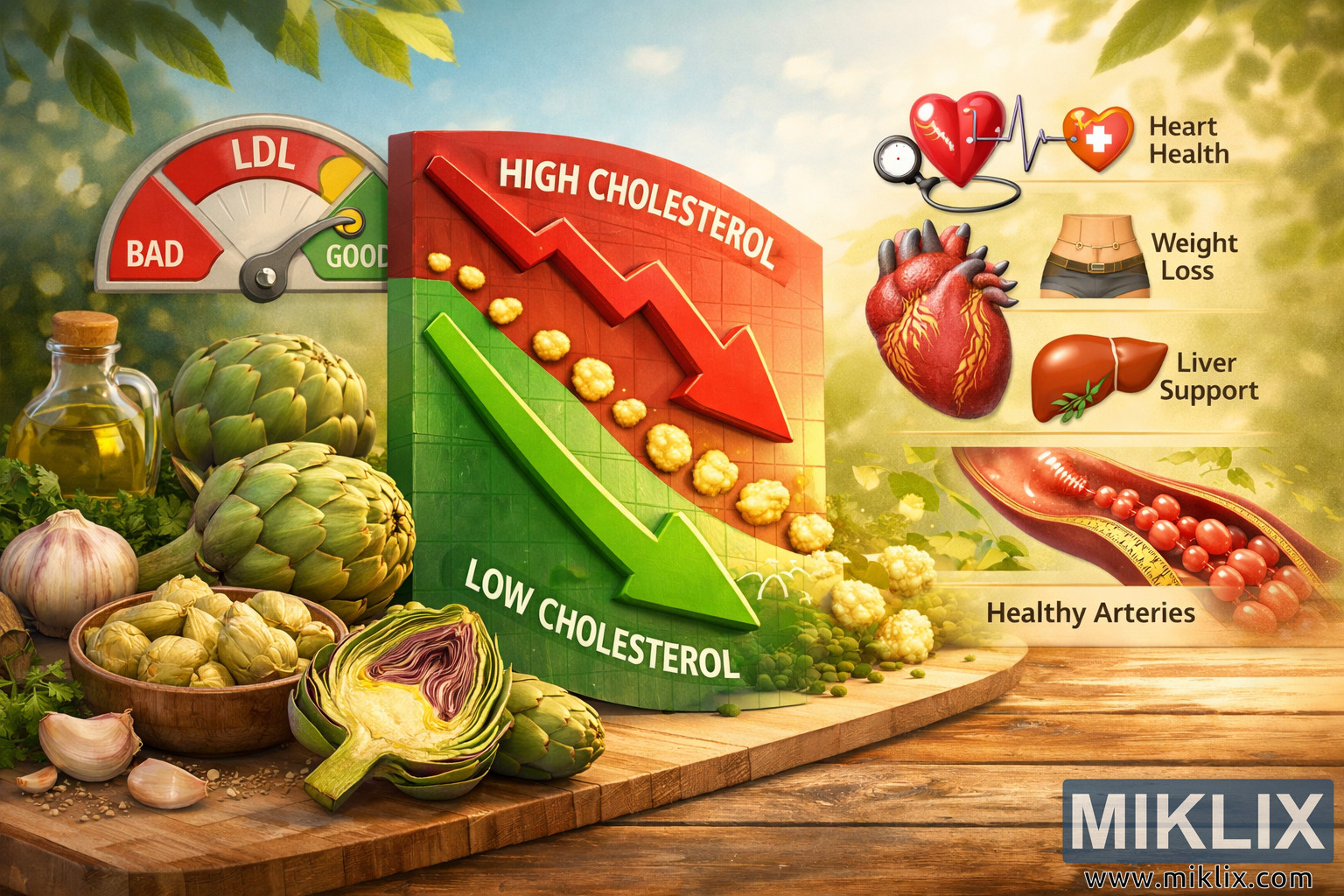
This image presents a comprehensive and visually engaging depiction of the relationship between artichoke consumption and cholesterol reduction, emphasizing the broader health benefits associated with this natural dietary choice. The composition is arranged in a balanced landscape orientation, combining realistic and symbolic elements to convey both scientific and holistic wellness themes.
On the left side of the image, a cluster of fresh artichokes dominates the foreground. Their green leaves are rendered with intricate texture and subtle variations in hue, capturing the organic vitality of the vegetable. One artichoke is sliced open to reveal its purple and yellow heart, a focal point that draws attention to the nutrient-rich core. Surrounding the artichokes are complementary ingredients often associated with healthy Mediterranean cuisine: a small glass bottle of olive oil reflecting warm sunlight, peeled garlic cloves, and sprigs of parsley resting on a rustic wooden surface. These elements collectively evoke a sense of natural abundance and culinary tradition.
At the center of the composition, a stylized 3D cholesterol graph serves as the primary visual metaphor. Two arrows dominate this section: a red, jagged arrow labeled 'HIGH CHOLESTEROL' pointing downward, and a green, smooth arrow labeled 'LOW CHOLESTEROL' also descending but with a gentler curve. The contrast between the two arrows symbolizes the transition from unhealthy to healthy cholesterol levels. Small yellow spheres representing cholesterol particles are shown diminishing along the arrows, visually narrating the process of reduction. Adjacent to the graph are two circular gauges: one labeled 'LDL' with a gradient from red ('BAD') to green ('GOOD'), and another labeled 'HDL' with the inverse gradient, emphasizing the balance between harmful and beneficial cholesterol types.
To the right of the graph, the image transitions into a series of health-related icons and anatomical illustrations that highlight the physiological benefits of lowered cholesterol. At the top, a stylized heart wrapped in a stethoscope pulses with a faint electrocardiogram line, symbolizing improved cardiovascular health. Below it, a slim waist encircled by a measuring tape represents weight management and metabolic efficiency. Further down, a liver rendered with a subtle golden glow signifies detoxification and organ support. At the bottom, a clean, unobstructed artery with smooth blood flow illustrates vascular health and reduced risk of plaque buildup. Each of these elements is accompanied by small labeled icons: a shield with a cross for 'Heart Health,' a waistline for 'Weight Loss,' a liver for 'Liver Support,' and a blood vessel for 'Healthy Arteries.'
The background of the image is a softly blurred outdoor landscape bathed in warm sunlight. Gentle rays filter through green foliage, creating a serene atmosphere that reinforces the theme of natural wellness. Floating leaves and light particles add a sense of motion and vitality, suggesting that health is dynamic and interconnected with nature. The color palette is dominated by greens and golds, complemented by touches of red and purple to maintain visual balance and highlight key contrasts.
Overall, the image communicates a holistic message: that regular consumption of artichokes can contribute to lowering cholesterol levels and promoting multiple aspects of health. The interplay of realistic food imagery, scientific symbolism, and anatomical representations creates a multidimensional narrative that appeals to both the intellect and the senses. It invites viewers to appreciate the artichoke not merely as a vegetable but as a symbol of natural healing and preventive nutrition. The composition’s clarity, symmetry, and vibrant color scheme make it suitable for educational, medical, or wellness contexts, effectively bridging the gap between scientific data and visual storytelling.
The image is related to: Artichokes: The Delicious Vegetable That's Good for Your Health