
Image: Artichoke Quality Guide: How to Select the Best Fresh Artichokes for Health Benefits
Published: July 19, 2026 at 1:00:25 PM UTC
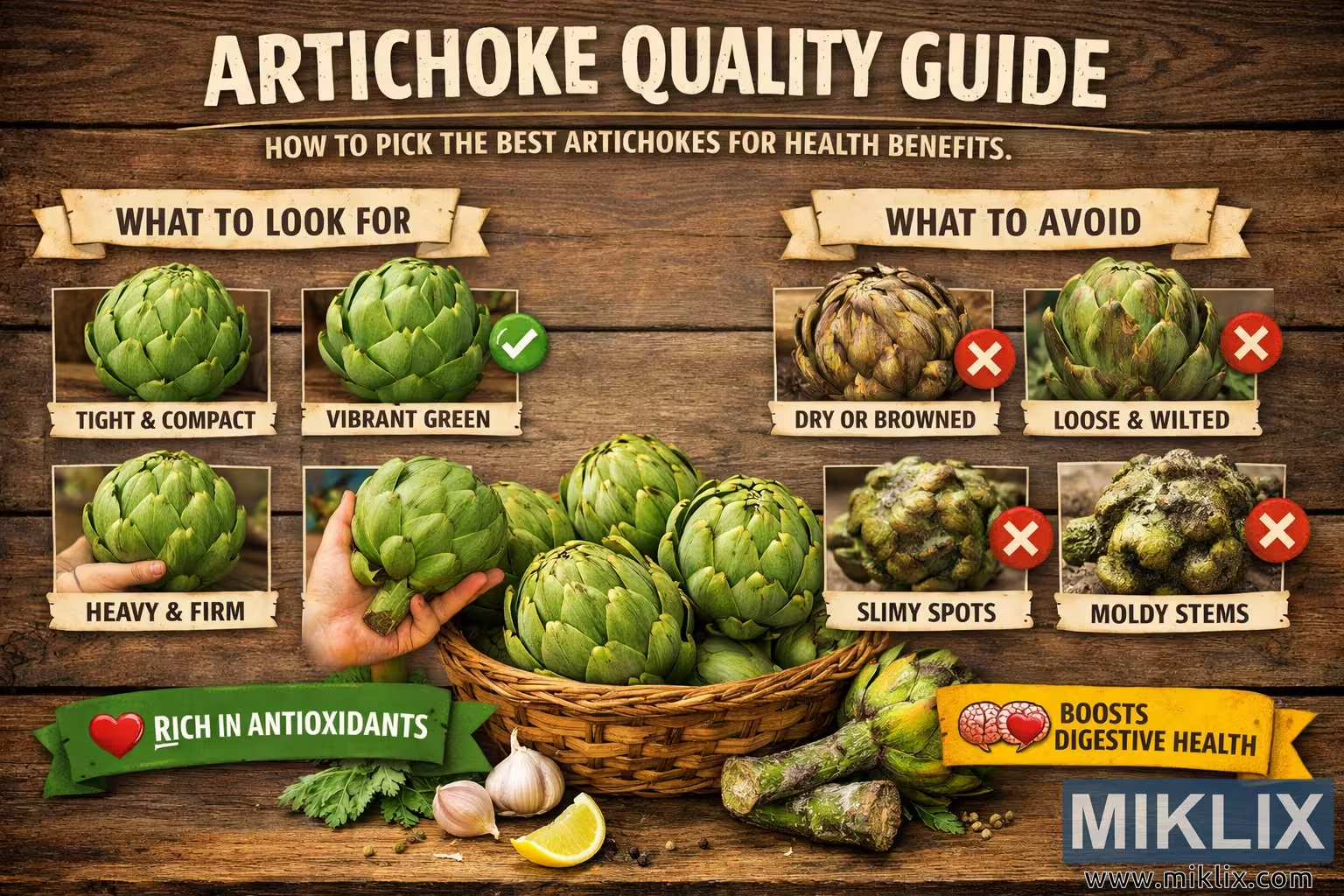
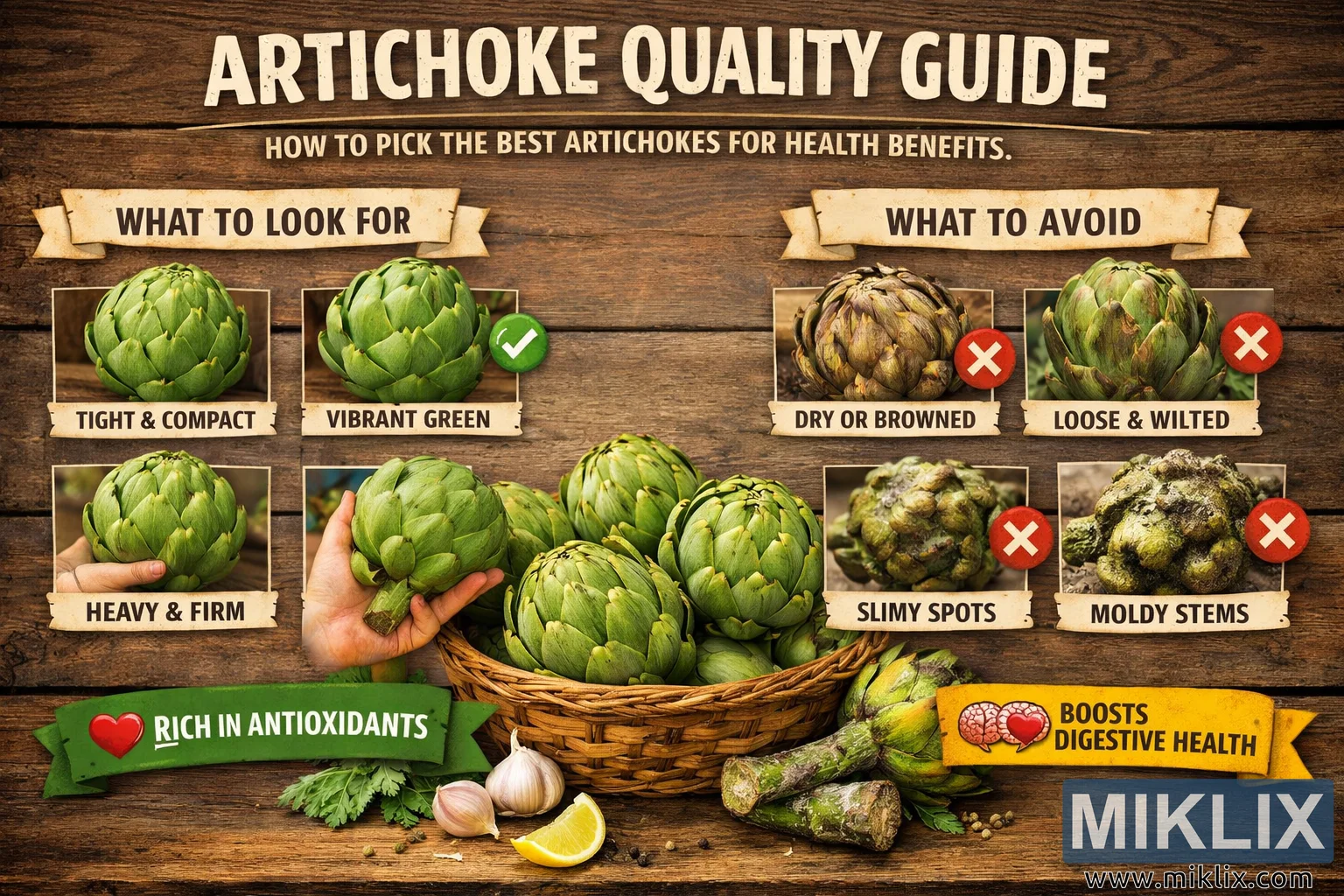
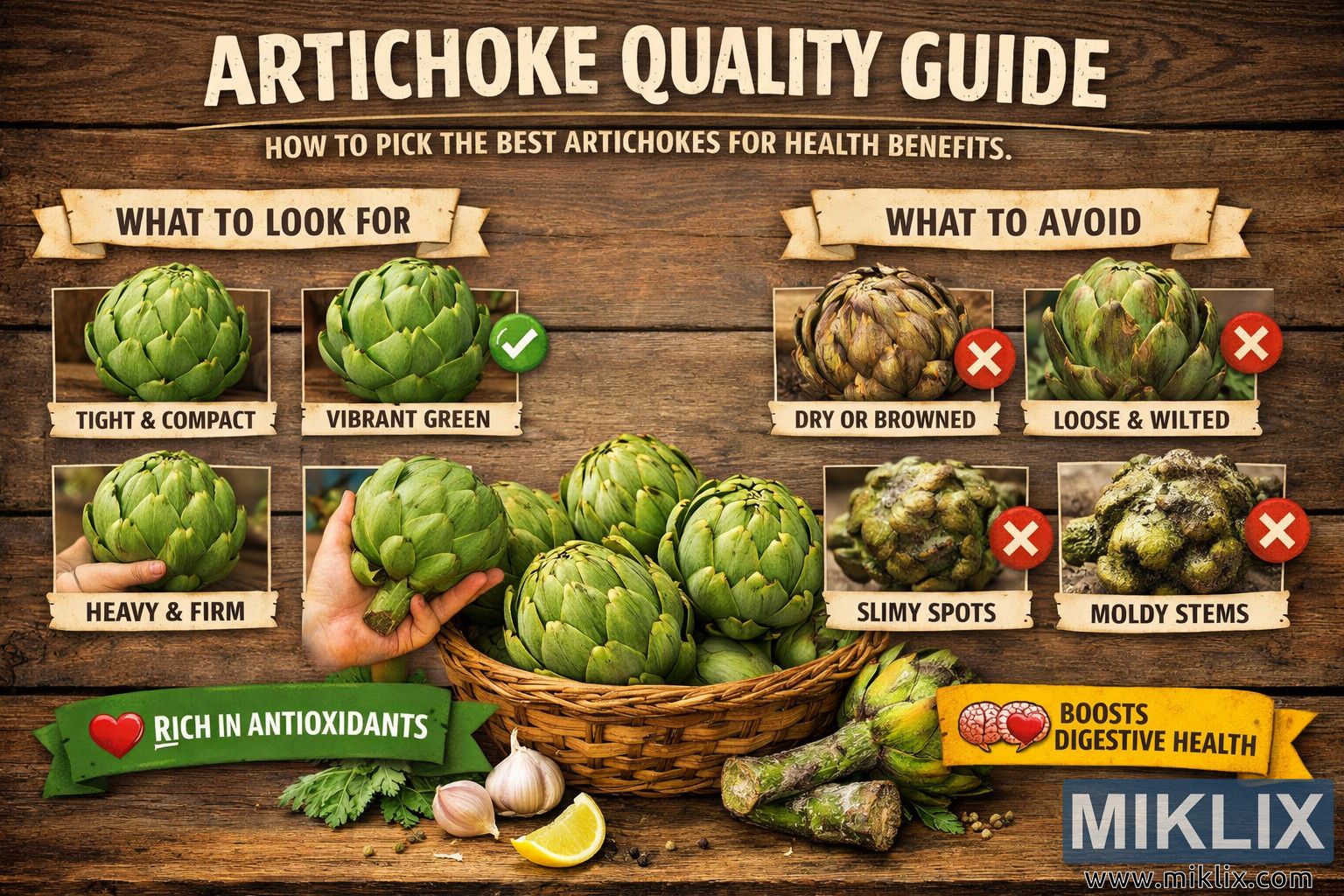
A detailed landscape infographic titled "Artichoke Quality Guide" visually explains how to select the best fresh artichokes for health benefits. It contrasts desirable traits like tight, compact leaves, vibrant green color, firm weight, and fresh-cut stems with warning signs such as dry or browned leaves, loose and wilted structure, slimy spots, and moldy stems. The bottom of the image features a basket of fresh artichokes surrounded by garlic and lemon, along with banners emphasizing that high-quality artichokes are rich in antioxidants and support digestive health.
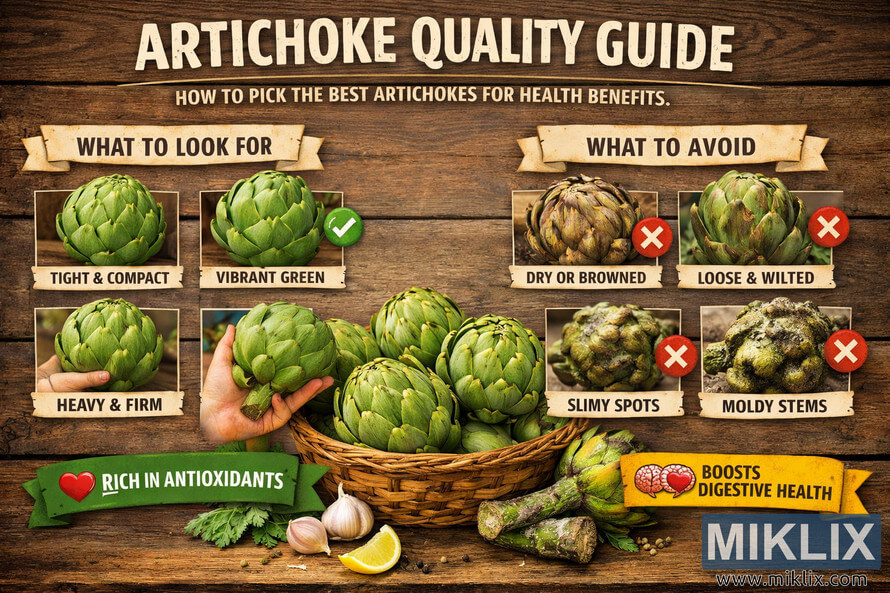
Available versions of this image
The image files available for download below are less compressed and higher resolution - and as a result of that, higher quality - than the images embedded in articles and pages on this website, which are more optimized for file size in order to reduce bandwidth consumption.
Regular size (1,536 x 1,024)
Large size (3,072 x 2,048)
Very large size (4,608 x 3,072)
Extra large size (6,144 x 4,096)
Comically large size (1,048,576 x 699,051)
- Still uploading... ;-)
Image description
The image is a richly detailed, landscape-oriented infographic titled "ARTICHOKE QUALITY GUIDE," designed to help viewers understand how to choose the best fresh artichokes for optimal health benefits. The title appears at the top of the image in large, rustic, cream-colored, bold letters that stand out against a textured wooden background, evoking the feeling of a farmer’s market stall or a traditional kitchen countertop. Just beneath the main title, a subtitle in smaller, off-white capital letters reads: "HOW TO PICK THE BEST ARTICHOKES FOR HEALTH BENEFITS." This subtitle clearly sets the educational tone of the infographic, signaling that the visual content will focus on practical selection tips tied to nutritional value and overall quality.
The layout of the infographic is divided into two main vertical sections: the left side labeled "WHAT TO LOOK FOR" and the right side labeled "WHAT TO AVOID." Each section is visually separated by decorative banners that resemble parchment or scrolls, reinforcing the idea of a guide or handbook. The left banner, "WHAT TO LOOK FOR," has a parchment-like texture and warm tones, suggesting trustworthy, time-tested advice. The right banner, "WHAT TO AVOID," appears on a scroll-like background, slightly darker and more dramatic, hinting at caution and warning.
On the left side, under "WHAT TO LOOK FOR," there are four photographic examples of artichokes that demonstrate desirable qualities. Each example is accompanied by a clear label and a small icon that reinforces the message.
The first example is labeled "TIGHT & COMPACT." The image shows an artichoke whose leaves are closely packed together, forming a dense, rounded shape. The outer leaves appear firm and snug, with no gaps or spreading. This visual emphasizes that a high-quality artichoke should not look loose or open; instead, the leaves should cling tightly, indicating freshness and structural integrity.
The second example is labeled "VIBRANT GREEN." Here, the artichoke is shown in a bright, natural green color, with subtle variations in shade that suggest a fresh, living plant. There are no brown patches, yellowing areas, or dull, faded tones. The emphasis on vibrant green coloration communicates that the best artichokes are visually lively and free from discoloration, which can be a sign of age or poor storage.
The third example is labeled "HEAVY & FIRM." In this image, a hand is shown holding an artichoke, giving a sense of weight and tactile feedback. The artichoke appears solid and dense, with the implication that when you pick it up, it should feel heavier than it looks, indicating tightly packed leaves and moisture content. The firmness suggests that the vegetable is not dried out or spongy, both of which would reduce quality and nutritional value.
The fourth example is labeled "FRESH CUT STEMS." This close-up image focuses on the stems of several artichokes. The stems look cleanly trimmed, with a fresh, slightly moist appearance rather than shriveled or discolored. The color of the stems is consistent with the rest of the artichoke, and there are no signs of mold, dryness, or cracking. This visual teaches that the condition of the stem is a strong indicator of overall freshness and handling.
On the right side of the infographic, under the "WHAT TO AVOID" banner, four photographic examples illustrate undesirable traits that signal poor quality or potential spoilage. Each example is paired with a label and a red "X" icon, making it immediately clear that these are warning signs.
The first example is labeled "DRY OR BROWNED." The artichoke shown here has visible brown patches and dry, rough areas on its leaves. The color is uneven, with some parts appearing dull or faded. This image warns that browning and dryness are signs of age, oxidation, or improper storage, and such artichokes are less likely to offer the best flavor or nutritional benefits.
The second example is labeled "LOOSE & WILTED." In this image, the artichoke’s leaves are spread apart, sagging, and lacking structure. The overall shape looks open and tired, with the leaves curling outward instead of hugging the core. This visual communicates that a loose, wilted artichoke has lost its freshness and internal moisture, making it a poor choice for cooking or eating.
The third example is labeled "SLIMY SPOTS." This close-up shows areas on the artichoke where the surface appears wet, sticky, or slimy, often accompanied by darker discoloration. The texture looks unpleasant and clearly unhealthy. The image emphasizes that any sliminess is a strong indicator of spoilage and bacterial growth, and such artichokes should be avoided entirely.
The fourth example is labeled "MOLDY STEMS." This image focuses on an artichoke stem covered in visible mold, with fuzzy or powdery growth and discolored patches. The stem looks unhealthy and compromised. This example reinforces the idea that the stem is not just a structural part of the vegetable but also a key freshness indicator—mold on the stem suggests that the entire artichoke is unsafe or at least far past its prime.
At the bottom of the infographic, two colorful banners highlight the health benefits associated with choosing high-quality artichokes. On the left, a green banner with a heart icon reads "RICH IN ANTIOXIDANTS." The green color and heart symbol suggest vitality, protection, and wellness, implying that fresh artichokes can contribute to overall health by providing antioxidant compounds that help combat oxidative stress.
On the right, a yellow banner with a combined brain and heart icon reads "BOOSTS DIGESTIVE HEALTH." The yellow tone adds warmth and energy, while the brain and heart imagery suggests a holistic benefit that touches both mental and physical well-being. This banner communicates that artichokes, when fresh and properly selected, can support digestion and gut health, likely due to fiber and other beneficial plant compounds.
Centered at the bottom of the image, between these two banners, is a wicker basket filled with fresh artichokes. The artichokes in the basket are vibrant green, compact, and visually appealing, embodying all the positive traits described in the "WHAT TO LOOK FOR" section. Surrounding the basket are garlic cloves and a lemon wedge, subtle culinary elements that hint at how artichokes might be prepared in a healthy, flavorful dish. The garlic and lemon add a sense of context and lifestyle, suggesting that selecting good artichokes is part of a broader pattern of mindful, nutritious cooking.
The overall color palette of the infographic is composed of natural greens, earthy browns, and warm yellows, creating a harmonious, inviting atmosphere. The wooden background and rustic textures give the impression of authenticity and closeness to nature. The lighting is even and well-balanced, ensuring that every detail—from the texture of the leaves to the condition of the stems—is clearly visible. The depth of field is deep, keeping all elements sharp and legible, which is essential for an educational guide.
The composition directs the viewer’s attention first to the title, then down to the two main sections, and finally to the basket of artichokes and health benefit banners at the bottom. This visual flow mirrors the logical progression of learning: understanding what to look for, recognizing what to avoid, and then appreciating the health advantages of making good choices. The infographic successfully combines aesthetic appeal with practical information, making it a useful visual tool for anyone interested in selecting fresh artichokes that maximize both flavor and nutritional value.
The image is related to: Artichokes: The Delicious Vegetable That's Good for Your Health